
Dalmatian icons
Church work from the medieval period to modern Croatian painting.
Fred Romero from Paris, France — CC BY 2.0 · Fred Romero from Paris, France — CC BY 2.0 · Fred Romero from Paris, France — CC BY 2.0 · Nicola Quirico — CC BY-SA 4.0
The national museum in Zadar, an institution of several departments spread across the old town: an art gallery, an ethnographic department, a natural history department and a department on the city's history. The art gallery is the broadest: paintings and icons from Dalmatia across centuries, from medieval church work to modern Croatian painting. The ethnographic department shows dress, crafts and tools from the northern Dalmatian countryside, and the natural history department covers the nature of the islands and coast. What deserves saying about Zadar itself: the city was largely destroyed in Allied bombing in 1943-1944 — more than sixty per cent of its buildings — and was damaged again in the war of the 1990s. What survives of the museum's collections came through that twice. A practical point: the departments are in different buildings, each with its own hours and sometimes its own ticket — check the official site before going to learn which is open and where. The old town is small and all the departments are within walking distance.
Church work from the medieval period to modern Croatian painting.
The city was bombed in 1943-1944 and damaged again in the 1990s.
The ethnographic department shows village dress and crafts rather than the city's.
The old town, Zadar
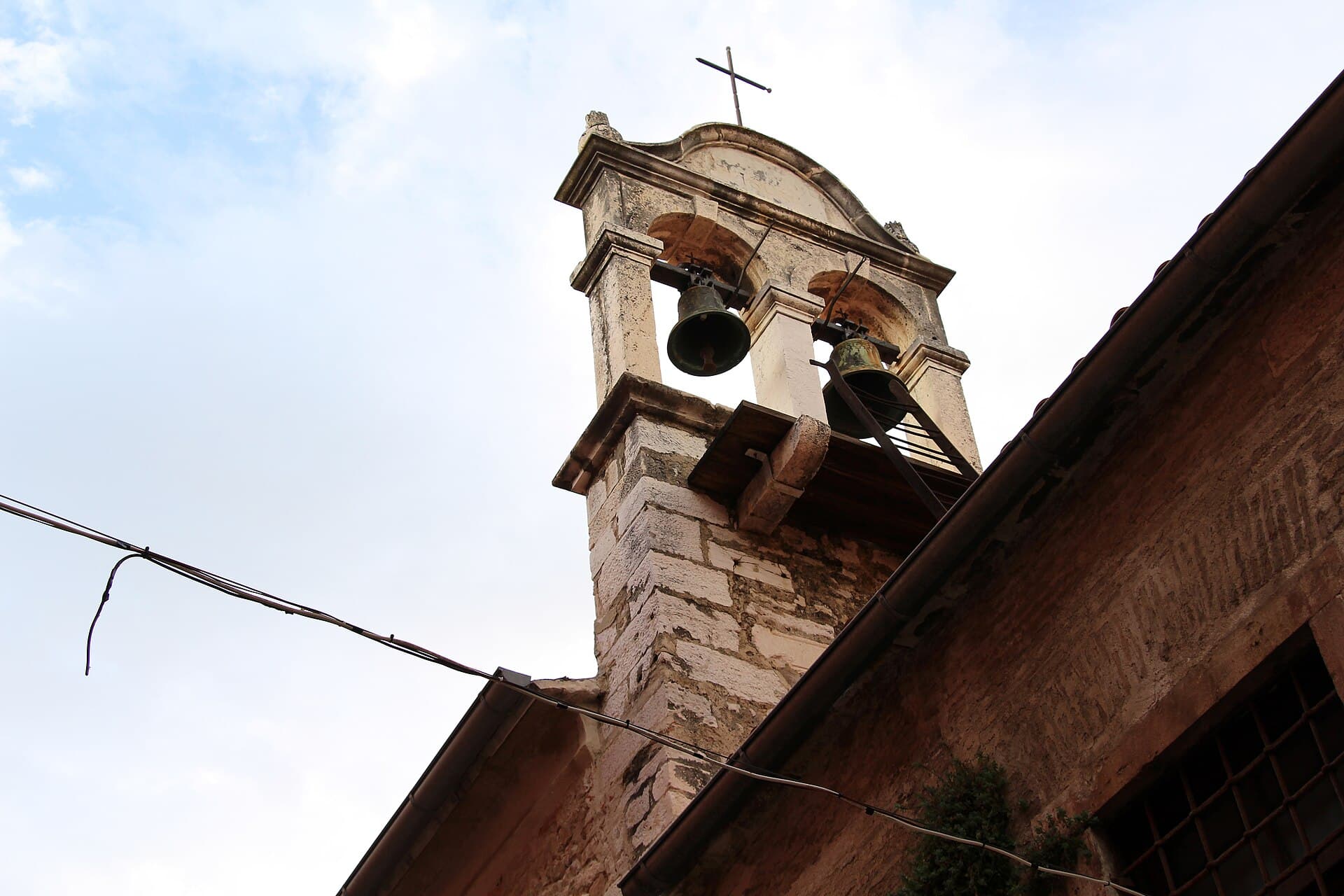 Puppet Theatre ZadarA professional puppet theatre in Zadar, founded in the mid twentieth century, pr1 minute walk4.8
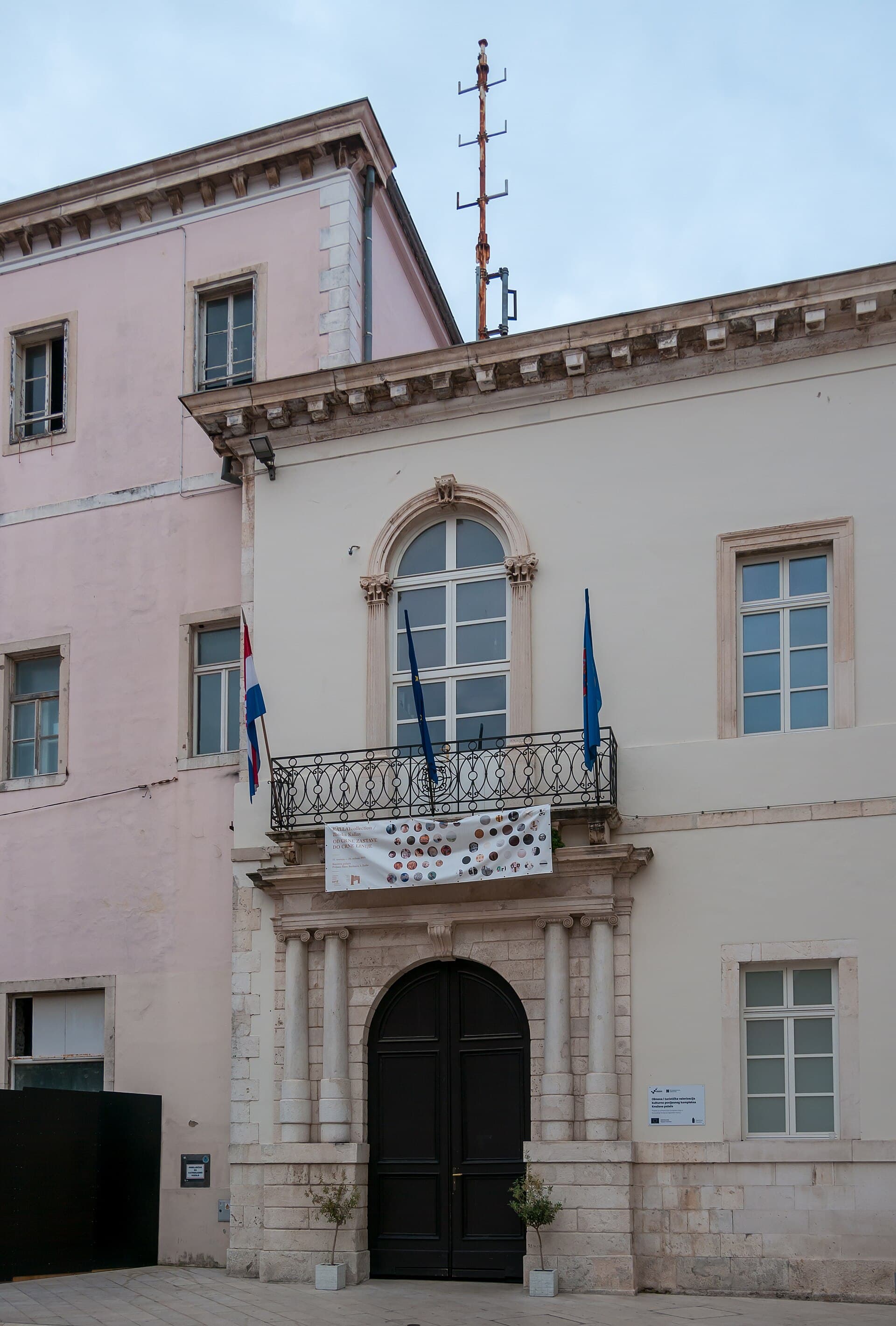 Rector's Palace, ZadarThe seat of Zadar's government through centuries of Venetian rule and after it, 1 minute walk4.6
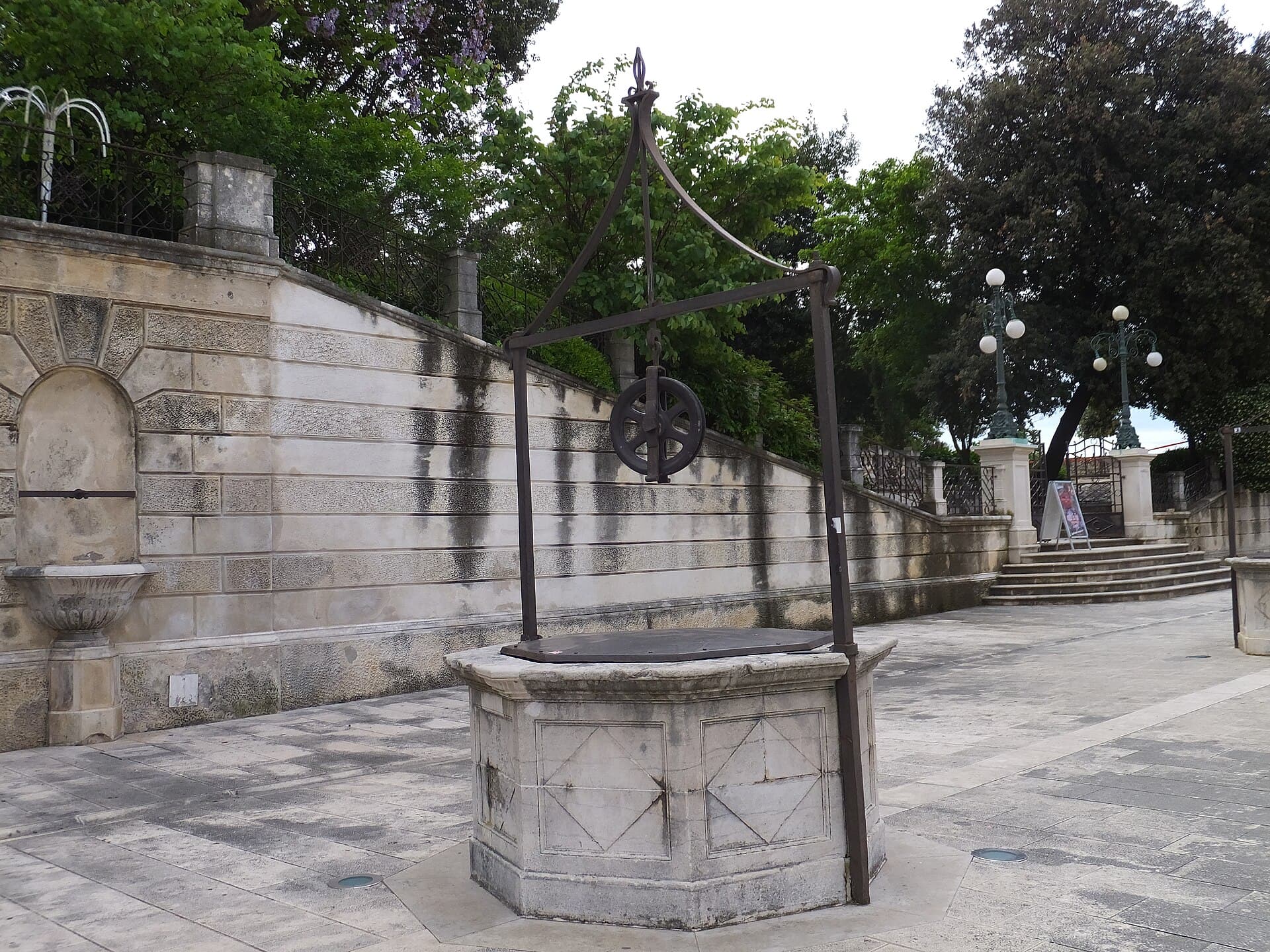 The Five Wells SquareThe Five Wells Square in the old town is named literally: five stone wellheads s1 minute walk4.7
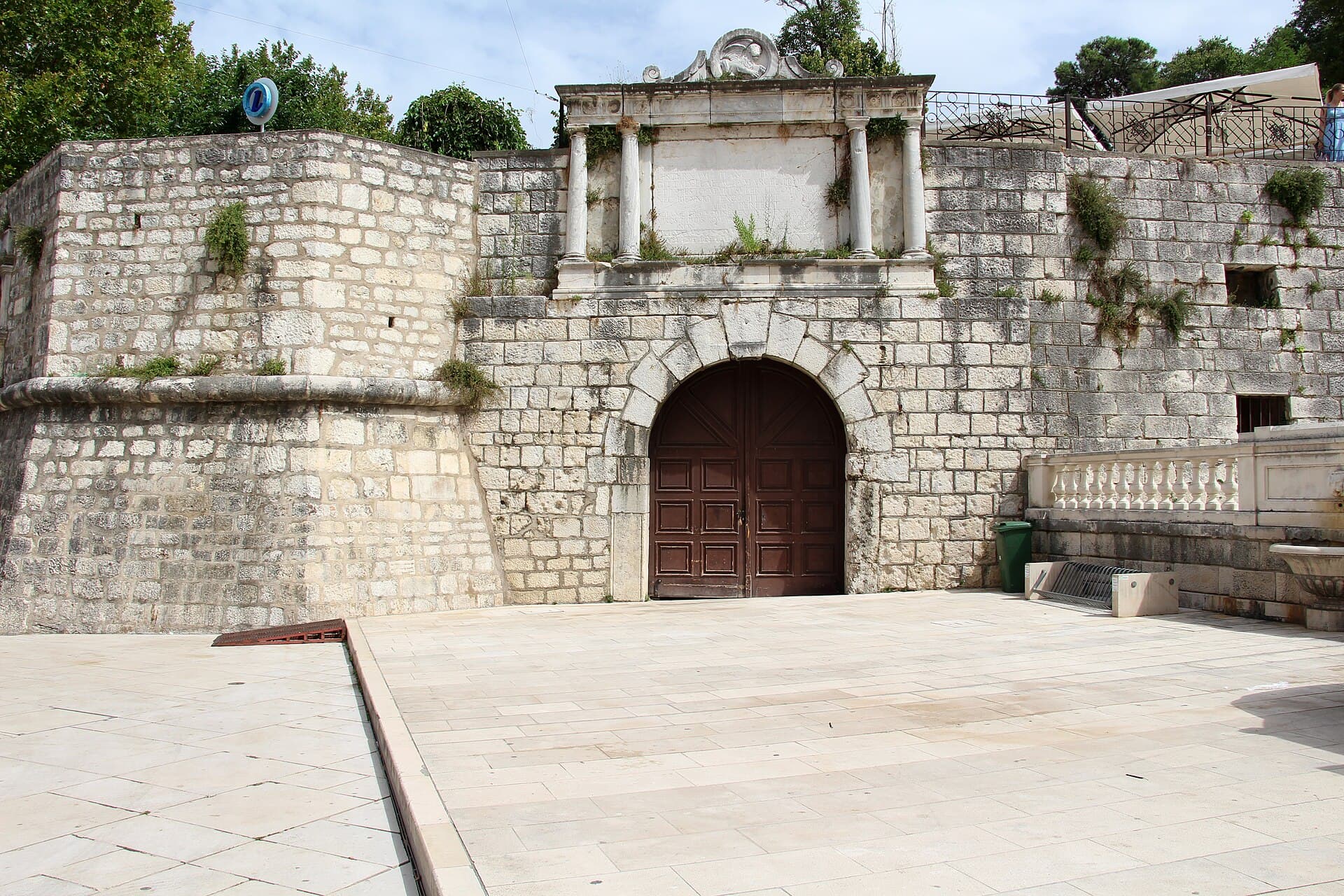 Queen Jelena Madijevka ParkThis small park stands on top of the Grimani bastion at the edge of the old town2 minutes walk4.8
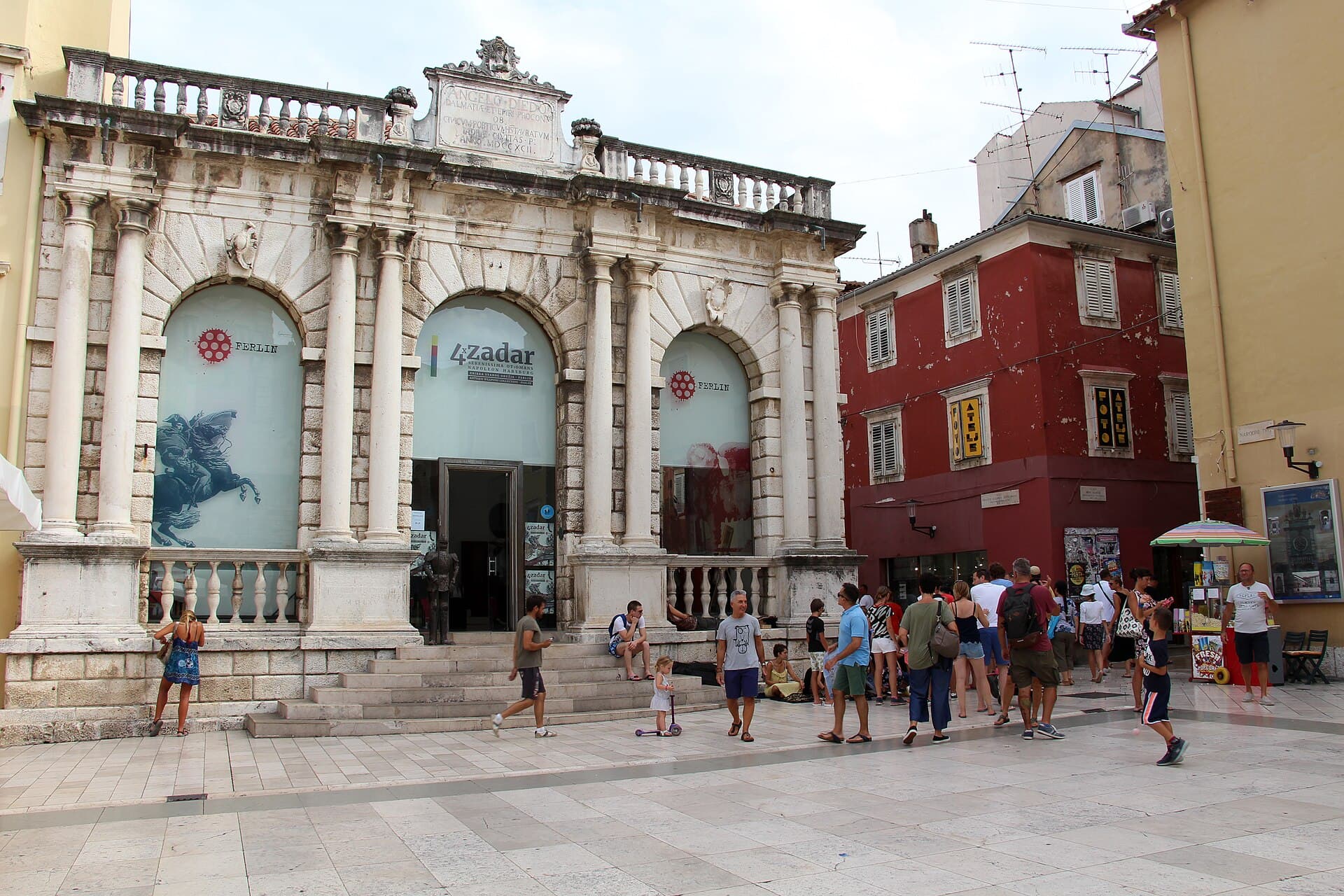 The City LoggiaThe City Loggia stands on Narodni trg, the People's Square, Zadar's administrati2 minutes walk4.1
The Sea Organ — stone steps descending into the water with pipes played by the waves — and beside it the Greeting to the Sun, a glass circle lit at night by solar power. Then the circular ninth-century Church of St Donatus, the Roman forum, and the sunset from the waterfront, which Alfred Hitchcock called the most beautiful in the world.
Zadar was Italian between the wars and served as an Italian then German military base, so the Allies bombed it more than fifty times between 1943 and 1944. Over sixty per cent of the city was destroyed and most of its inhabitants fled. What you see in the old town today is a mixture of surviving buildings and others rebuilt in the 1950s in a plain modern manner — which is why Zadar looks different from Dubrovnik or Trogir.