
The blue dome
Crowns the 15th-century khanqah; outer shell restored around 2000.
Davide Mauro — CC BY-SA 4.0 · Davide Mauro — CC BY-SA 4.0 · Nikolay Trebukchin — CC BY-SA 4.0 · Davide Mauro — CC BY-SA 4.0 · Davide Mauro — CC BY-SA 4.0
A quiet shrine complex at Samarkand's Old Cemetery, built up from the 12th to the 20th century around the grave of Khoja Abdi, a 9th-century judge. A 12th-century tomb, a 15th-century khanqah, a small madrasa of 1905 and a mosque of 1909 frame a shaded courtyard with an octagonal pool. The name Darun, Persian for inside, recalls that the grave lay within the city wall. Khoja Abdi was a respected jurist who, tradition says, came from Arabia; he is said to have died around 861. His 12th-century tomb, attributed to the Seljuk sultan Sanjar, is so small that the tombstone almost fills it, so in Ulugh Beg's time a larger domed hall, the khanqah, was built in front of it, and a pool was dug beneath plane trees. The khanqah's portal is patterned in blue glazed brick, and its blue-tiled dome rests on a tall drum ringed by a Quranic inscription in thuluth script. Behind it, the tomb is a plain white chamber. On the courtyard's west side, the mosque's iwan stands on slender carved wooden columns under a painted ceiling, with its craftsmen's names worked into the decoration. A large new mosque, begun in 2019, now rises beside the old buildings. The complex is on Sadriddin Ayni Street, about 2 km south-east of the Registan as the crow flies, a short taxi ride away. It is a working mosque and shrine, so dress modestly and avoid prayer times; half an hour is enough. The ruined Ishratkhona stands about 150 m north, and Imam al-Maturidi's mausoleum about 1.5 km north.
Crowns the 15th-century khanqah; outer shell restored around 2000.
Shaded by old plane trees.
Carved columns, painted ceiling.
Sadriddin Ayni Street, by the Old Cemetery, south-east Samarkand
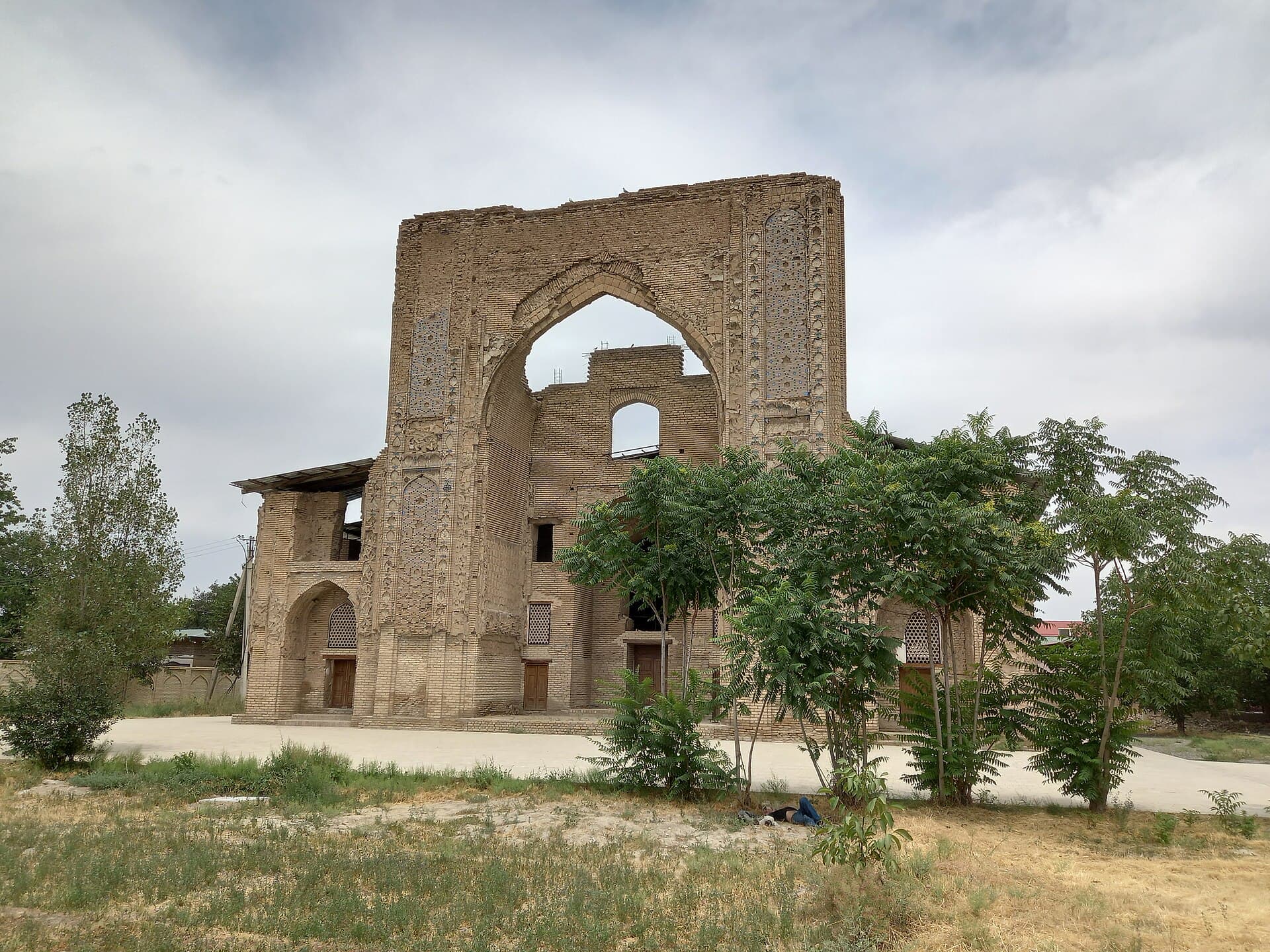 Ishratkhona MausoleumThe ruins of an imposing Timurid mausoleum in Samarkand, built in the reign of S2 minutes walk4.3
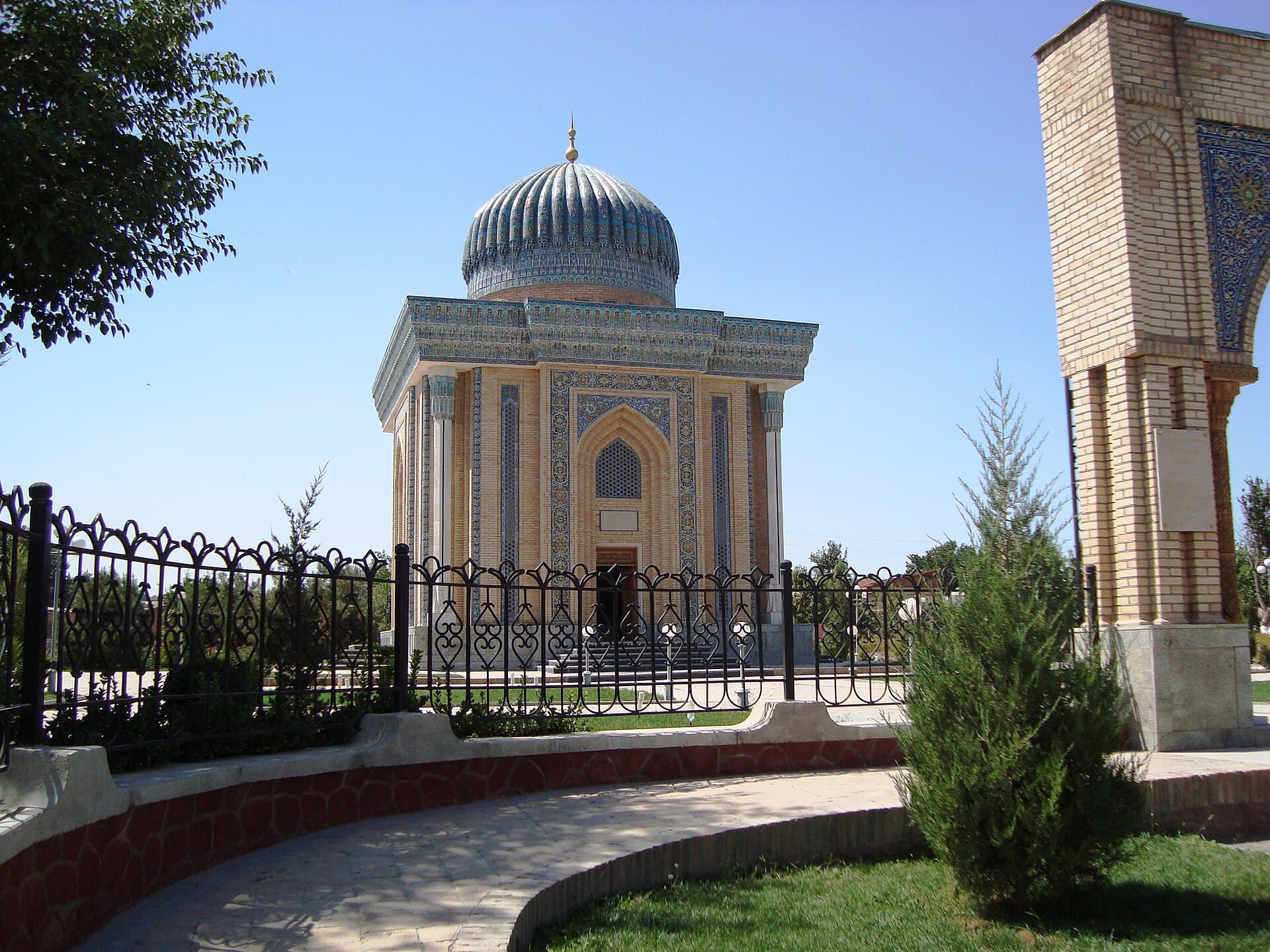 Imam al-Maturidi Mausoleum (Samarkand)This memorial complex in Samarkand's old Chokardiza cemetery stands over the gra19 minutes walk
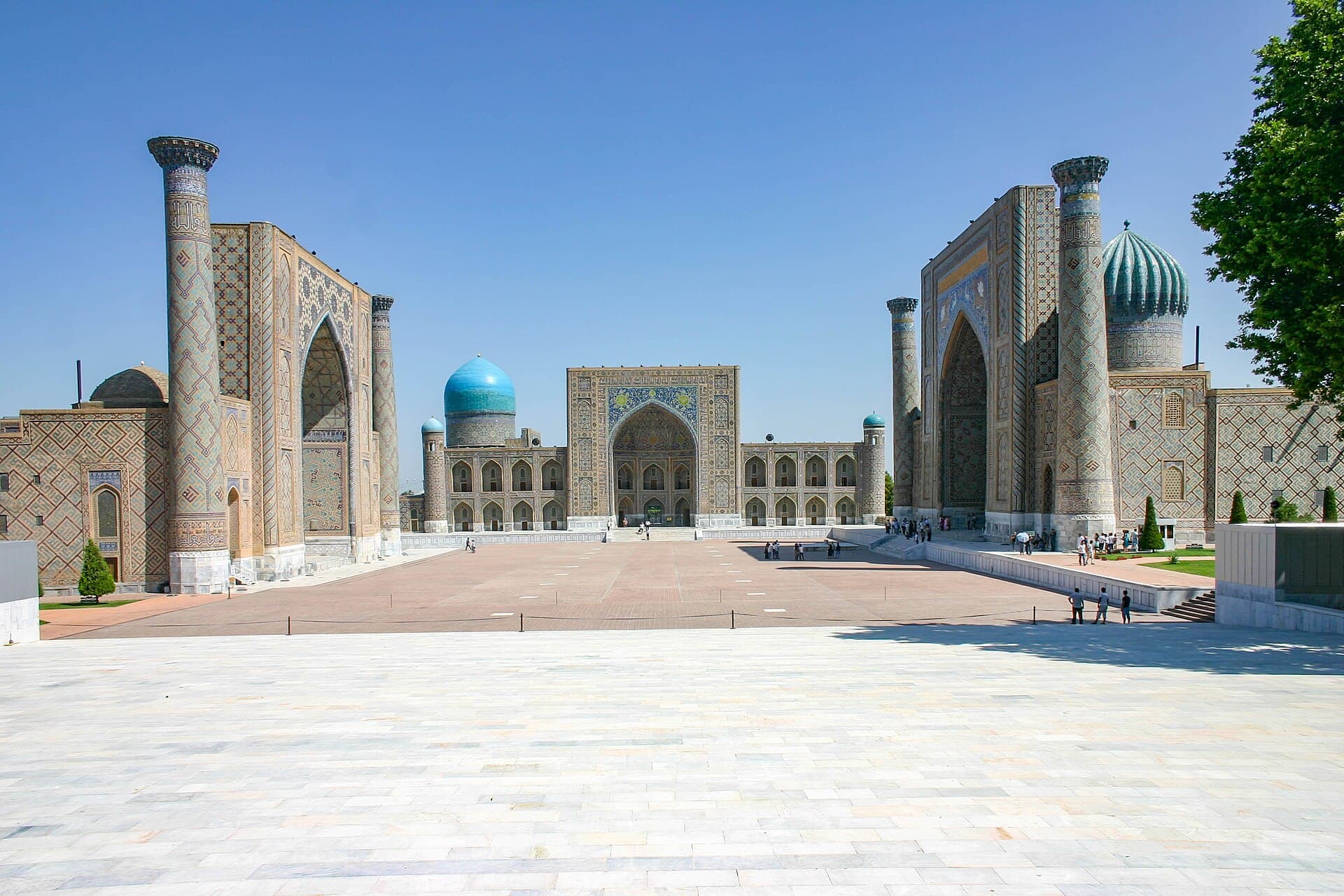 Registan SquareThe historic square at the heart of Samarkand, centre of the Timurid Empire and 25 minutes walk4.7
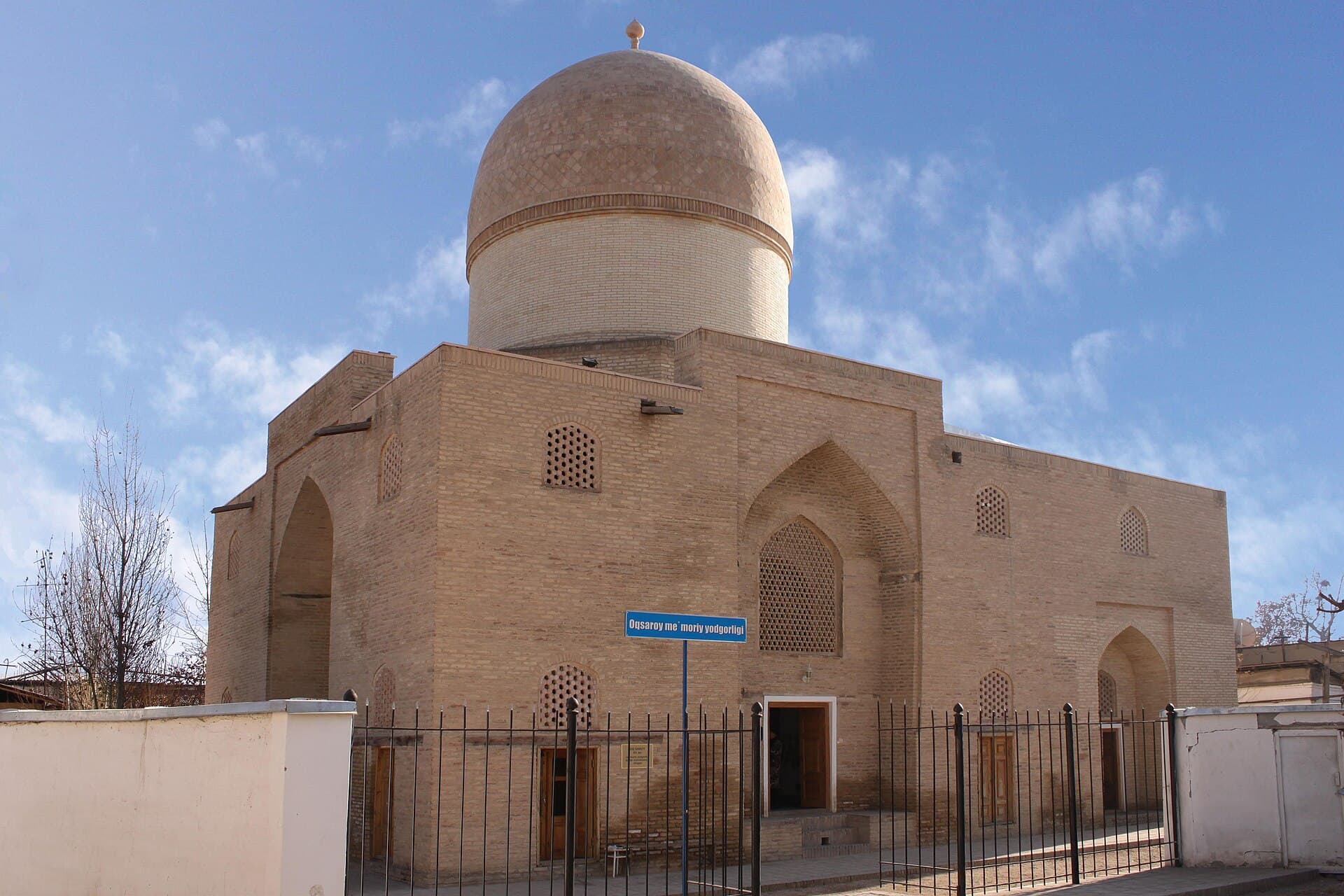 Aksaray Mausoleum (Samarkand)The Aksaray Mausoleum (Oqsaroy in Uzbek, Turkic for White Palace) is a small 15t25 minutes walk
Darun means inside and birun outside: Abdi Birun is a separate shrine outside the old wall in Samarkand's southern outskirts, about 3.7 km away as the crow flies, rebuilt in 1633 by Nadir Divan-Begi. Both are known locally as Khoja Abdi, and tradition links the two men buried there to one family.
It sits over a spring, so its water stays at a steady level in winter and summer, and local people hold it to be healing. It was first dug in the 15th century and took its octagonal shape in the early 20th century.