
Sherdor's tigers
On the façade.
Nikolai Bulykin — CC BY-SA 4.0 · Rudolph.A.Furtado — CC0 · BeshevI — CC BY-SA 4.0 · Hasan Tohirov — CC BY-SA 4.0 · AIDEPCUL — CC BY 4.0 · Hasan Tohirov — CC BY-SA 4.0 · Lasterna — CC0 · Kamol Azzam — CC BY-SA 4.0
The historic square at the heart of Samarkand, centre of the Timurid Empire and later the city's commercial, educational and ceremonial core. Three madrasas frame it, among the finest achievements of Islamic architecture in Central Asia, with soaring iwans, turquoise domes and intricate mosaic tilework. The oldest is the Ulugh Beg Madrasa (1417-1420) on the west side, a centre of learning under Timur's grandson. Facing it stands the Sherdor Madrasa (1619-1636), «the lion-bearing», whose façade carries striking mosaics of two tigers with a rising sun on their backs. Between them is the Tilla-Kori Madrasa (1646-1660), «the gilded», which served as the city's grand mosque as well as a college, its mosque interior glittering with gold. People once gathered here to hear royal proclamations, heralded by blasts on huge copper horns. Today visitors walk into the madrasas' courtyards and galleries, where the old student cells now hold craft and souvenir shops. Tickets are about 100,000 som for foreign visitors, per visitor guides. The square is loveliest at sunset and in the evening when the façades are lit, and can be seen from outside for free. Spring and autumn are the best seasons; summer is very hot.
On the façade.
In gold.
On all three.
Centre of old Samarkand
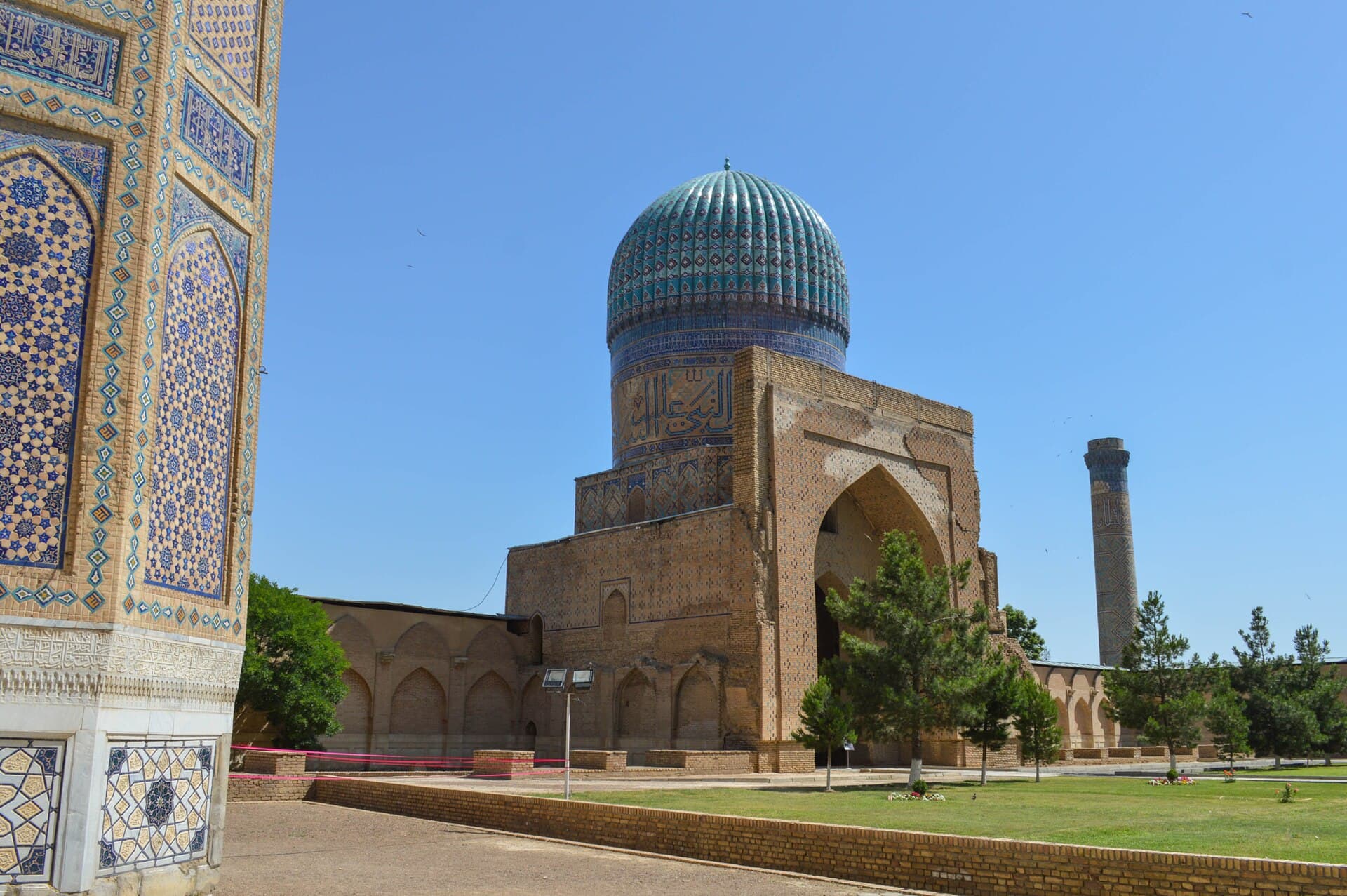 Bibi-Khanym MosqueOne of Samarkand's most important monuments and, in the 15th century, one of the10 minutes walk4.7
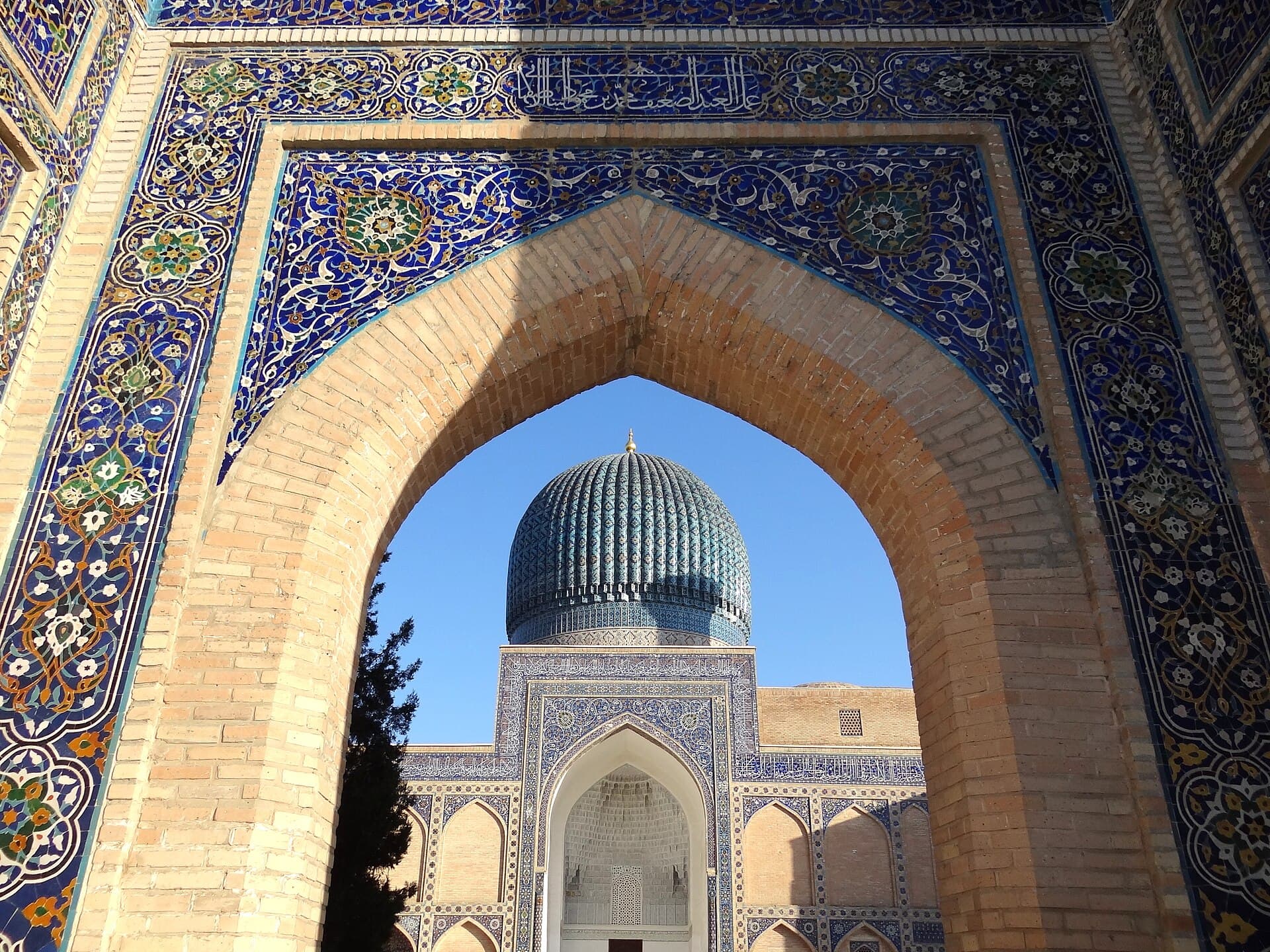 Gur-e Amir, Timur's MausoleumThe mausoleum of the Turco-Mongol conqueror Timur (Tamerlane) in Samarkand, whos11 minutes walk4.8
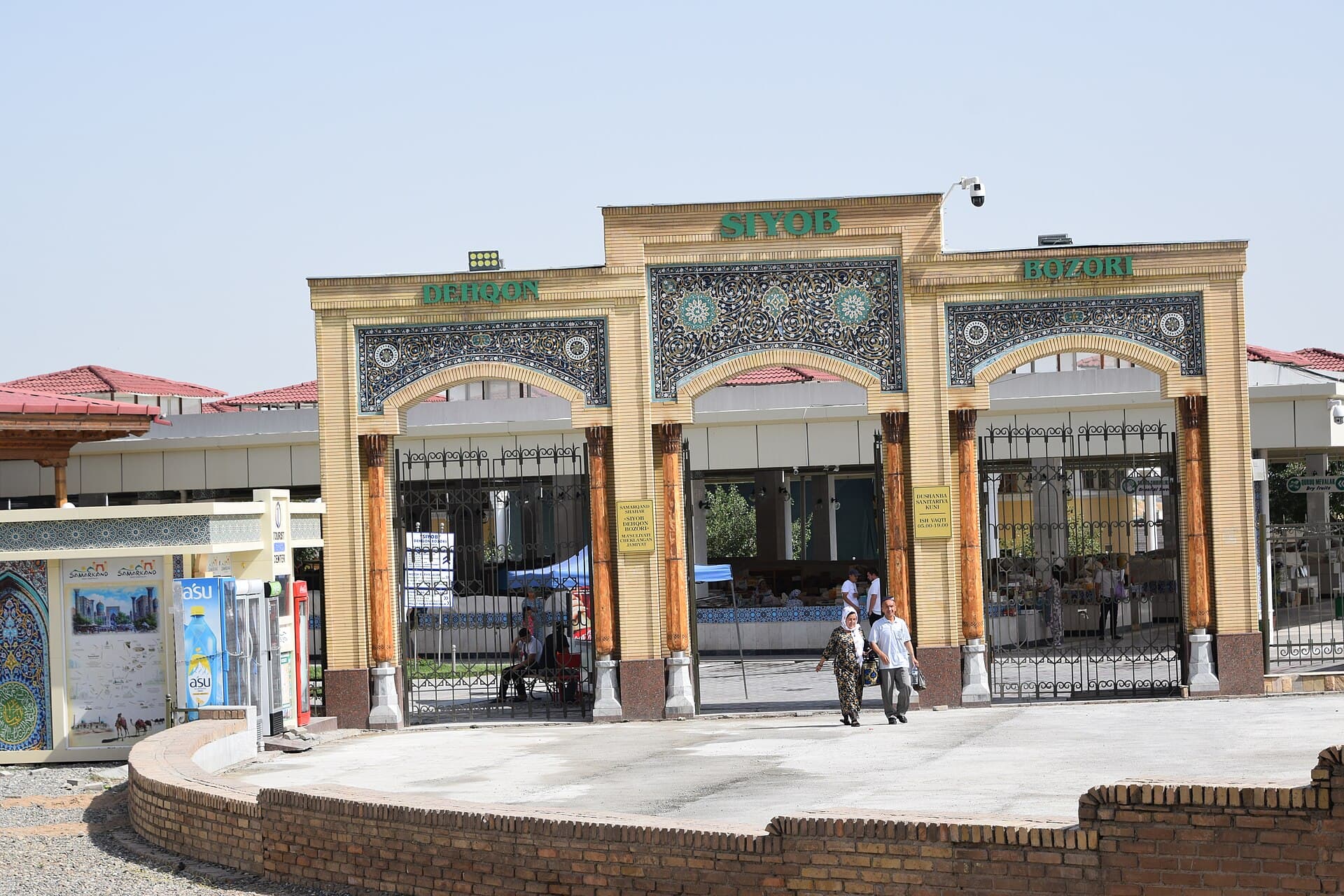 Siyob Bazaar, SamarkandSamarkand's largest bazaar, spreading over more than seven hectares in the old c11 minutes walk4.6
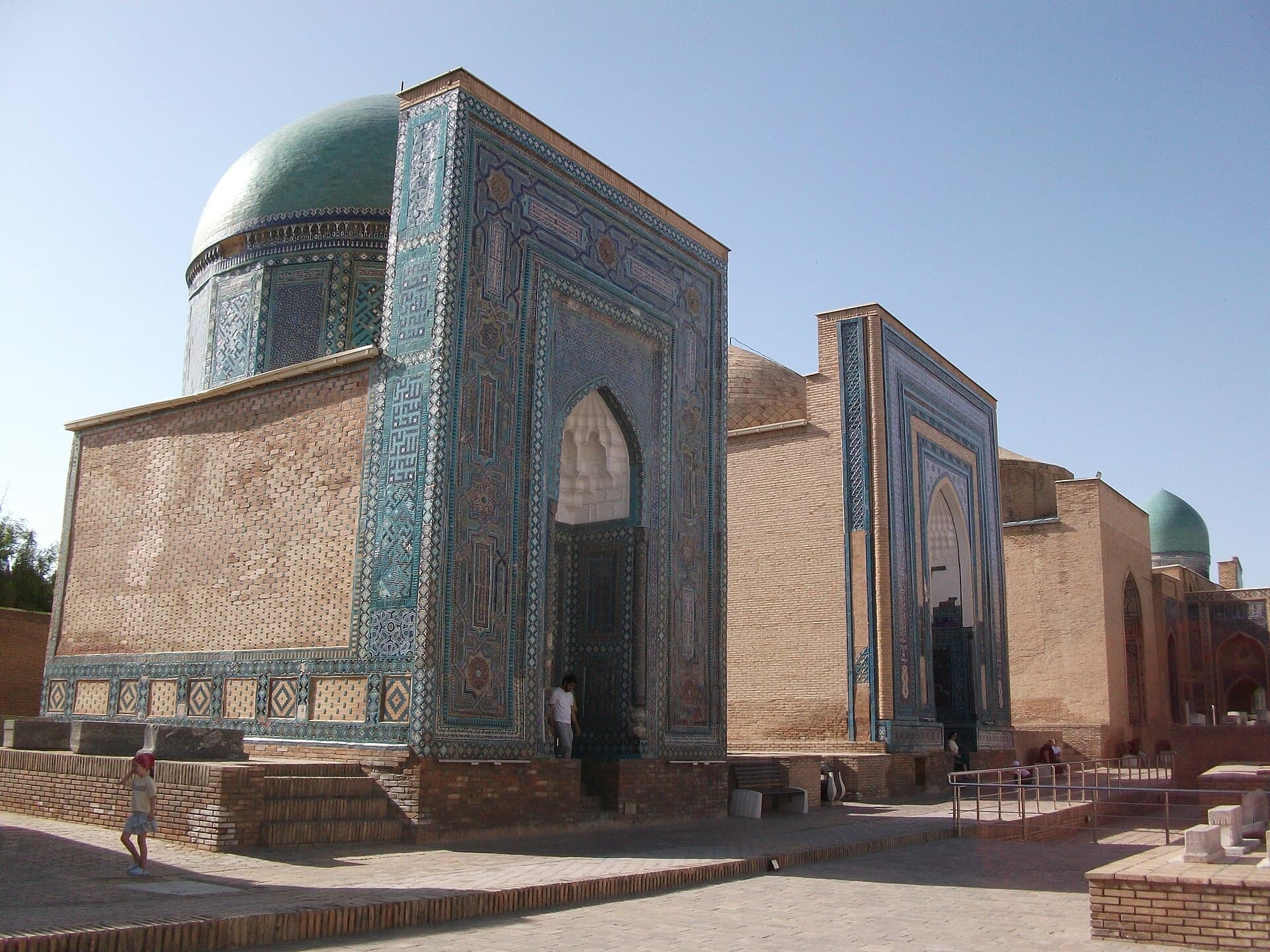 Shah-i-Zinda necropolisA complex of mausoleums and religious buildings in northeast Samarkand whose Per17 minutes walk4.7
About 100,000 som for foreign visitors, per visitor guides, covering the three madrasas; the square can be seen from outside for free.