
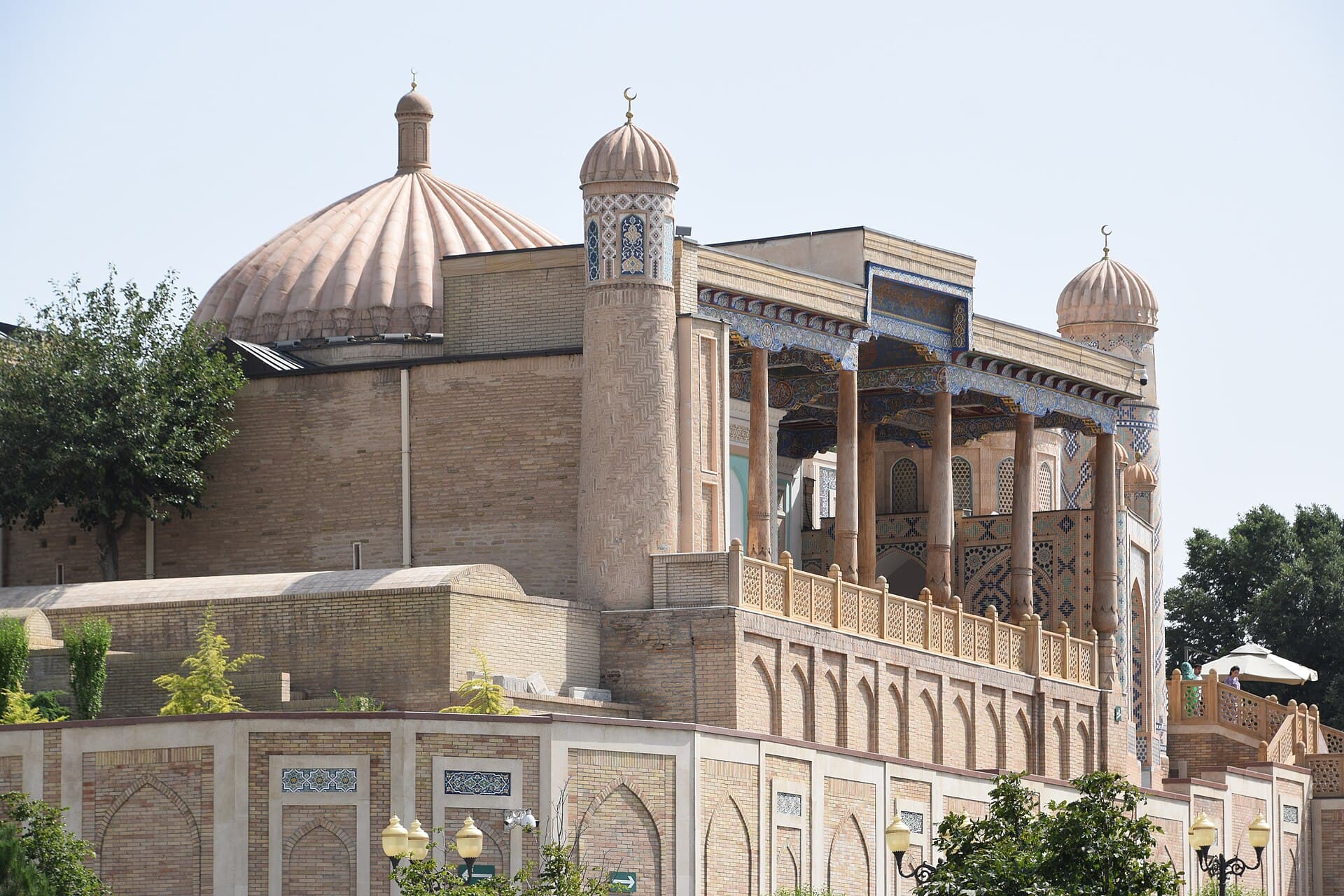
Al-Maturidi's mausoleum
Rebuilt over his grave.
Original uploader was Oltantr (talk) — Public domain · Hasan Tohirov — CC BY-SA 4.0 · Original uploader was Oltantr (talk) — Public domain · Hasan Tohirov — CC BY-SA 4.0 · Hasan Tohirov — CC BY-SA 4.0
This memorial complex in Samarkand's old Chokardiza cemetery stands over the grave identified as that of Abu Mansur al-Maturidi, the Hanafi jurist and theologian who died in 333 AH (944 CE) and gave his name to the Maturidi school, one of the main schools of Sunni theology. In 2025–2026 it was rebuilt and enlarged to 10.2 hectares. Born in Maturid near Samarkand, he wrote Kitab al-Tawhid and the Quran commentary Ta'wilat Ahl al-Sunna. Chokardiza became the resting place of the city's scholars; the Qandiyya, a medieval book on Samarkand, ranked it after only al-Mu'alla in Mecca and al-Baqi' in Medina. In the Soviet era his tomb was destroyed and houses covered parts of the cemetery. A memorial opened over the rediscovered grave in November 2000; his 1155th birth anniversary, marked in 2025, brought the new works. A new portal opens onto newly planted gardens and al-Maturidi's fully reconstructed mausoleum. The mausoleum of Burhan al-Din al-Marghinani (died 1197), author of the Hanafi law manual al-Hidaya, was also rebuilt, on a site archaeologists located during the works. The complex now includes a new mosque, a research centre, a library and a museum on his school and the cemetery's history. It lies in the old city, a 10–15 minute walk east of the Registan (about 900 m as the crow flies), and about 850 m south of Shah-i-Zinda and south-east of Bibi-Khanym. It is a shrine: dress modestly, covering shoulders and knees; women cover their hair; remove shoes where required; avoid prayer times, especially Friday midday prayer. Allow 30 to 90 minutes.
Rebuilt over his grave.
For the author of al-Hidaya.
Resting place of medieval Samarkand's scholars.
Chokardiza cemetery, old city, east of the Registan, Samarkand
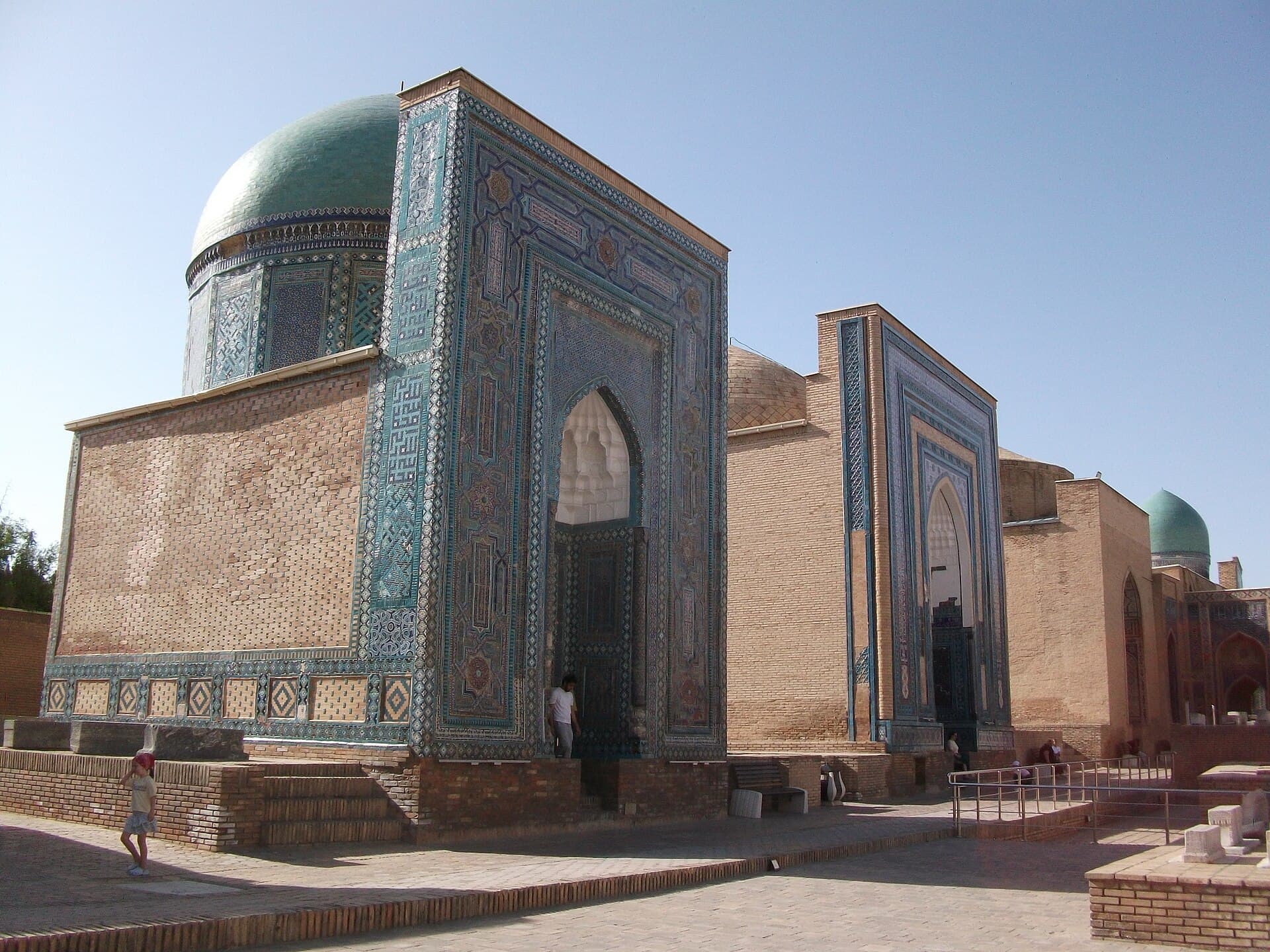 Shah-i-Zinda necropolisA complex of mausoleums and religious buildings in northeast Samarkand whose Per11 minutes walk4.7
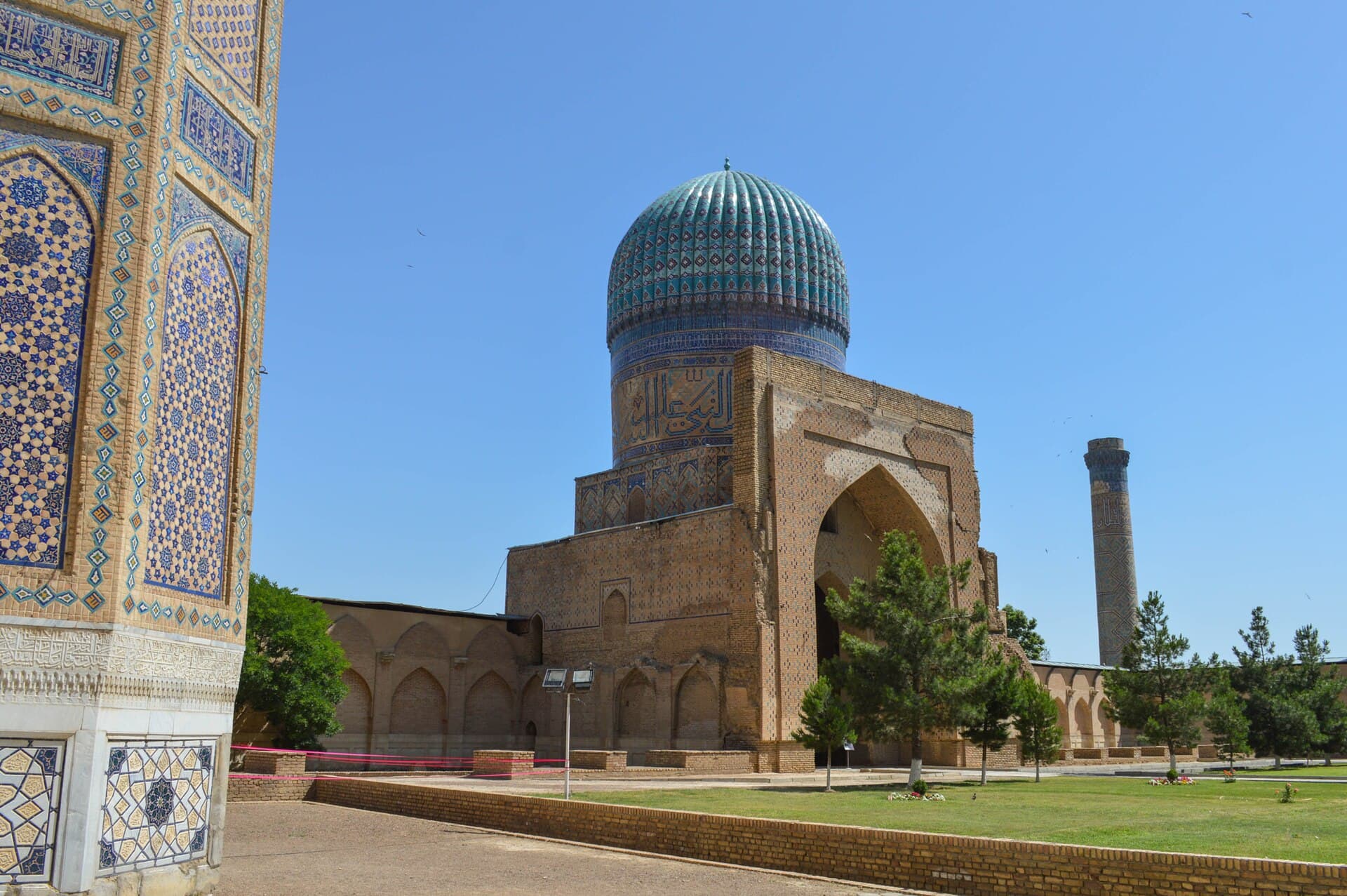 Bibi-Khanym MosqueOne of Samarkand's most important monuments and, in the 15th century, one of the11 minutes walk4.7
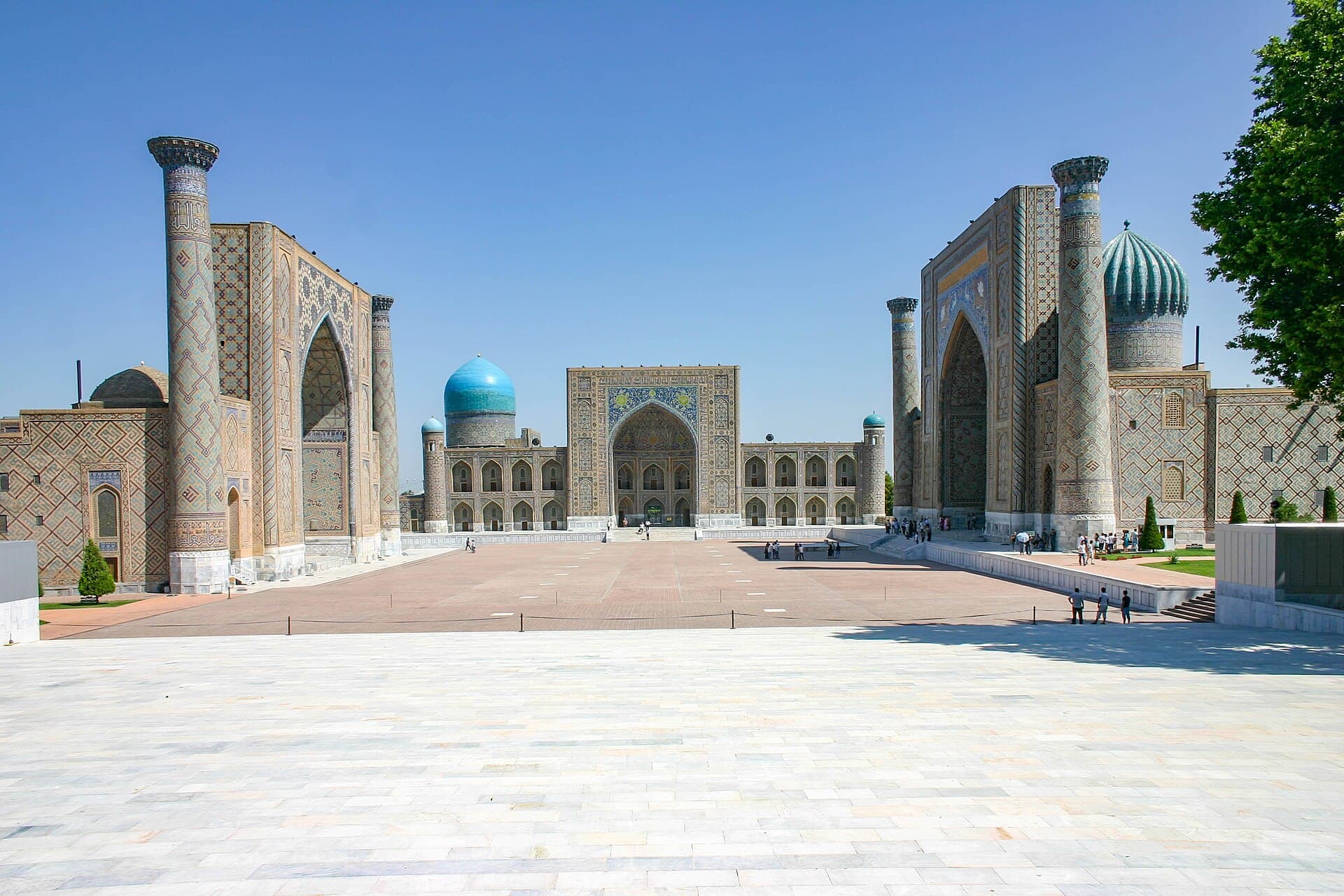 Registan SquareThe historic square at the heart of Samarkand, centre of the Timurid Empire and 11 minutes walk4.7
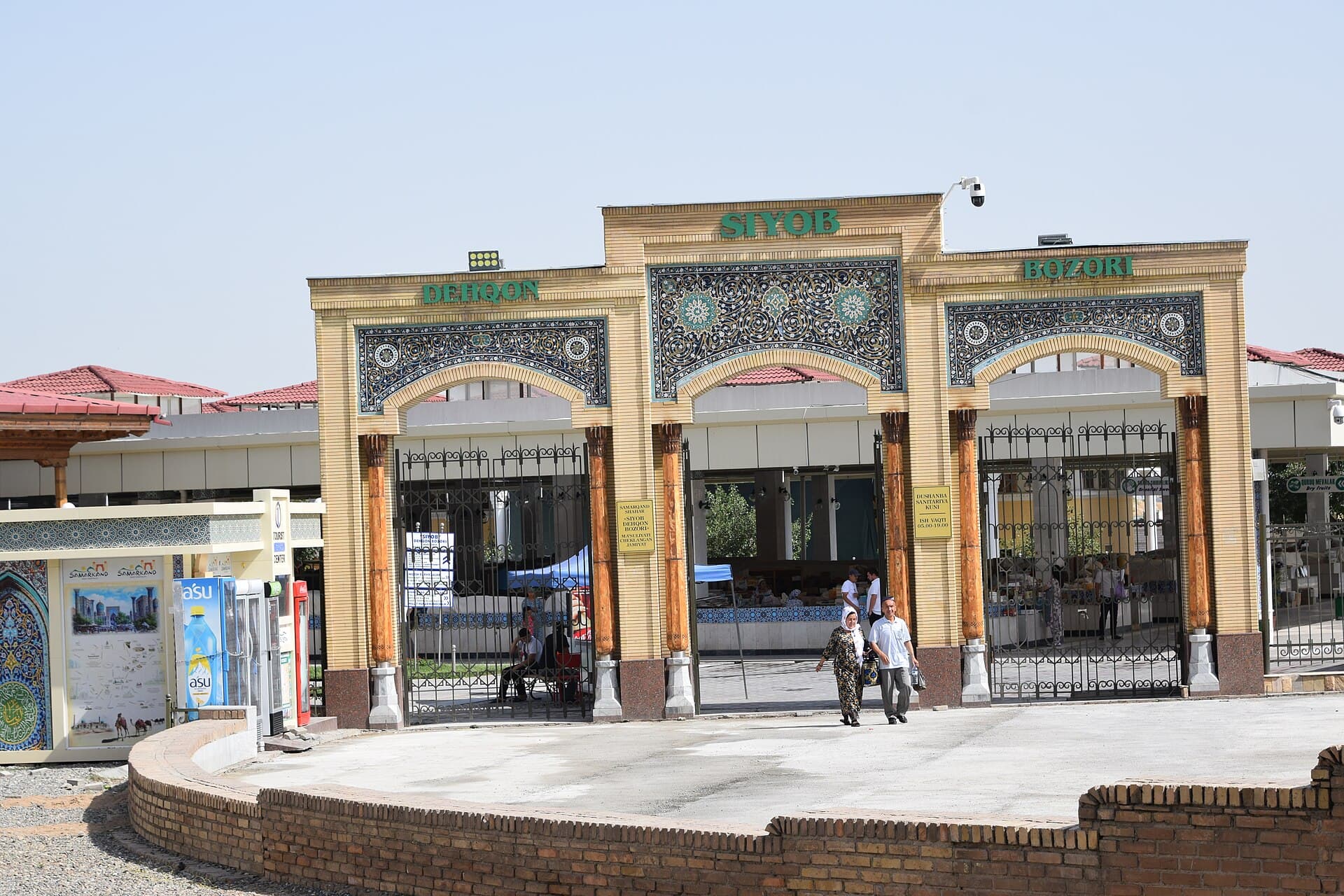 Siyob Bazaar, SamarkandSamarkand's largest bazaar, spreading over more than seven hectares in the old c12 minutes walk4.6
 Hazrat Khizr MosqueA hilltop mosque facing the Shah-i-Zinda complex, named after the Prophet Khidr 13 minutes walk4.6
One of the main schools of Sunni theology alongside the Ash'ari school, it gives reason an important role in matters of belief. It became dominant in Central Asia and later the favoured school of the Ottoman and Mughal empires.
It is usually read as the warriors' fortress, from chokar (warrior) and diza (fortress), after an early medieval stronghold that stood here before the cemetery.