The huge portal
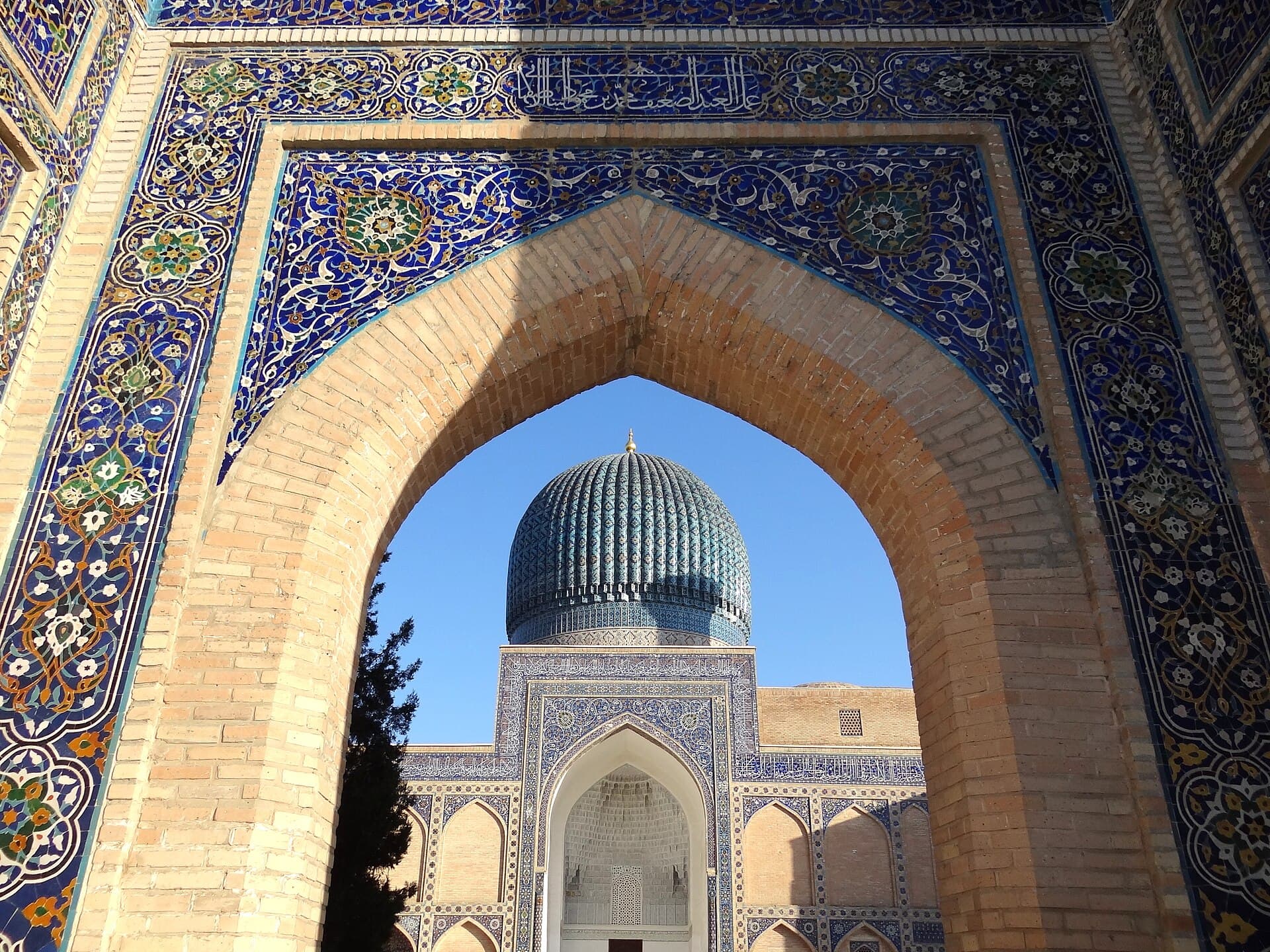
In brick.
Jamshid Nurkulov — CC BY-SA 4.0 · ShHamrayev — CC BY-SA 4.0 · Nikolay Trebukchin — CC BY-SA 4.0 · Bobyrr — CC BY-SA 4.0 · Jamshid Nurkulov — CC BY-SA 4.0 · Jamshid Nurkulov — CC BY-SA 4.0 · Jamshid Nurkulov — CC BY-SA 4.0 · Davide Mauro — CC BY-SA 4.0
The ruins of an imposing Timurid mausoleum in Samarkand, built in the reign of Sultan Abu Sa'id (1451-1469). Its endowment deed records that the noblewoman Habiba Sultan, Abu Sa'id's wife, raised the domed building over the grave of her daughter, Princess Khavand Sultan Bika, and excavations in 1940 found several female burials, so it seems to have been a tomb for women of the Timurid house. Its popular name, Ishratkhona, «house of pleasures», comes from a 19th-century Samarkand folk tale about a romantic meeting of Timur, after which he ordered a palace built on the spot; the name stuck from the first drawing of the building in 1869, although it does not match its real purpose. The mausoleum had a tall western portal, a domed gallery on the south, a mosque on the north and vaulted rooms in its corners. Its dome and high drum fell in the 1903 earthquake, leaving the huge portal and brick walls, which still carry traces of tile and carving. It is quiet and little visited, usually seen from outside without a ticket, and is sometimes wrapped in restoration scaffolding. A good stop for lovers of ruins and Timurid architecture away from the crowds.
In brick.
On the walls.
Away from crowds.
Southeast of old Samarkand, near the Abdi Darun shrine
The name comes from a 19th-century folk tale about Timur; documents and excavations show it was a 15th-century tomb for women of the Timurid family.