
The craft workshops
Woodcarvers, engravers and miniaturists at work.
Panpanchik — CC BY-SA 4.0 · NatalieChunina — CC BY-SA 4.0 · Jamshid Nurkulov — CC BY-SA 4.0 · Jamshid Nurkulov — CC BY-SA 4.0 · Jamshid Nurkulov — CC BY-SA 4.0
A 19th-century madrasa in central Tashkent, built around 1850 by Abulkasim Eshon, a revered sheikh of the Naqshbandi Sufi order; eshon is Central Asia's title for a Sufi master. A state-protected monument, it is now a centre of applied arts, with craftsmen at work in the old student cells. It rose beside an older Sufi lodge, the Muyi Muborak khanqah, whose Persian name means blessed hair: tradition says it kept a hair of the Prophet Muhammad. The madrasa had one storey until a second was finished in 1864. Its founder is remembered as a peacemaker in the cholera riot of 1892 and died in that year's epidemic; legend says he took the disease upon himself. In Soviet times families lived in its cells until 1974, then a toy factory moved in; restoration began in the late 1970s. A tall portal, with three pointed niches on either side and corner turrets under small domes, opens through carved wooden doors onto a tree-shaded courtyard ringed by two storeys of latticed cells. Woodcarvers, metal engravers, ceramicists and miniature painters work in them and sell lacquered papier-mâché boxes, painted ceramics, embroidery and carvings, and the courtyard hosts exhibitions and festivals. It stands at the northern edge of the Alisher Navoi National Park, between the Palace of Friendship of Peoples and the parliament building; an hour is ample. Magic City lies about 500 m away, the Museum of Applied Arts 1.7 km east, and the Kukeldash Madrasa and Chorsu Bazaar about 2 km north, all as the crow flies.
Woodcarvers, engravers and miniaturists at work.
Pointed niches and domed corner turrets.
Shade trees, two storeys of cells, exhibitions.
Furqat Street, beside the Palace of Friendship of Peoples, Tashkent
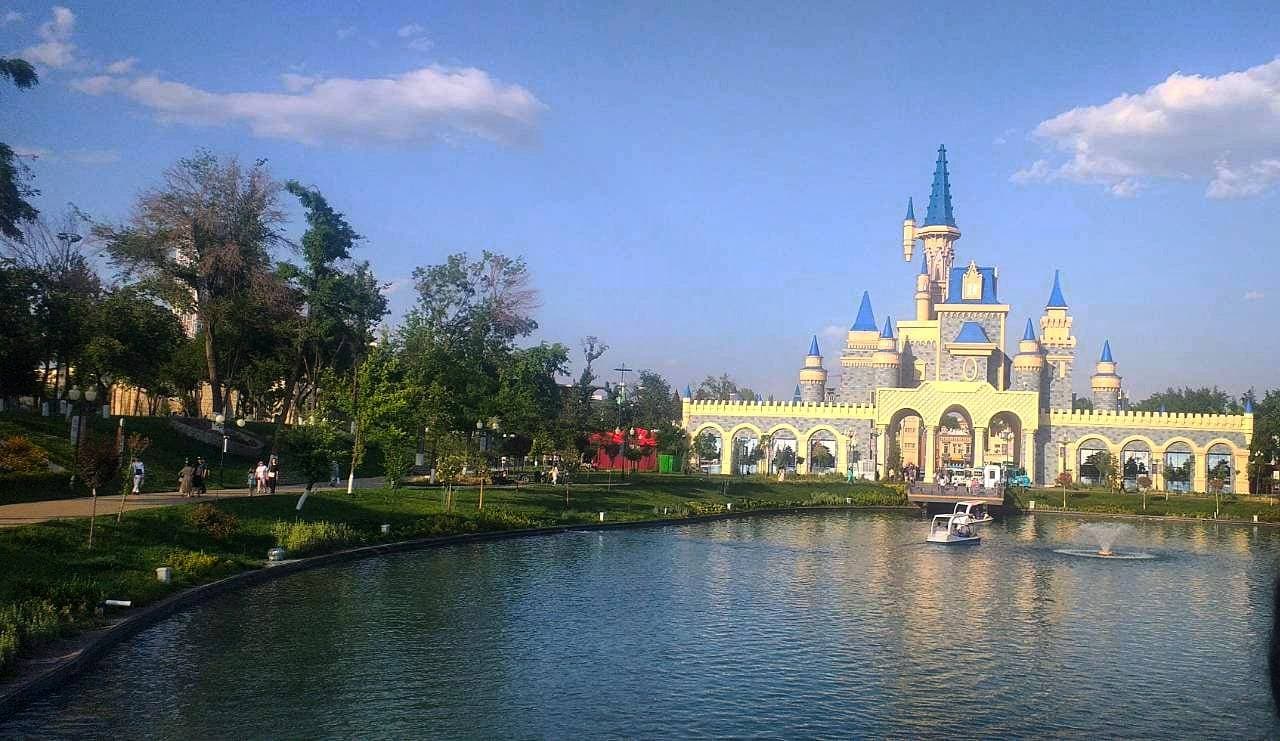 Magic City ParkAn entertainment park in Tashkent set around a small lake with a colourful fairy6 minutes walk4.5
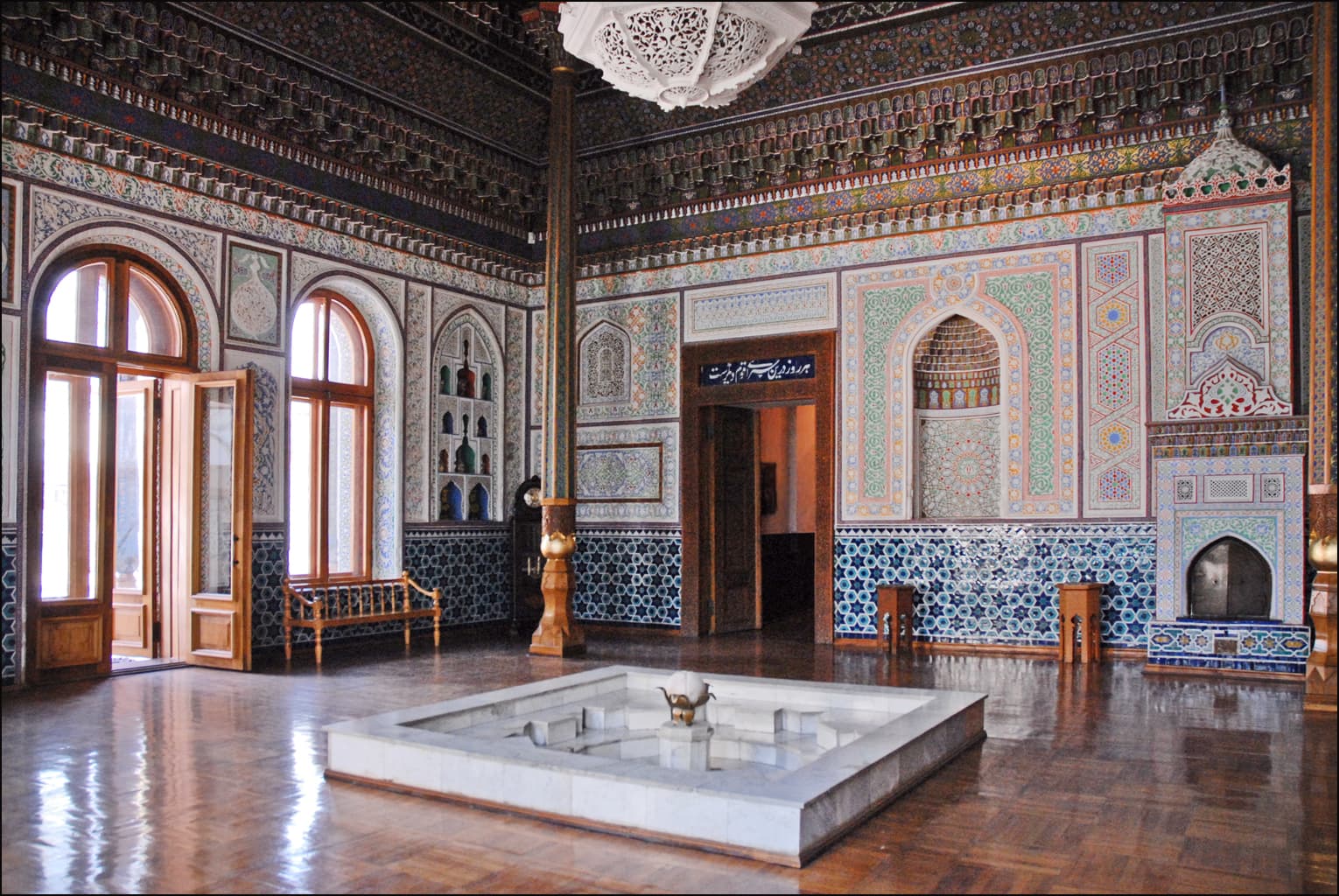 Museum of Applied Arts, TashkentUzbekistan's State Museum of Applied Arts occupies a remarkable late 19th-centur22 minutes walk
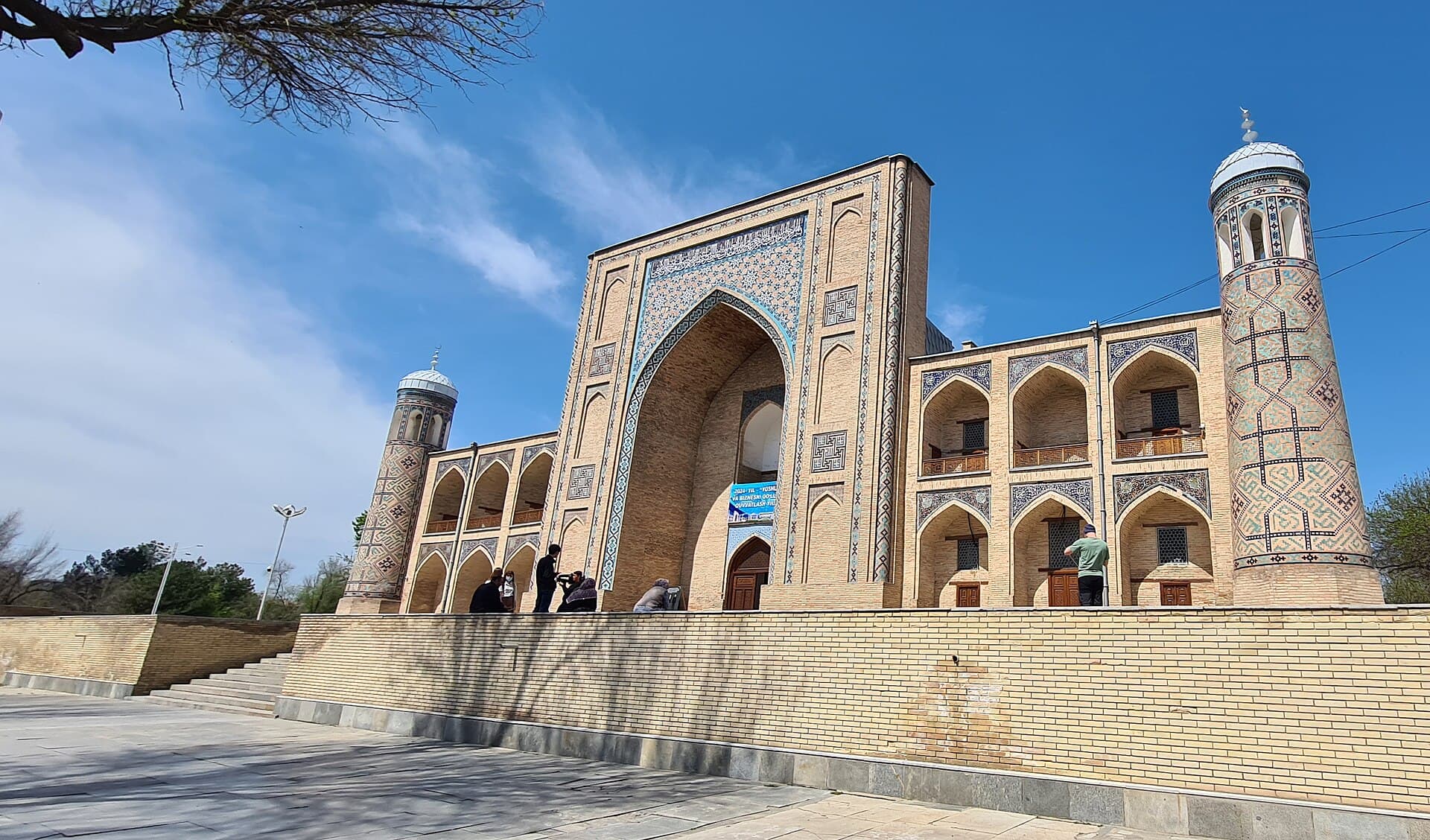 Kukeldash Madrasa, TashkentOne of Tashkent's oldest surviving madrasas, built around 1570 by the Shaybanid 24 minutes walk
Yes, the Uzbek novelist Abdulla Qodiriy, author of Bygone Days, studied Arabic and Persian here in the 1910s.
Milliy Bog' and Xalqlar Do'stligi metro stations are each a 7-10 minute walk away, and taxis can drop you at the car park beside the madrasa, entered from Bunyodkor Avenue.