
The layered wall
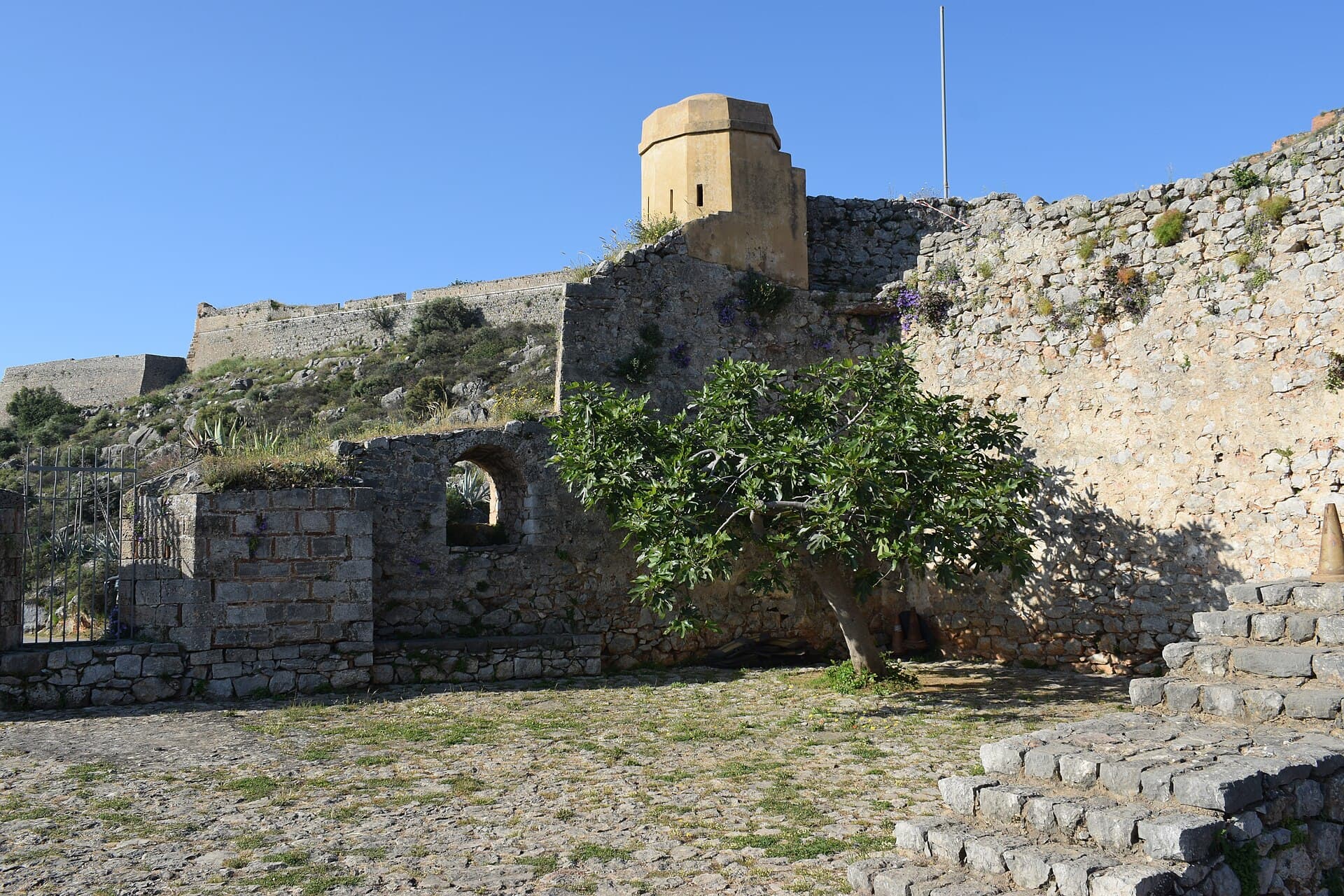
Five eras in one structure, readable by eye from bottom to top.
Andreas Tille This image is the original work of Andreas Tille. More images can be found at his image gallery, with this image being hosted at http://people.debian.org/~tille/nafplion/02_nafplion/cast — CC BY-SA 3.0 · George E. Koronaios — CC BY-SA 4.0 · Stolbovsky — CC BY-SA 3.0 · Stolbovsky — CC BY-SA 3.0
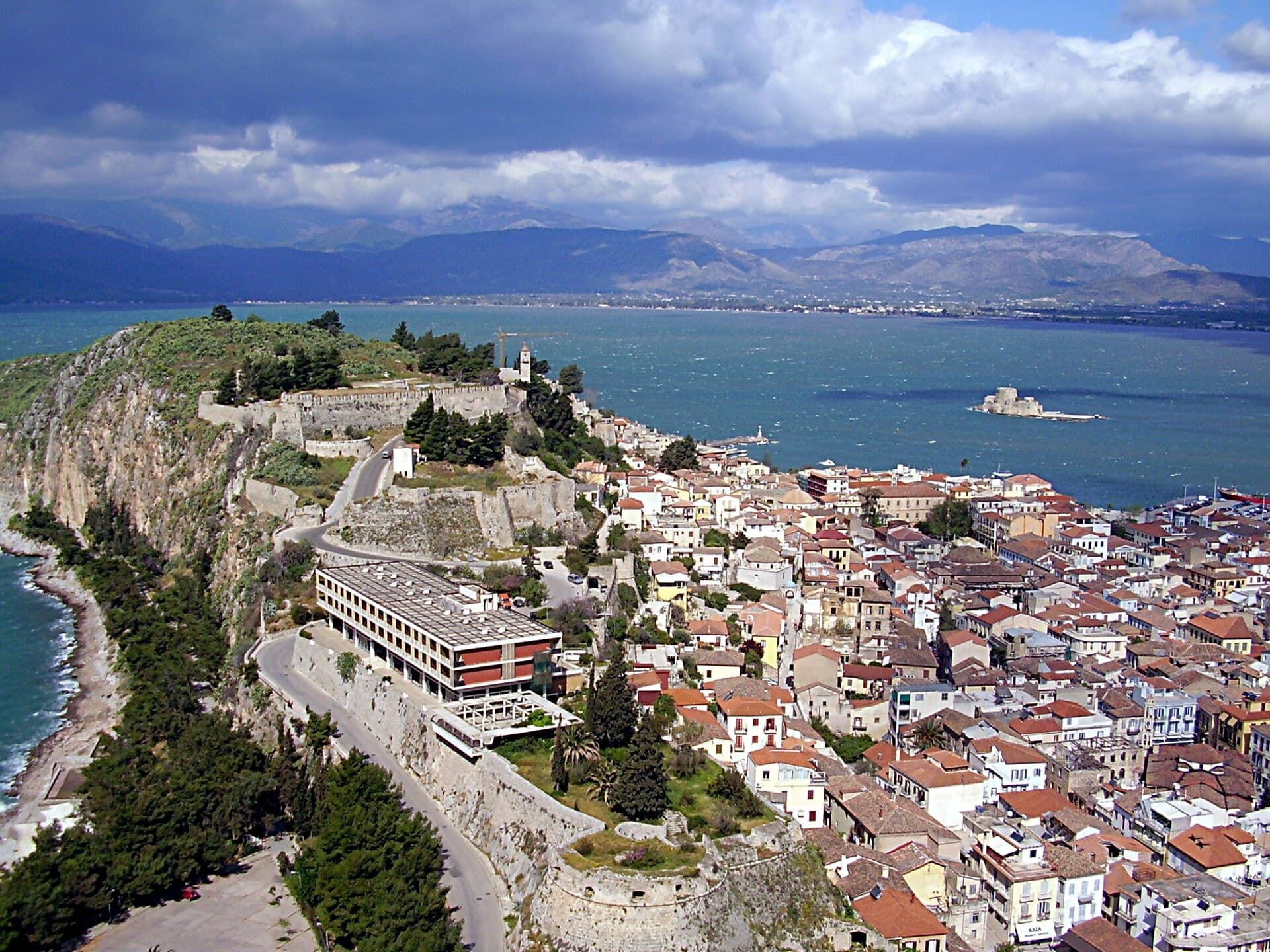
**The oldest part of Nafplio — four civilisations stacked in a single wall** — on the rocky headland that separates the old town from the sea. The whole town was up here before it came down to the flat: **ancient** walls at the base, then **Byzantine**, then **Frankish** from the era of the western knights, then **Venetian** with its massive curtain, then **Ottoman**. In places you can read the layers in **one wall**: large irregular blocks at the bottom, ordered masonry above them, and cut Venetian stone at the top. In the 20th century it served as a **political prison** before being abandoned. ✅ It is **free and always open**, reached on foot from the town or by a lift. ⚠ But be honest about the expectation: **this is not a curated site**. A large part of it is occupied by a **hotel**, the remains are scattered and almost entirely unexplained, and there is no route and no signage. ✅ What earns it is **sunset**: the best free place in Nafplio to watch one.
Five eras in one structure, readable by eye from bottom to top.
The best free spot in Nafplio to watch the sun over the gulf.
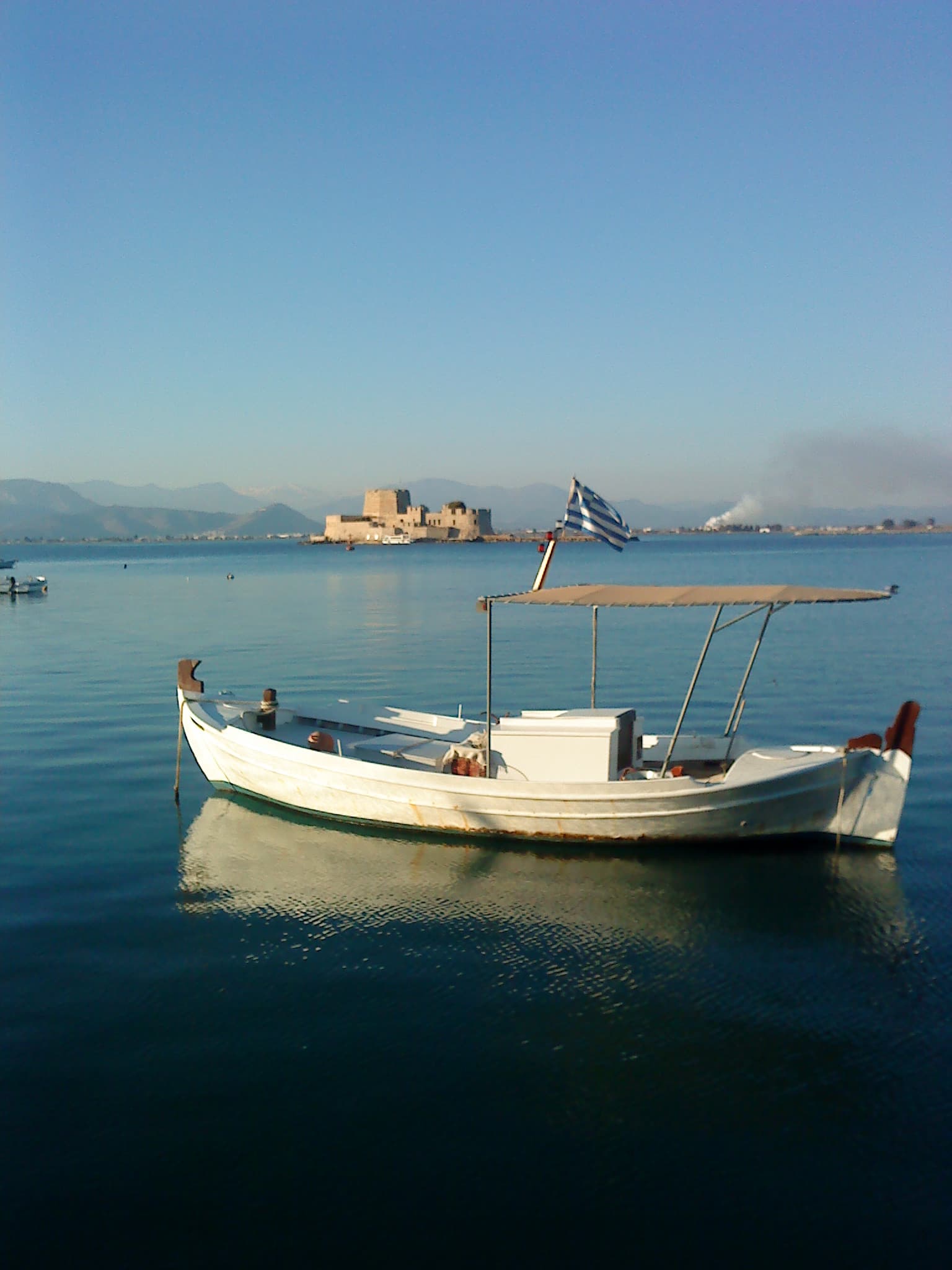
Tiled roofs, the square and Bourtzi directly beneath you.
Acronauplia, 21100 Nafplio, Greece
 Nafplio Old Town**The first capital of modern Greece, and the handsomest town in the Peloponnese5 minutes walk4.9
 Palamidi Fortress**A Venetian fortress on a rock summit 216 m above the town** — and the thing it9 minutes walk4.6
 Bourtzi Fortress**A small fortress standing alone on a rocky islet in the harbour** — the symbol10 minutes walk4.6
**By looking at the size of the stones and how they were cut — a skill you learn in two minutes and can use across Greece.** ✅ **Oldest usually at the bottom**: **massive irregular blocks** laid without mortar, their corners trimmed to interlock — this is "Cyclopean" or ancient masonry, and you see it again at Tiryns and Mycenae. ✅ **Byzantine**: smaller, more regular stones, often with **courses of red brick** running through them — the brick is a very reliable marker. ✅ **Frankish and Venetian**: stone **cut square** in straight courses with visible mortar, and sometimes the **Lion of St Mark** carved on it. ✅ **Ottoman**: mostly repairs and additions, pointed or lobed arches, and modified gun positions. ⚠ **The general rule**: the higher you go in a wall the later it is — because each ruler built **on top of** what he found rather than knocking it down.
**Yes, but go with the right expectation: it is a viewpoint and a walk, not a site visit.** ⚠ **What you will not find**: panels, a marked route, a guide, facilities, or any arrangement telling you what you are looking at. A large part of the headland is **occupied by a hotel** and closed to you, and the remains are scattered among trees and rock. Anyone going in search of "Acronauplia castle" in the usual sense will wonder where it is. ✅ **What you will find**: it is **free**, **always open** so no hours constrain you, there is **a lift** that spares you the climb, and it has **the best sunset in Nafplio** — the old town below you with its tiled roofs, Bourtzi in the water, Palamidi above, and the sun going down over the gulf. ✅ **The ideal arrangement**: Palamidi in the morning (the content), Acronauplia at sunset (the view) — they do not compete, they complete each other.