
The crossing
Five minutes by boat, with the whole of Nafplio seen from the water.
Varvarak2017 — CC BY-SA 4.0 · Anastasius Moumtzoglou — CC BY-SA 4.0 · Elgaard — CC BY-SA 4.0 · Giles Laurent — CC BY-SA 4.0
**A small fortress standing alone on a rocky islet in the harbour** — the symbol of Nafplio and the thing most photographed here. The Venetians built it in **1473**, not to live in but to close the entrance: a **great chain** was drawn from the fortress to the shore to keep any hostile ship out of the port. Greeks sometimes call it **Kastelli** for that reason. Its later history is odd: after independence it briefly housed **the Greek government**, and then — the part that surprises visitors — **the state executioner lived here** with his family in the 19th century, because he was not welcome in the town. In the 20th century it spent some years as **a hotel**. ✅ And the best thing about it is not the interior but **the crossing**: a small boat takes five minutes from the quay, and you see the whole of Nafplio from the water. ⚠ The inside is **very small**: a courtyard, stairs and a roof terrace — half an hour is enough.
Five minutes by boat, with the whole of Nafplio seen from the water.
A full circle over the town, Palamidi and the gulf from mid-harbour.
Walls and towers of 1473 on a rock the size of the fortress.
Bourtzi, 21100 Nafplio, Greece
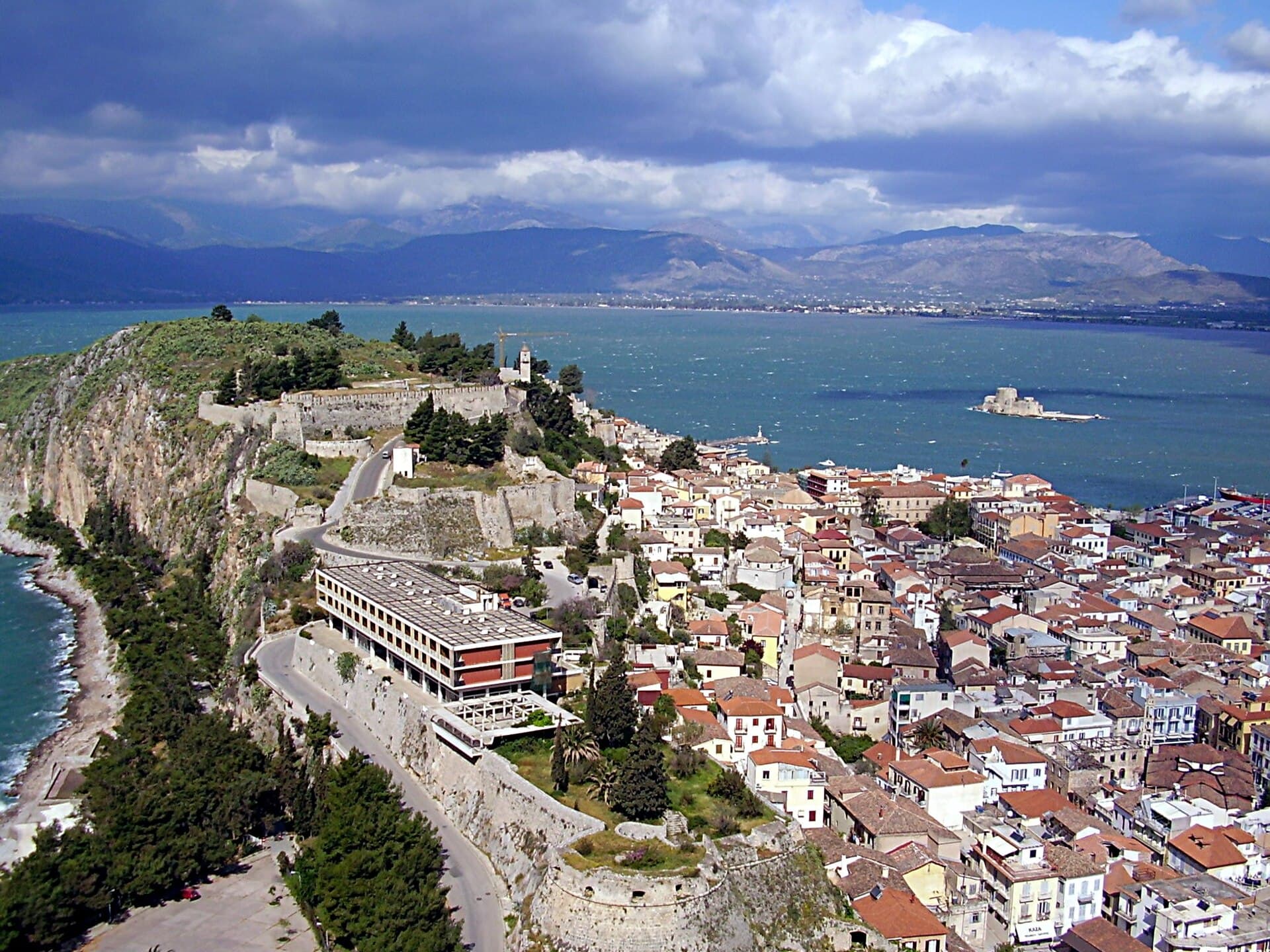 Acronauplia**The oldest part of Nafplio — four civilisations stacked in a single wall** — o10 minutes walk4.6
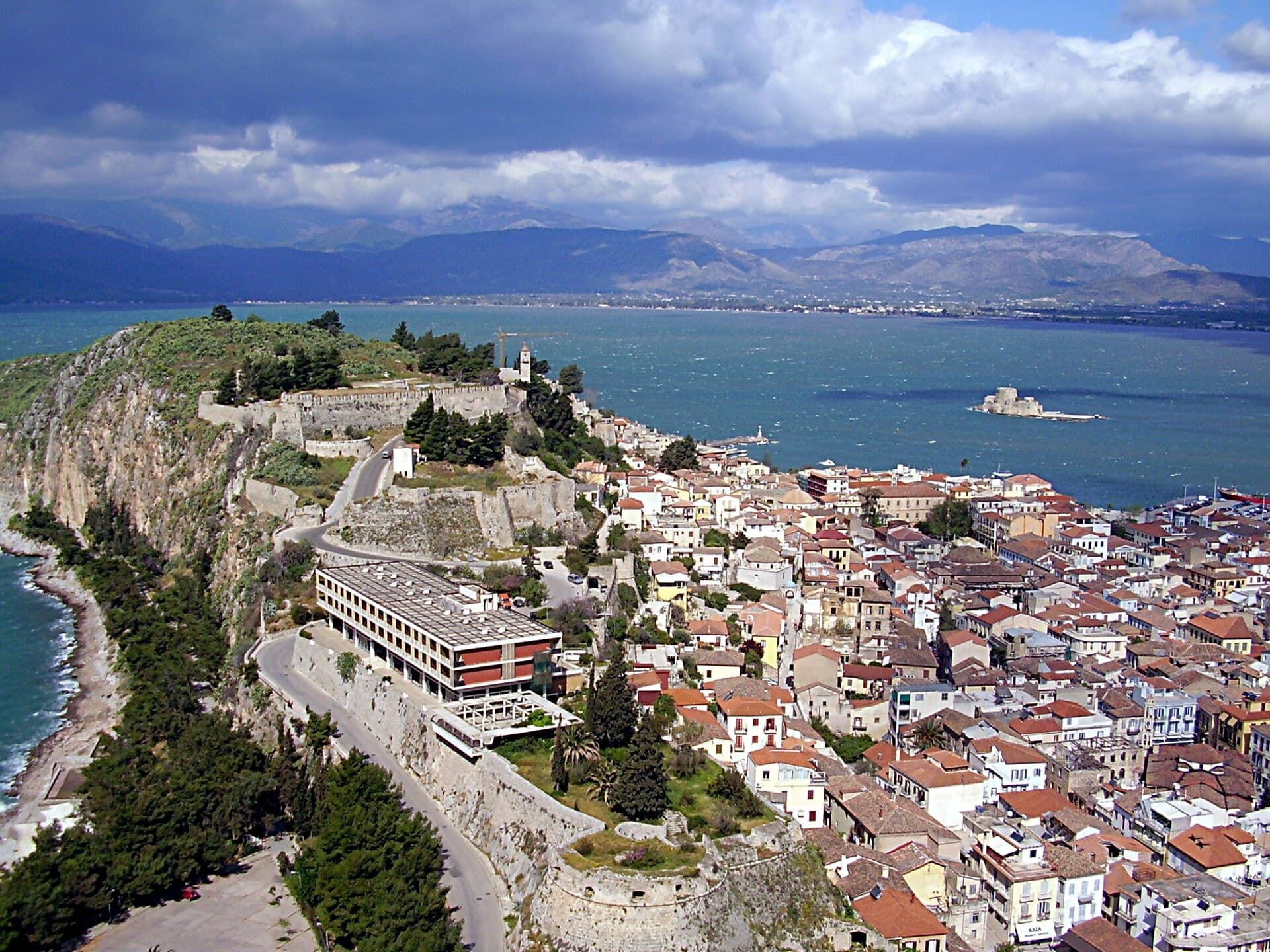 Nafplio Old Town**The first capital of modern Greece, and the handsomest town in the Peloponnese12 minutes walk4.9
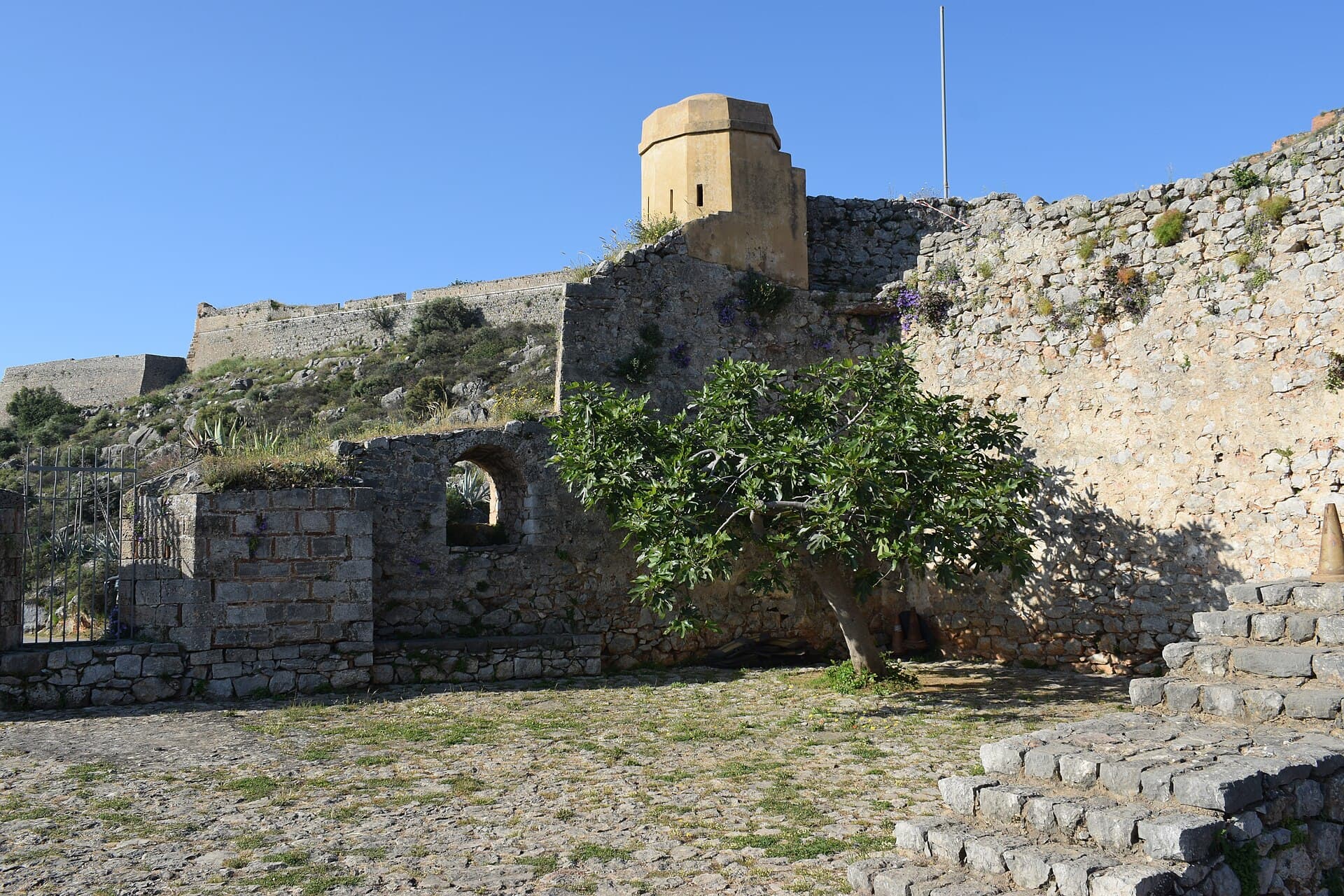 Palamidi Fortress**A Venetian fortress on a rock summit 216 m above the town** — and the thing it19 minutes walk4.6
**Cross — but understand you are paying for the crossing, not the fortress.** ⚠ **The interior is modest**: a small courtyard, stairs and a roof, with no displays and no explanation, done in twenty minutes; anyone who crosses expecting "a castle" will come back unconvinced. ✅ **What genuinely earns the €5**: **the view from the water**. Nafplio is built on a spit between two fortresses, and you simply cannot see that formation from land — from the boat you get the whole old town, Palamidi above it and Acronauplia between them in a single frame, and that is the best photograph you will take here. ✅ **A timing tip**: cross **an hour before sunset** — the light is gold on the stone, and you come back as the town lights up. ⚠ **And ask about the return boat before you get on**, because the schedule shifts with season and demand.
**A real episode told in Nafplio, and it says more about the society than about the fortress.** ✅ **The background**: in the 19th century the modern Greek state had an **official executioner** who carried out death sentences. His trade made him **absolutely a social outcast**: nobody would rent him a house, sit with him, or marry into his family. ✅ **The state's solution**: it housed him **in Bourtzi** — on an island in the water, isolated from the town that refused him but near enough for the work. So he lived there with his family. ⚠ **Why is the story worth telling?** Because it inverts the meaning of the place: you look at Bourtzi and see a romantic postcard — when for decades it was **a functional exile** for a man the town would not have. That kind of social history is rarely explained at the site itself.