
Syntagma Square
A marble-paved square ringed by Venetian and Ottoman buildings.
Andreas Tille This image is the original work of Andreas Tille. More images can be found at his image gallery, with this image being hosted at http://people.debian.org/~tille/nafplion/02_nafplion/cast — CC BY-SA 3.0 · FilipposTrains (compilation, sources to attribute see above; if any of the sources used in the Montage are removed from Wikimedia Commons, or better ones are found, please inform its creator so that t — CC BY-SA 4.0 · Holger Uwe Schmitt — CC BY-SA 4.0 · Holger Uwe Schmitt — CC BY-SA 4.0
**The first capital of modern Greece, and the handsomest town in the Peloponnese** — on a spit of land between two fortresses, its frontages more Italian than Greek. When Greece won independence from the Ottoman empire, **Nafplio was its capital**, from **1823 to 1834**, before the seat moved to Athens. It was here that Greece's first head of state, **Ioannis Kapodistrias**, was assassinated in 1831 at the door of the church of St Spyridon — and the bullet mark is still marked in the stone. Before that it was long held by the **Venetians**, then the Ottomans, then the Venetians again — so the architecture came out mixed: **iron balconies** and neoclassical fronts in ochre and pink, narrow marble-paved lanes climbing in steps, and Ottoman fountains surviving on corners. At its heart is marble-paved **Syntagma Square**, ringed by Venetian and Ottoman buildings, from which all the pedestrian lanes run. ✅ It is **a walking town above all**: the centre is free of cars, and its size is covered on foot.
A marble-paved square ringed by Venetian and Ottoman buildings.
Ochre and pink fronts and iron balconies above stone steps.
A promenade under Acronauplia looking out to Bourtzi in the water.
Old Town, 21100 Nafplio, Greece
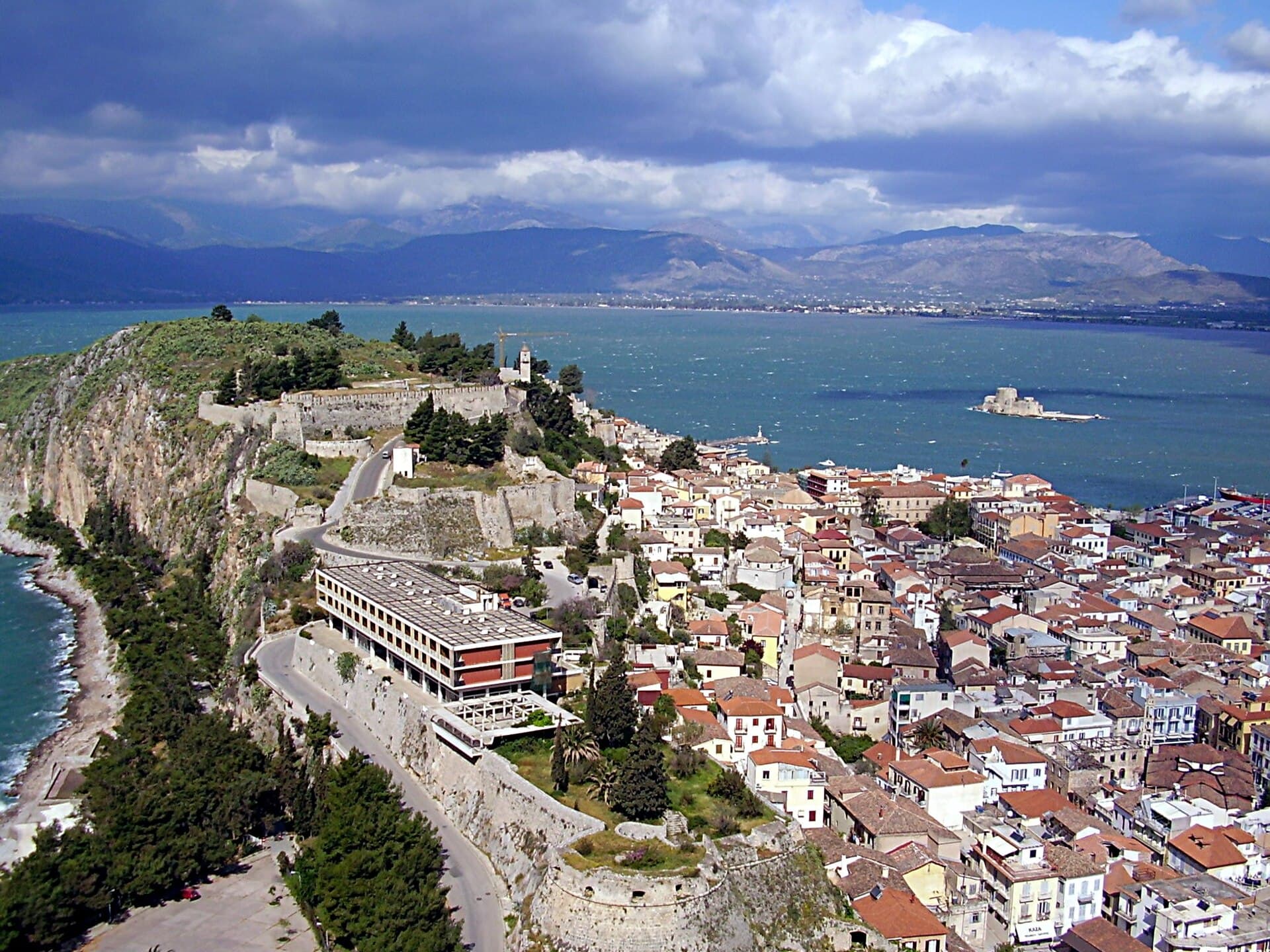 Acronauplia**The oldest part of Nafplio — four civilisations stacked in a single wall** — o5 minutes walk4.6
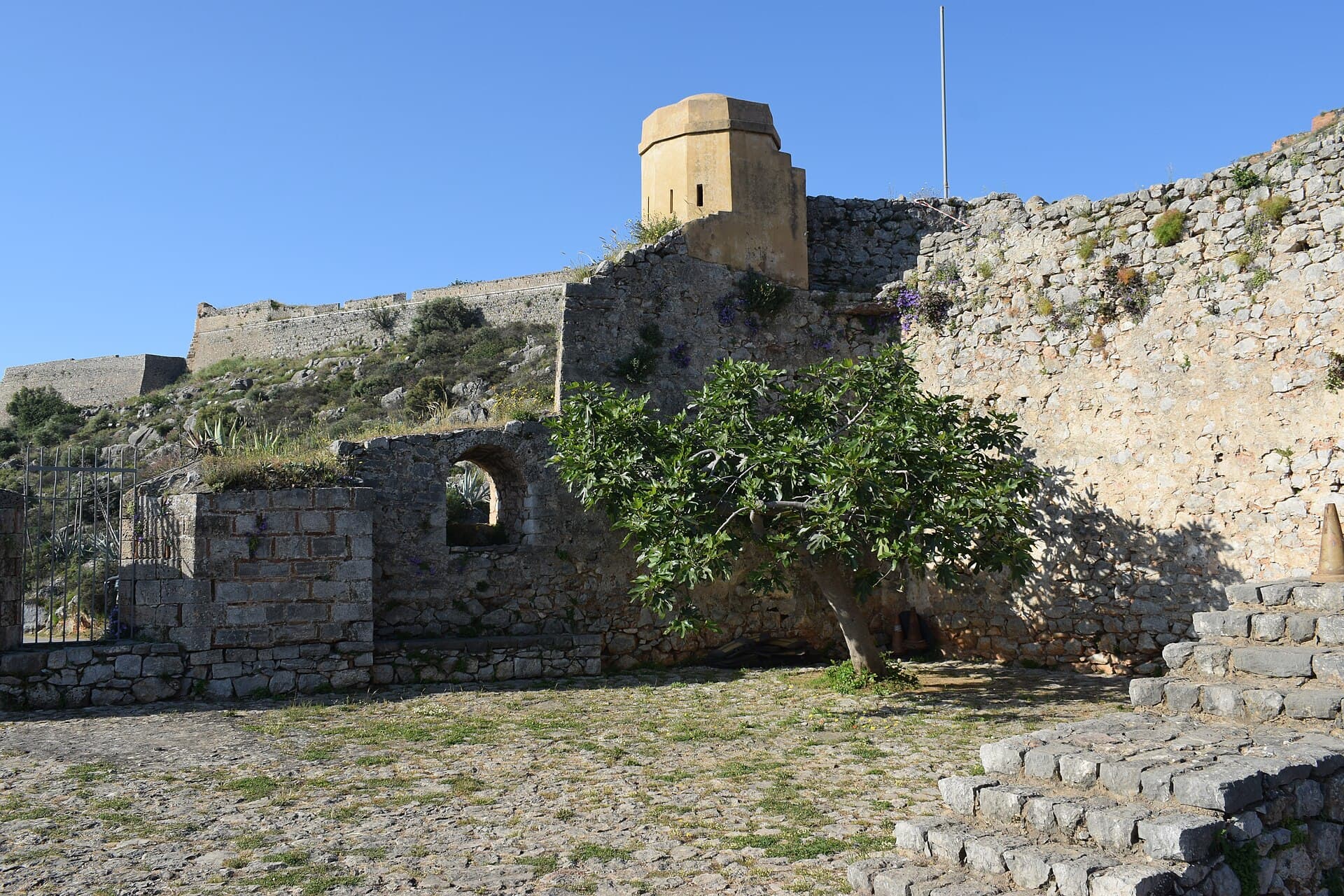 Palamidi Fortress**A Venetian fortress on a rock summit 216 m above the town** — and the thing it7 minutes walk4.6
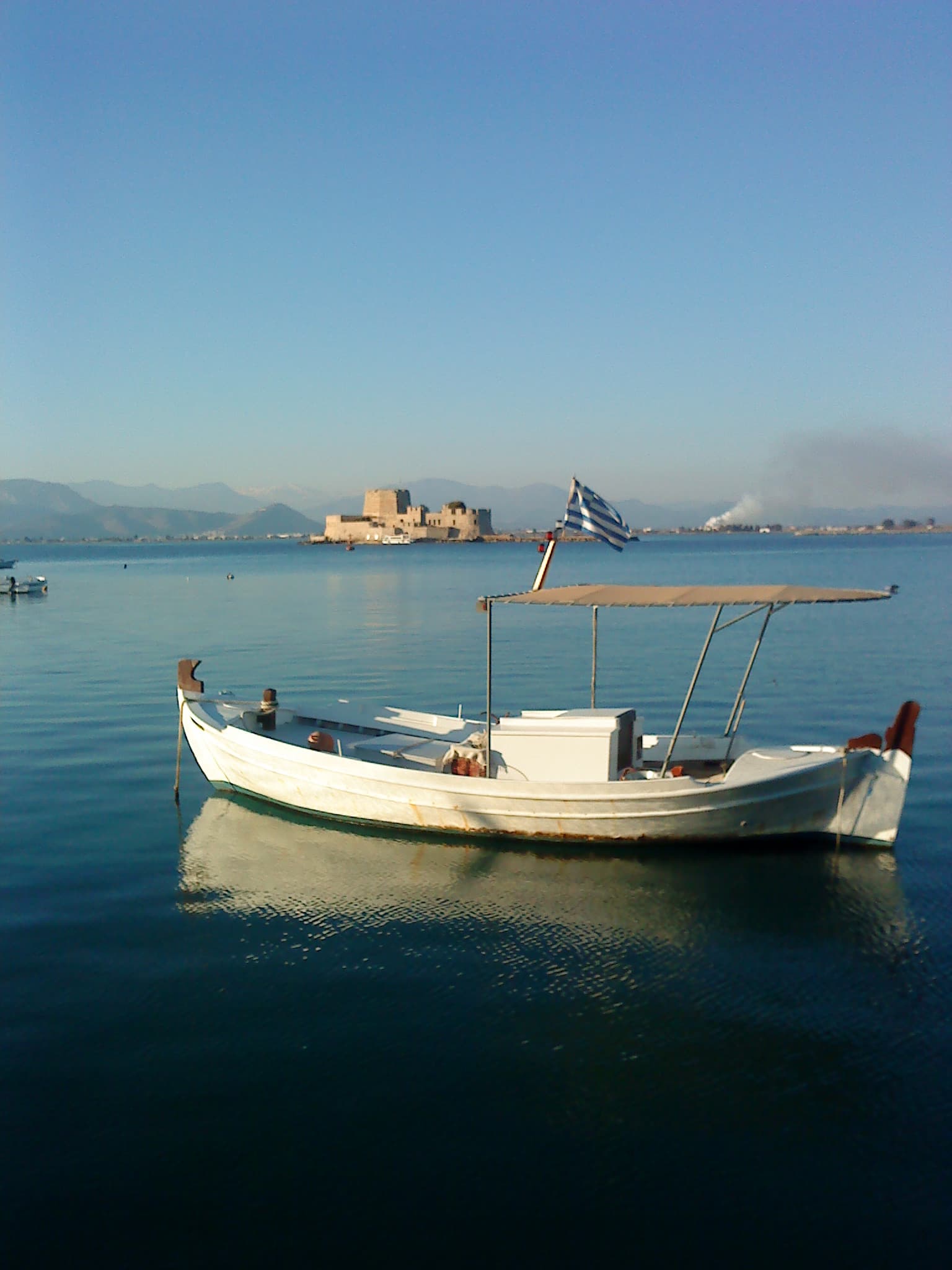 Bourtzi Fortress**A small fortress standing alone on a rocky islet in the harbour** — the symbol12 minutes walk4.6
**It was chosen because it was safe and fortified, and given up because it was small and remote.** ✅ **Why chosen**: in the 1820s Athens was **a small, wrecked town** unfit to be a capital, while Nafplio was **a complete sea fortress** with walls, a harbour and two citadels — Acronauplia and Palamidi — and the revolutionaries had taken it early. It was, in short, **the only practical option** for a state at war. ✅ **Why given up**: once the state settled, the criteria changed. **King Otto** was installed, and the capital moved to **Athens in 1834** for reasons that were **chiefly symbolic**: Athens was a name the world knew and a history that tied the new state to the classical inheritance European opinion had sympathised with. ⚠ **The effect on you as a visitor**: Nafplio **stopped expanding** at exactly the moment it might have ballooned — which is why its centre survives as it was.
**Three nights, and it is far and away the best base in the northeastern Peloponnese.** ✅ **The town itself** deserves **a full day**: the lanes, the square, the seafront, Palamidi, Acronauplia and the boat to Bourtzi. ✅ **But what is around it is the real reason to stay**: within half an hour to an hour by car you reach **Mycenae** (18 km), **Tiryns** (4 km), **Epidaurus** (30 km) and **Nemea** (30 km) — four of the most important sites in Greece, two of them UNESCO-listed. Nowhere else in the country puts that many within that radius. ✅ **A suggested order**: one day for the town, one for Mycenae plus Tiryns and the Treasury, one for Epidaurus and Nemea. ⚠ **You need a car** for these; buses exist but are slow and infrequent and will not allow more than one site a day.