
The carved façade
Eastern ornament.
ほっきー — CC0 · Oqsaqol — CC BY-SA 4.0 · Jamshid Nurkulov — CC BY-SA 4.0 · Evakuz — CC BY-SA 4.0 · 26D — CC BY-SA 4.0 · Humoyun Mehridinov — CC BY-SA 4.0 · Humoyun Mehridinov — CC BY-SA 4.0 · Panpanchik — CC BY-SA 4.0
Uzbekistan's national opera and ballet house, officially the Alisher Navoi State Academic Grand Theatre, named after the poet Alisher Navoi, the greatest figure of Chagatai literature. Designed by the architect Alexey Shchusev, it was built between 1942 and 1947 and opened in November 1947 for the 500th anniversary of Navoi's birth. It seats about 1,400, and its main stage covers 540 m². The façade blends classical architecture with Eastern ornament carved in stone, and in front of it a square with a large fountain is one of the city's loveliest. Hundreds of Japanese prisoners of war worked on the building between 1945 and 1947, and in 1996 a plaque was placed on it in their honour. The company's roots go back to a folk music ensemble founded in 1929. Tickets are sold per performance, with international and Uzbek opera and ballet. The building and fountain can be seen for free, best in the evening when the façade is lit.
Eastern ornament.
Out front.
Opera or ballet.
Theatre Square, central Tashkent
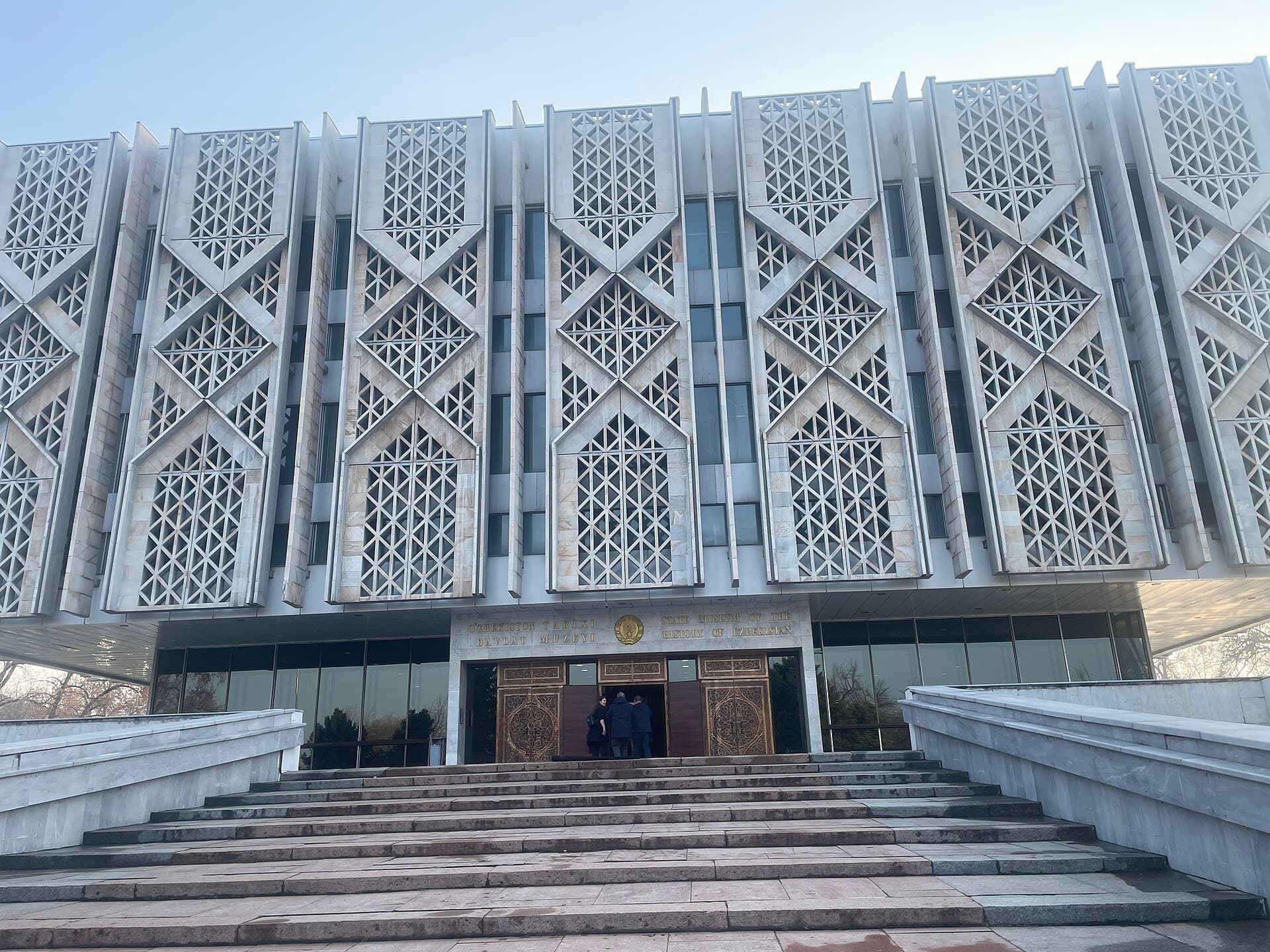 State Museum of History of UzbekistanCentral Asia's oldest museum and Uzbekistan's main history museum, founded in 184 minutes walk4.1
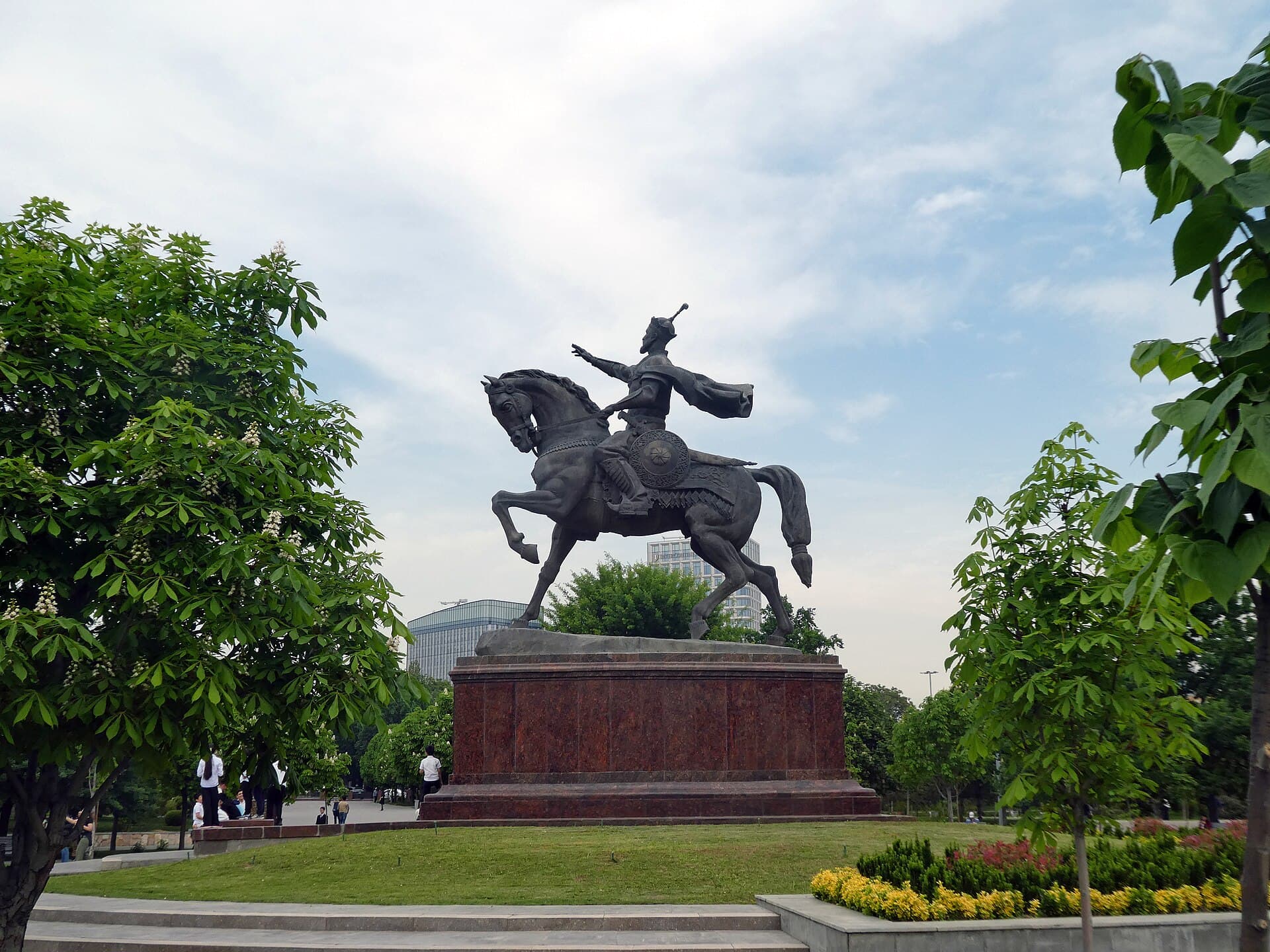 Amir Timur SquareTashkent's central square, a round park whose centrepiece since 1993 has been a 9 minutes walk
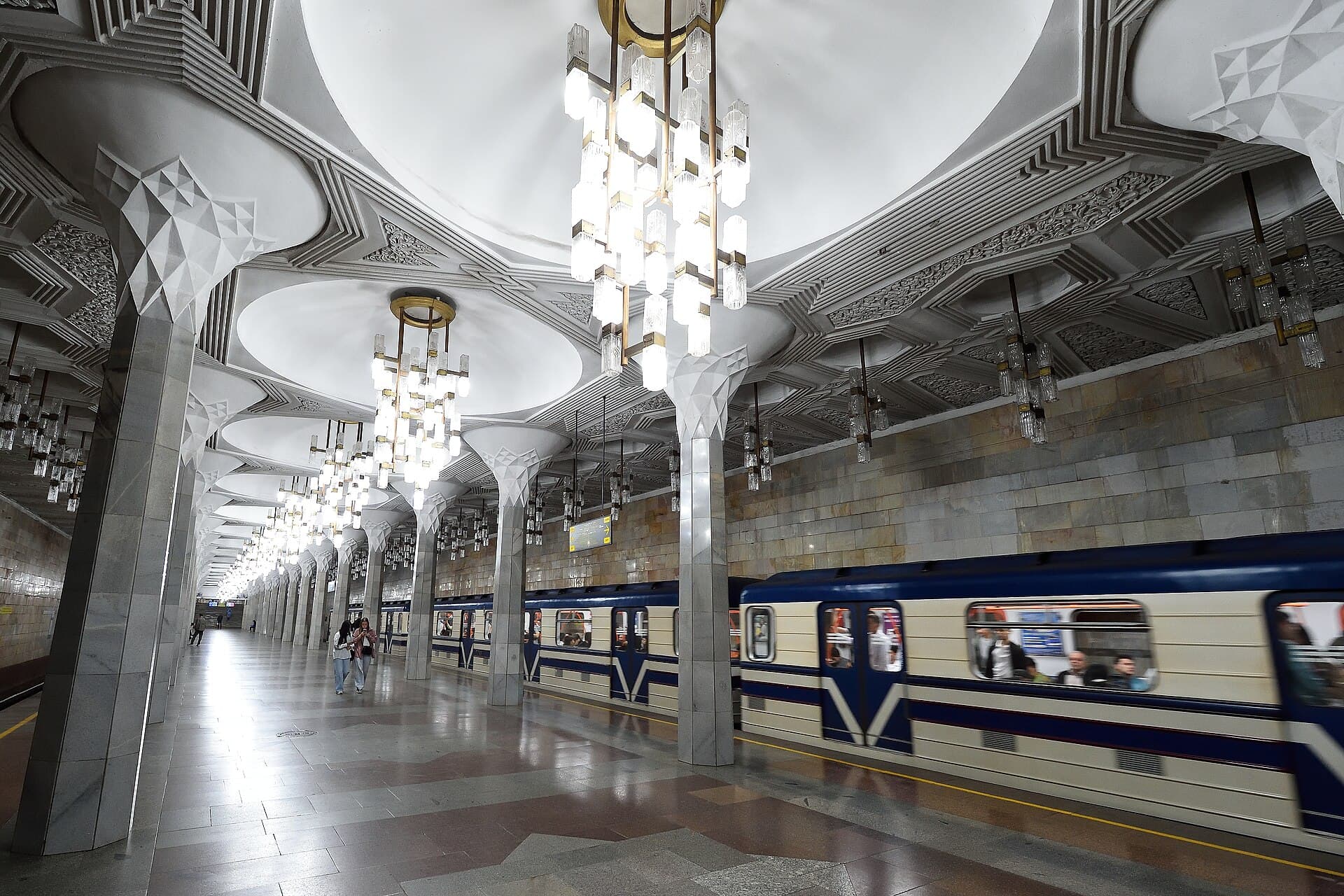 Tashkent MetroCentral Asia's first metro, opened on 6 November 1977 after the 1966 earthquake,9 minutes walk
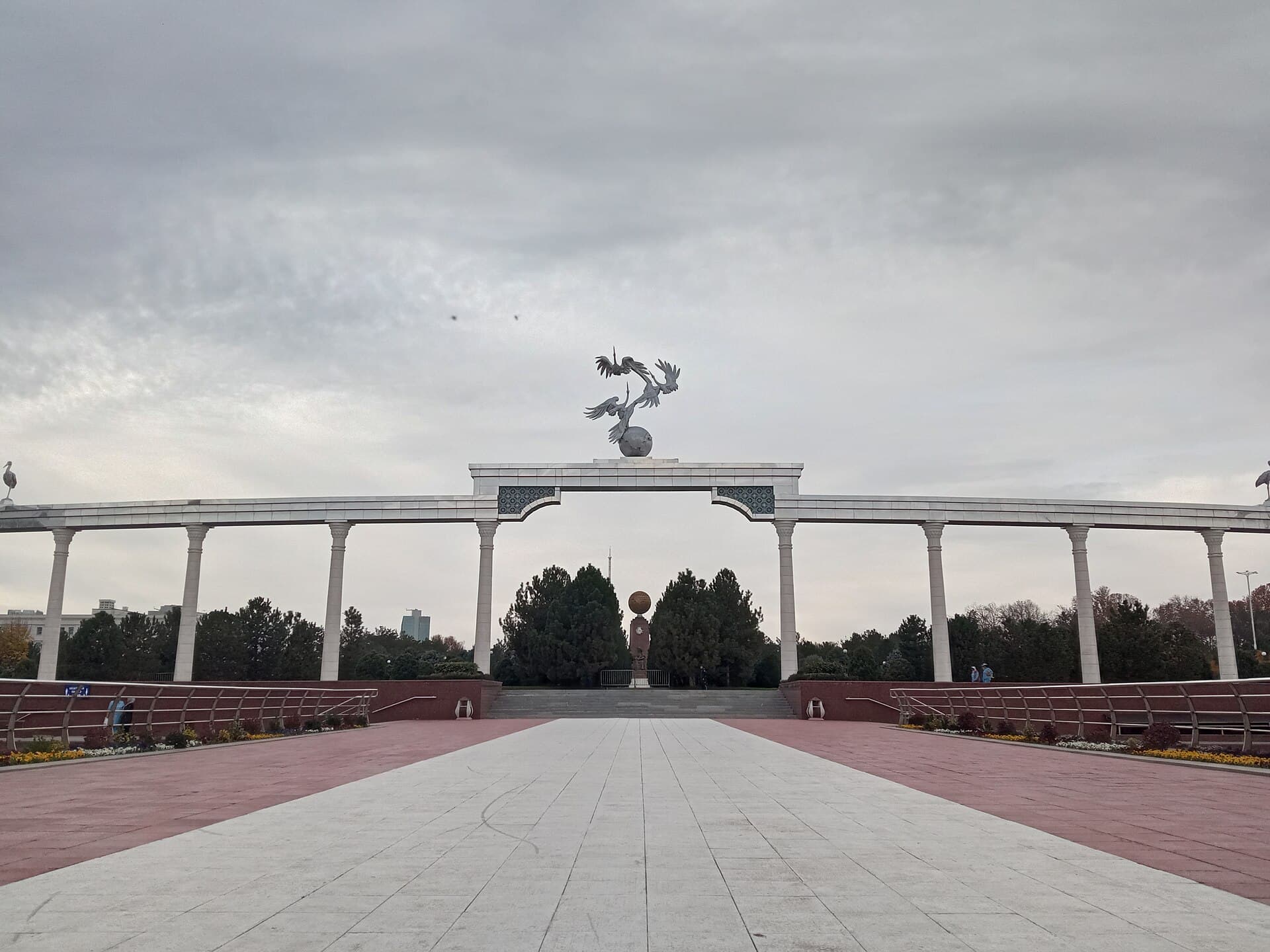 Independence Square, TashkentTashkent's largest square, more a vast park than a plaza. Once Lenin Square, it 10 minutes walk
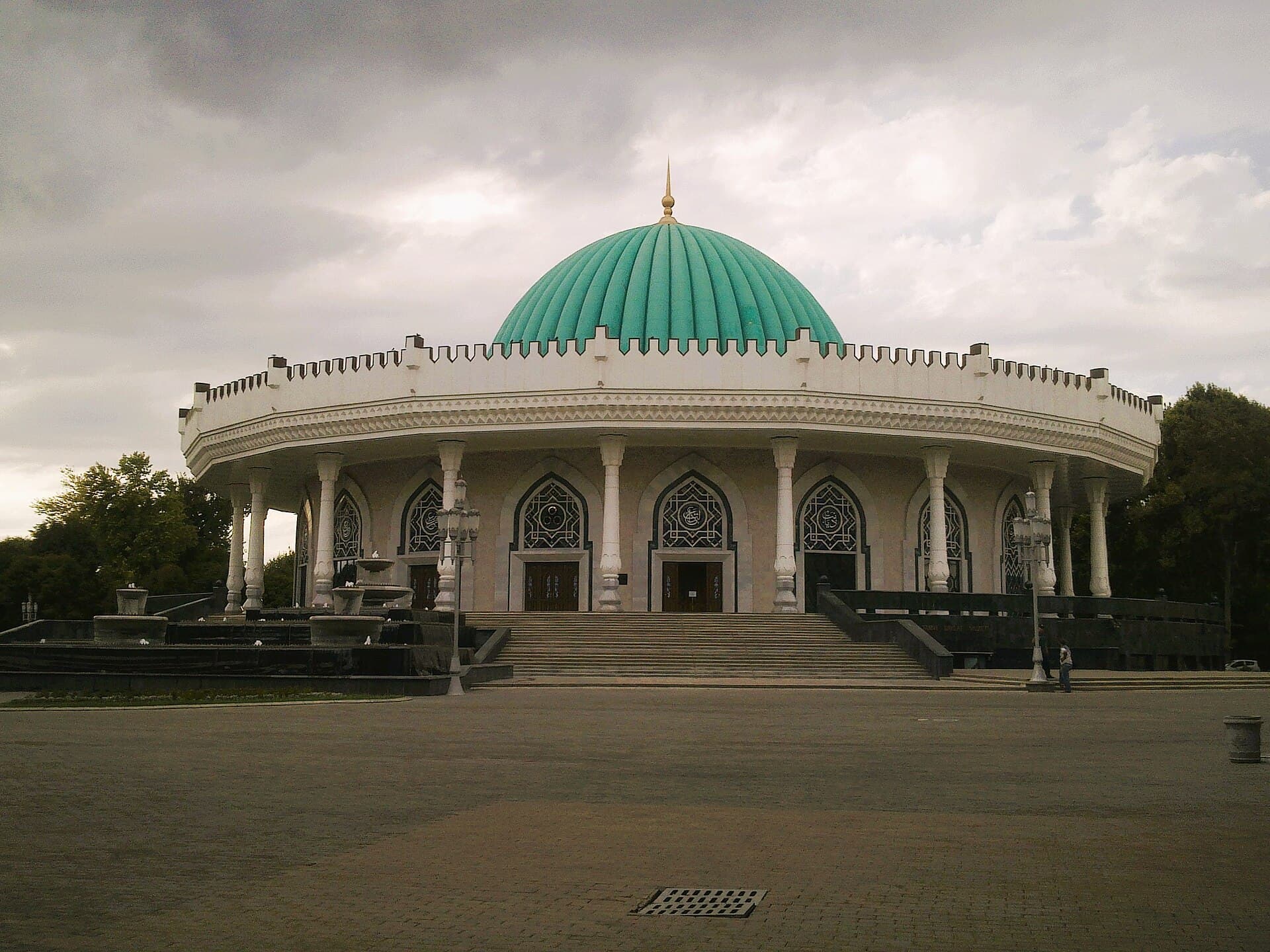 Amir Timur MuseumThe State Museum of Timurid History, a round building under a blue dome that rec10 minutes walk
The architect Alexey Shchusev; it was built in 1942-1947 and opened for the 500th anniversary of the poet Navoi's birth.