
Timur's statue
On horseback.
Екатерина Борисова — CC BY-SA 4.0 · Doris Ingeborg Lohse — CC BY-SA 4.0 · Adam Harangozó — CC BY-SA 4.0 · Enric — CC BY 4.0 · Alla Gajeva — CC BY-SA 4.0 · Just2Roz — CC0 · Quitochka — CC BY-SA 4.0 · Davide Mauro — CC BY-SA 4.0
Tashkent's central square, a round park whose centrepiece since 1993 has been a bronze equestrian statue of Timur by the sculptors Ilkhom and Kamol Jabbarov. Timur raises his right hand, and the pedestal carries his motto, «Strength is in justice», in four languages, Arabic among them. The square began as a park in 1882 under Russian rule and has changed names many times. A statue of Stalin stood here until 1961, then one of Karl Marx from 1968, before the square took Timur's name after independence. Landmarks ring it: Hotel Uzbekistan with its famous patterned concrete façade, the white-columned Palace of International Forums, the blue-domed Amir Timur Museum, and the Tashkent Chimes, a 30 m clock tower of 1947 whose clockwork came from the town hall of Allenstein in East Prussia; a twin tower was built across the street in 2009. The square is free and open all day, and loveliest in the evening when the buildings around it are lit. Sayilgoh Street, the pedestrian street known as Tashkent's Broadway, starts here.
On horseback.
From 1947.
Patterned façade.
Central Tashkent, between Hotel Uzbekistan and the Palace of International Forums
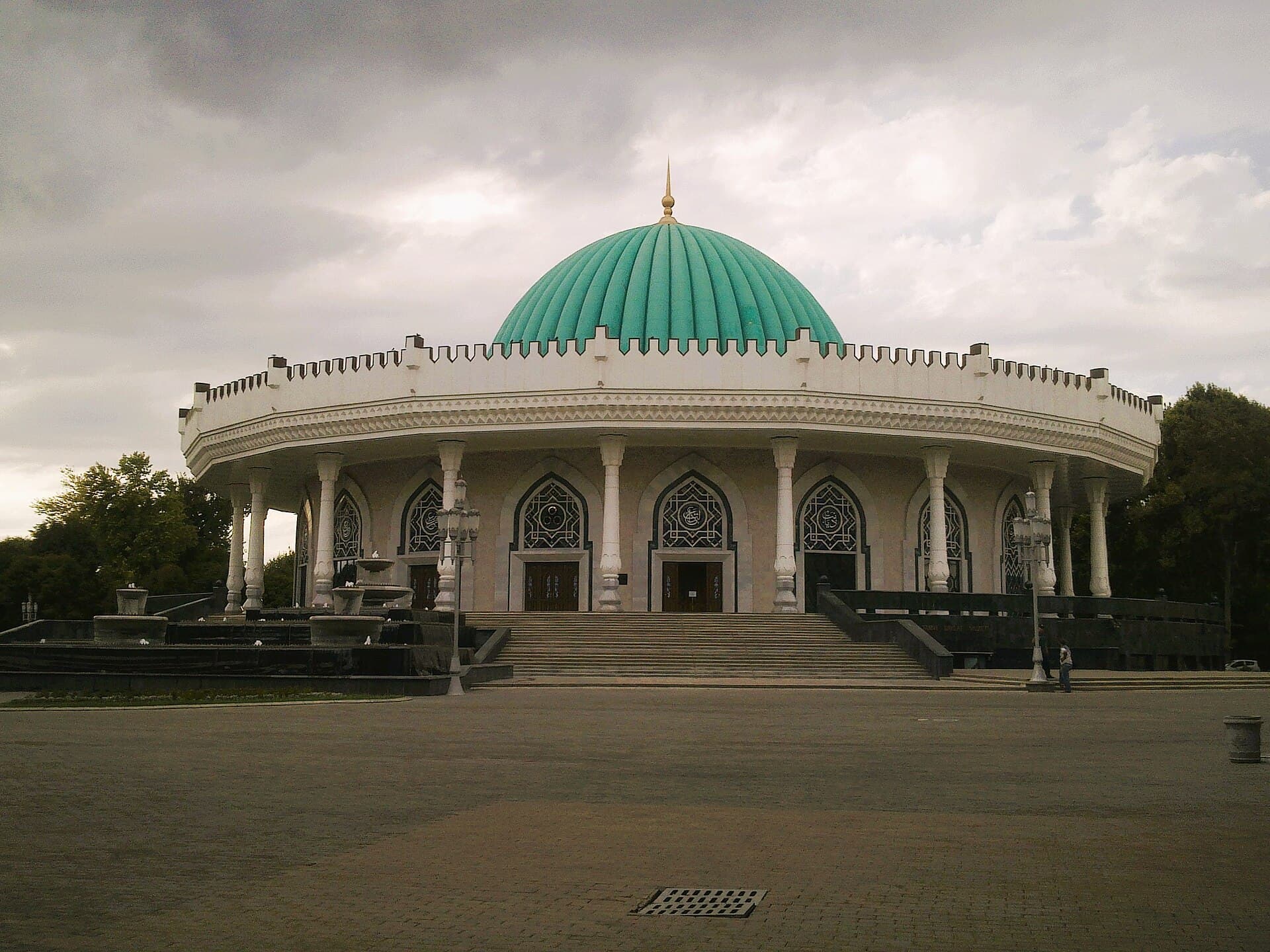 Amir Timur MuseumThe State Museum of Timurid History, a round building under a blue dome that rec4 minutes walk
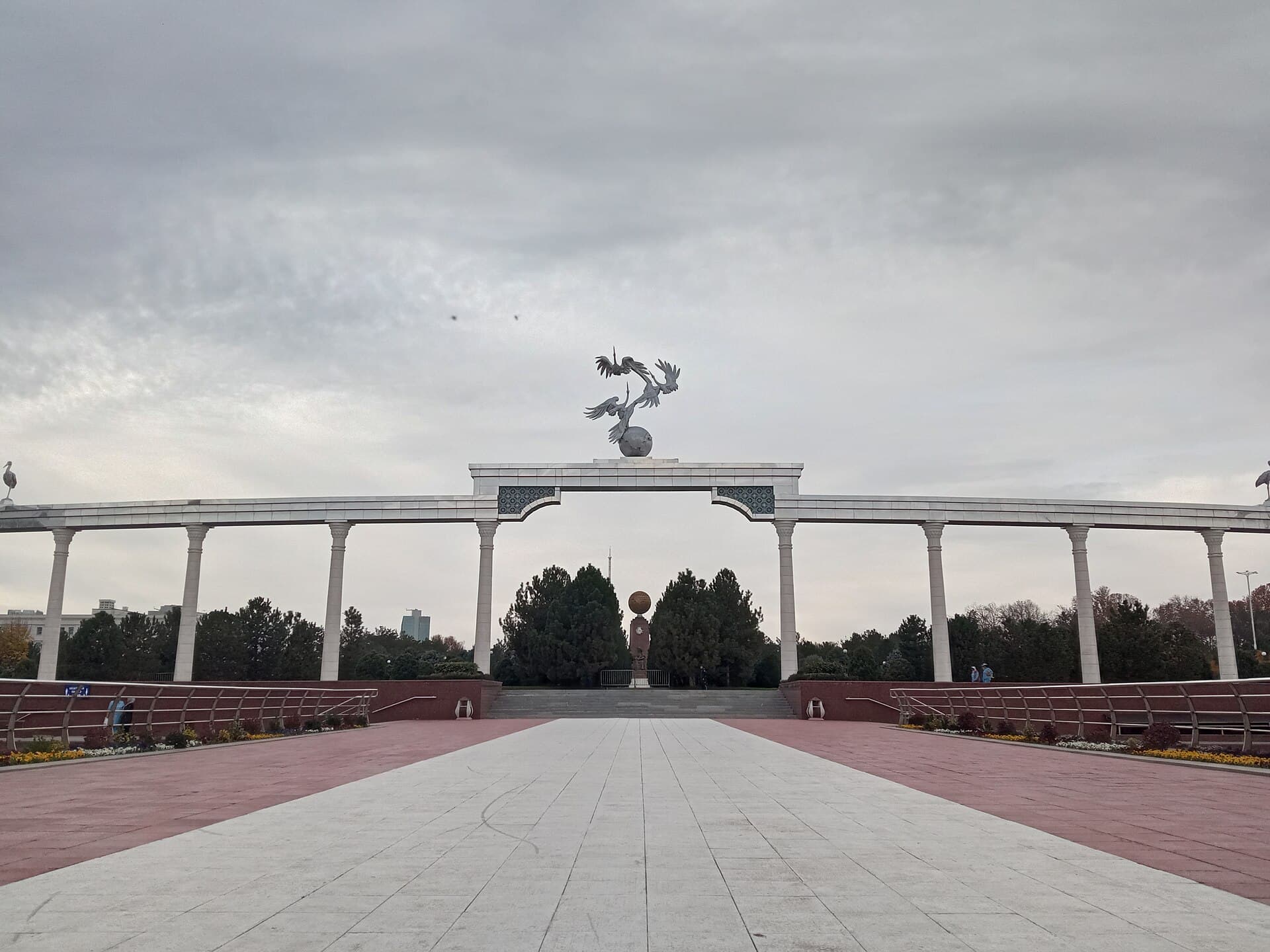 Independence Square, TashkentTashkent's largest square, more a vast park than a plaza. Once Lenin Square, it 13 minutes walk
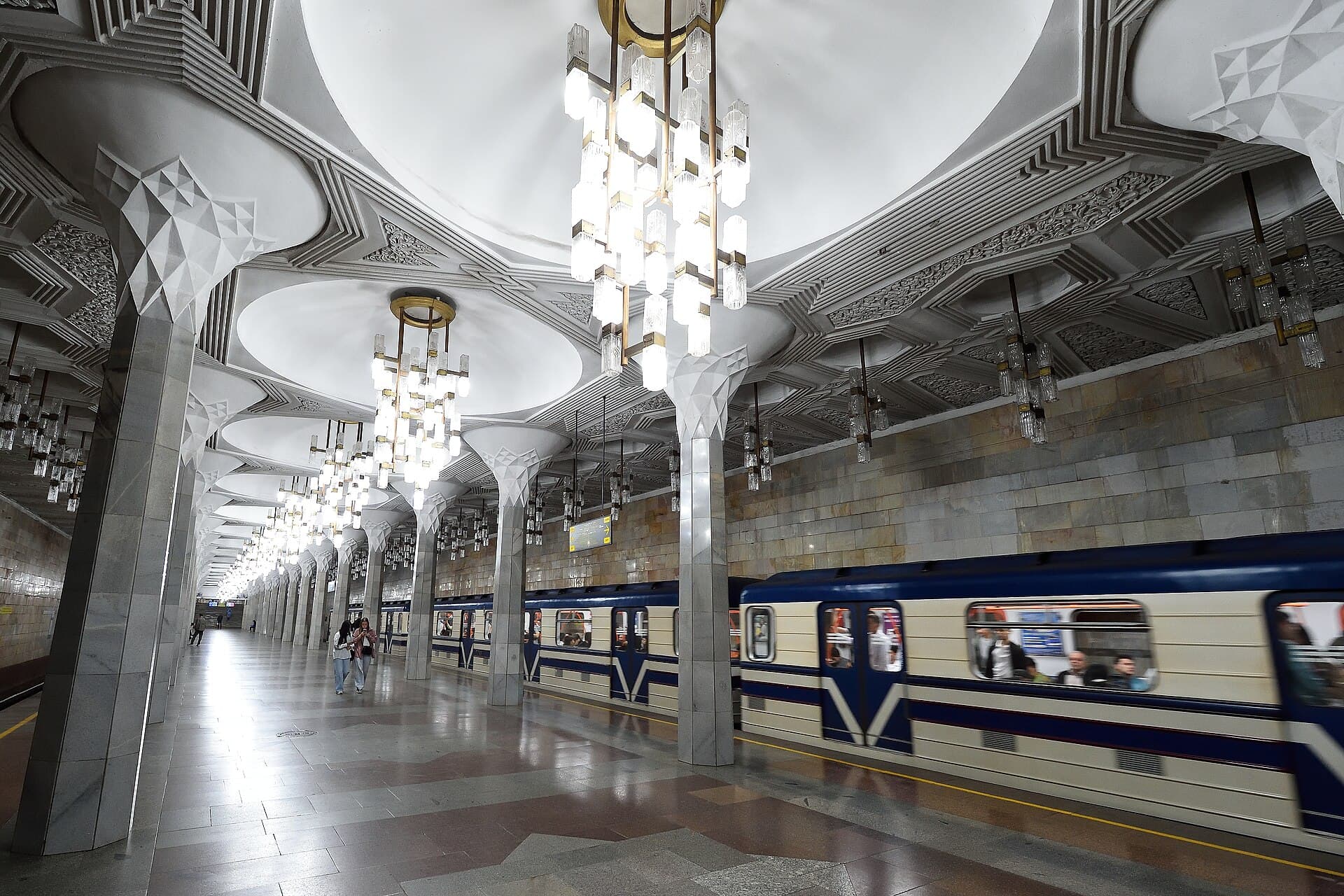 Tashkent MetroCentral Asia's first metro, opened on 6 November 1977 after the 1966 earthquake,18 minutes walk
His name and motto, «Strength is in justice», in Uzbek, Russian, English and Arabic.