
The maq'ad
A loggia with a painted wooden ceiling.
Sohilaali869 — Public domain · Sohilaali869 — Public domain · Mohamed Ouda — CC BY-SA 3.0 · Sohilaali869 — Public domain · Antwan raafat — CC BY-SA 4.0
Amir Taz Palace is a Mamluk palace on al-Suyufiyya Street, just off Saliba Street in historic Cairo, built in 1352 for Sayf al-Din Taz, one of the leading amirs of the Bahri Mamluk state. It covers more than 8,000 square metres around a large courtyard laid out as a garden, with its buildings on all four sides. Taz is said to have built it for his marriage to a daughter of Sultan al-Nasir Muhammad. It was altered many times; in Ottoman times Ali Agha Dar al-Saada added a public fountain and Quran school and renewed the loggia. In the late 19th century it became a girls' school, and later a storeroom for the education ministry. The 1992 earthquake badly damaged it, and part of its rear wall collapsed in March 2002, prompting a Ministry of Culture rescue project that also brought archaeological finds to light. A passage from the street opens into the courtyard, facing the maq'ad, the main reception loggia, with its painted wooden ceiling. The harem wing has wooden lattice windows and round stained-glass openings. In the northern iwan, a ceiling of geometric and floral designs carries an inscribed band of Taz's titles, centred on a cup, the emblem of his post as cupbearer. The palace now serves as a cultural centre and hosts events. It lies 300 m west of the Sultan Hassan Madrasa and 500 m north-east of the Mosque of Ibn Tulun in a straight line, so all three fit one walk.
A loggia with a painted wooden ceiling.
A large garden at the palace's heart.
The cupbearer's badge in the northern iwan.
Al-Suyufiyya Street, off Saliba Street, al-Khalifa district, Cairo
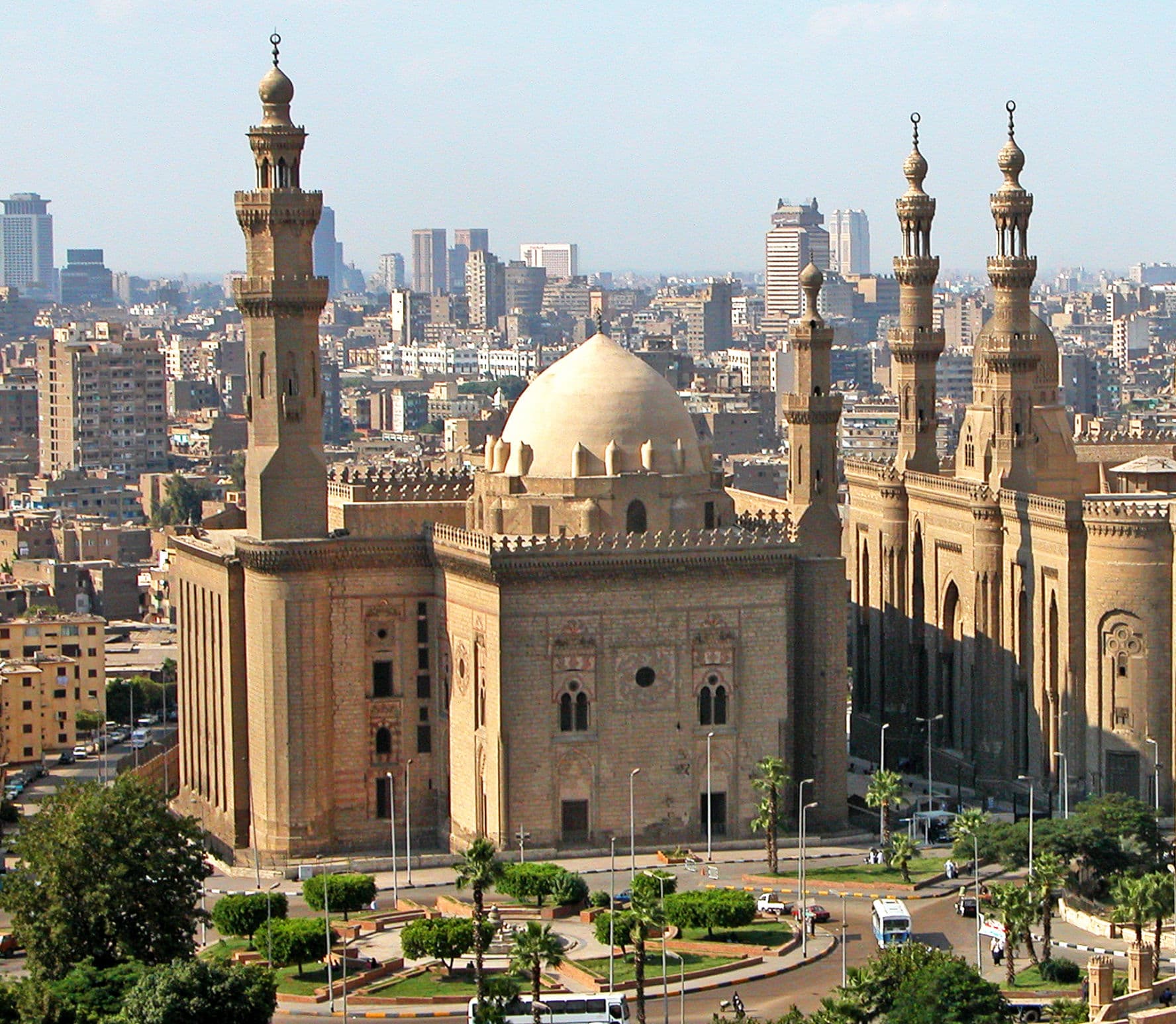 Mosque-Madrasa of Sultan HassanThe largest thing the Mamluks built, and to many historians the summit of Islami4 minutes walk4.8
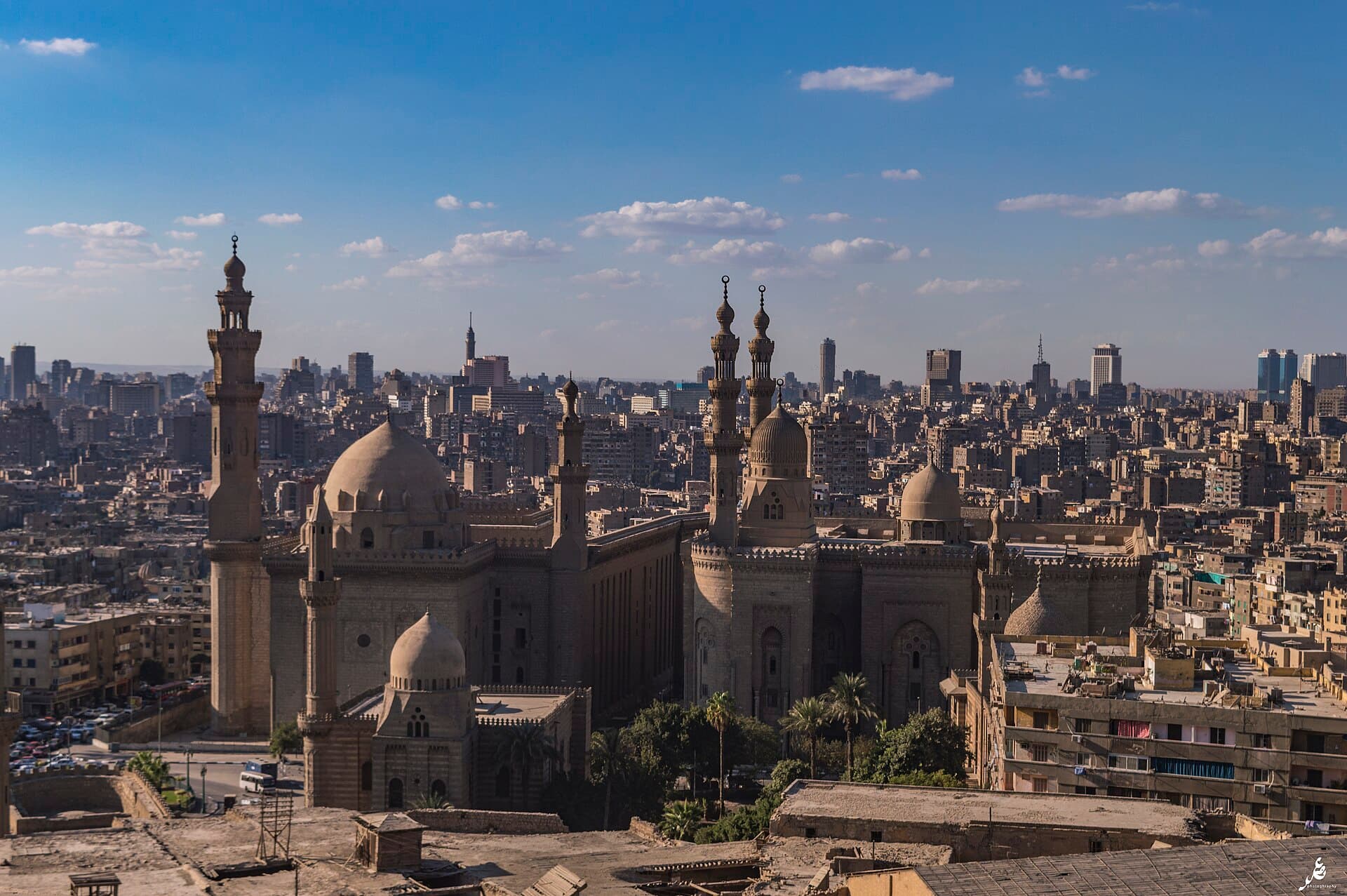 Al-Rifa'i MosqueA huge, grand mosque on Citadel Square, facing the Mamluk Madrasa of Sultan Hass5 minutes walk4.7
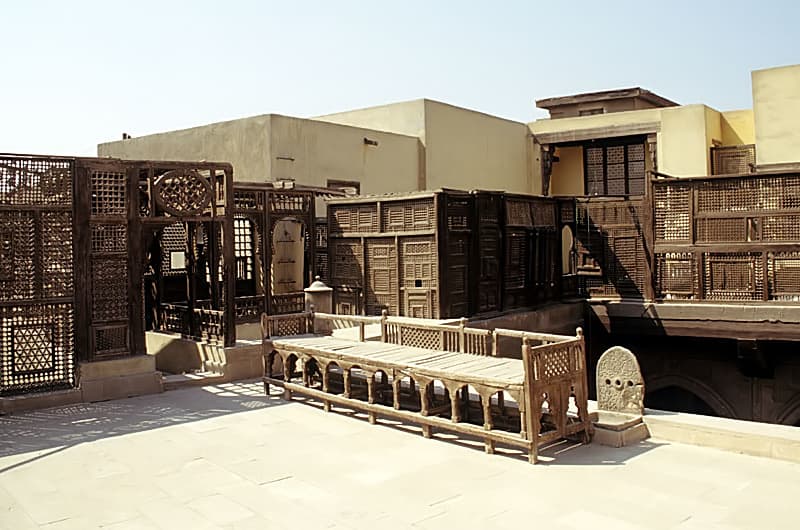 Gayer-Anderson Museum (Bayt al-Kritliyya)Two joined old houses beside the Mosque of Ahmad ibn Tulun, the older from the s6 minutes walk4.5
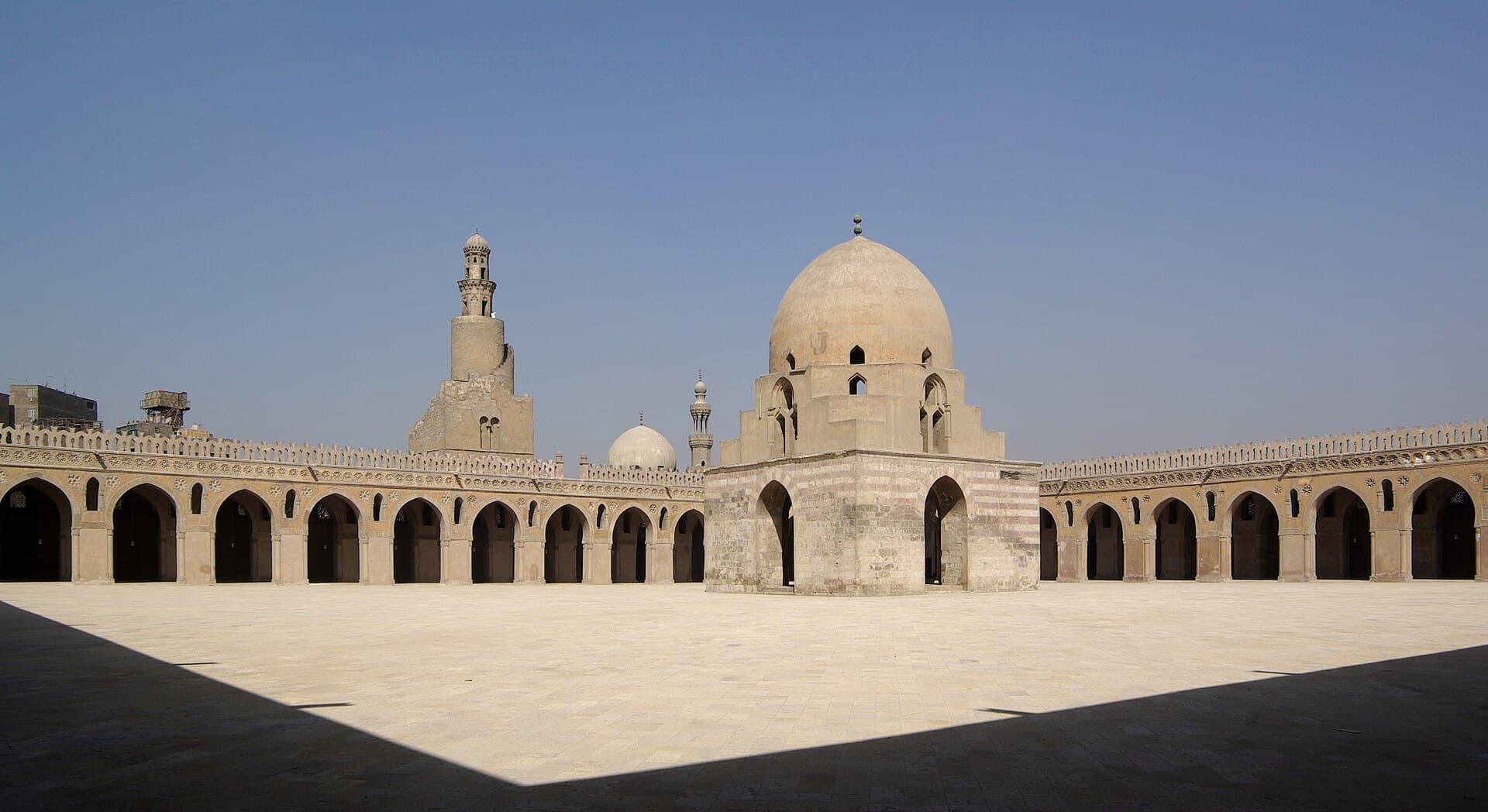 Mosque of Ibn TulunThe oldest mosque in Egypt surviving in its original form, and the largest in ar6 minutes walk4.6
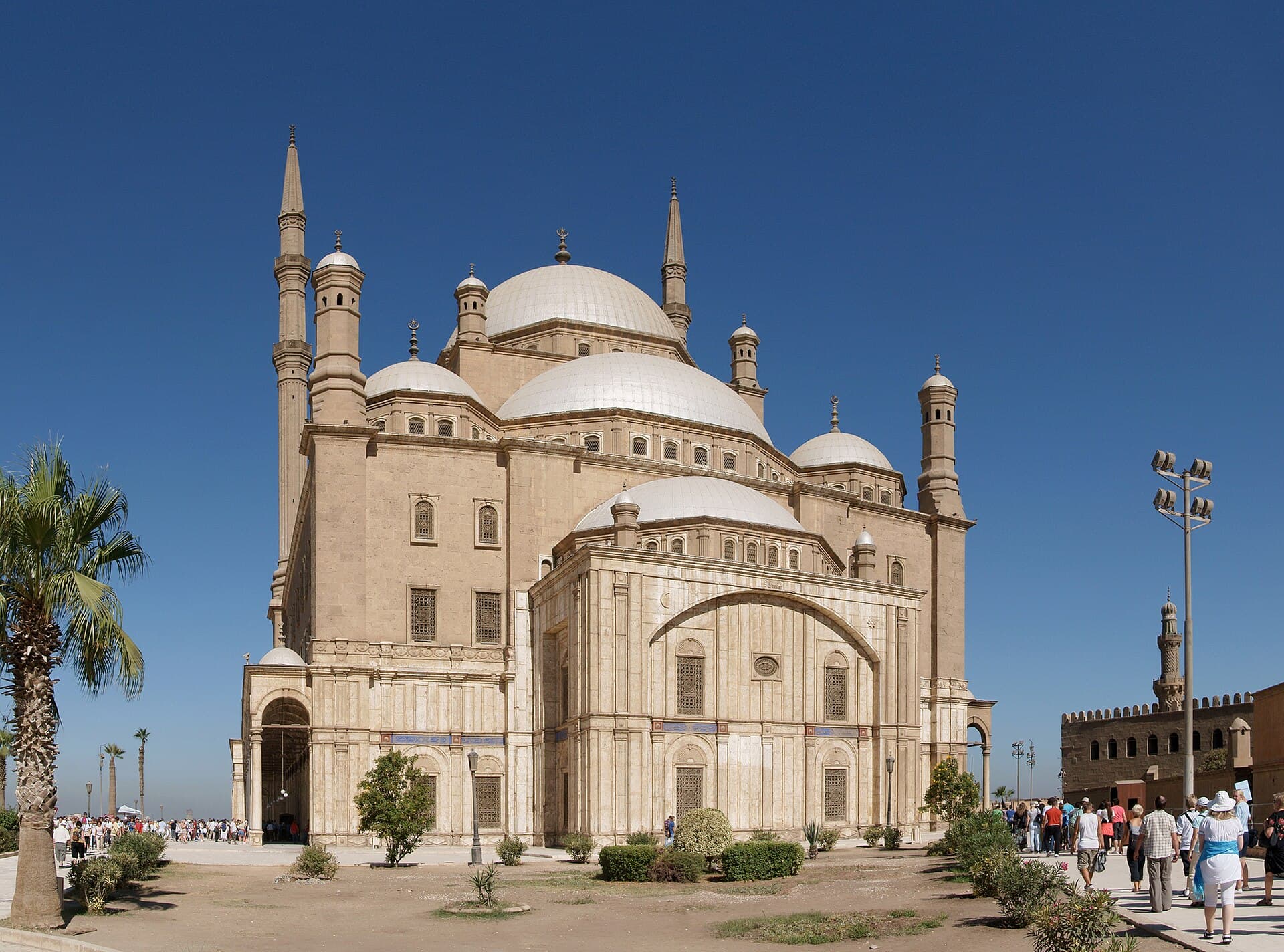 Muhammad Ali MosqueThe grey-domed mosque with two slender minarets that became Cairo's skyline, kno9 minutes walk4.8
A Mamluk amir who rose in the 1340s and became one of the powers in the state under the sons of al-Nasir Muhammad, having served as cupbearer.
It served for decades as a neglected storeroom, was damaged in the 1992 earthquake and lost part of a wall in 2002, before the Ministry of Culture took on its difficult rescue.