
The qibla iwan
Among the largest medieval vaults anywhere, and its echo is part of the effect.
Dennis G. Jarvis — CC BY-SA 2.0 · ولاء — Public domain · ولاء — Public domain · ولاء — Public domain
The largest thing the Mamluks built, and to many historians the summit of Islamic architecture in Egypt — raised between 1356 and 1363 directly below the Citadel. Scale is the first thing you notice: the façade rises some thirty-six metres, the portal alone is taller than a three-storey building, and the qibla iwan is among the largest vaults built anywhere in the medieval world. So much was spent on it that it was said to have nearly bankrupted the state. The plan is cruciform: an open court with four iwans leading off it, and in the corners four separate madrasas, one for each of the Sunni schools of law, each with its own students and lodgings. It was not merely a mosque but a university with four faculties. Sultan Hassan himself was killed before it was finished and was never buried here; the huge dome chamber behind the qibla wall stands empty of him — one of the building's ironies. Directly opposite across the square stands the Rifai Mosque, far younger — late nineteenth century — holding the tombs of Egypt's royal family and that of the last Shah of Iran. One ticket usually covers both. Inside it is cool and nearly empty of visitors, and the echo under the iwan is part of its effect.
Among the largest medieval vaults anywhere, and its echo is part of the effect.
A separate faculty for each Sunni school in the corners — a university, not just a mosque.
Five centuries younger, holding the last Shah of Iran and Egypt's royal tombs.
Salah al-Din Square, below the Citadel, Cairo
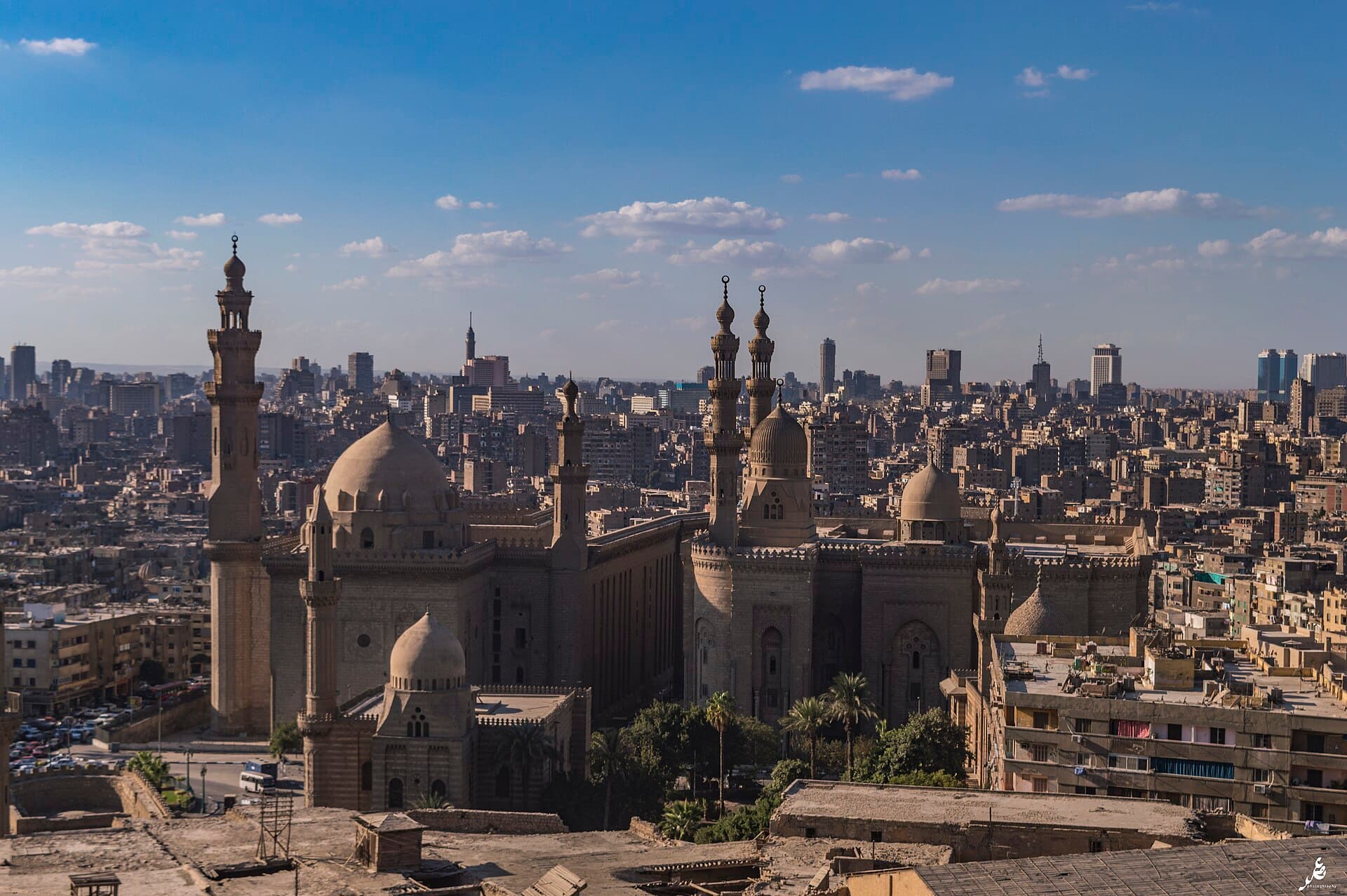 Al-Rifa'i MosqueA huge, grand mosque on Citadel Square, facing the Mamluk Madrasa of Sultan Hass1 minute walk4.7
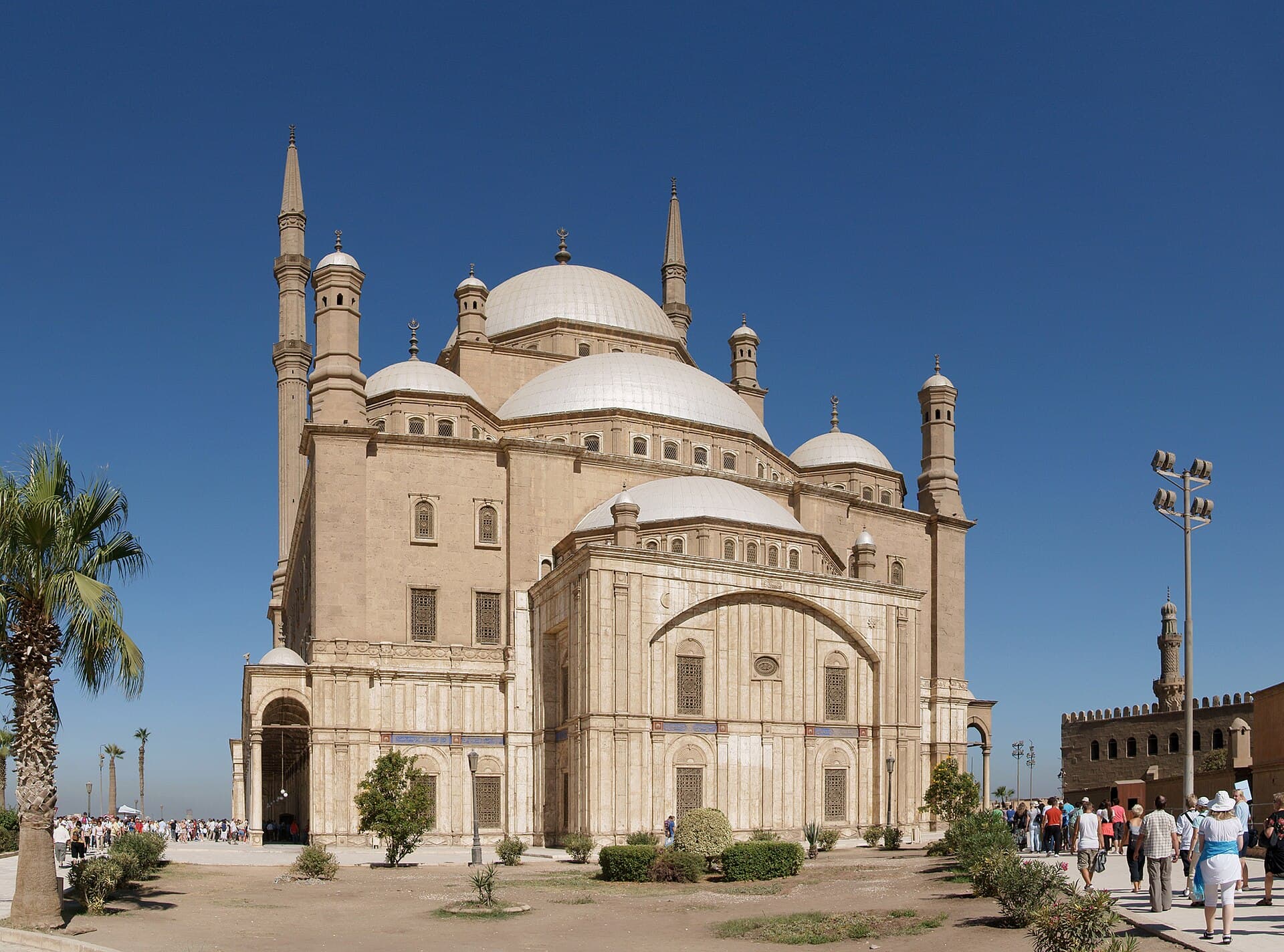 Muhammad Ali MosqueThe grey-domed mosque with two slender minarets that became Cairo's skyline, kno6 minutes walk4.8
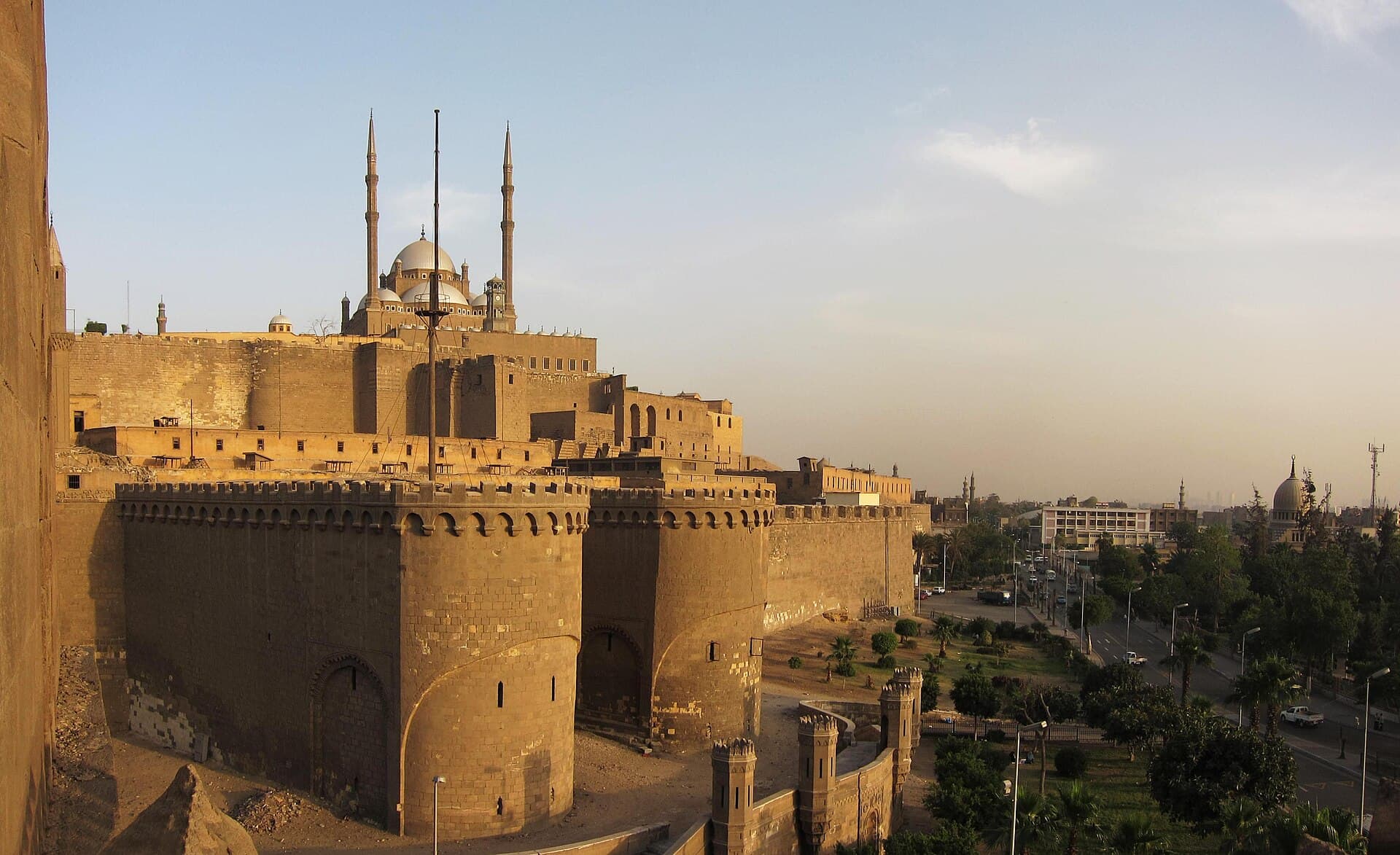 Saladin CitadelThe fortress from which Egypt was ruled for seven hundred years, set on a spur o6 minutes walk4.5
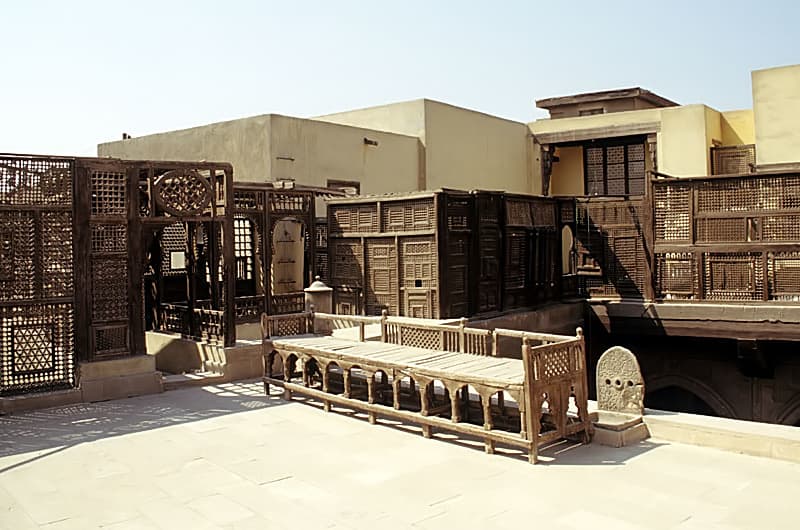 Gayer-Anderson Museum (Bayt al-Kritliyya)Two joined old houses beside the Mosque of Ahmad ibn Tulun, the older from the s9 minutes walk4.5
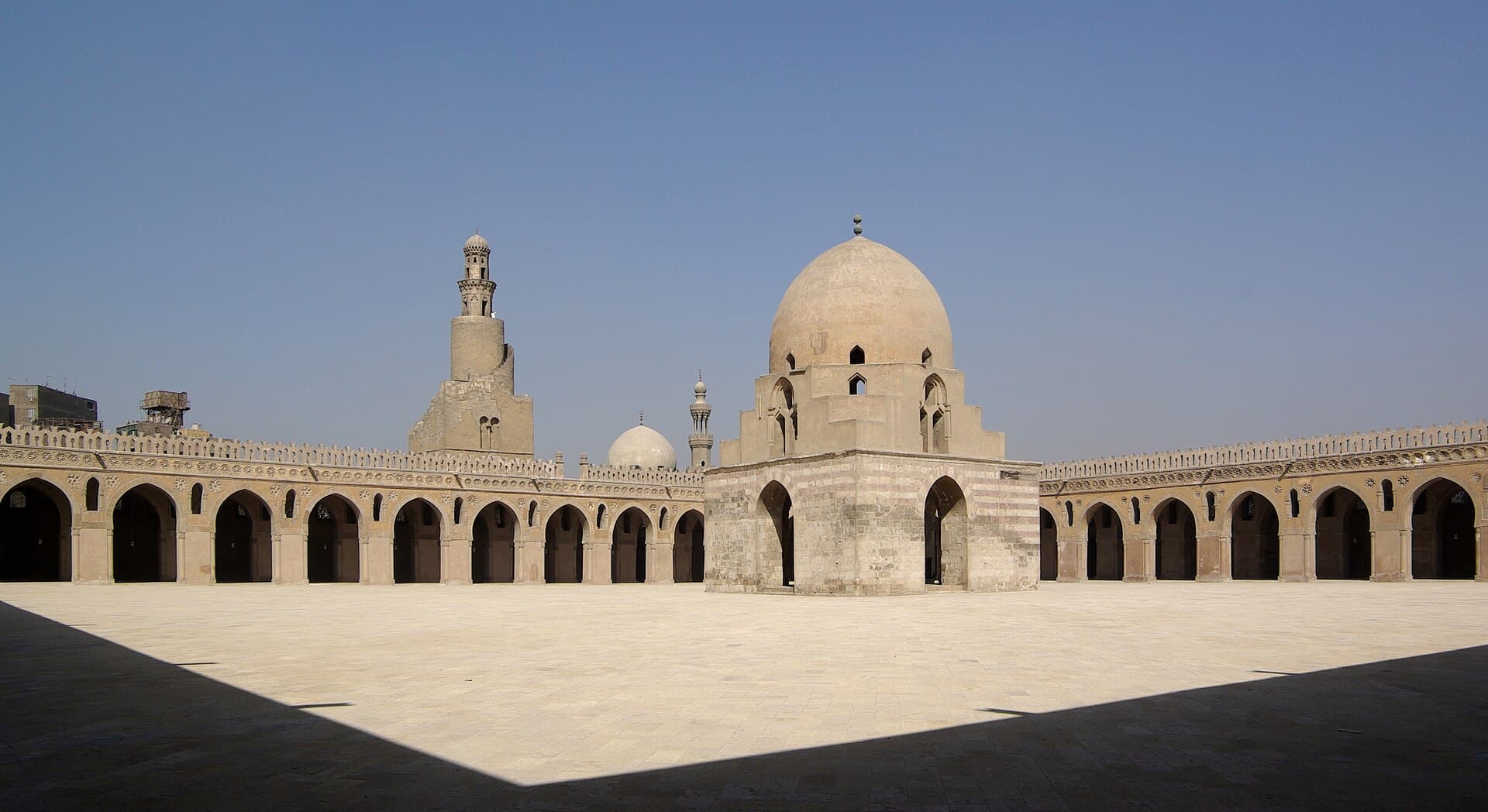 Mosque of Ibn TulunThe oldest mosque in Egypt surviving in its original form, and the largest in ar10 minutes walk4.6
Yes — the Citadel stands directly above and is minutes by car. The usual order is Sultan Hassan and Rifai first in the morning, then up to the Citadel. Ibn Tulun is close in the same direction.
Sultan Hassan was killed in 1361 before the building was finished and his body was never found, so the great dome chamber prepared for him stayed empty; two of his sons were buried there later. The building raised to be his tomb never served its first purpose.