
The tiled wall
Blue and green tiles from the 1650s.
R Prazeres — CC BY-SA 4.0 · R Prazeres — CC BY-SA 4.0 · R Prazeres — CC BY-SA 4.0 · R Prazeres — CC BY-SA 4.0 · Khaled suleyman — CC BY-SA 4.0
Aqsunqur Mosque is a Mamluk mosque on Bab al-Wazir Street in Darb al-Ahmar, between Bab Zuweila and the Citadel. The amir Shams al-Din Aqsunqur, son-in-law of Sultan al-Nasir Muhammad, completed it in 1347. People call it the Blue Mosque for the blue and green tiles that cover its qibla wall. Aqsunqur, a former governor of Tripoli, supervised the work himself and gave it a Syrian-style plan that is rare in Cairo. The mosque took in the older mausoleum of Sultan al-Ashraf Kujuk, which explains its irregular shape. Between 1652 and 1654 the Ottoman officer Ibrahim Agha Mustahfizan restored it, adding a wooden ceiling on columns and the Iznik-style tiles with their cypresses, vases and tulips. The Aga Khan Trust for Culture and the World Monuments Fund began conservation in 2009, and it reopened in May 2015. You enter a wide courtyard ringed by four arcades, with an ablutions fountain of 1412 at its centre. The tiled wall is on the south side, next to a mihrab of coloured marble and a marble minbar, among the oldest left in any Cairo mosque, its rail carved with leaves and bunches of grapes. Aqsunqur, his sons and Ibrahim Agha are all buried here. The mosque lies 800 m south of Bab Zuweila and 700 m north of the Citadel in a straight line, on the walking route between them. Allow 30 to 60 minutes.
Blue and green tiles from the 1650s.
Among Cairo's oldest in marble.
Four arcades and a fountain of 1412.
Bab al-Wazir Street, Darb al-Ahmar, Cairo
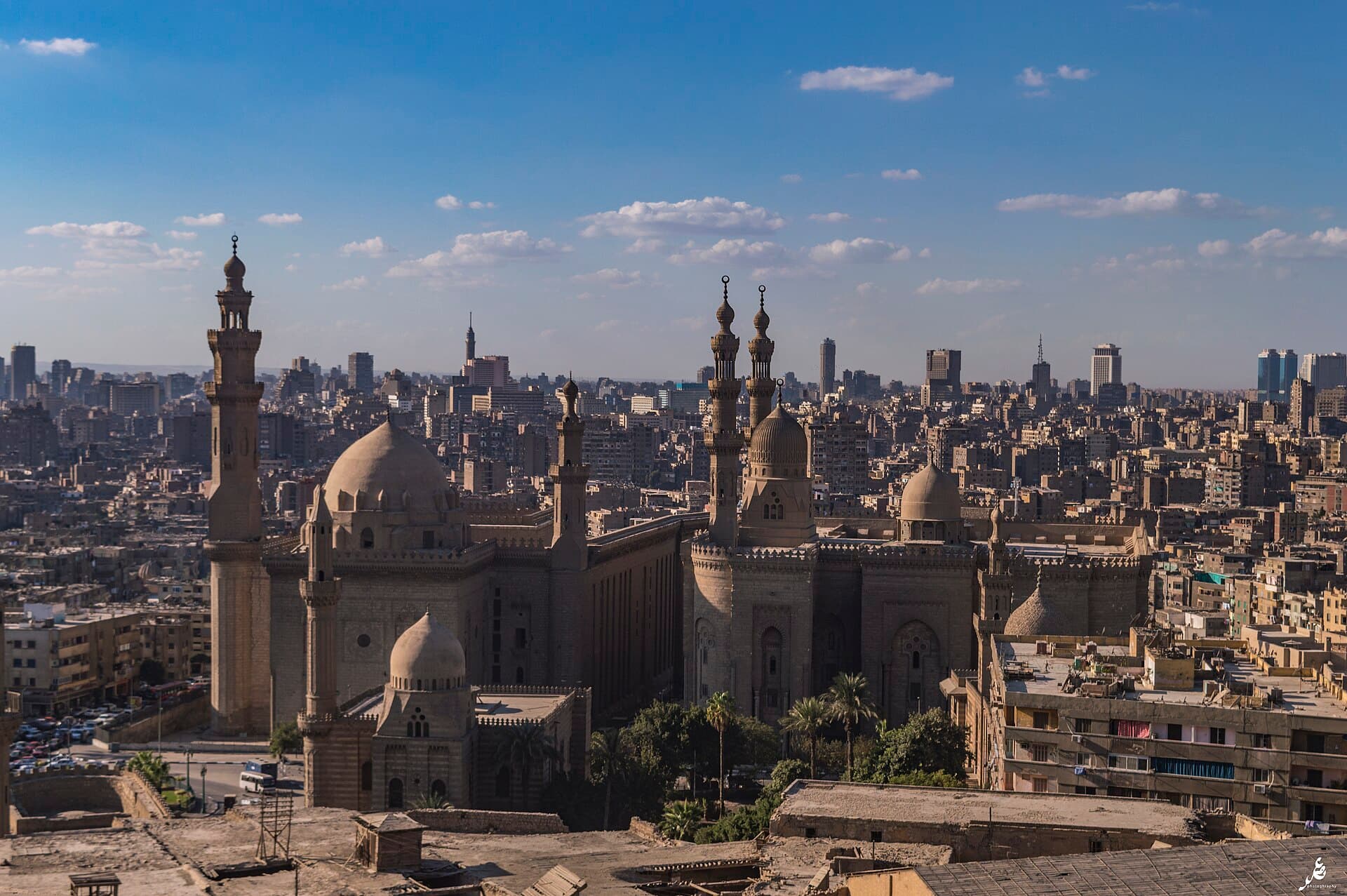 Al-Rifa'i MosqueA huge, grand mosque on Citadel Square, facing the Mamluk Madrasa of Sultan Hass6 minutes walk4.7
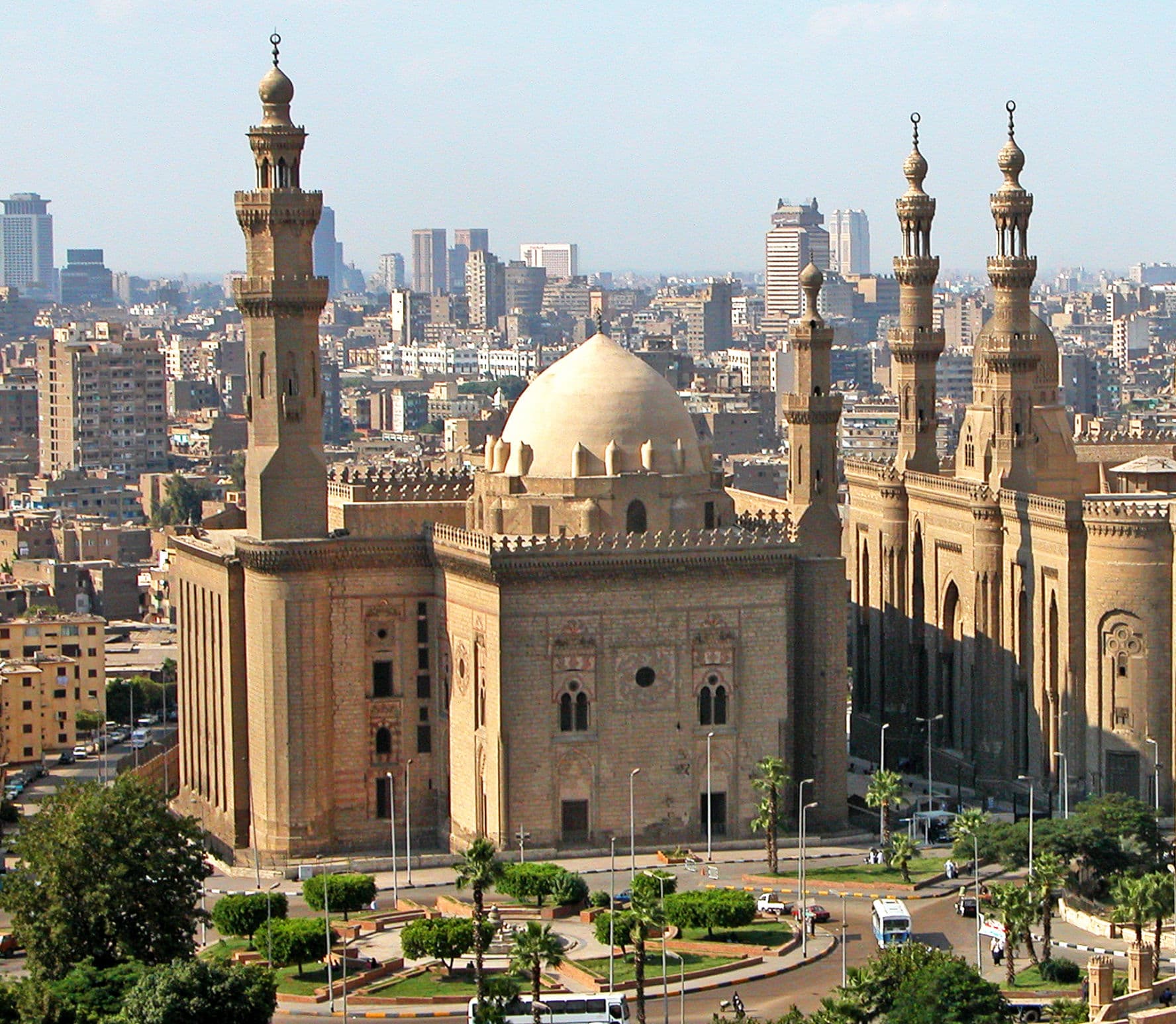 Mosque-Madrasa of Sultan HassanThe largest thing the Mamluks built, and to many historians the summit of Islami7 minutes walk4.8
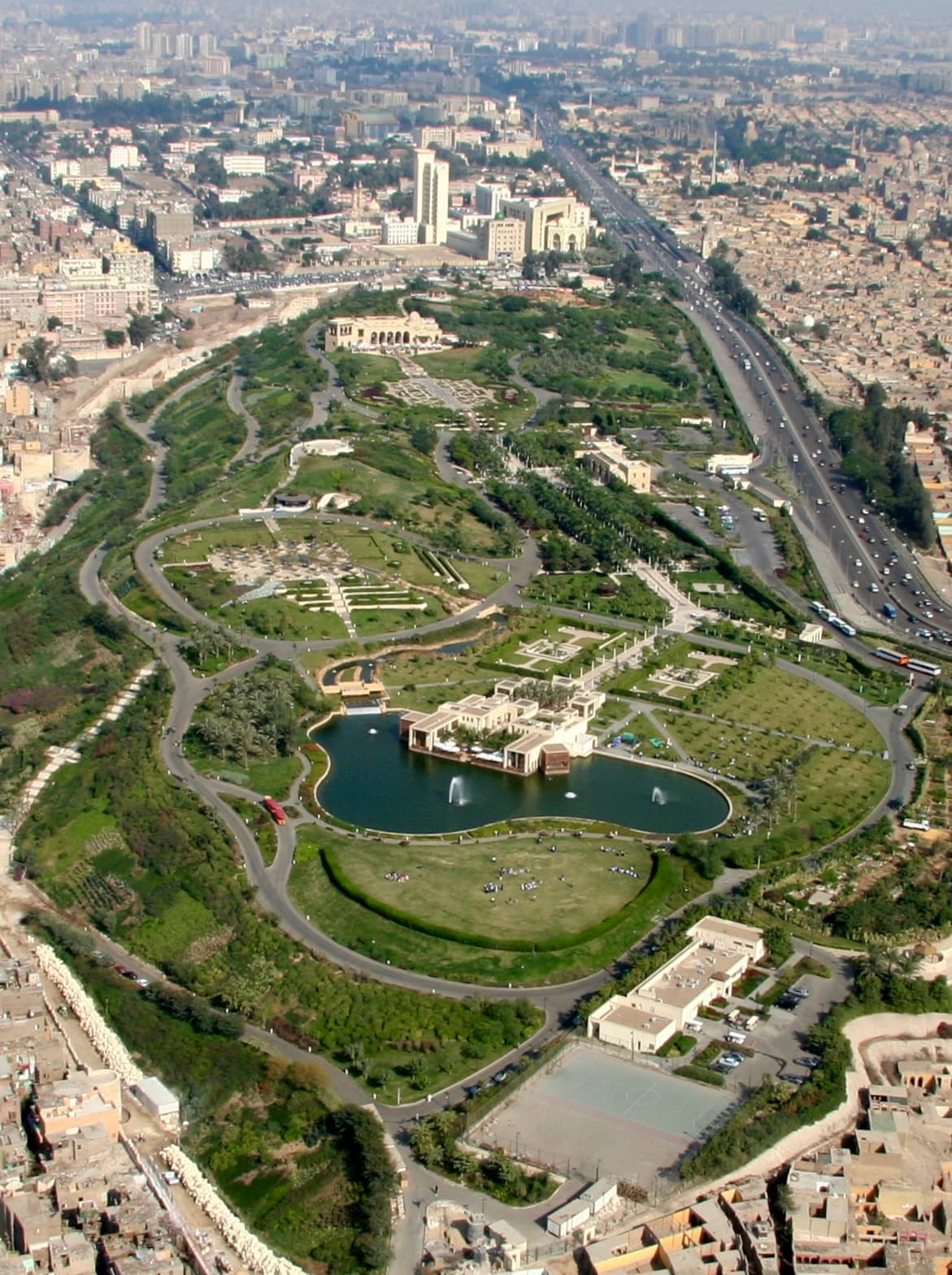 Al-Azhar ParkA park on a hill between Fatimid Cairo and the Citadel, with a stranger history 10 minutes walk4.4
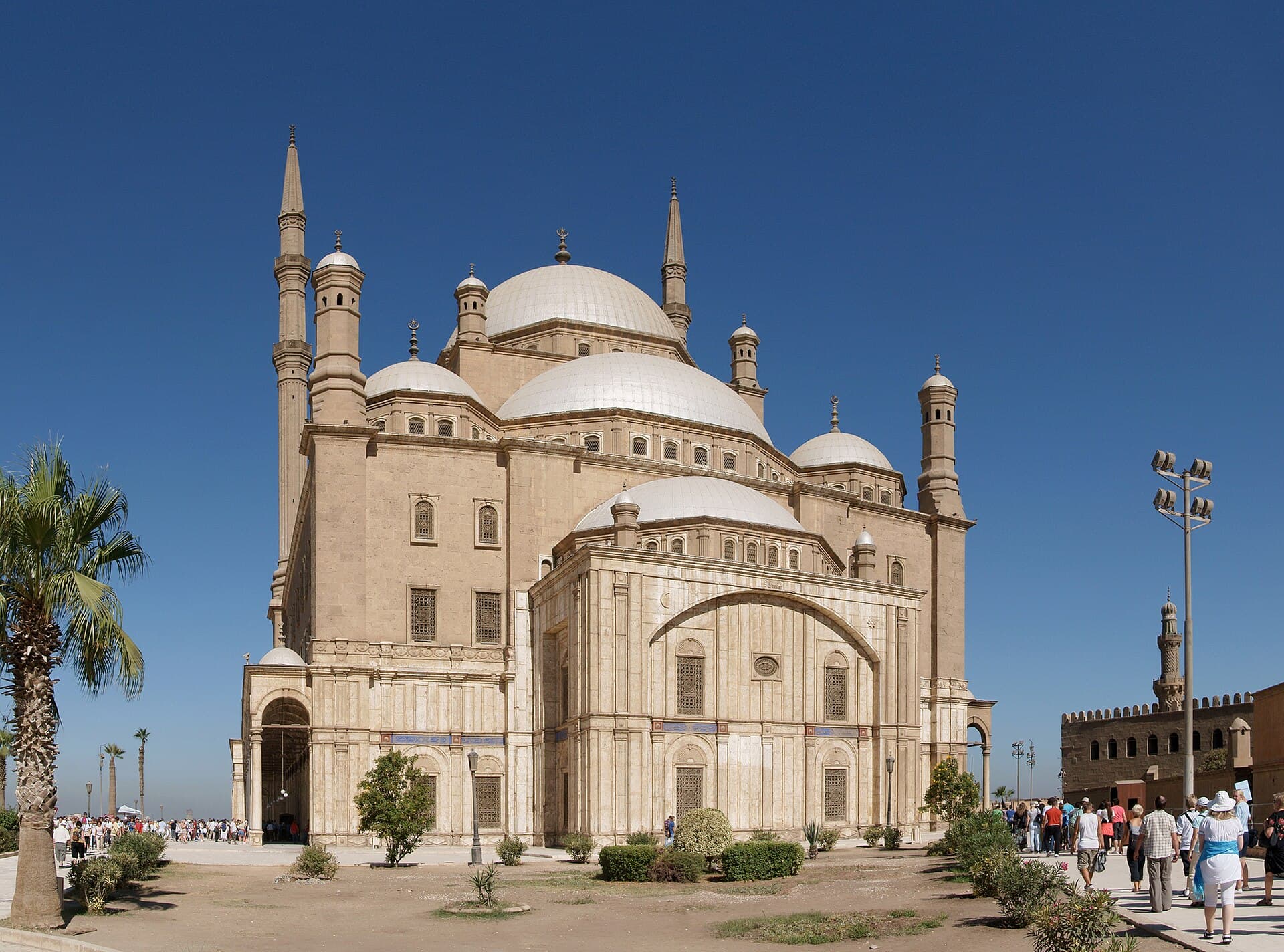 Muhammad Ali MosqueThe grey-domed mosque with two slender minarets that became Cairo's skyline, kno10 minutes walk4.8
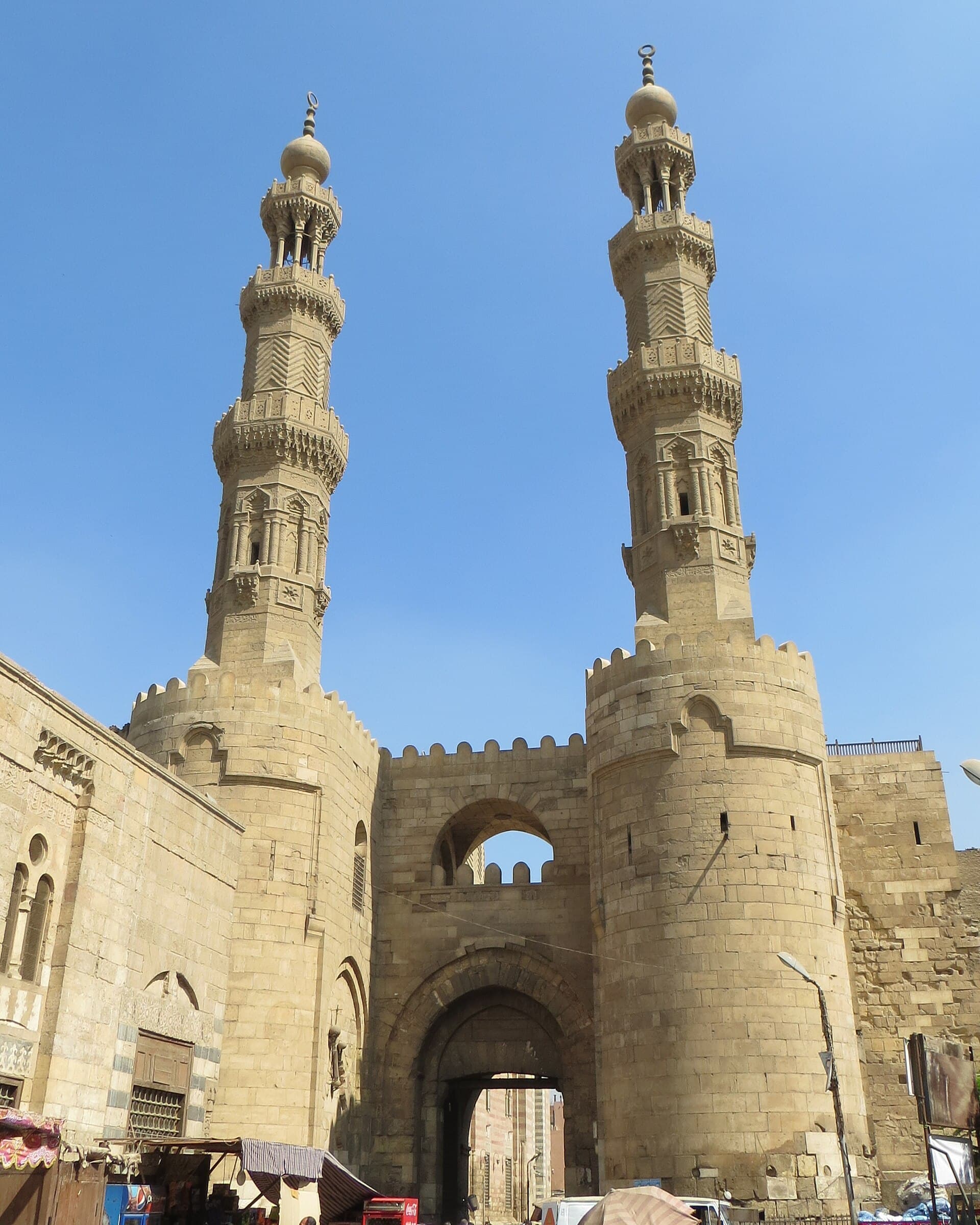 Bab ZuweilaOne of three surviving gates of the Fatimid city wall, standing at the southern 10 minutes walk4.6
Ibrahim Agha imported them from Istanbul and Damascus in the 1650s. They follow the Iznik style and gave the mosque its popular name.
No. They are separate buildings, and Sultan Ahmed Mosque in Istanbul came more than two and a half centuries after this one. The name here is simply a nickname for Aqsunqur Mosque.