
The inscription
All three names still legible in the stone.
Sailko — CC BY 3.0 · lienyuan lee — CC BY 3.0 · Michael Newman — CC BY 3.0 · Reinhard Kraasch — CC BY-SA 4.0
A Roman triumphal arch of about **27 BC**, standing at the eastern entrance to the old town where the city gate once was. No emperor or senate built it. **Salvia Postuma Sergi**, a woman of a powerful local family, paid for it herself in honour of three of her relatives who served at the battle of **Actium** on Octavian''s side. All three of their names are still carved on it. That detail is what makes it distinctive: a private triumphal arch, funded by a woman, for a provincial family — not an imperial monument. Its decoration is rich on the inner face towards the city and almost bare on the outer one, because it originally stood against the city wall, later demolished. Note: **Michelangelo** and **Palladio** both drew it on their travels, and Renaissance architects studied it as a model of classical proportion. Around it today are the cafés of cobbled **Sergijevaca** street, the start of the old town.
All three names still legible in the stone.
Richly carved, while the outer is bare because it met the wall.
The cobbled walk that begins here and runs through the old town.
Giardini, Pula
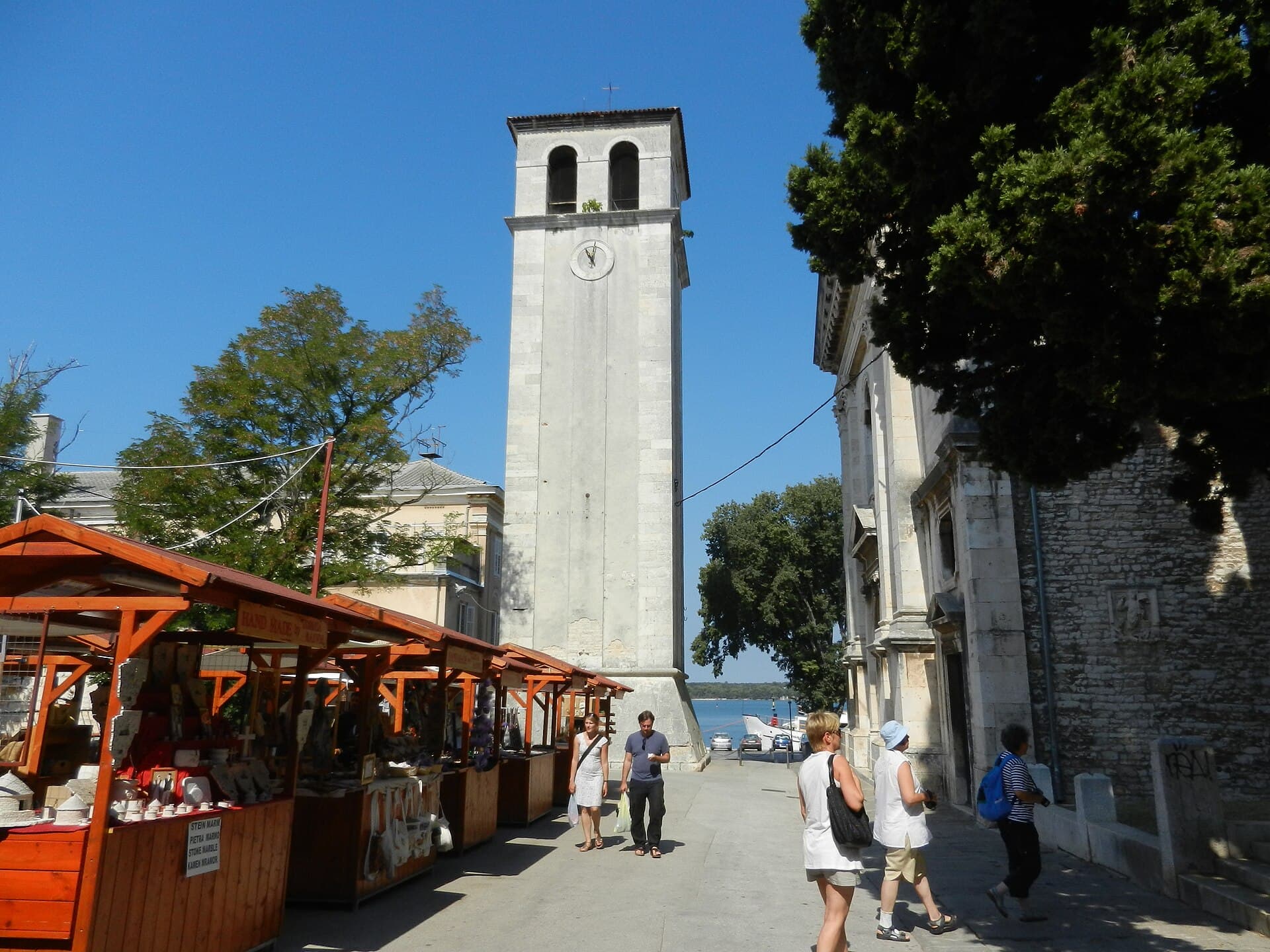 Pula CathedralThe Cathedral of the Assumption is the oldest building still in use in Pula — an5 minutes walk4.4
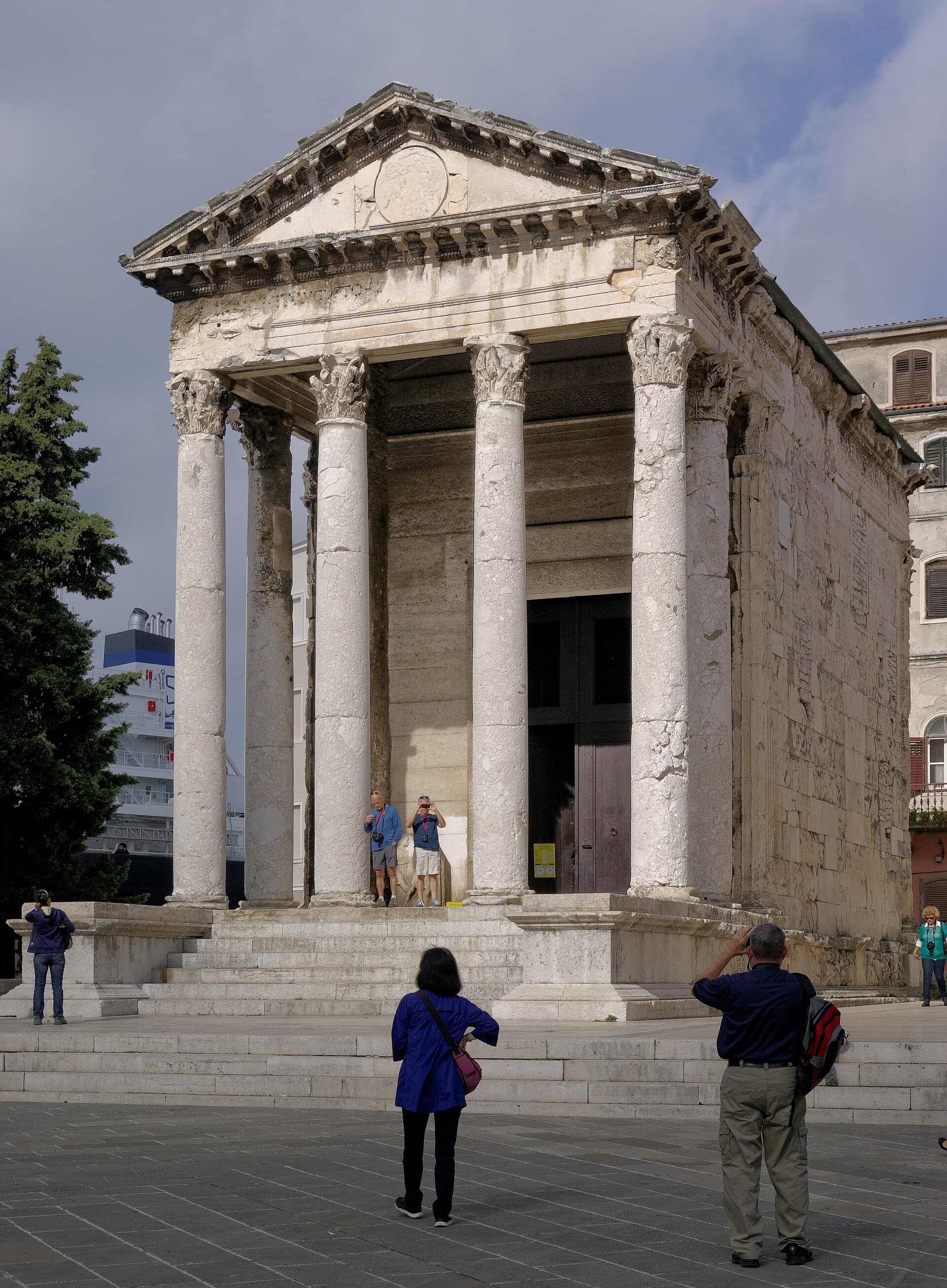 Temple of AugustusA complete Roman temple standing on Pula''s central square, built between **2 BC6 minutes walk4.5
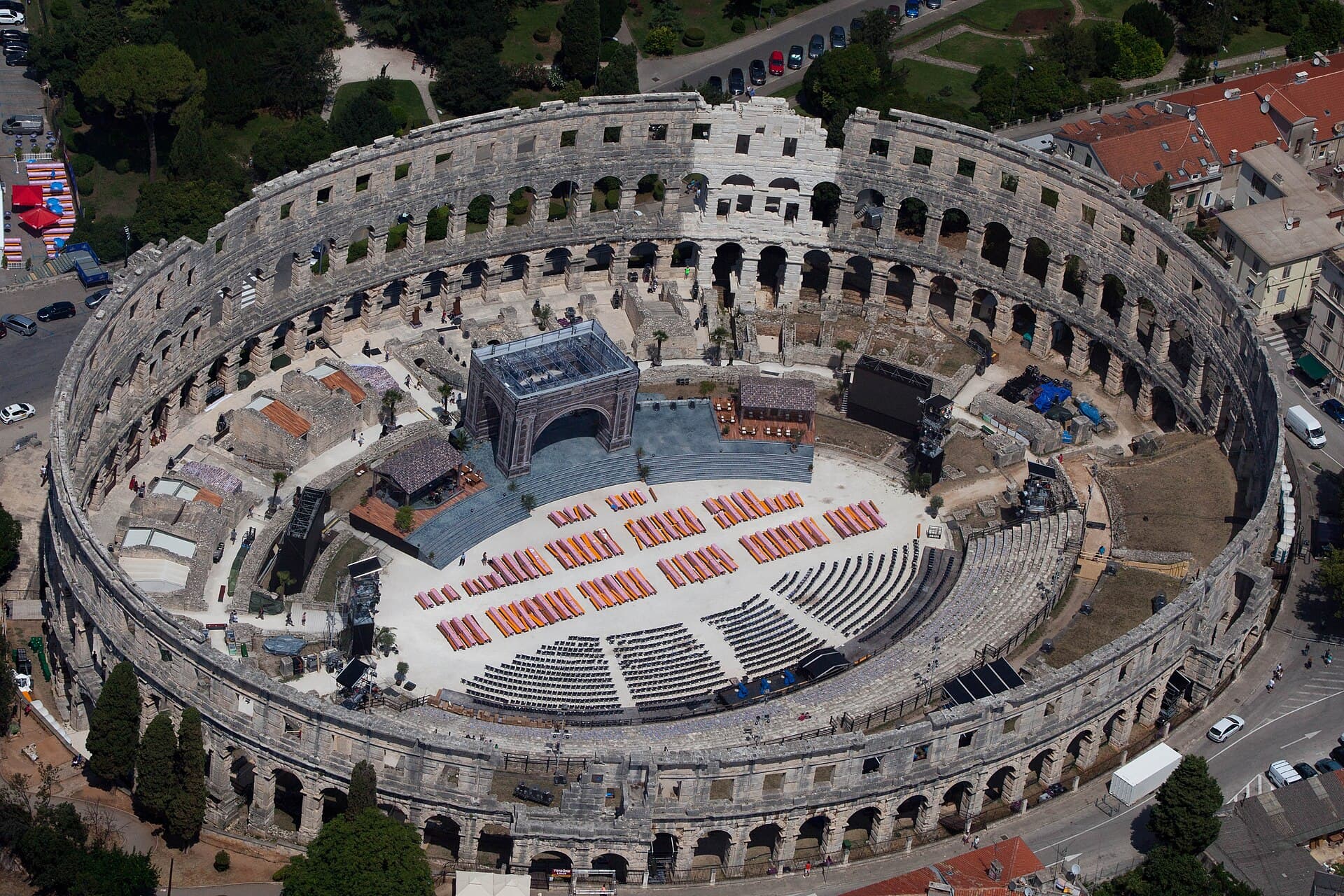 Pula ArenaThe sixth-largest surviving Roman amphitheatre in the world, and the only one to8 minutes walk4.7
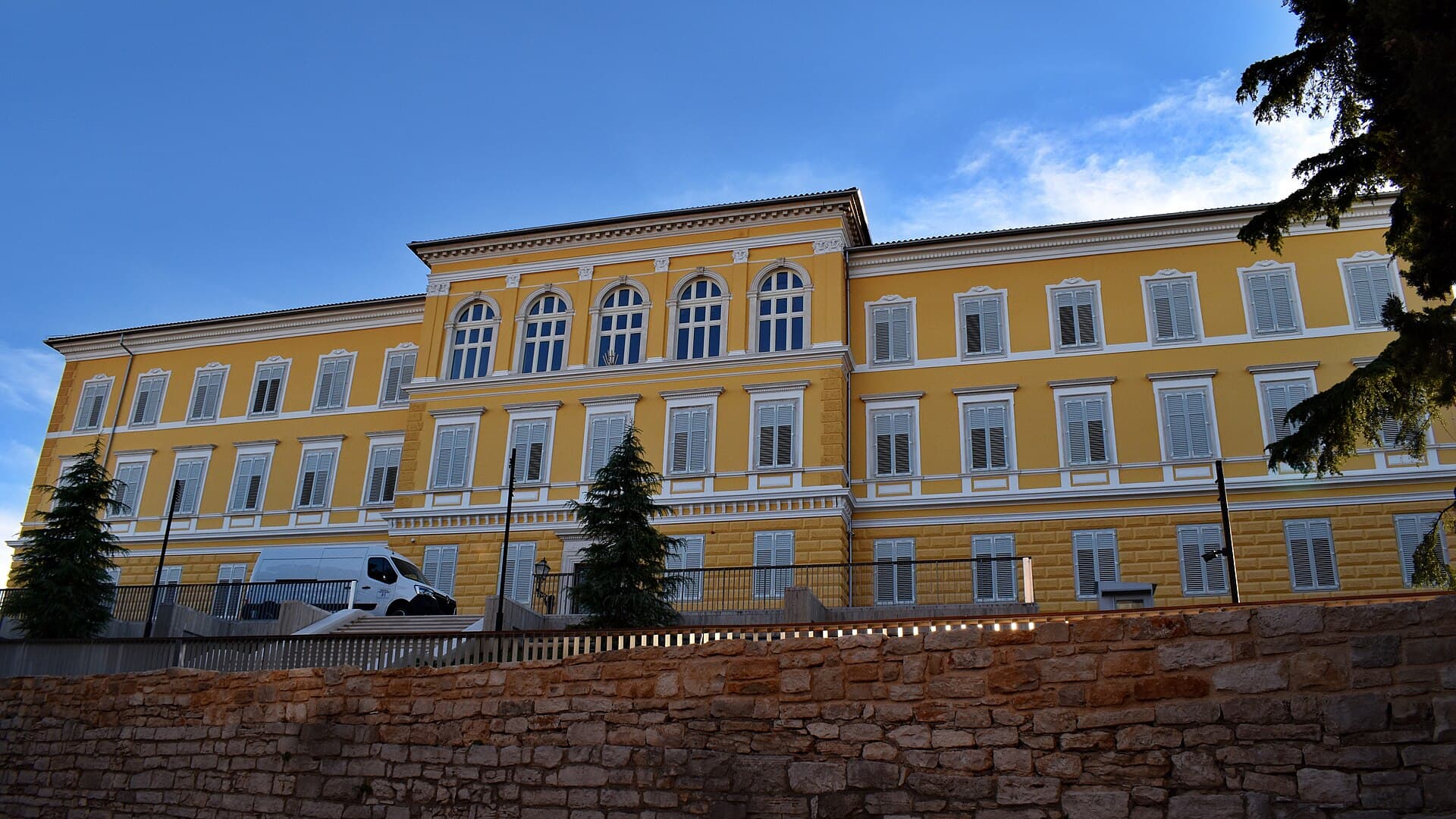 Archaeological Museum of IstriaThe principal museum for the archaeology of the whole Istrian peninsula, on a hi8 minutes walk3.2
Start early at the **Arena**, before the sun gets high — it is completely open with no shade. Then walk down about ten minutes to the **forum** and the **Temple of Augustus**, and take coffee on the square. After that the **Arch of the Sergii** and cobbled Sergijevaca street, then the **Gate of Hercules** and the **Archaeological Museum** if time allows. The afternoon offers two choices: **Brijuni** by ferry from Fažana (a full half-day, book ahead), or **Kamenjak** to the south for swimming in clear water among the rocks. The old town is entirely walkable and needs no car; Kamenjak and Brijuni do.