
The Corinthian front
Six columns whose proportions became a textbook reference.
Berthold Werner — CC BY-SA 3.0 · Berthold Werner — CC BY-SA 3.0 · Berthold Werner — CC BY-SA 3.0 · Berthold Werner — CC BY-SA 3.0
A complete Roman temple standing on Pula''s central square, built between **2 BC and AD 14** — within the emperor Augustus''s own lifetime, dedicated to him and to the goddess Roma. The front is six Corinthian columns carrying a pediment, and its proportions are precise enough that it became a textbook example of classical architecture. **Thomas Jefferson** used drawings of this specific temple when designing the Virginia State Capitol. The square it stands on is Pula''s original **Roman forum**, and remains the city''s main square two thousand years later — a rare continuity. Note the story told about it: in **January 1944** an Allied air raid scored a direct hit and destroyed it almost completely. What you see was rebuilt between 1945 and 1947 from **its own original stones**, gathered out of the rubble and reassembled piece by piece. Inside is a single small room holding Roman sculpture and bronzes.
Six columns whose proportions became a textbook reference.
Pula''s original Roman square, still its main one.
Every stone returned to its place after the 1944 bombing.
Forum, Pula
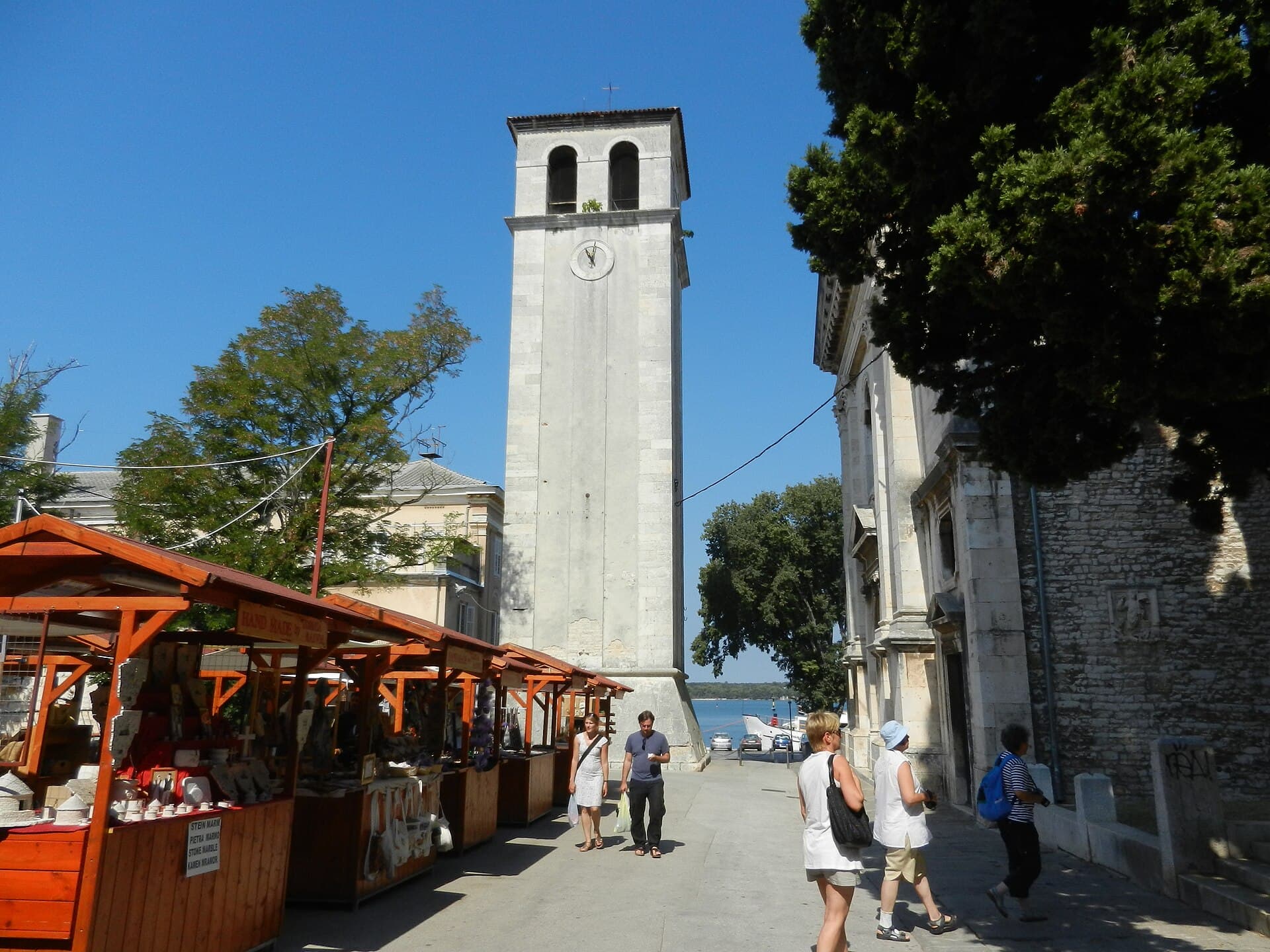 Pula CathedralThe Cathedral of the Assumption is the oldest building still in use in Pula — an3 minutes walk4.4
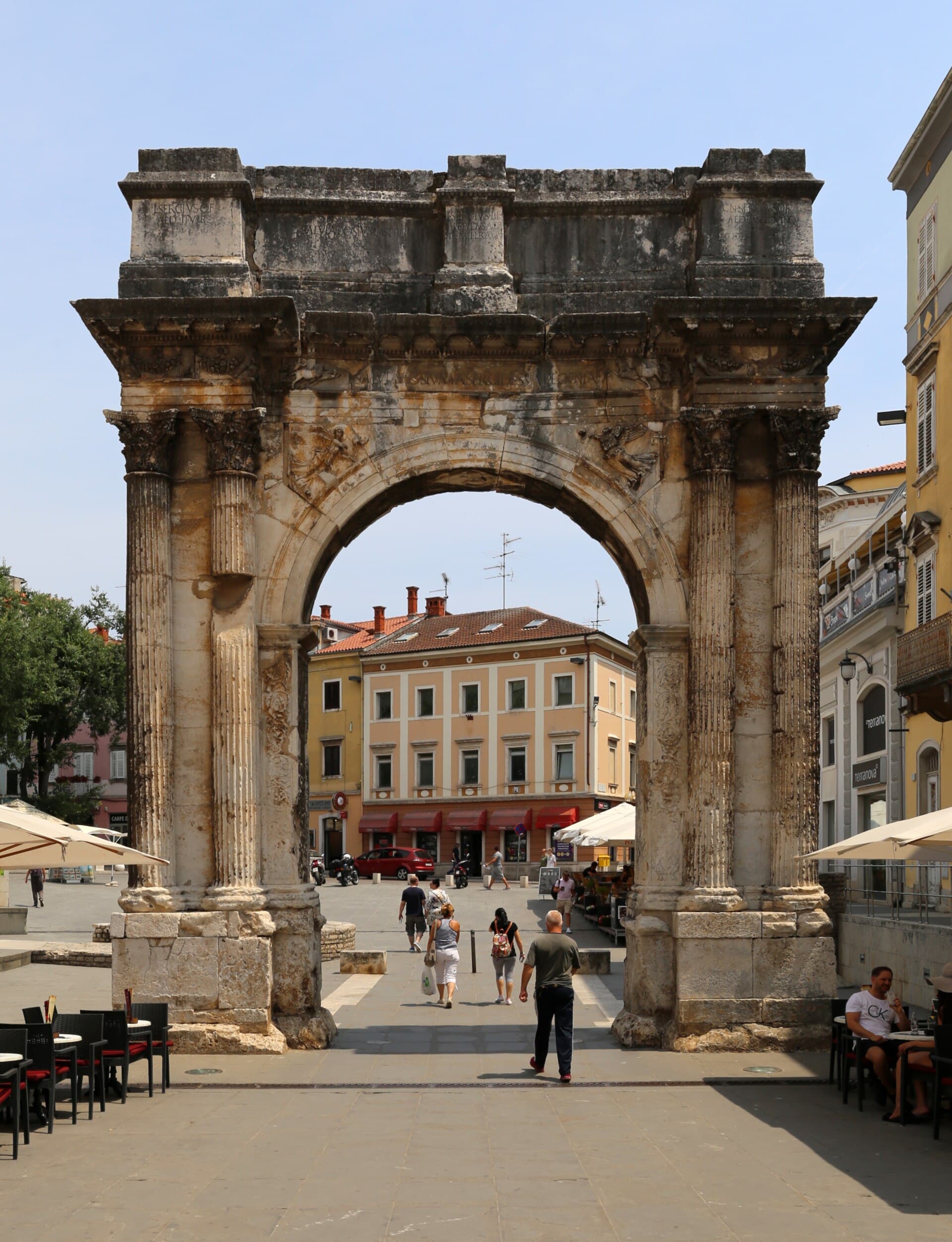 Arch of the SergiiA Roman triumphal arch of about **27 BC**, standing at the eastern entrance to t6 minutes walk4.5
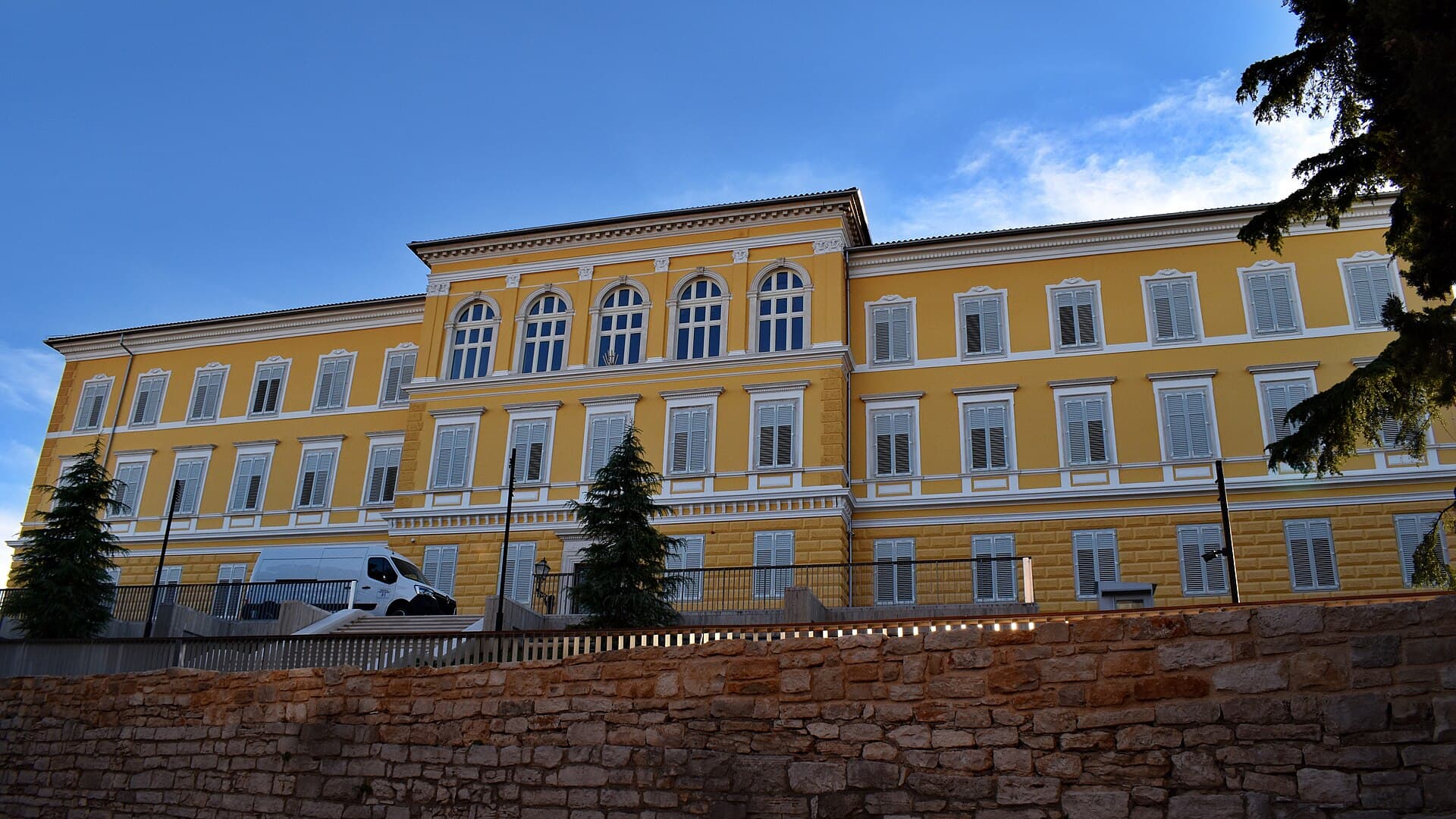 Archaeological Museum of IstriaThe principal museum for the archaeology of the whole Istrian peninsula, on a hi9 minutes walk3.2
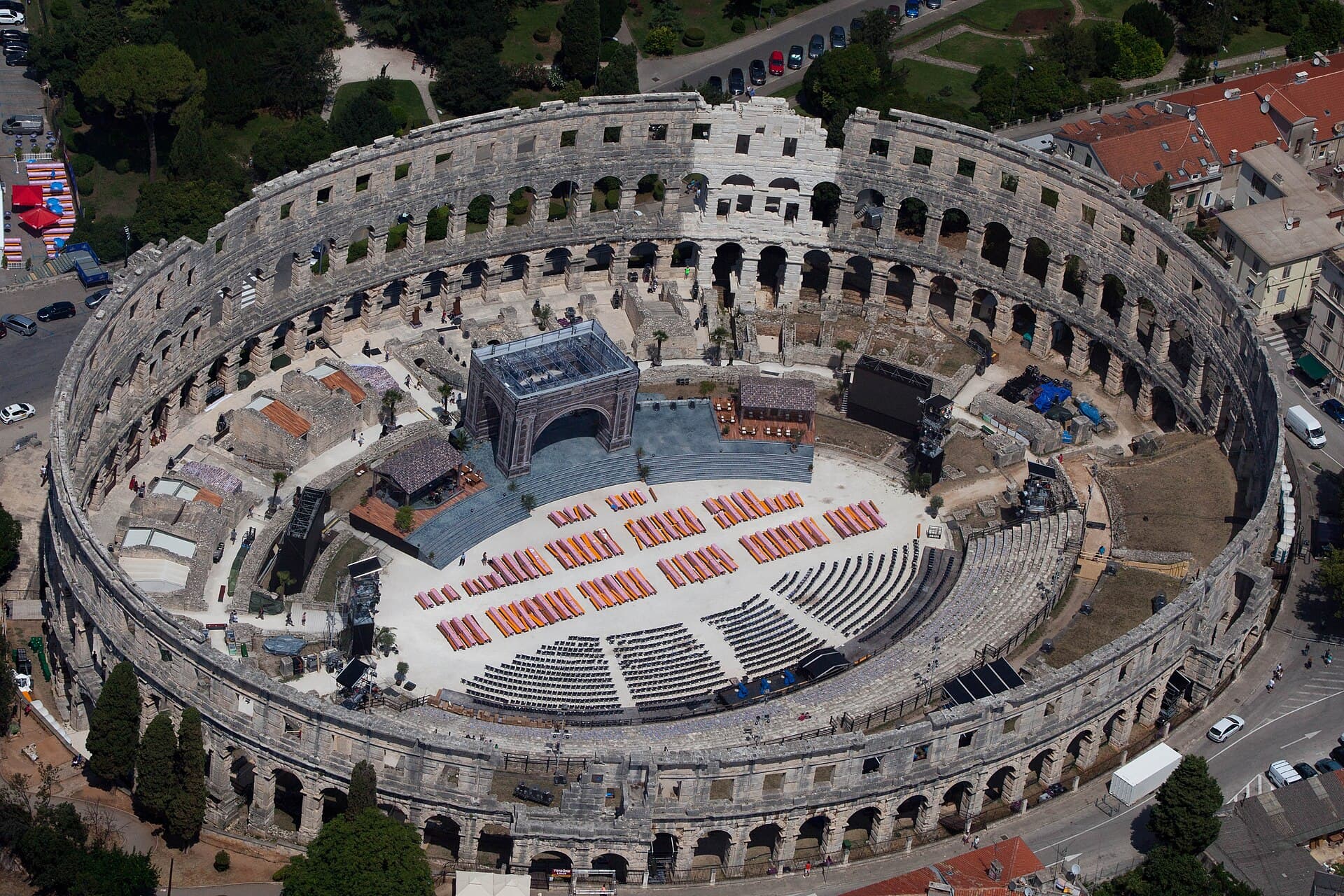 Pula ArenaThe sixth-largest surviving Roman amphitheatre in the world, and the only one to9 minutes walk4.7
Pula is one of the richest Adriatic cities for Roman remains, and all of them sit in a centre walkable in **half a day**. The big four: the **Arena** to the north, the **Temple of Augustus** on the forum, the **Arch of the Sergii** at the old town''s eastern end, and the **Gate of Hercules**, which carries the city''s oldest inscription (about 47 BC) naming its founders. Add the **Roman mosaic** exposed behind a building near the forum showing the punishment of Dirce — free, and missed by most visitors. The whole route is about 25 minutes'' walk end to end, and while the tickets are separate, most are nominal.