
The floor mosaic
Fifth-century fragments exposed under glass.
Tanya Dedyukhina — CC BY 3.0 · Chris Sammis from Lenexa, KS, United States — CC BY-SA 2.0 · Diego Delso — CC BY-SA 4.0
The Cathedral of the Assumption is the oldest building still in use in Pula — and the most layered. It began as a **clandestine church** in the fourth century, when Christianity was still banned, and became a public one after Constantine legalised it. It was burned and rebuilt repeatedly: by the Goths, then the Venetians, then again after a Genoese raid in the fourteenth century. The facade you see is Renaissance (sixteenth century), but the walls behind it are fifth and sixth century, and parts of a **fifth-century mosaic** are exposed under glass in the floor. The high altar is a re-used third-century **Roman stone sarcophagus**, holding the relics of saints. Note: much of the stone in its walls was **taken from the Arena and other Roman buildings** — normal medieval practice, and the reason so many Roman structures vanished from the city. The detached bell tower is seventeenth-century, and its base too is Arena stone.
Fifth-century fragments exposed under glass.
Its walls built from stone carried off the Roman buildings.
Seventeenth century, its base also Roman stone.
Trg svetog Tome 2, Pula
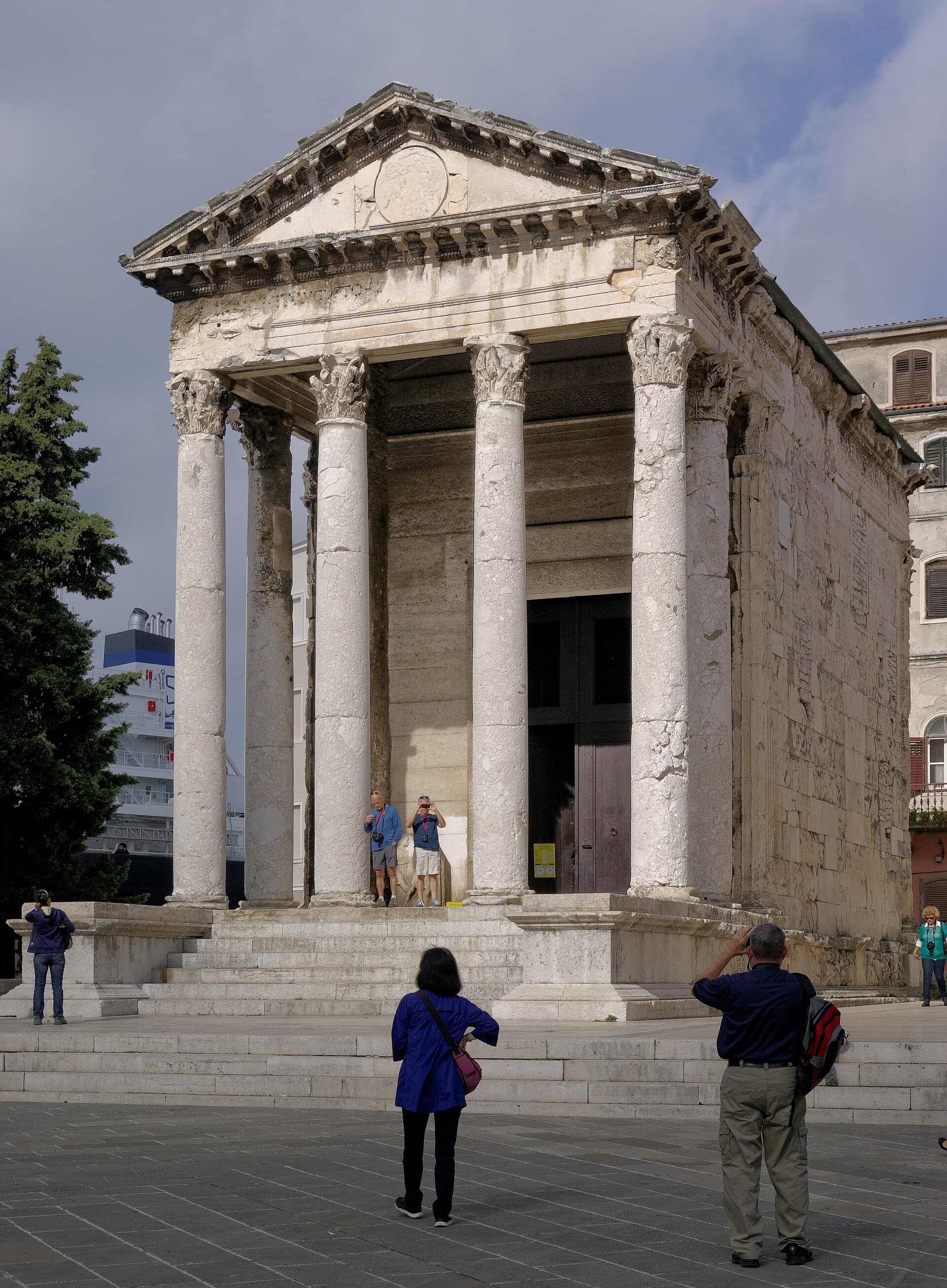 Temple of AugustusA complete Roman temple standing on Pula''s central square, built between **2 BC3 minutes walk4.5
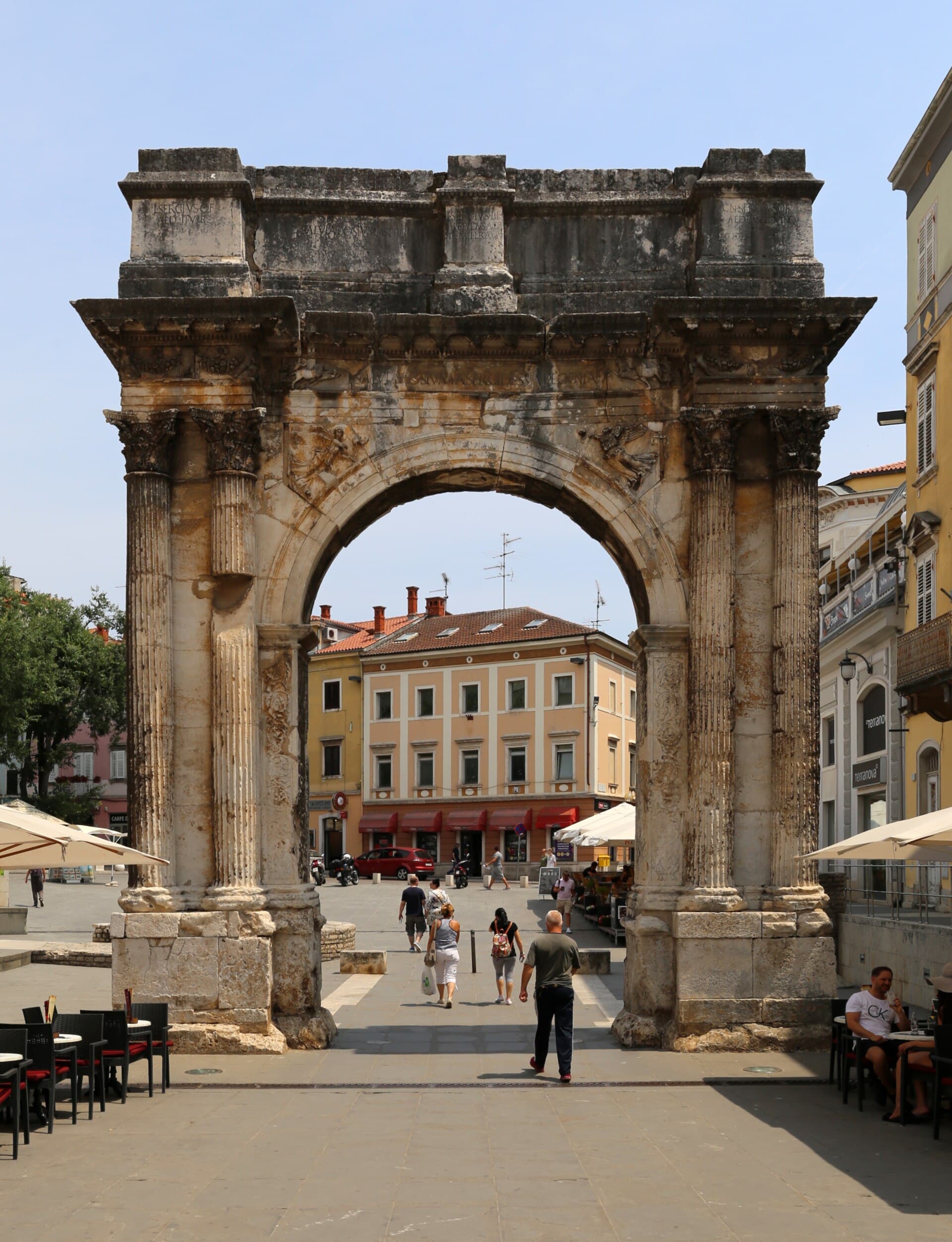 Arch of the SergiiA Roman triumphal arch of about **27 BC**, standing at the eastern entrance to t5 minutes walk4.5
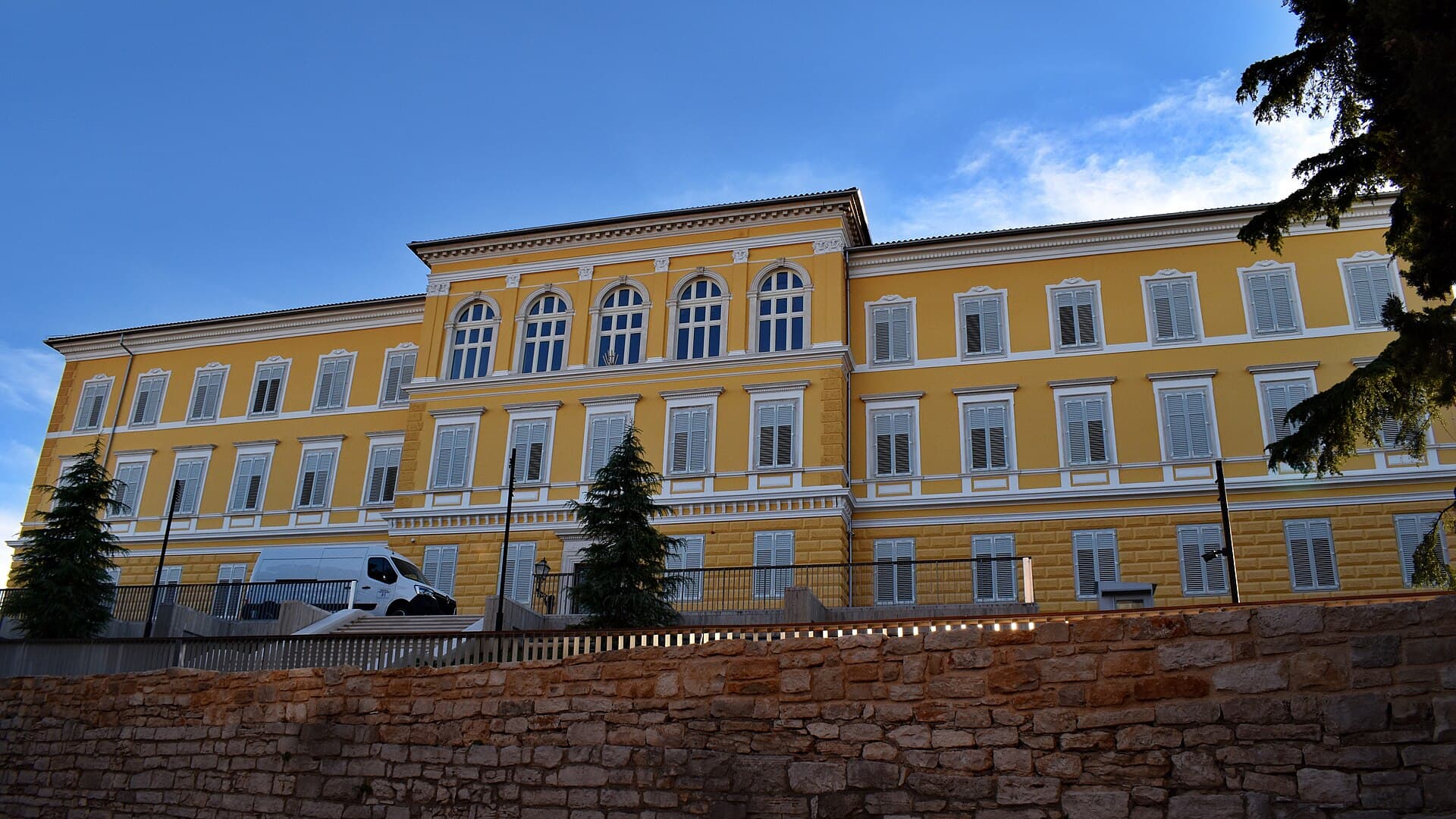 Archaeological Museum of IstriaThe principal museum for the archaeology of the whole Istrian peninsula, on a hi6 minutes walk3.2
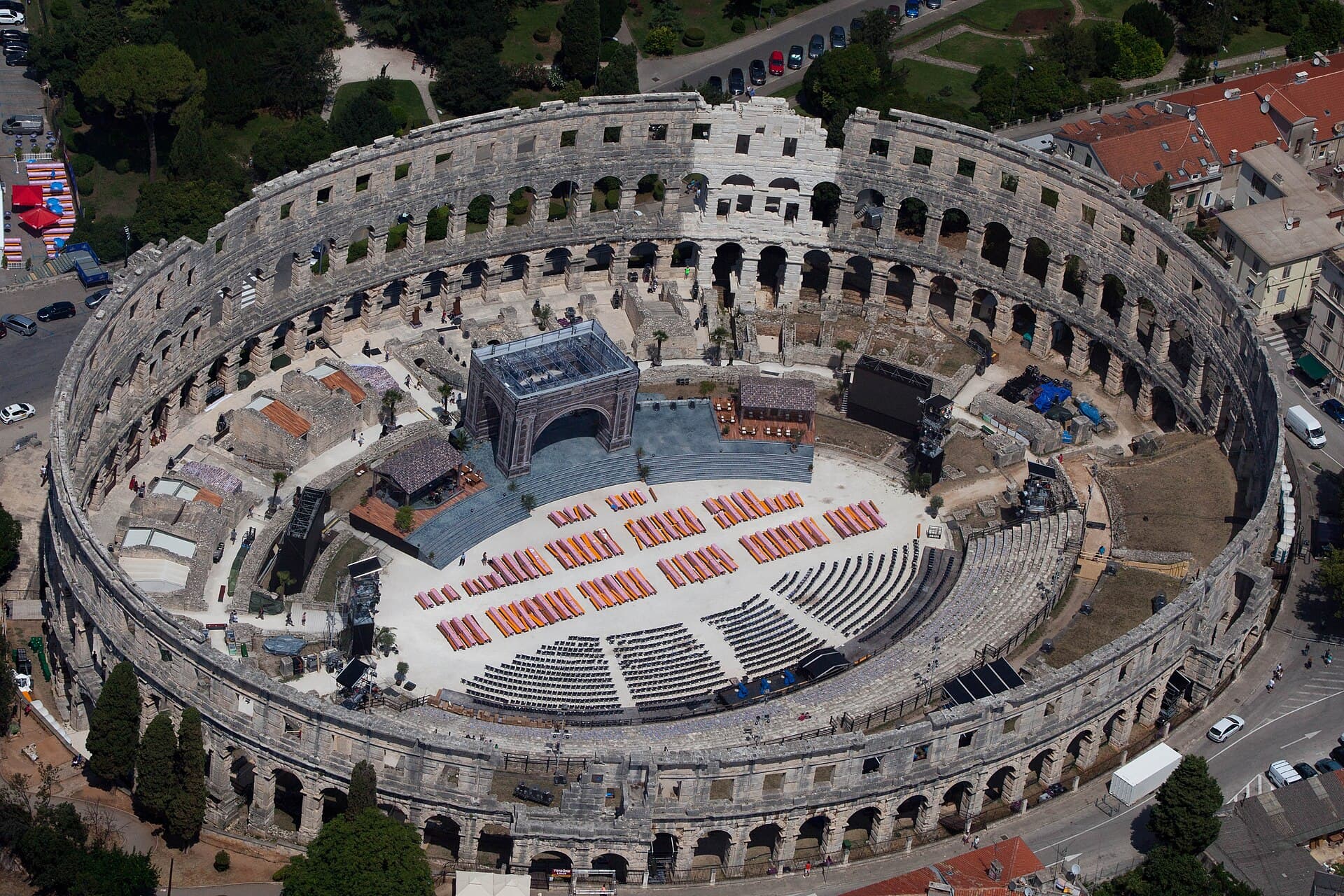 Pula ArenaThe sixth-largest surviving Roman amphitheatre in the world, and the only one to6 minutes walk4.7
Yes in working churches, which is most of them. The practical rule is **shoulders and knees covered** for men and women — no sleeveless tops and no short shorts inside. In coastal towns this is enforced firmly in summer, because visitors arrive straight from the beach, and some larger churches (Dubrovnik''s cathedral, for instance) refuse entry or hand out coverings at the door. ⚠ Photography is normally allowed **without flash**, and never during services. ⚠ Nothing else is expected of non-Christian visitors — entry is open to everyone, and modest dress is the only requirement.