
The side towers
Three still standing, with no parallel at any other amphitheatre.
Jeroen Komen from Utrecht, Netherlands — CC BY-SA 2.0 · Terragio67 — CC BY-SA 4.0 · Terragio67 — CC BY-SA 4.0 · Psittacuso — CC BY-SA 4.0
The sixth-largest surviving Roman amphitheatre in the world, and the only one to keep **all four of its architectural rings** complete along with its three side towers. It was built in the first century AD under Vespasian — the same reign as the Colosseum — for around **twenty thousand spectators**, an enormous figure for a city whose population then was under five thousand. The reason is that Pula was an important naval harbour on the sea route north. It survived because it was never quarried for its stone, as others were. In the fifteenth century Venetian nobles proposed moving it block by block to Venice, and a senator from Pula itself stopped the plan. Beneath the seating are underground passages where equipment and animals were kept, now holding an exhibition on **olive and wine growing** in Roman Istria, with original amphorae and presses. Note: it is still in use — major summer concerts, and the **Pula Film Festival** every July.
Three still standing, with no parallel at any other amphitheatre.
A Roman oil and wine exhibition with original amphorae and presses.
Still in use, and the Pula Film Festival every July.
Flavijevska 17, Pula
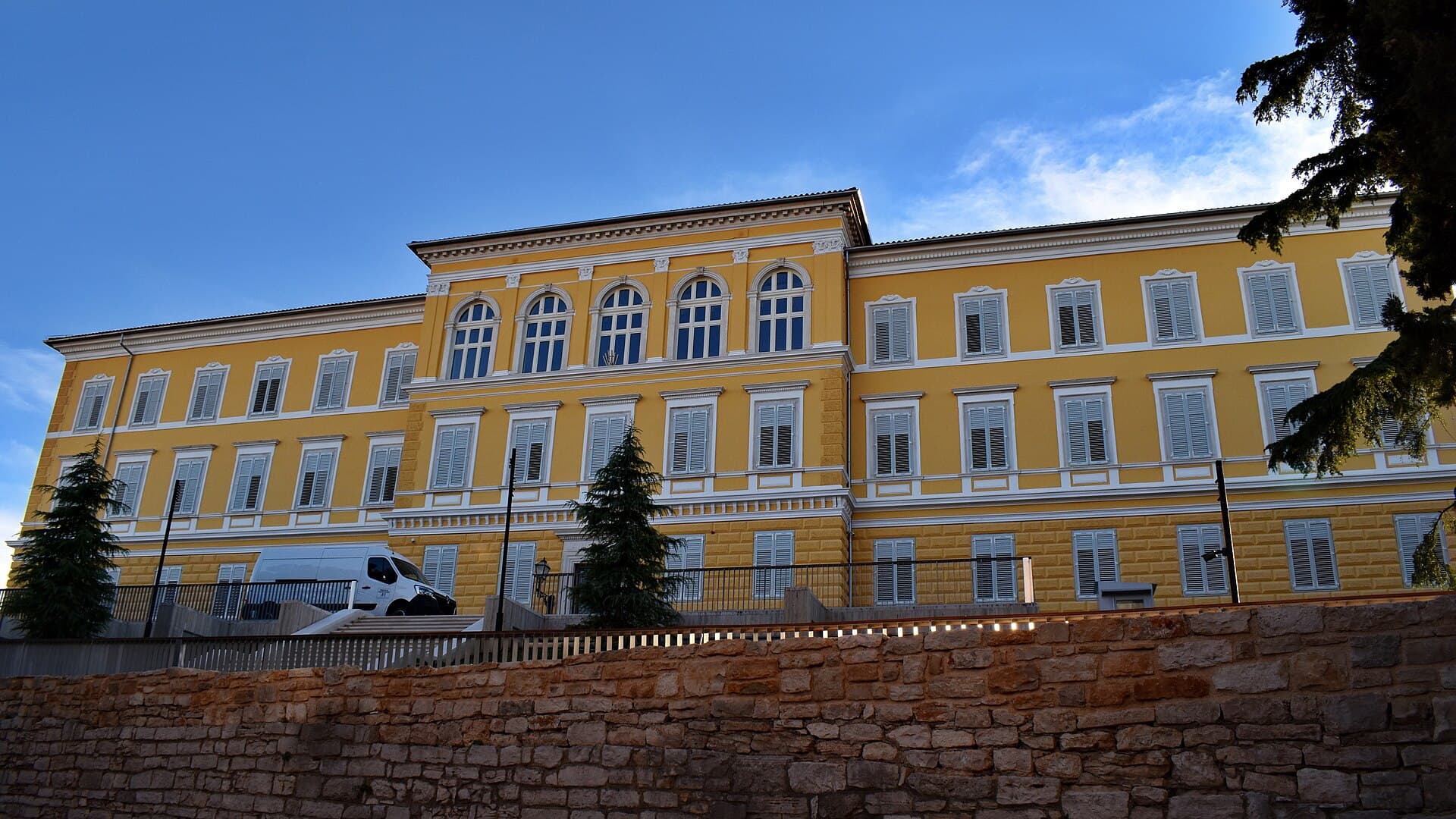 Archaeological Museum of IstriaThe principal museum for the archaeology of the whole Istrian peninsula, on a hi2 minutes walk3.2
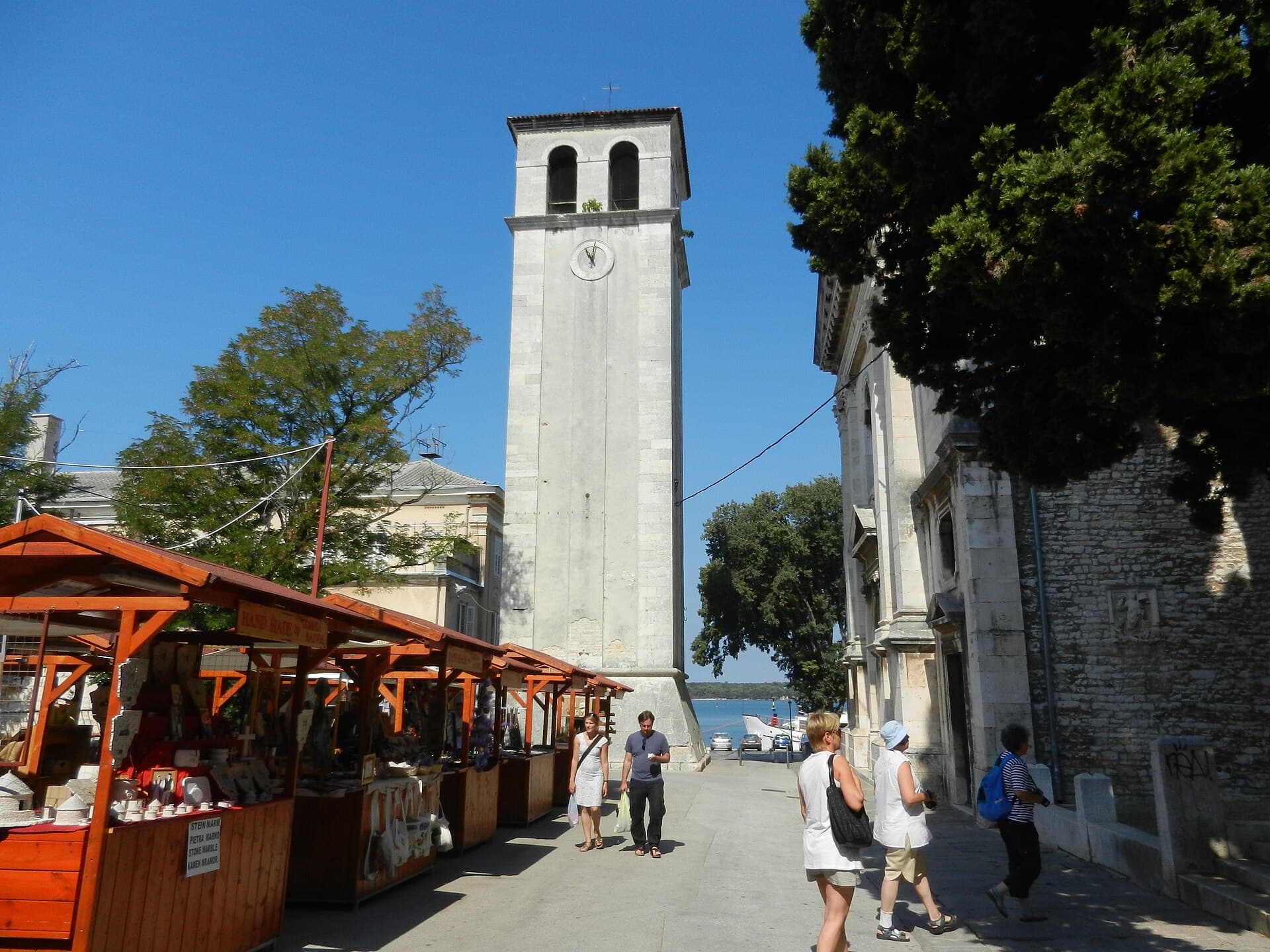 Pula CathedralThe Cathedral of the Assumption is the oldest building still in use in Pula — an6 minutes walk4.4
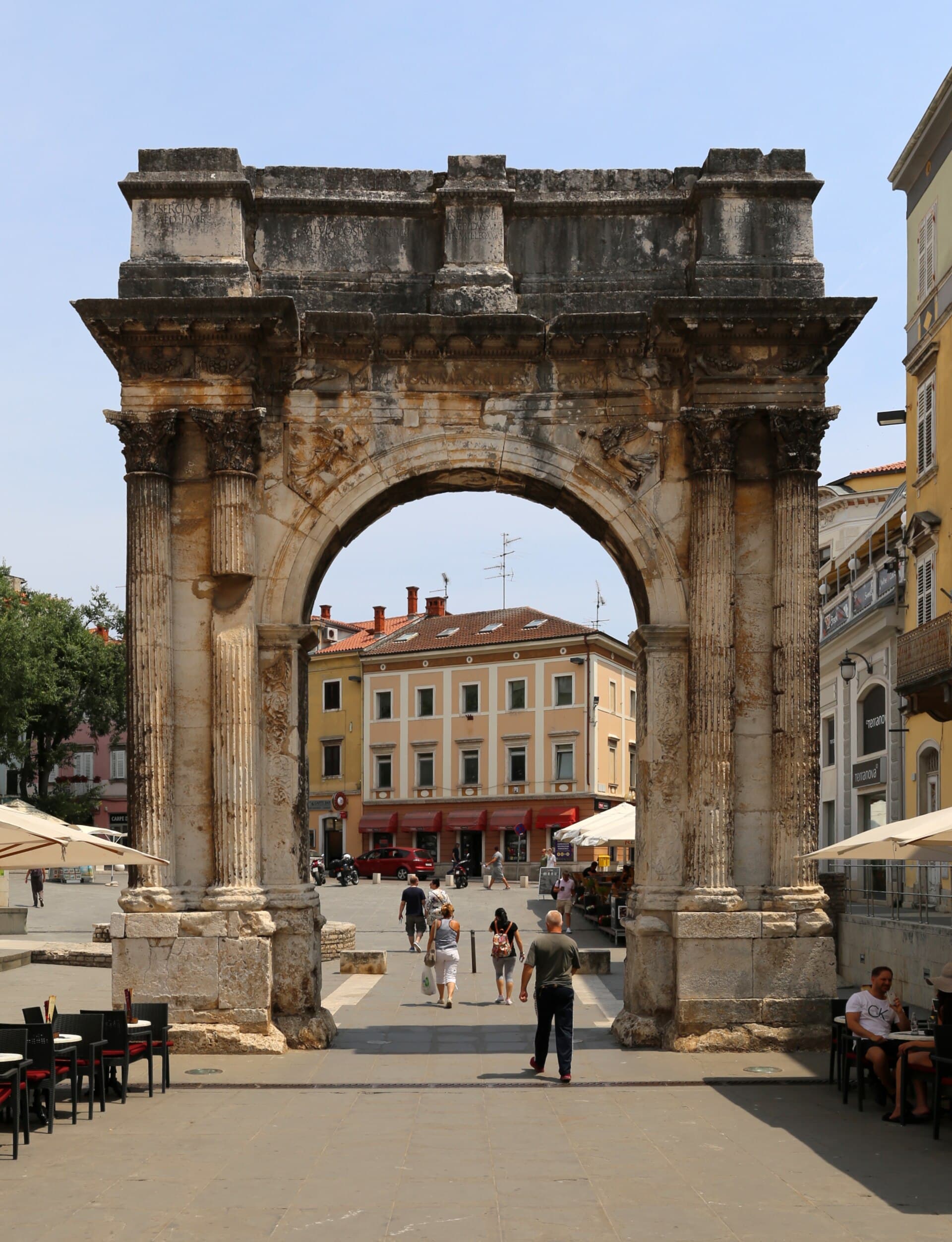 Arch of the SergiiA Roman triumphal arch of about **27 BC**, standing at the eastern entrance to t8 minutes walk4.5
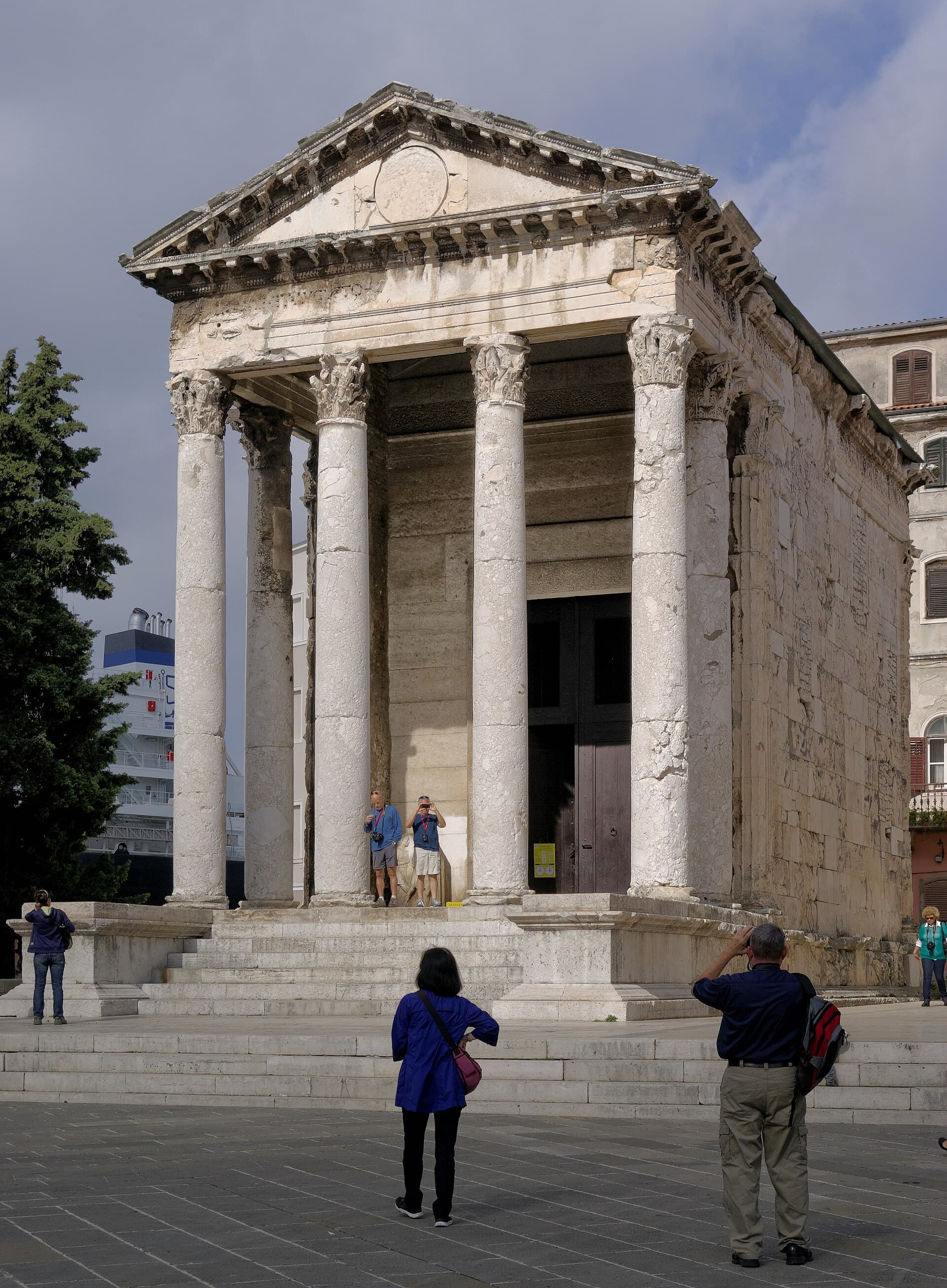 Temple of AugustusA complete Roman temple standing on Pula''s central square, built between **2 BC9 minutes walk4.5
The Colosseum is far larger — fifty thousand spectators against twenty thousand here — and incomparably more famous. But Pula has two genuine advantages. First, **its four rings are complete**: the Colosseum lost a third of its outer wall to earthquakes and stone-robbing, while Pula''s perimeter is intact on every side, so you see the original form as intended. Second, **crowds**: the Colosseum takes over twelve million visitors a year with queues of hours, while Pula can be seen in an hour without booking on most days. ⚠ What Pula lacks is its inner stone seating, removed over the centuries — the interior today is open ground with modern concert seating.