
The reversed arch
Begun for Napoleon's glory, finished to toast his fall.
Filip Maljković from Pancevo, Serbia — CC BY-SA 2.0 · Ray Swi-hymn from Sijhih-Taipei, Taiwan — CC BY-SA 2.0 · ParsonsPhotographyNL — CC BY-SA 4.0 · dconvertini — CC BY-SA 2.0
The Arch of Peace closes the Sempione axis with neoclassical pomp: a marble triumphal arch begun by Napoleon in 1807 as the gateway of his new Alpine road towards Paris — then he fell before its finish, and the victorious Austrians completed it, reversing both direction and meaning: from monument to Napoleon's glory into an "arch of peace" celebrating his fall, the four bronze horses on top turned pointedly to face away from France. Today the arch is more centre-of-life than monument: the square around it is a famous evening meeting point ringed by cafés and restaurants, the lawn before it Milan's open youth salon — the place at its best towards sunset, when its surrounds become an open-air gathering. Fifteen minutes serve it as a monument; an evening suits it as a square.
Begun for Napoleon's glory, finished to toast his fall.
Four bronzes deliberately turned from Paris.
Rim cafés and youth lawns — Milan's after-sunset commons.
Piazza Sempione, 20154 Milan
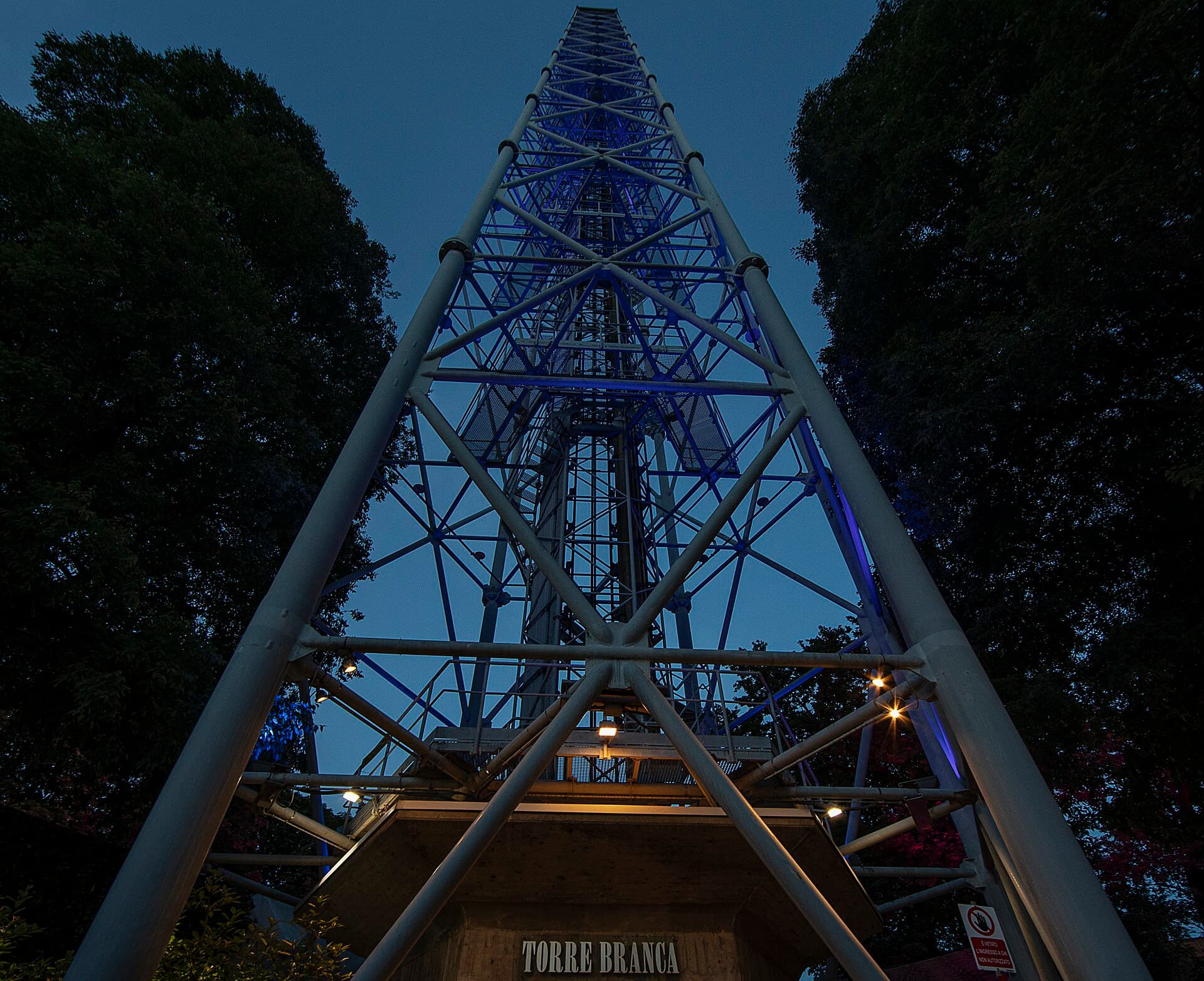 Torre BrancaThe Torre Branca is a slender steel needle of 108 metres among Sempione's trees,3 minutes walk4.4
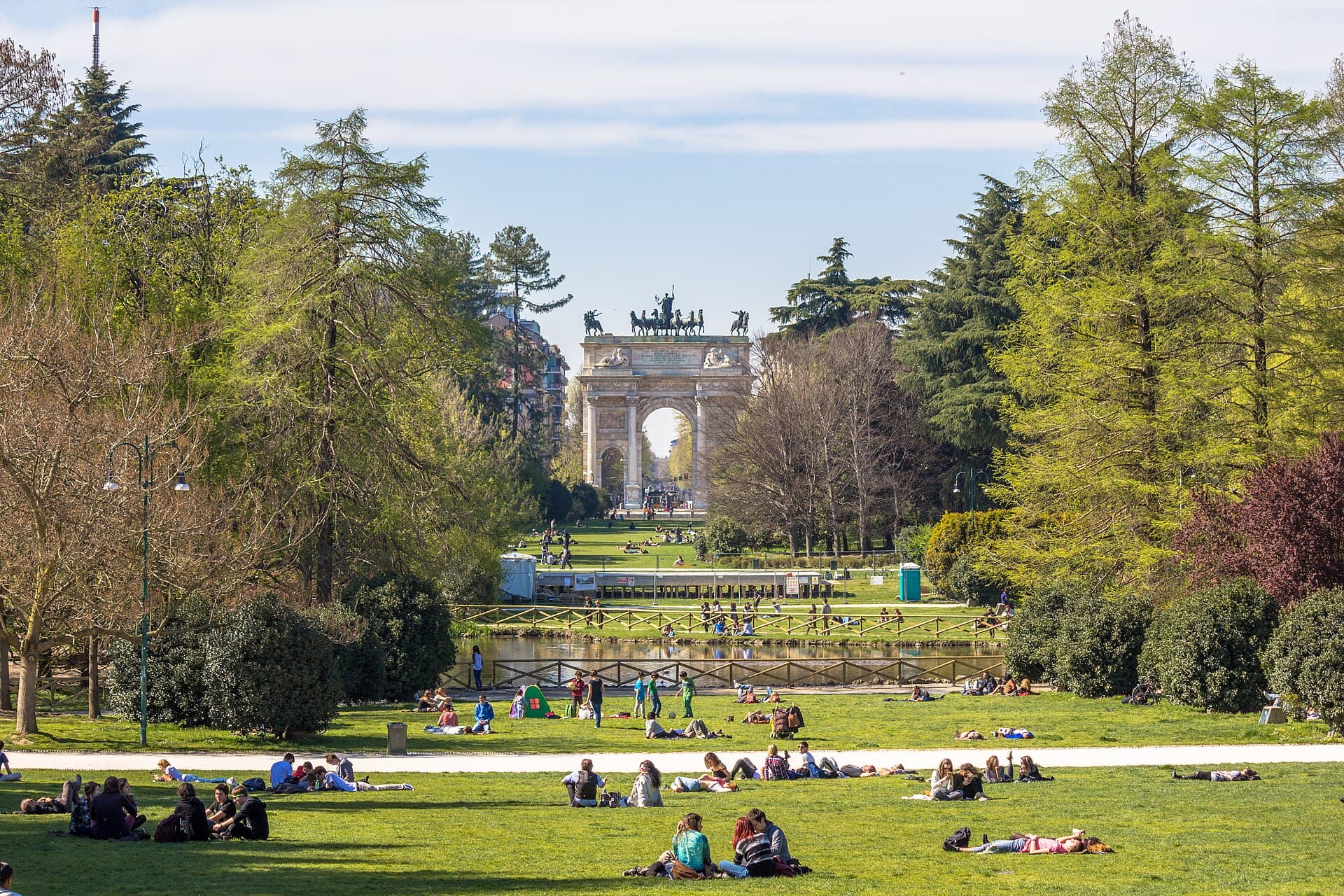 Parco SempioneSempione is Milan's green lung: forty-seven hectares of English-style lawns, pon4 minutes walk4.7
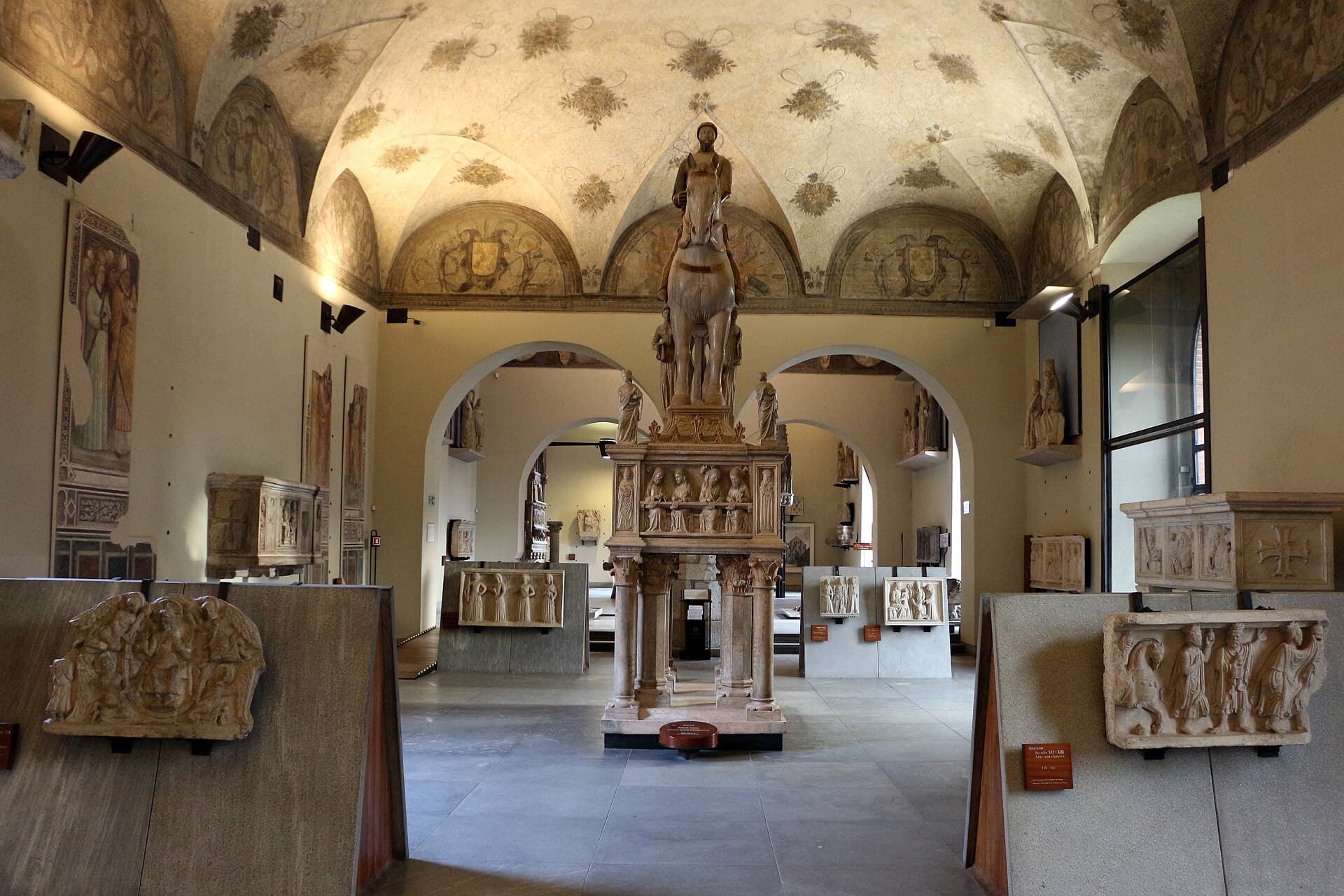 Museum of Ancient Art, Castello SforzescoIn a bare stone hall that was once a ward of a Spanish military hospital stands 9 minutes walk4.6
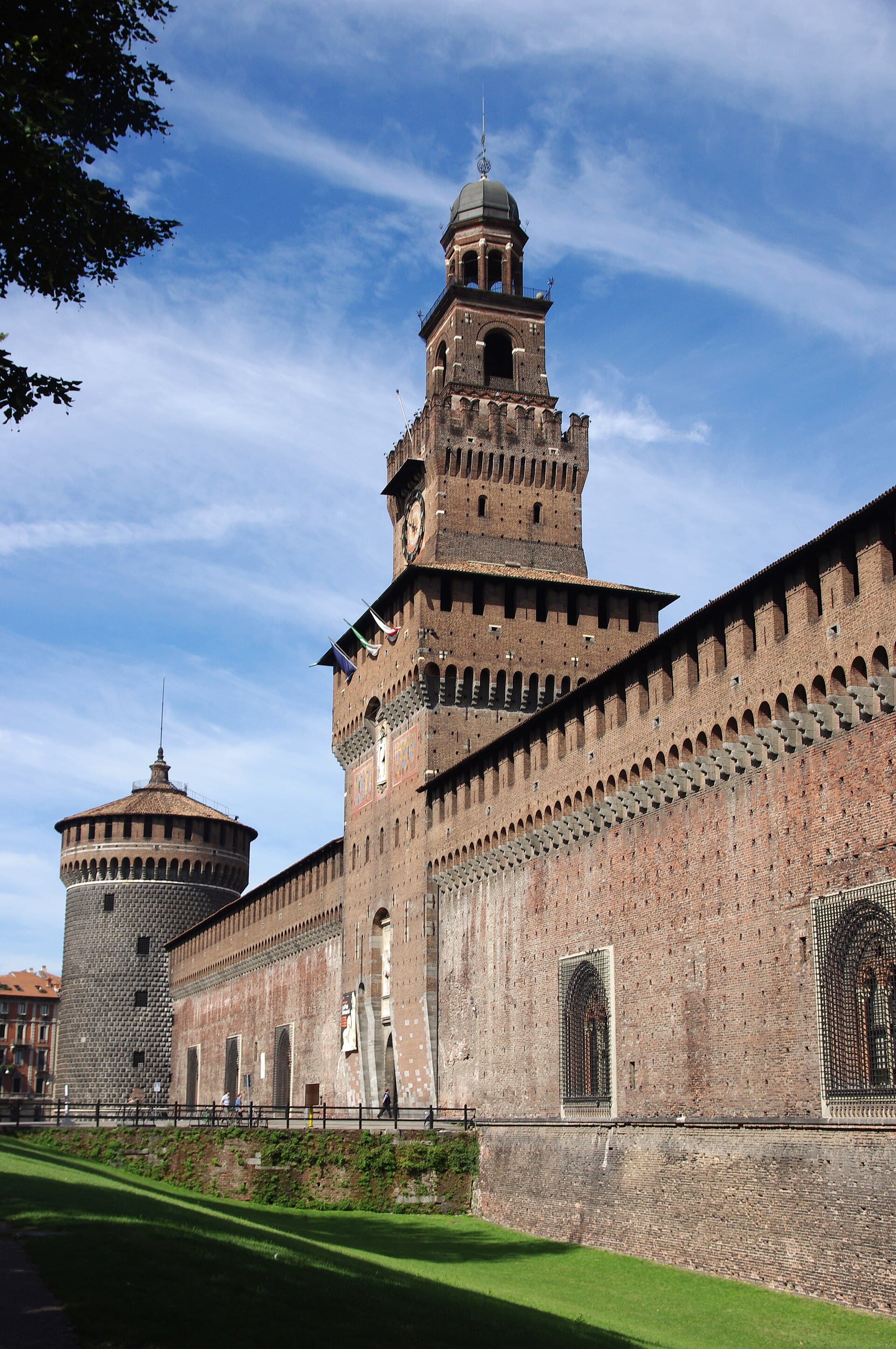 Sforzesco CastleThe Castello is the fortress of Milan's dukes: a huge red fifteenth-century squa10 minutes walk4.8
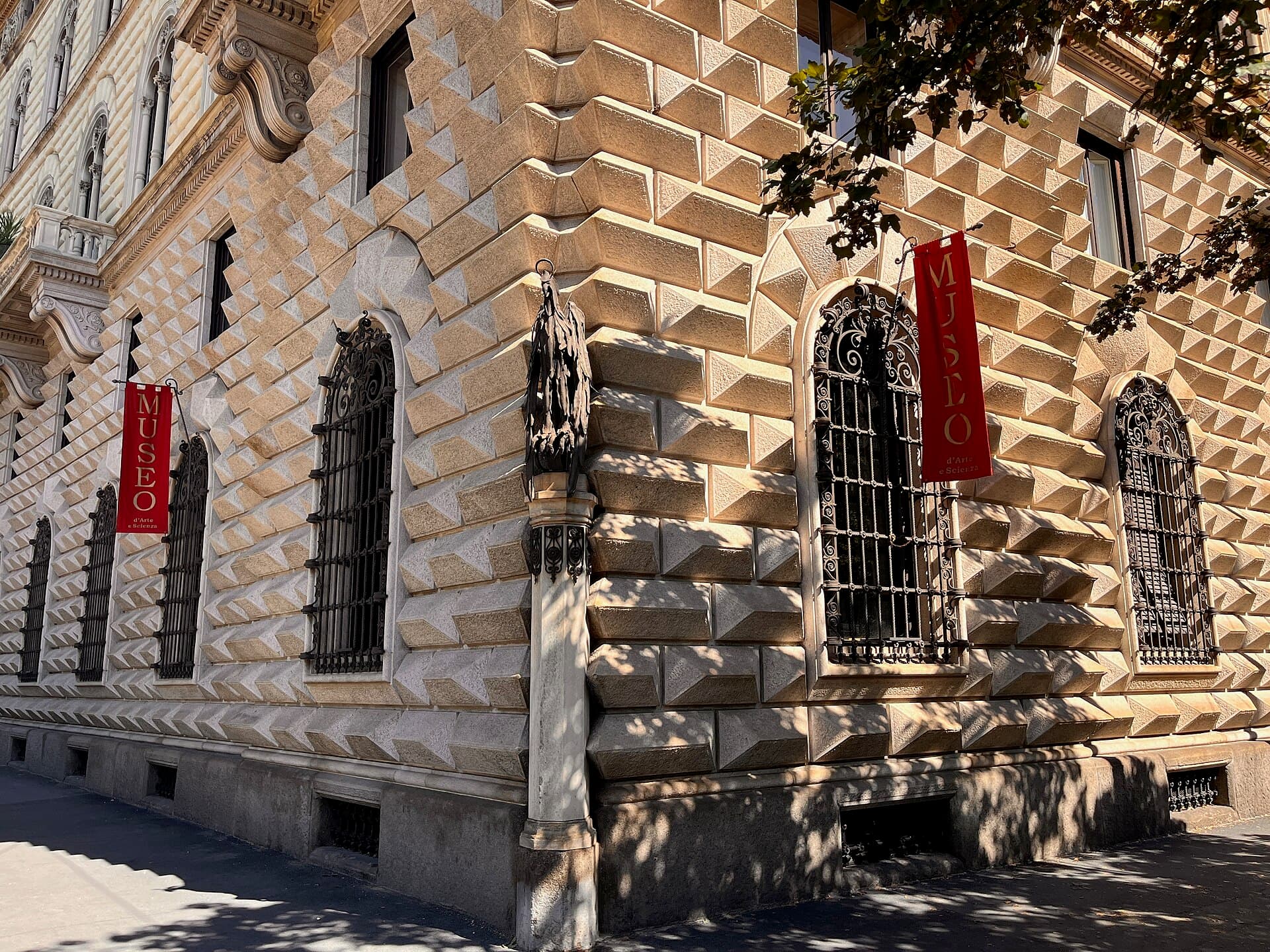 Museo d'Arte e ScienzaA private museum near the Sforza castle in Milan with an unusual subject: how it12 minutes walk4.4
Alone, no — nor does it need one: it stands as the finale of the Sempione walk from the castle, arriving en route. The art is timing that arrival for sunset, turning interlude into evening.
Its square's rim and Corso Sempione behind run a living strip of restaurants and cafés — pizza-casual to elegant, most facing the floodlit arch.
A lesson in written history: panels and figures were swapped to narrate "European peace" defeating "the tyrant" — the monument itself a document of victors literally recarving the story.