
The gate and its looted lions
A gate of about 1460 guarded by Greek lions taken as booty in 1687, the largest carved with Scandinavian runes — all of it visible free from the bridge.
Sergey Ashmarin — CC BY-SA 3.0 · Didier Descouens — Public domain · dconvertini — CC BY-SA 2.0 · dconvertini — CC BY-SA 2.0
At its peak this yard could put a fully armed warship in the water in a single day. That was not republican propaganda but a genuine production line: standardised parts, workshops arranged in sequence along both banks of an internal canal, and a hull sliding from station to station until it emerged at the far end with its oars, rigging, guns and crew. The Arsenal is traditionally dated to around 1104, and it employed thousands at a time when Europe had nothing else resembling a factory. Dante, in Venice as an envoy from Ravenna, is thought to have seen it working, and the cauldrons of boiling pitch he set down in the Inferno are usually read as this place. From behind these long silent walls came the power that made Venice mistress of the Mediterranean for centuries. Which is why arriving visitors are so often caught out: the Arsenal is not a museum that opens every morning. The Italian Navy still occupies a large part of it, and the gates stay shut for most of the year. The one dependable way into the vast southern halls — the ropeworks, the armouries, the covered docks — is the Venice Biennale, which rents them and fills them with contemporary work. In 2026 the art edition runs from 9 May to 22 November; the full ticket is about EUR 30 and covers one entry to the Arsenale and one to the Giardini, on whatever days you choose, with Mondays closed bar a handful of exception dates. Hours are 11am to 7pm through the summer, 10am to 6pm from late September. It is not included in the Venice Museum Pass or in Venezia Unica. If you come outside the Biennale season, ten minutes here are still worth spending. The land gate of about 1460 — generally counted the first classical revival building in the city — stands behind a small bridge that lets you see the whole of it with no ticket and no queue. It is guarded by marble lions carried off from Greece as war booty in 1687, the largest being the Piraeus Lion, whose shoulder and flank carry runic carvings cut by Scandinavian mercenaries in the eleventh century: a line of Norse on a Greek stone in front of an Italian doorway, and to my mind the strangest object on free display anywhere in Venice. A plaque with Dante's lines sits beside the gate, and a bust of him to the right. The neighbourhood out here in eastern Castello is quieter than Piazza San Marco by a margin your body registers immediately: washing on lines, children playing, cafes charging local prices rather than square prices. Take vaporetto line 1 to the Arsenale stop and walk two minutes; the boat fare alone costs more than most admissions in this city. From San Marco it is roughly a twenty-minute walk, but over several stepped bridges, which is hard work with a pushchair or a wheelchair. And plainly: if contemporary art does nothing for you, do not pay EUR 30 for the architecture alone — enjoy the gate, or spend your money on the nearby Naval History Museum, a separate ticket from about EUR 17, whose Ships Pavilion stands inside the Arsenal walls, if it is ships that draw you.
A gate of about 1460 guarded by Greek lions taken as booty in 1687, the largest carved with Scandinavian runes — all of it visible free from the bridge.
The three-hundred-metre rope-walk and the covered armouries open to the public only while the Biennale is on, and the architecture alone justifies the ticket.
Eastern Castello is a quiet residential quarter with sane prices, the nearest thing to relief after the scrum around San Marco.
Campo de l'Arsenal / Campo de la Tana, Castello, 30122 Venice
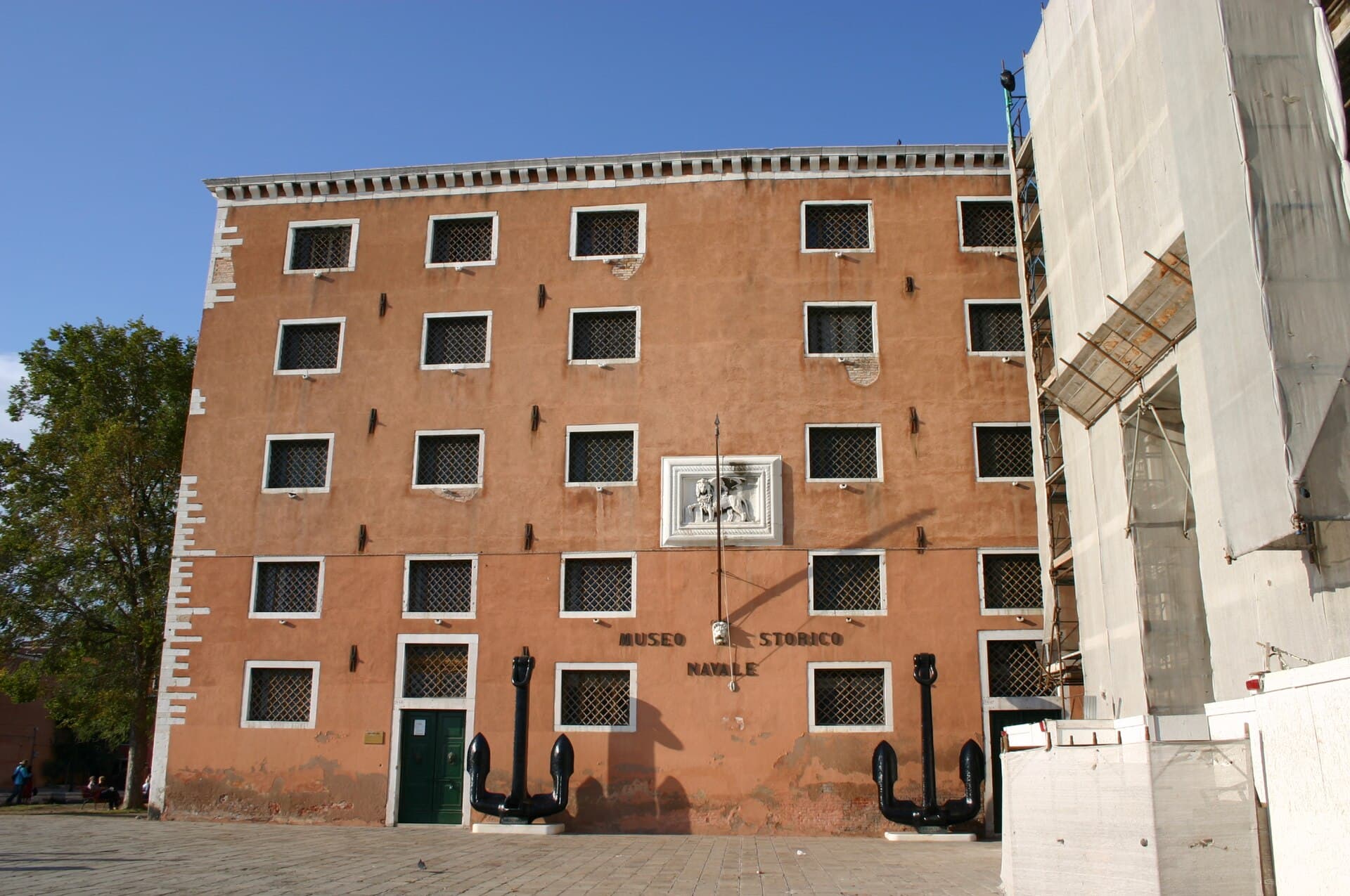 Naval History Museum (MUNAV)The most important object in this museum no longer exists. The Bucintoro, the gi5 minutes walk4.3
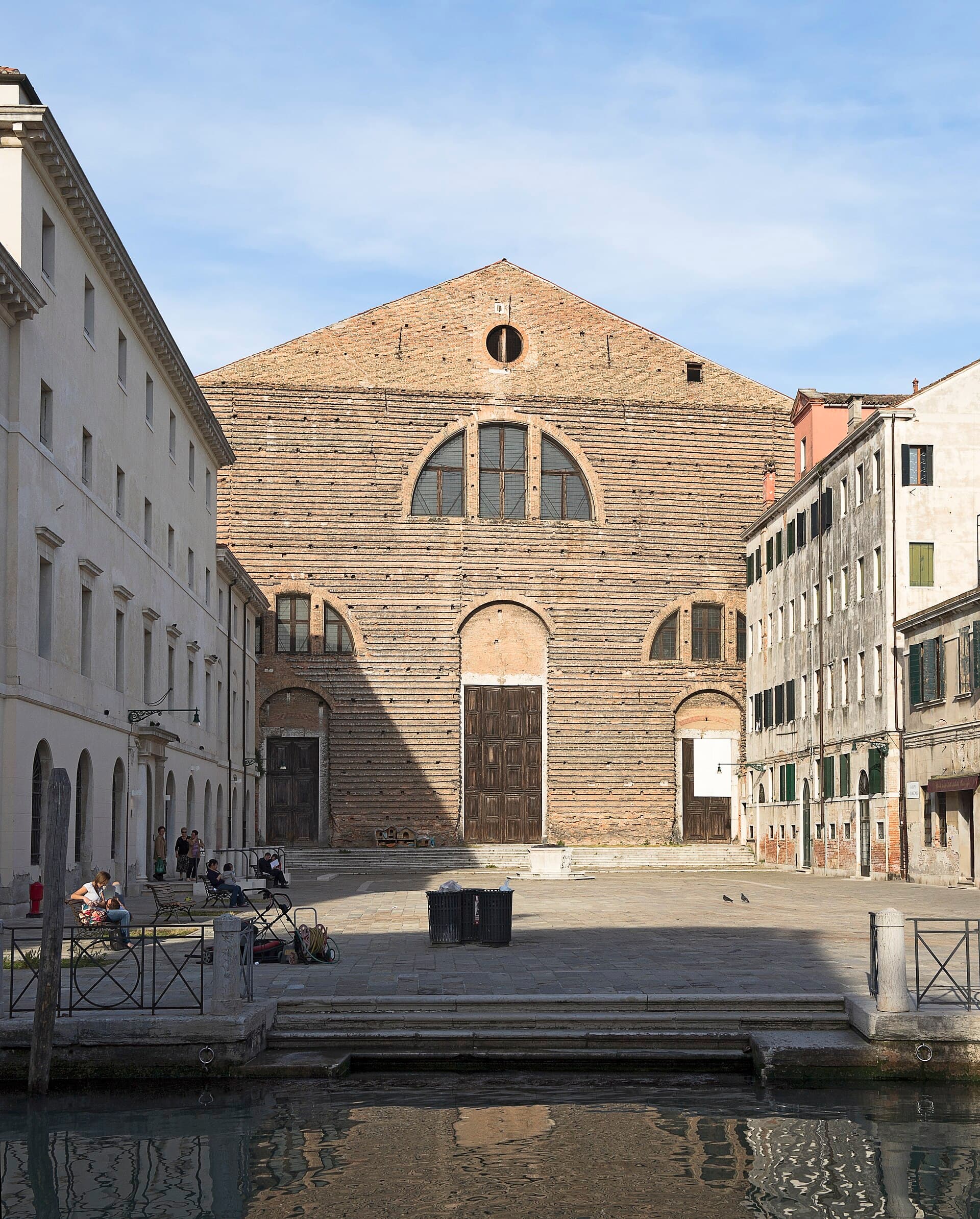 Ocean Space (Church of San Lorenzo)The church of San Lorenzo shut its doors to the public in 1865 and stayed silent8 minutes walk4.6
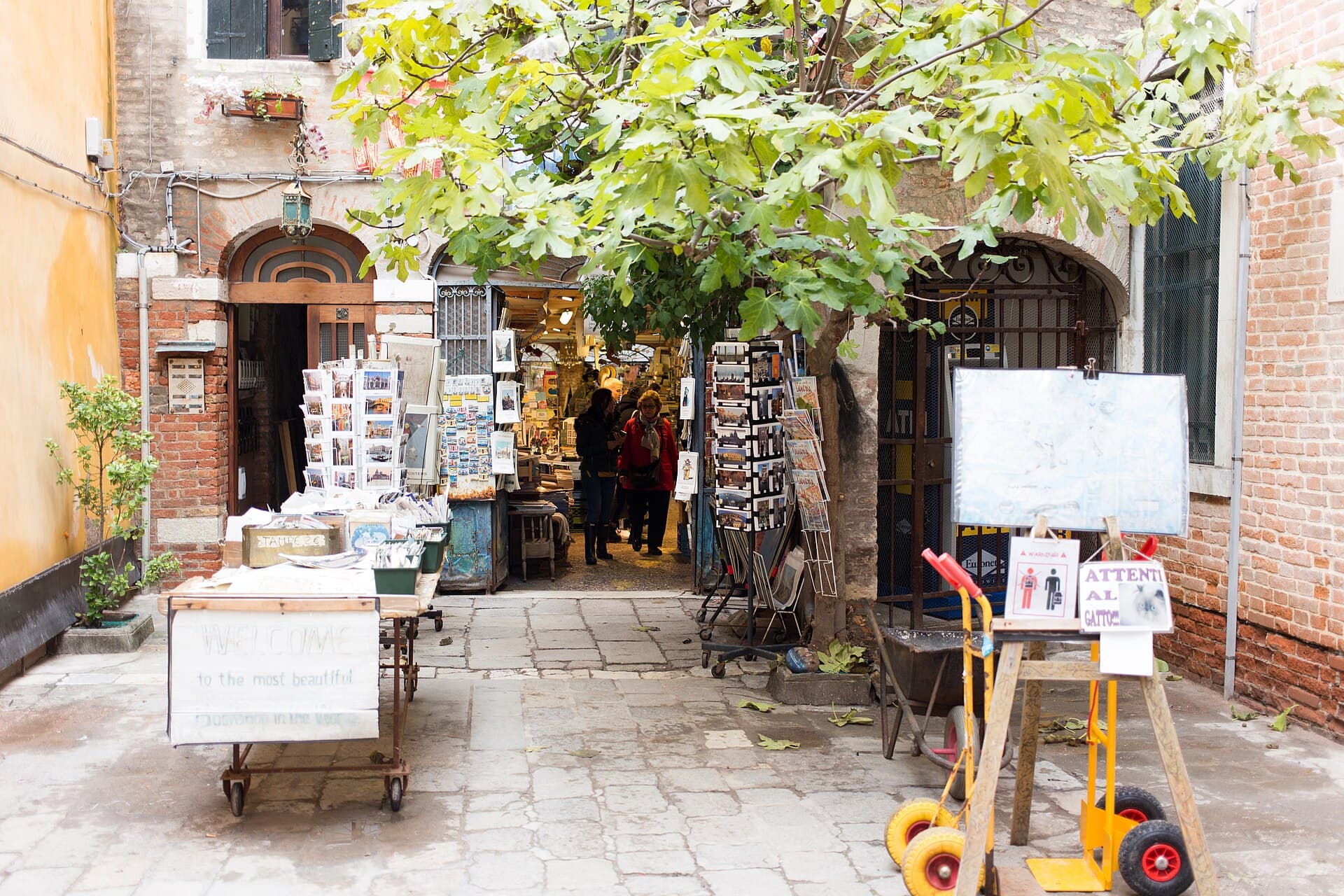 Libreria Acqua AltaThere is a full-size gondola in the middle of this shop, and it is not a prop: i11 minutes walk4.3
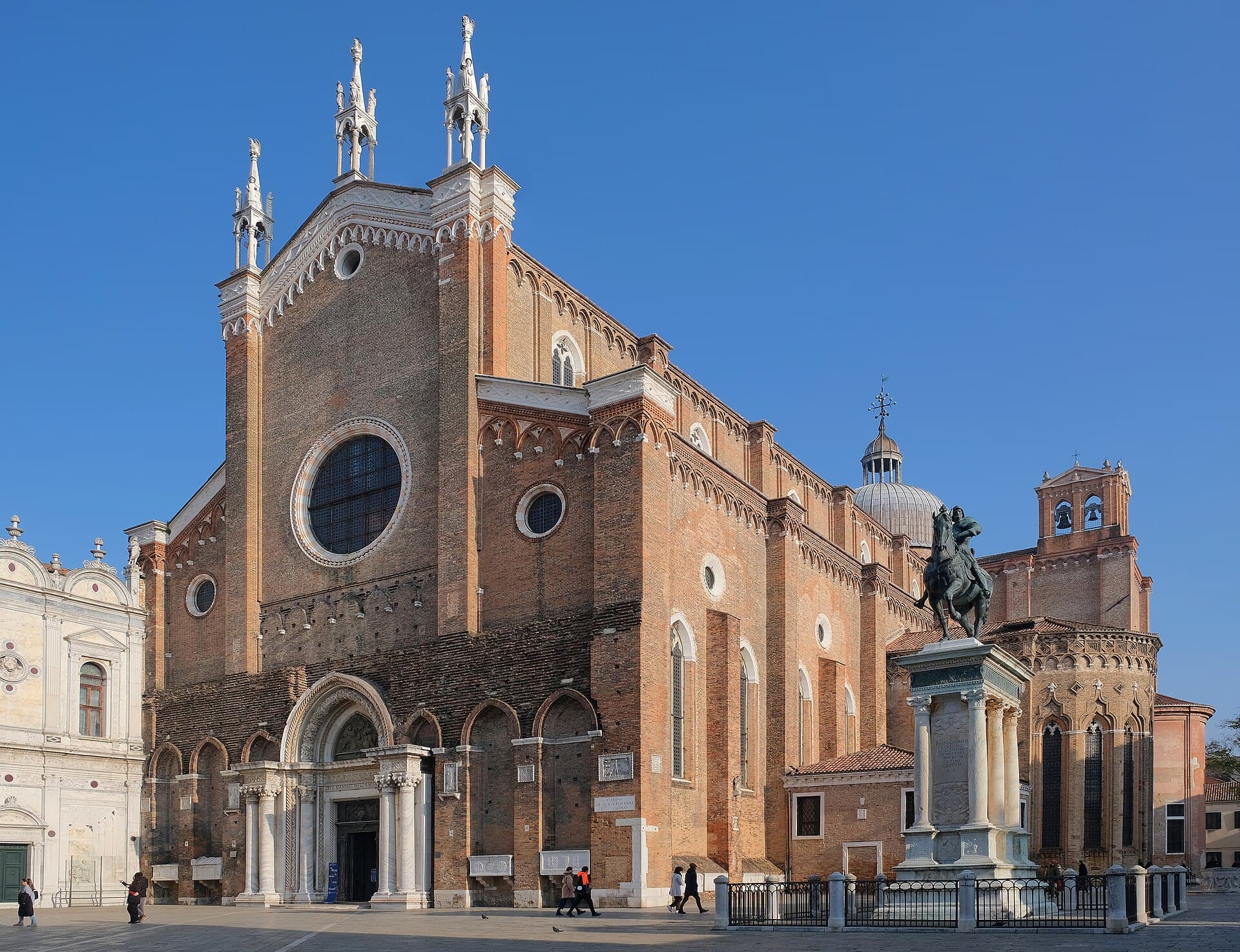 Santi Giovanni e PaoloSanti Giovanni e Paolo — "San Zanipolo" in Venetian — is the Republic's pantheon12 minutes walk4.6
 Le Stanze del VetroA museum in Venice that does not sell tickets. Entry to Le Stanze del Vetro has 12 minutes walk4.9
Not in the way you would hope. Most of the complex is Navy-controlled and shut, and the northern yards and the Porta Nuova tower open only for occasional events you cannot reliably plan around from abroad. The one year-round exception is the Ships Pavilion, the Naval History Museum's hall in the Arsenal's old oar workshop, which takes small timed groups at weekends on a museum ticket. Otherwise plan on seeing the gate and the lions from the bridge — a lovely free stop, but a ten-minute one, not a half day.
The Arsenale. The Giardini is a park of national pavilions: enjoyable, but a lot of walking and very uneven in quality. At the Arsenale the building is half the experience, above all the rope-walk running some three hundred metres under a timber roof. Doors open at 11am through the summer and 10am from late September, so go in on opening and give it three hours; save the Giardini for another day if the time appears.