
The Arthur legend in the Baltic
City merchants adopted the round table as a model of equality among members.
Diego Delso — CC BY-SA 3.0 · Wolskaola — CC BY-SA 3.0 pl · Diego Delso — CC BY-SA 3.0 · Diego Delso — CC BY-SA 3.0
A merchants' hall in the heart of Gdańsk's Long Street, the centre of the city's commercial and social life from the fourteenth century. The name comes from King Arthur and the knights of the round table: the merchants of the Baltic cities adopted the legend as a model of equality among members, and founded Artus Courts in several cities. Gdańsk's is the best known. The interior hall is among the most striking spaces in Poland: a high net-vaulted ceiling, walls covered in paintings, armour, hanging ships and guild emblems, and at its centre a sixteenth-century tiled stove about eleven metres high — said to be the largest of its kind in Europe, its decorated tiles carrying hundreds of scenes. The building was destroyed in the Second World War and rebuilt precisely from documentation, with its surviving pieces returned to it. The Neptune Fountain, the emblem of Gdańsk, stands in front of it. The site is squarely on the tourist route.
City merchants adopted the round table as a model of equality among members.
Destroyed in the war and restored from documentation, its surviving pieces returned.
The walls are covered in guild emblems, paintings and merchants' possessions.
Long Street, the old town centre
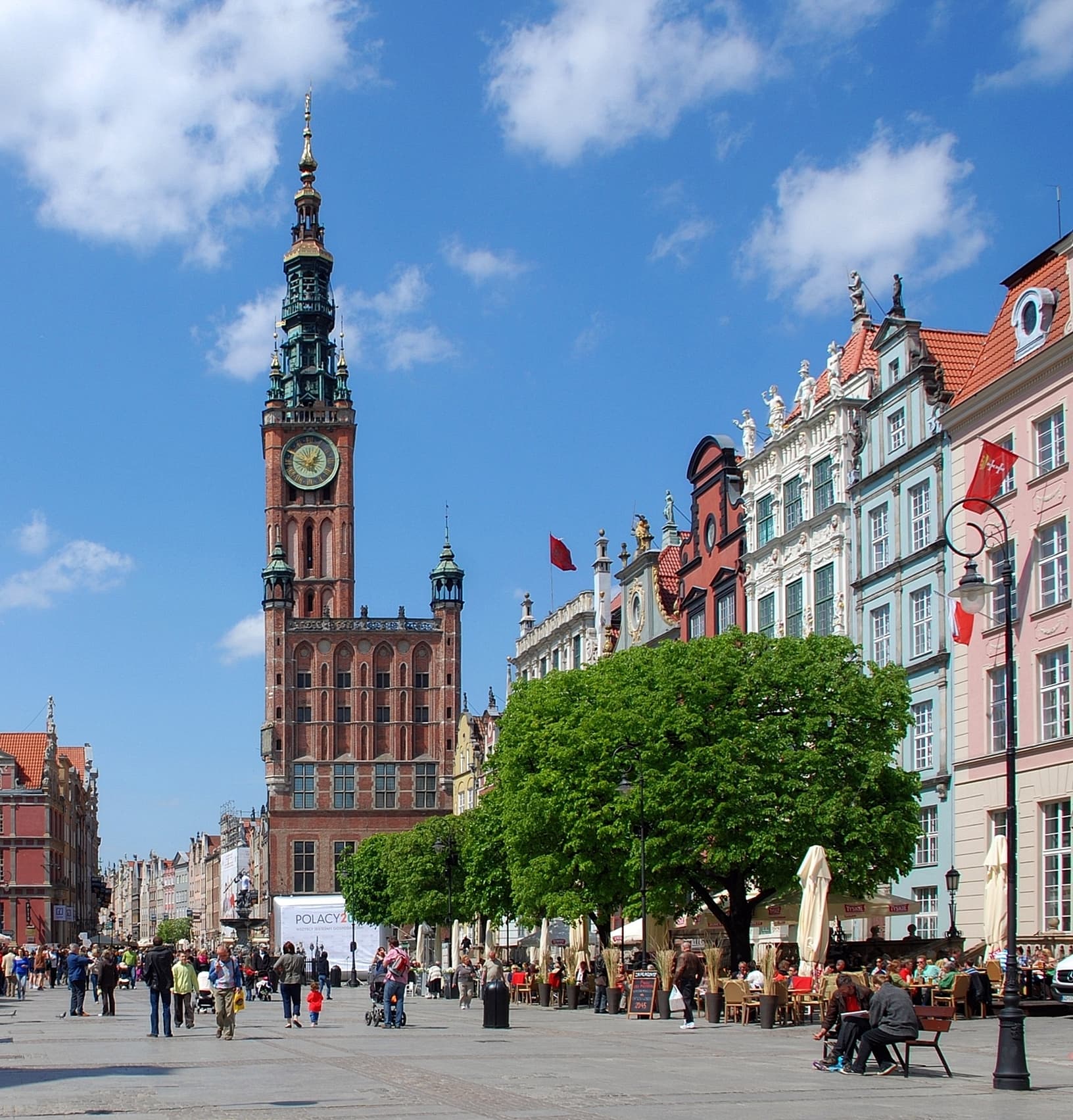 The Royal Way & Long MarketThe Royal Way is Gdansk's golden theatre: from the Highland Gate through the Gol1 minute walk4.9
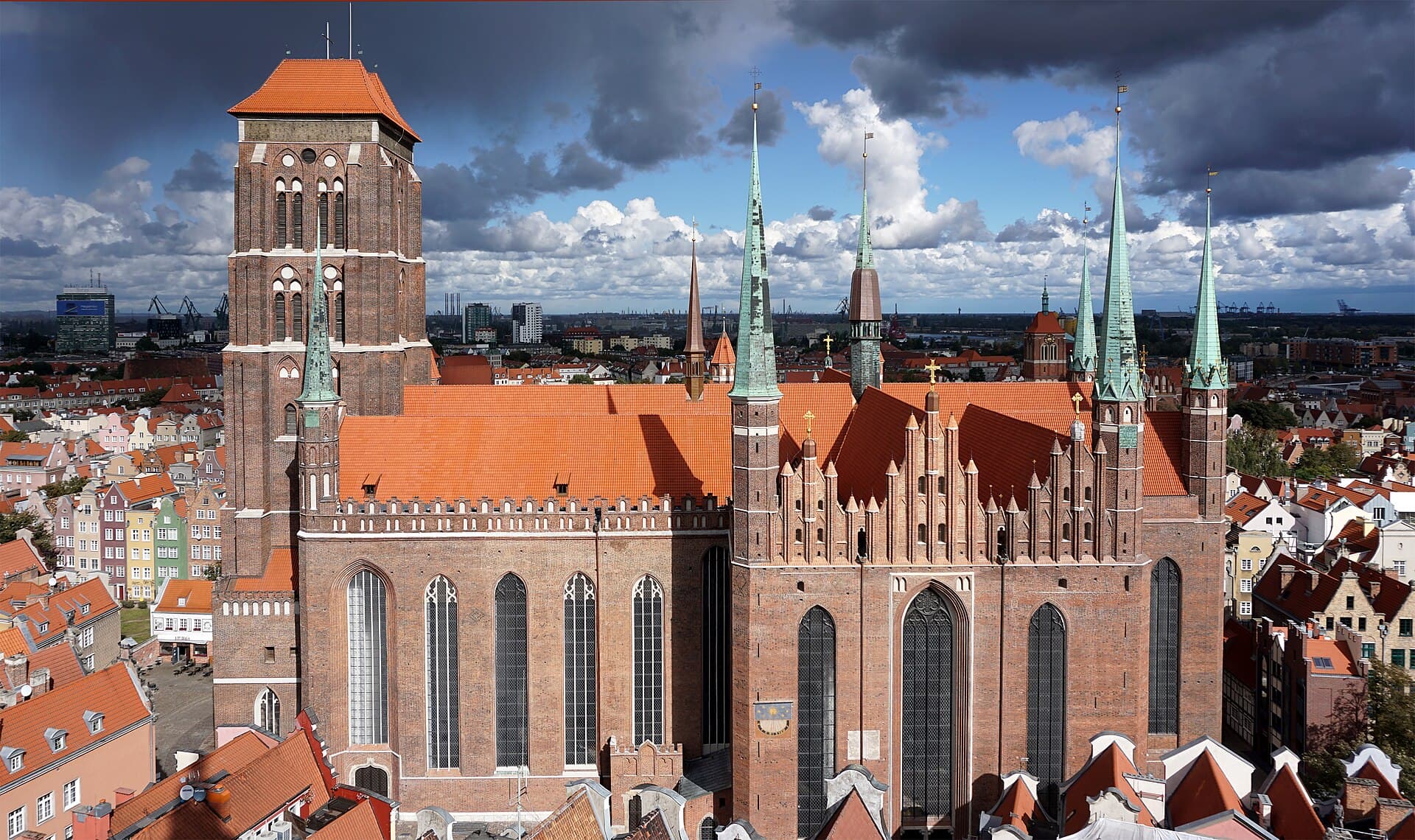 St. Mary's — the Largest Brick ChurchGdansk's St. Mary's is the largest brick church on earth: one hundred and five m2 minutes walk4.8
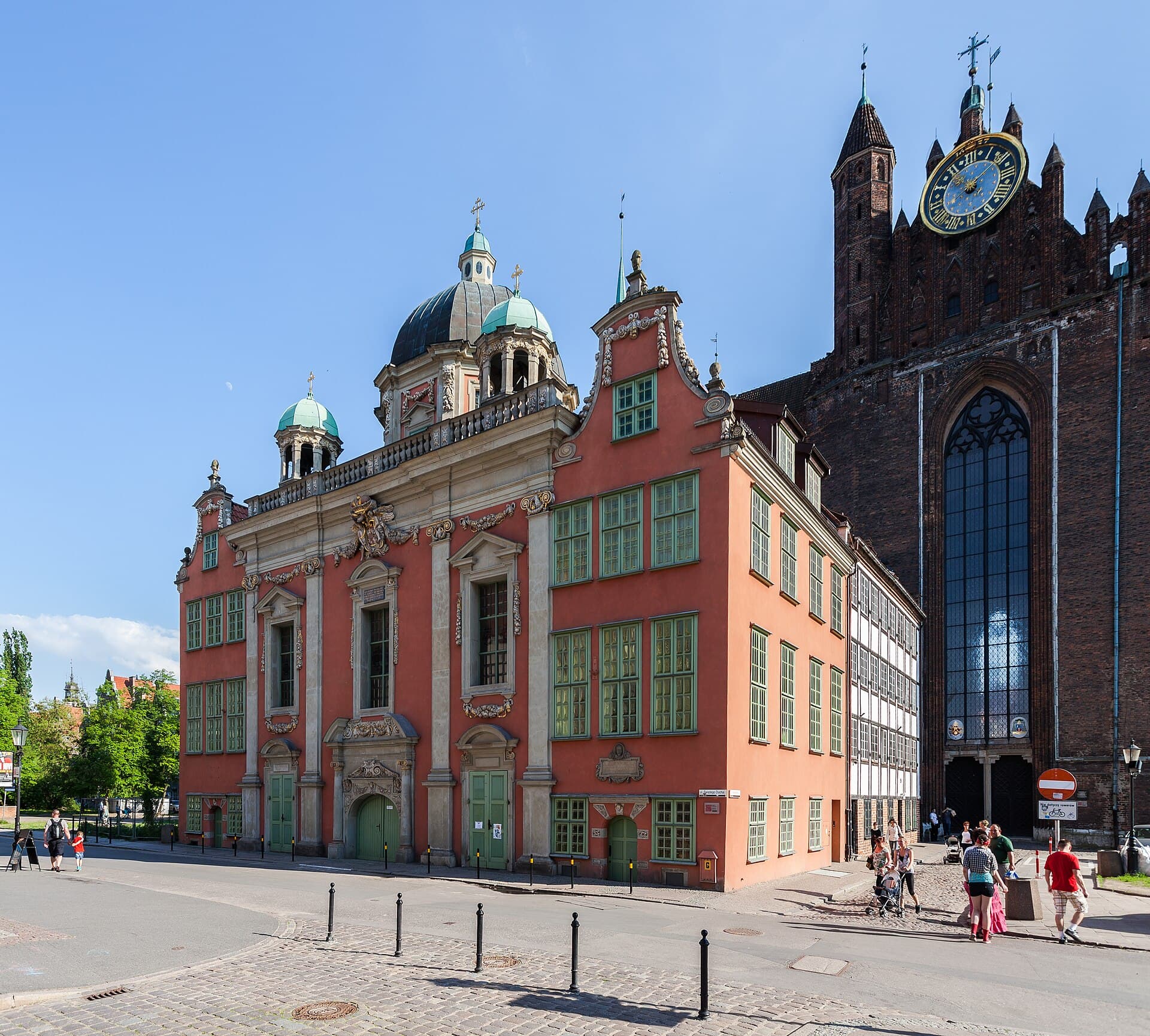 The Royal ChapelA small baroque church adjoining St Mary's, built between 1678 and 1681, and the2 minutes walk4.6
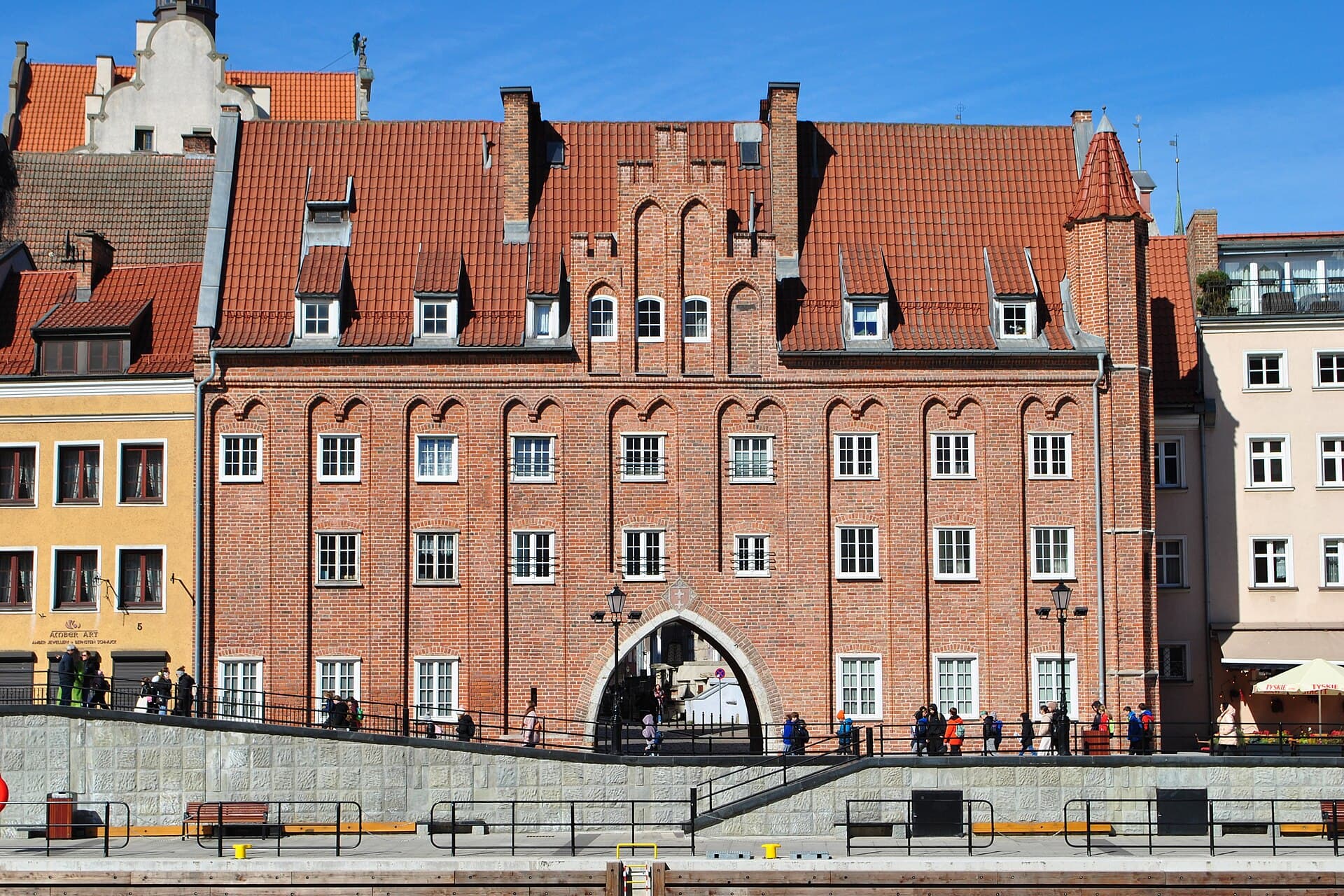 The Bread GateA mid-fifteenth-century Gothic water gate on the Gdańsk waterfront, one of the g2 minutes walk4.6
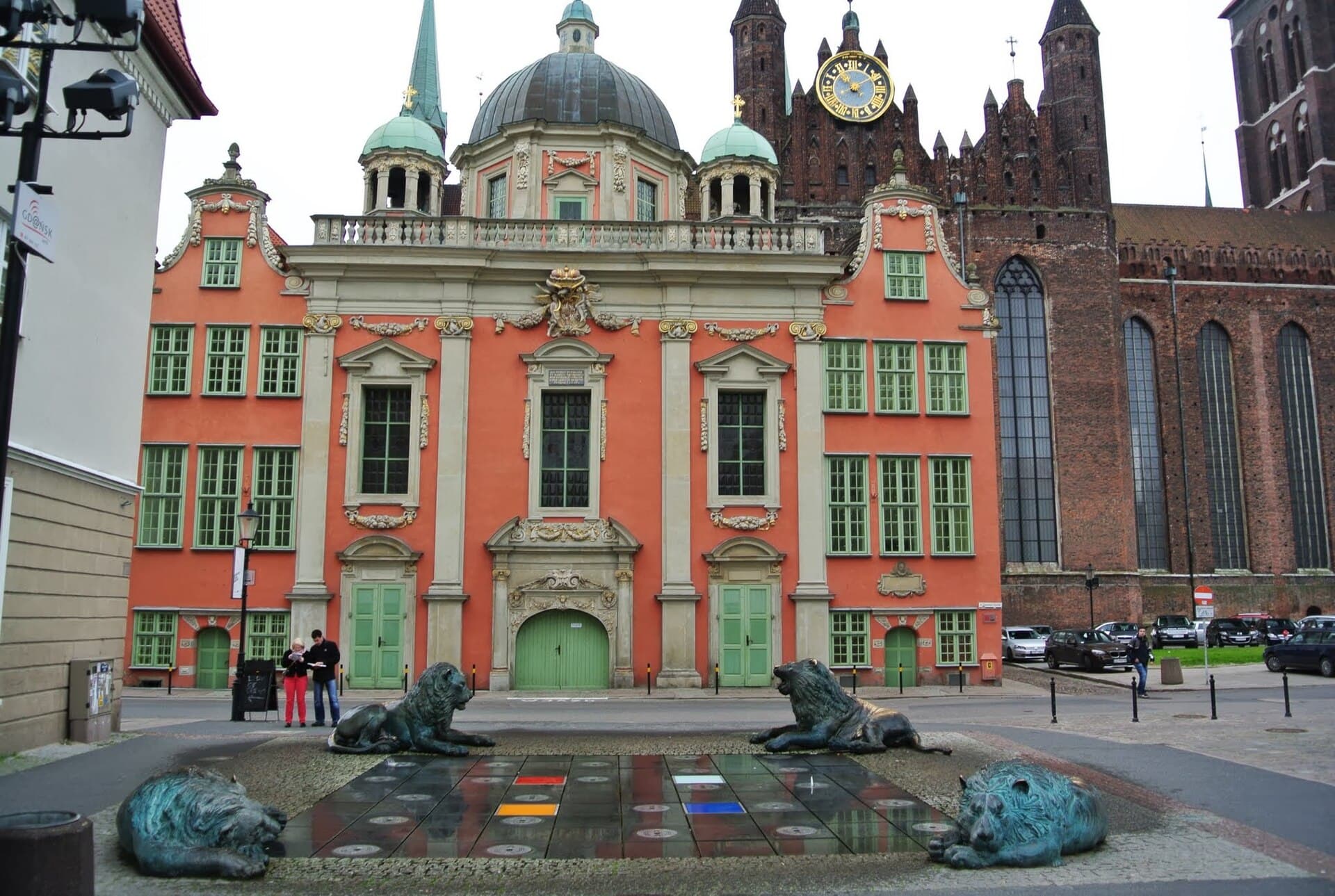 The Four Quarters FountainA contemporary fountain on the Coal Market in Gdansk's Main Town, installed in 23 minutes walk4.6
Because it was the main port exporting Polish grain to western Europe, and a member of the Hanseatic League that dominated Baltic trade. In the sixteenth and seventeenth centuries it was among northern Europe's richest and most populous cities, with wide self-government. The tall narrow houses along its streets were all built on that trade.
The museum runs several sites across the city — Artus Court, the Uphagen House, the Prison Tower, the Main Town Hall, the Amber Museum and others. For two or more, the combined ticket is clearly cheaper. Ask about it at the first site you enter.