
A city closed at night
Water gates and chains raised across the river.
Marek Mróz — CC BY-SA 4.0 · Aneta Pawska — CC BY-SA 4.0 · Andrzej Otrębski — CC BY-SA 4.0 · Unknown authorUnknown author — Public domain
A mid-fifteenth-century Gothic water gate on the Gdańsk waterfront, one of the gates that linked the city to its harbour. Gdańsk was closed at night: walls on the land side and a series of water gates on the Motława, each street ending at the water having its own. The gates were shut and chains raised across the river, so nothing entered or left. This gate in particular carries Gdańsk's early arms: two crosses without the crown added later in 1457, when King Casimir IV granted the city its privileges. That is, the gate predates that date and you can see it in the stone. It was destroyed in March 1945 along with about ninety per cent of Gdańsk's old city, and rebuilt in the 1950s. That reconstruction is a subject in itself: Poland rebuilt Gdańsk in its seventeenth and eighteenth-century image — that is, in its Dutch-Polish rather than its later German form. A public space, free to see.
Water gates and chains raised across the river.
The stone predates the royal privileges of 1457.
Along with ninety per cent of the old city.
The waterfront on the Motława
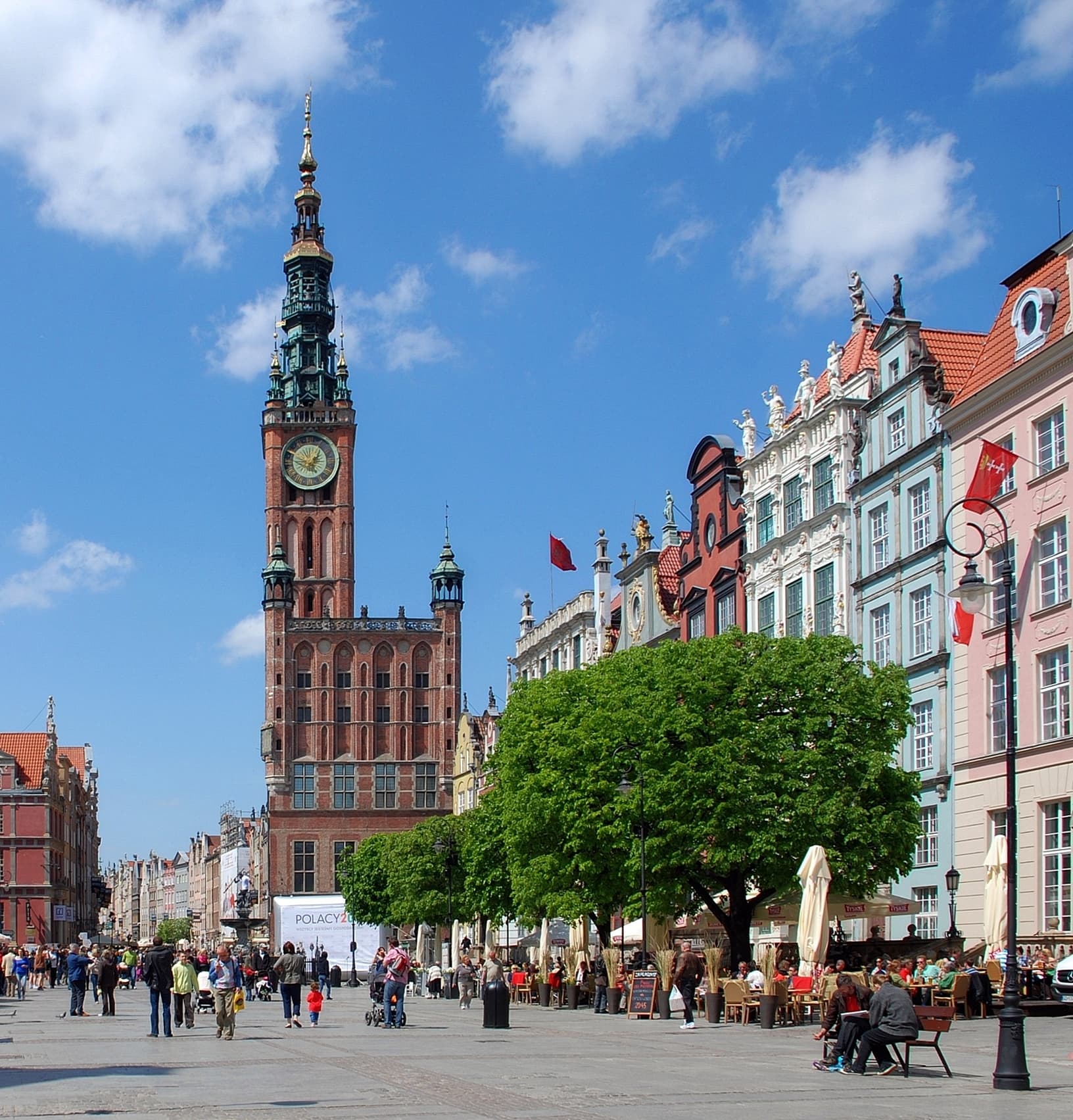 The Royal Way & Long MarketThe Royal Way is Gdansk's golden theatre: from the Highland Gate through the Gol2 minutes walk4.9
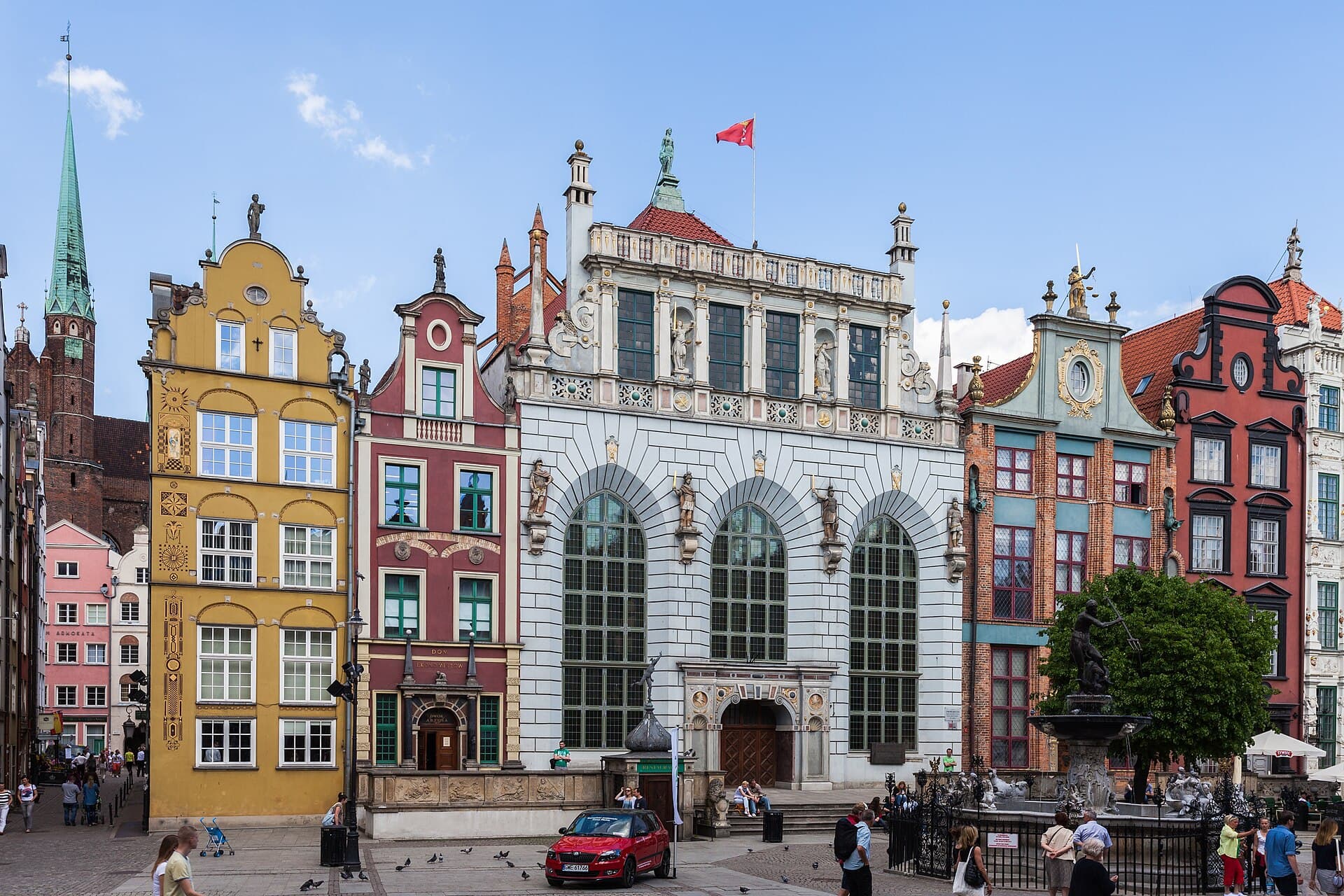 Artus CourtA merchants' hall in the heart of Gdańsk's Long Street, the centre of the city's2 minutes walk4.9
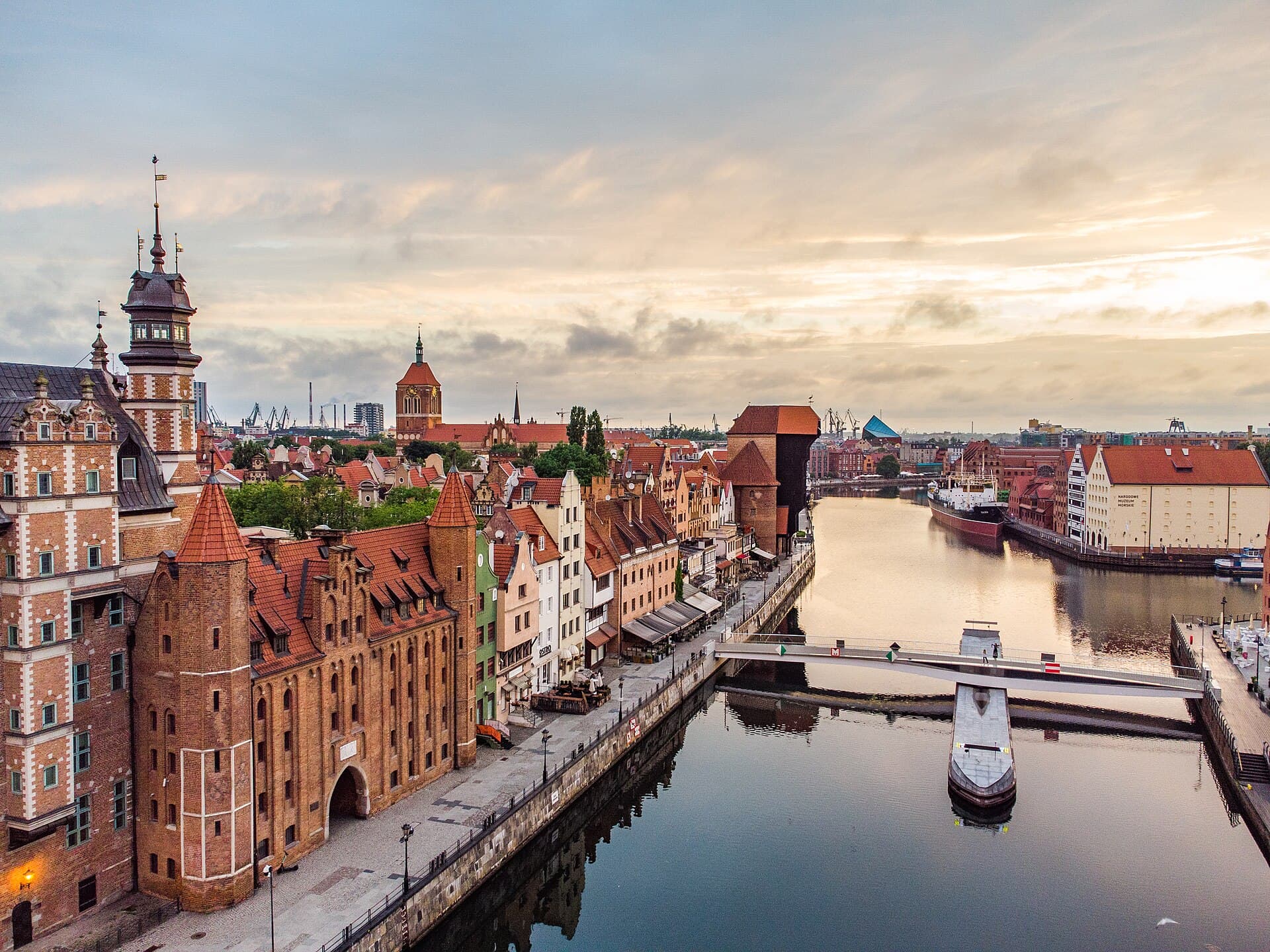 The Motława Embankment & the CraneThe Motława embankment is Gdansk's mother harbour: the long quay (Długie Pobrzeż3 minutes walk4.9
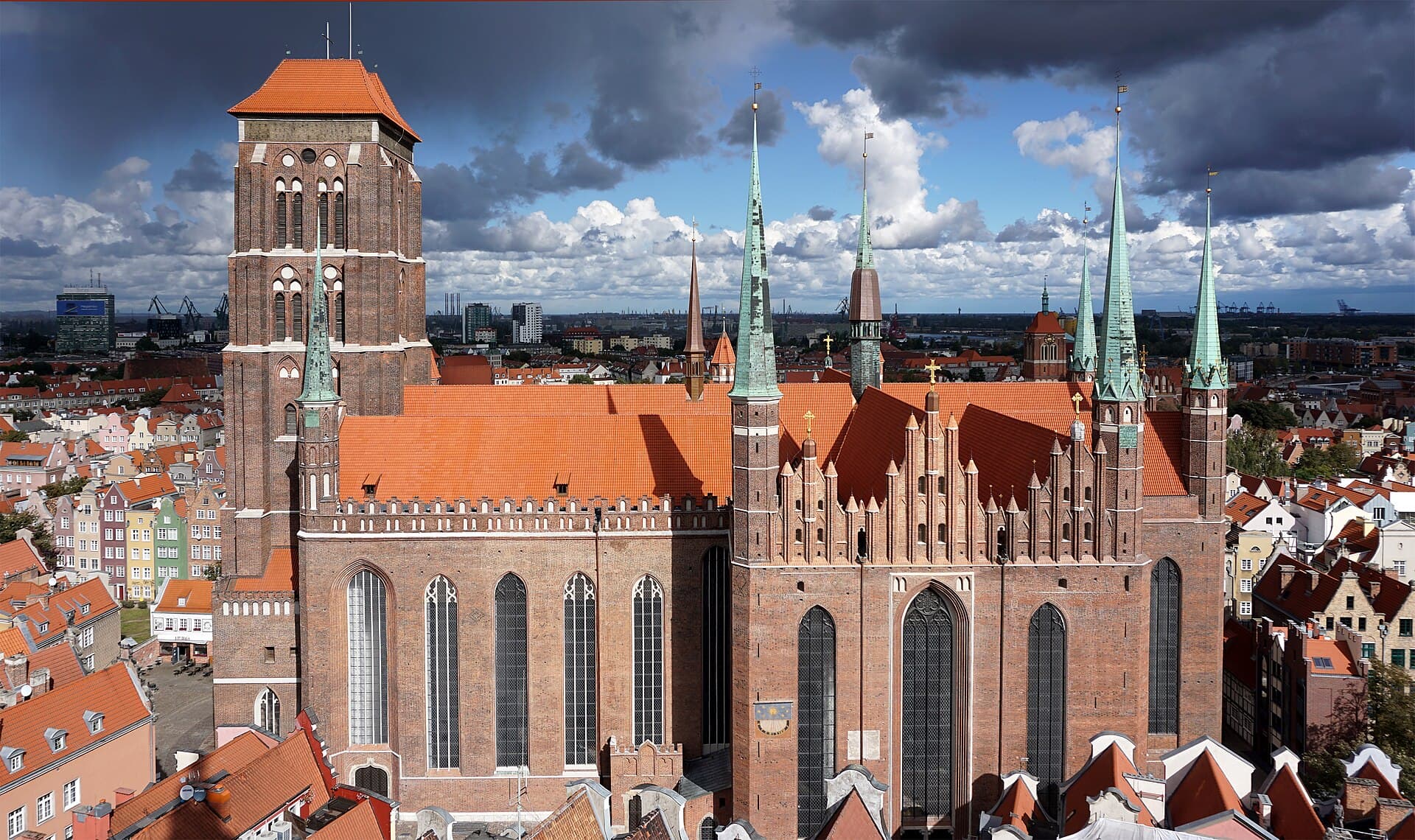 St. Mary's — the Largest Brick ChurchGdansk's St. Mary's is the largest brick church on earth: one hundred and five m3 minutes walk4.8
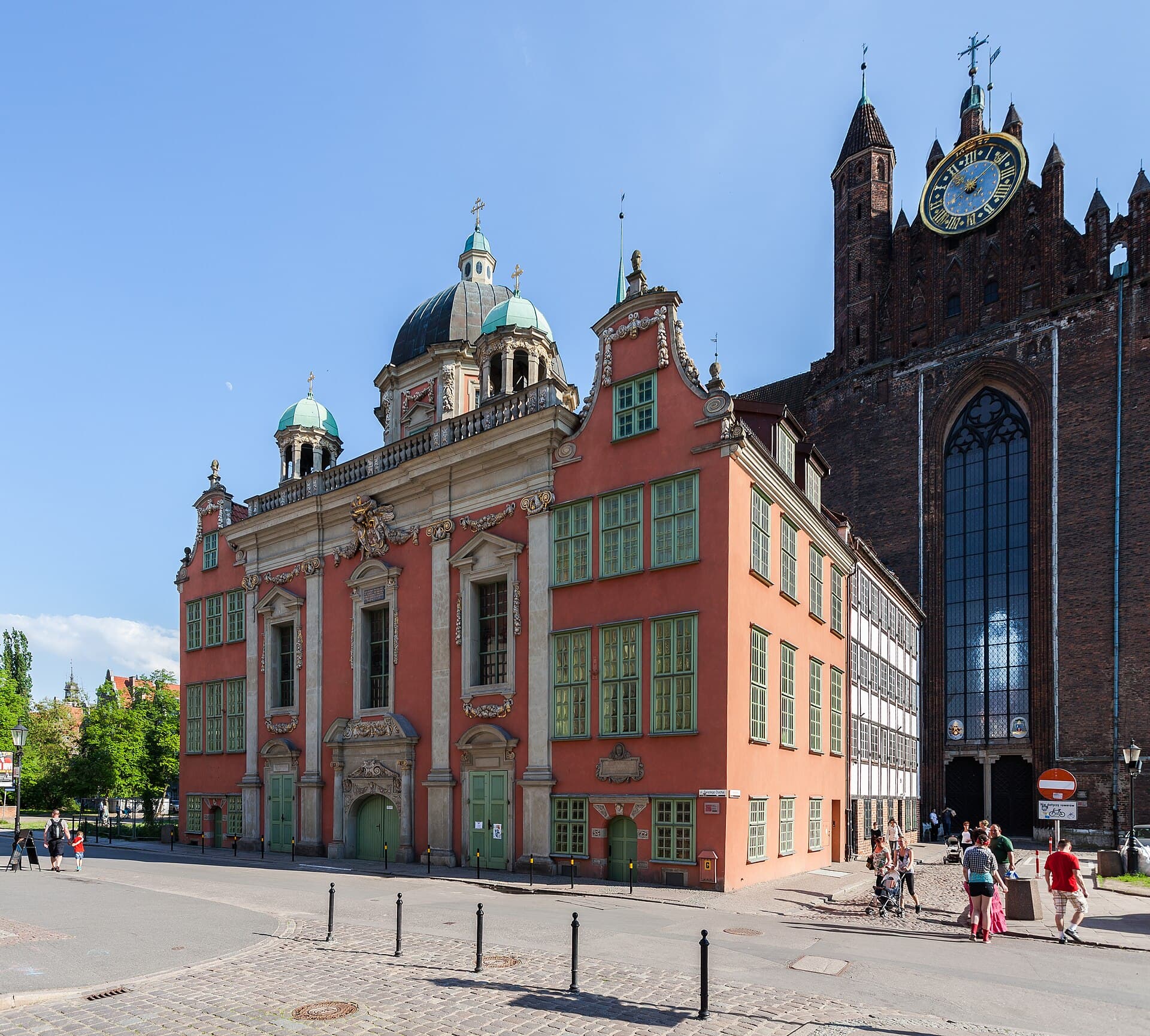 The Royal ChapelA small baroque church adjoining St Mary's, built between 1678 and 1681, and the3 minutes walk4.6
The old city was almost entirely destroyed in 1945. After the war Gdańsk passed from Germany to Poland, its German inhabitants expelled and Poles brought in from the east. The authorities decided to rebuild the historic centre, but not as it had been in 1939: it was rebuilt in its seventeenth-century image — the golden age when Gdańsk was a prosperous trading city under the Polish crown. The nineteenth-century German layers were removed and the baroque and Dutch facades restored.
The Crane is the best known — a fifteenth-century water gate and huge timber crane that was the largest port crane in Europe, raising masts and moving cargo by the power of men walking inside wooden wheels. Then St Mary's Gate, the Vegetable Gate and the Cow Gate. All lie along about a kilometre and can be walked between in half an hour.