
The Hansa façades
Narrow, soaring, gilded centuries of rivalry.
Henryk Bielamowicz — CC BY-SA 4.0 · Bybbisch94 — CC BY-SA 4.0 · Bybbisch94 — CC BY-SA 4.0 · Bybbisch94 — CC BY-SA 4.0
The Royal Way is Gdansk's golden theatre: from the Highland Gate through the Golden Gate, Długa street opens into the Long Market down to the Green Gate on the river — the Hanseatic merchants' narrow soaring façades in colour and gilt as centuries of architectural rivalry: the Baltic's richest street when Gdansk was its richest port. At its centre the bronze Neptune Fountain (1633) is the city's sea emblem — behind it Artus Court, the merchants' state hall with its giant tiled stove (old Europe's tallest) — and the Main Town Hall with its gilded tower as museum and climb. And truth be told: all this is resurrection too — the war destroyed 90% of the centre and Poland rebuilt it with Warsaw's own fidelity. Evening lights the façades gold and amber glitters in every shop window: the hour's walk that abbreviates a city.
Narrow, soaring, gilded centuries of rivalry.
The sea's emblem since 1633.
Highland, Golden, Green to the river.
Długi Targ, 80-828 Gdansk
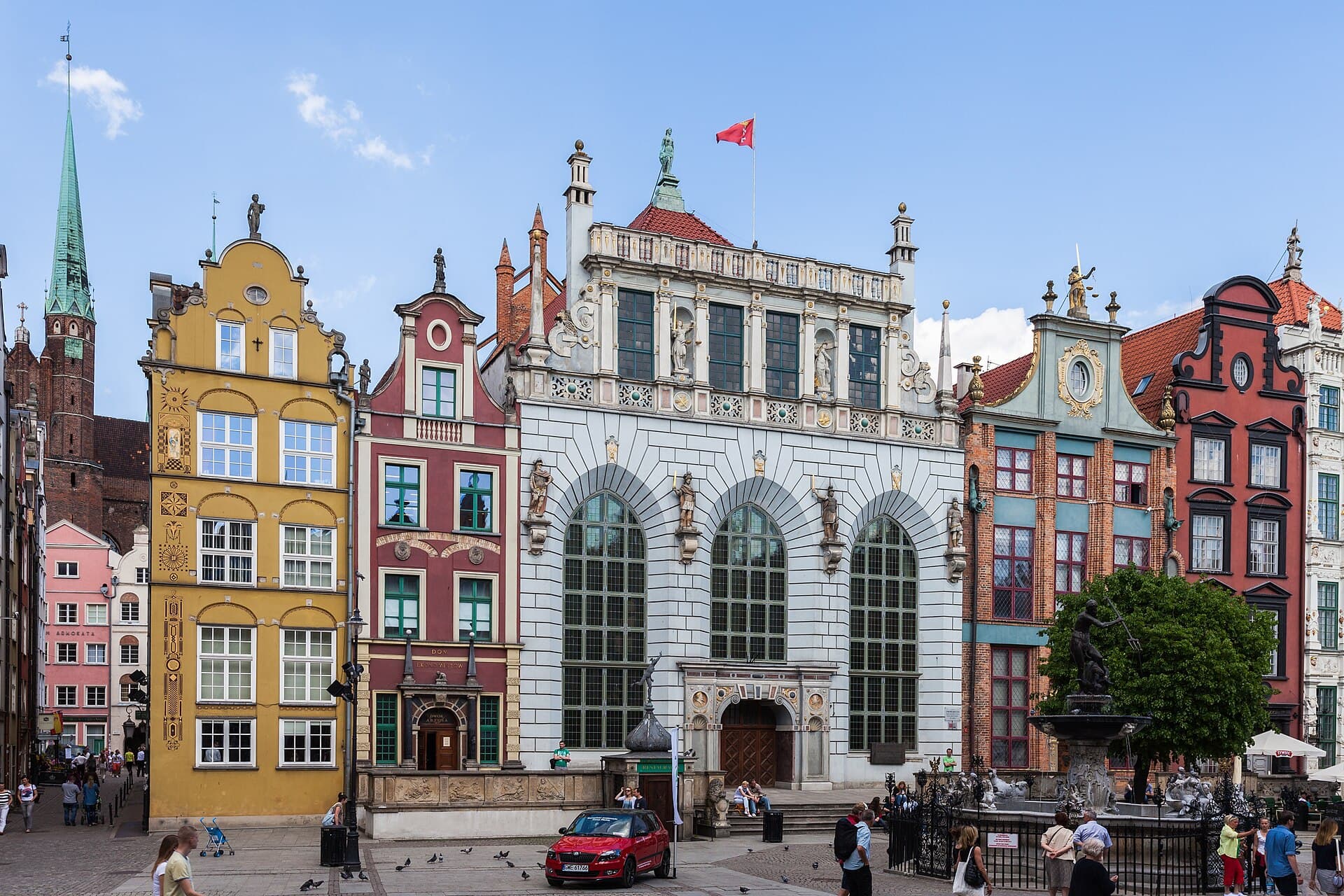 Artus CourtA merchants' hall in the heart of Gdańsk's Long Street, the centre of the city's1 minute walk4.9
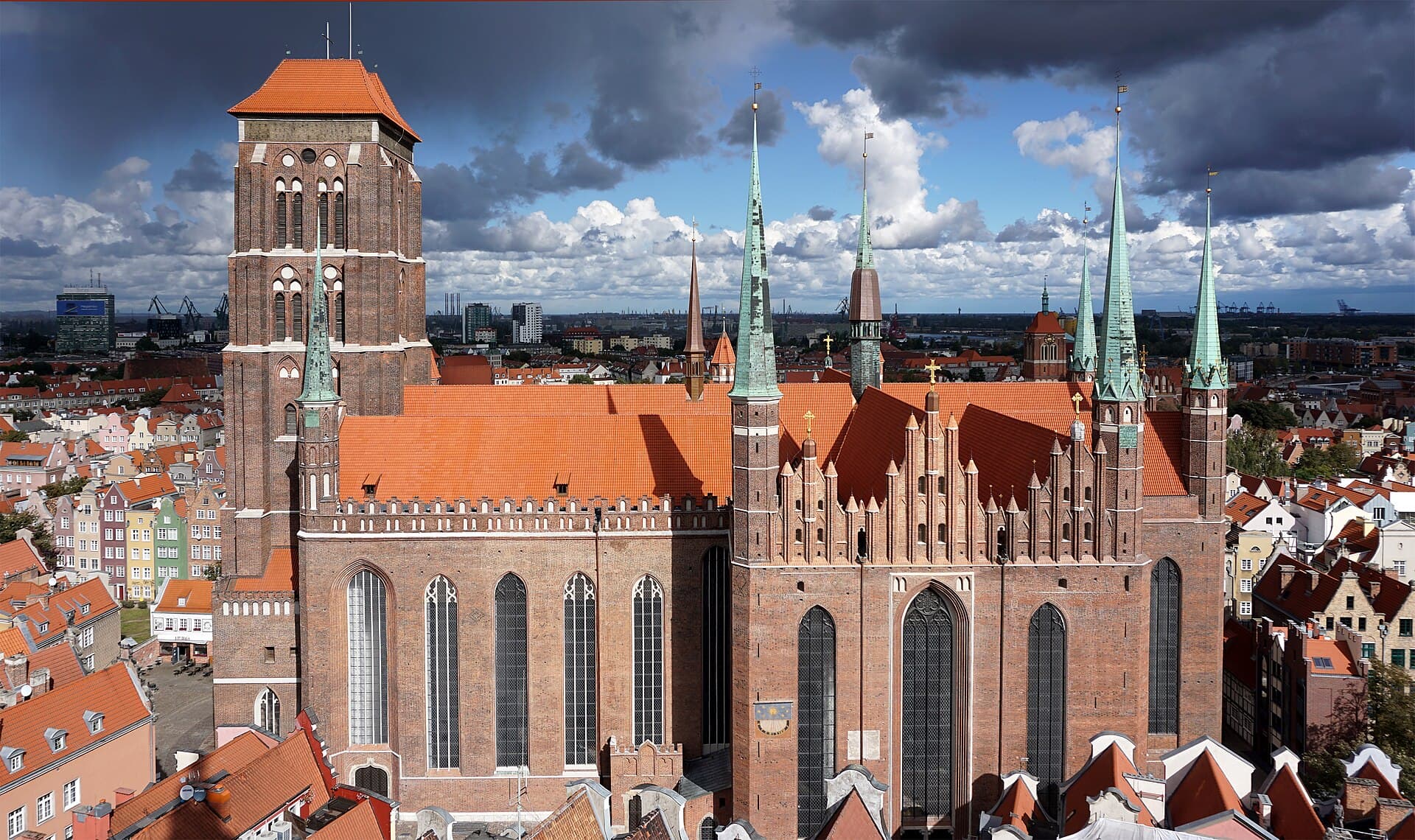 St. Mary's — the Largest Brick ChurchGdansk's St. Mary's is the largest brick church on earth: one hundred and five m2 minutes walk4.8
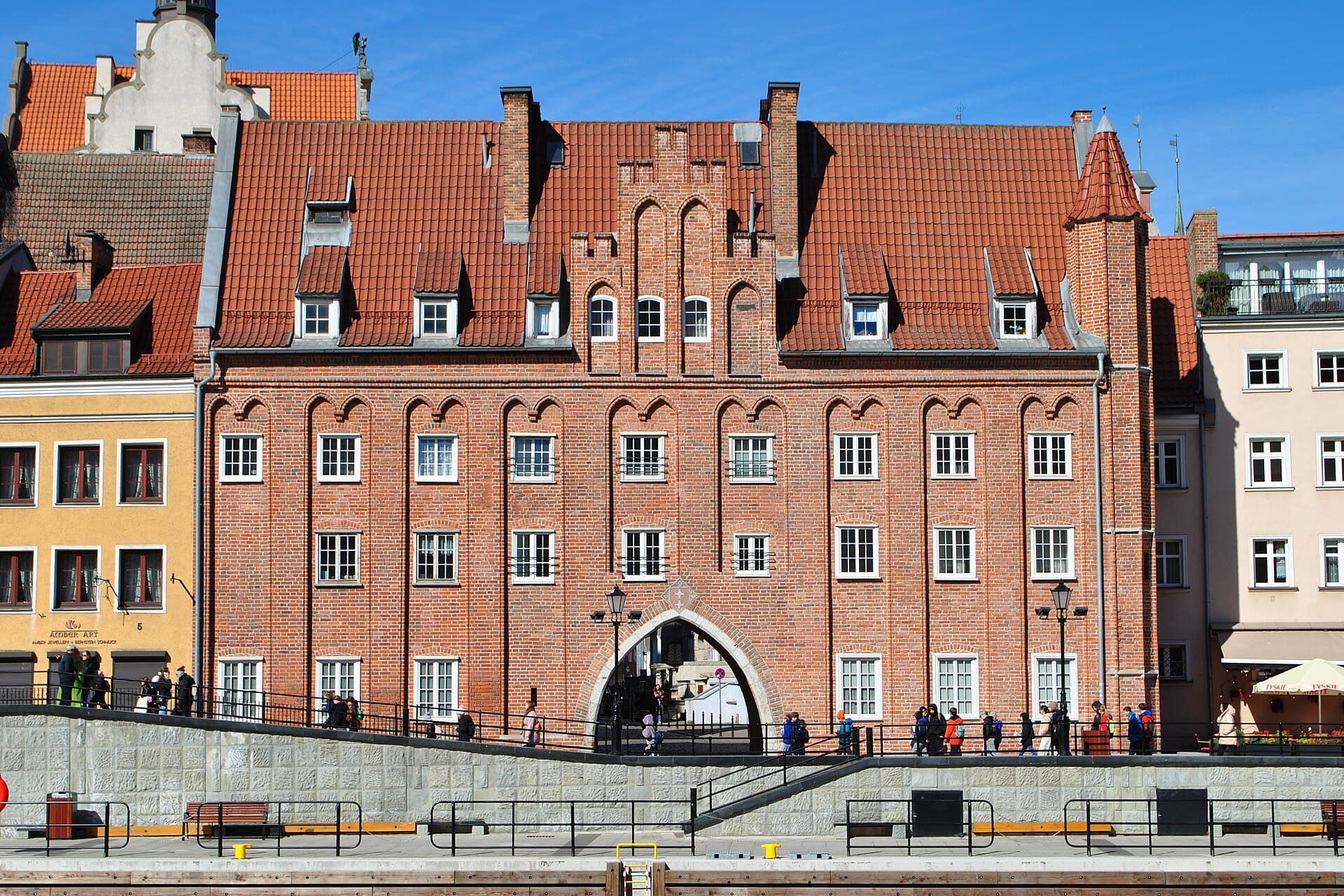 The Bread GateA mid-fifteenth-century Gothic water gate on the Gdańsk waterfront, one of the g2 minutes walk4.6
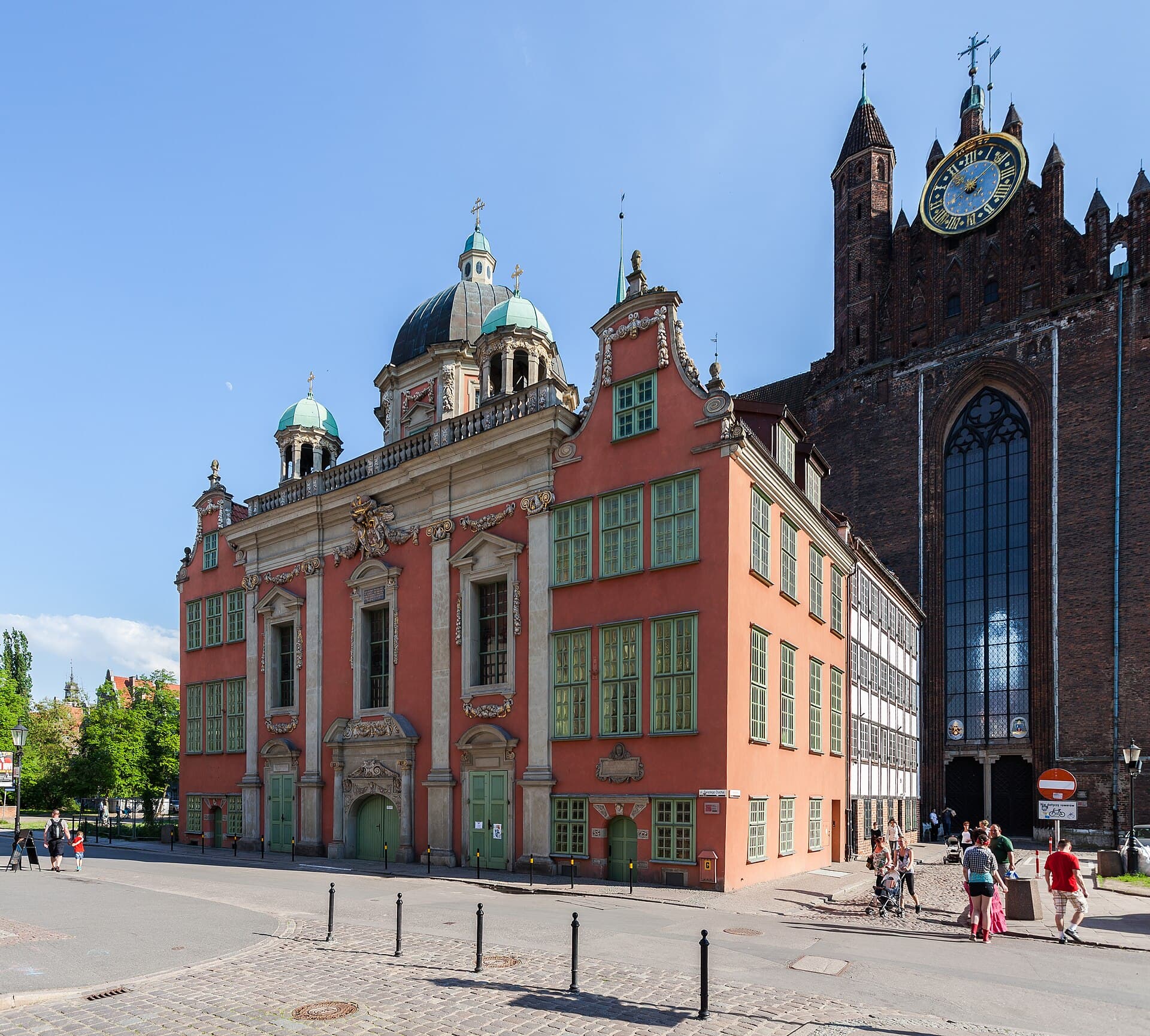 The Royal ChapelA small baroque church adjoining St Mary's, built between 1678 and 1681, and the3 minutes walk4.6
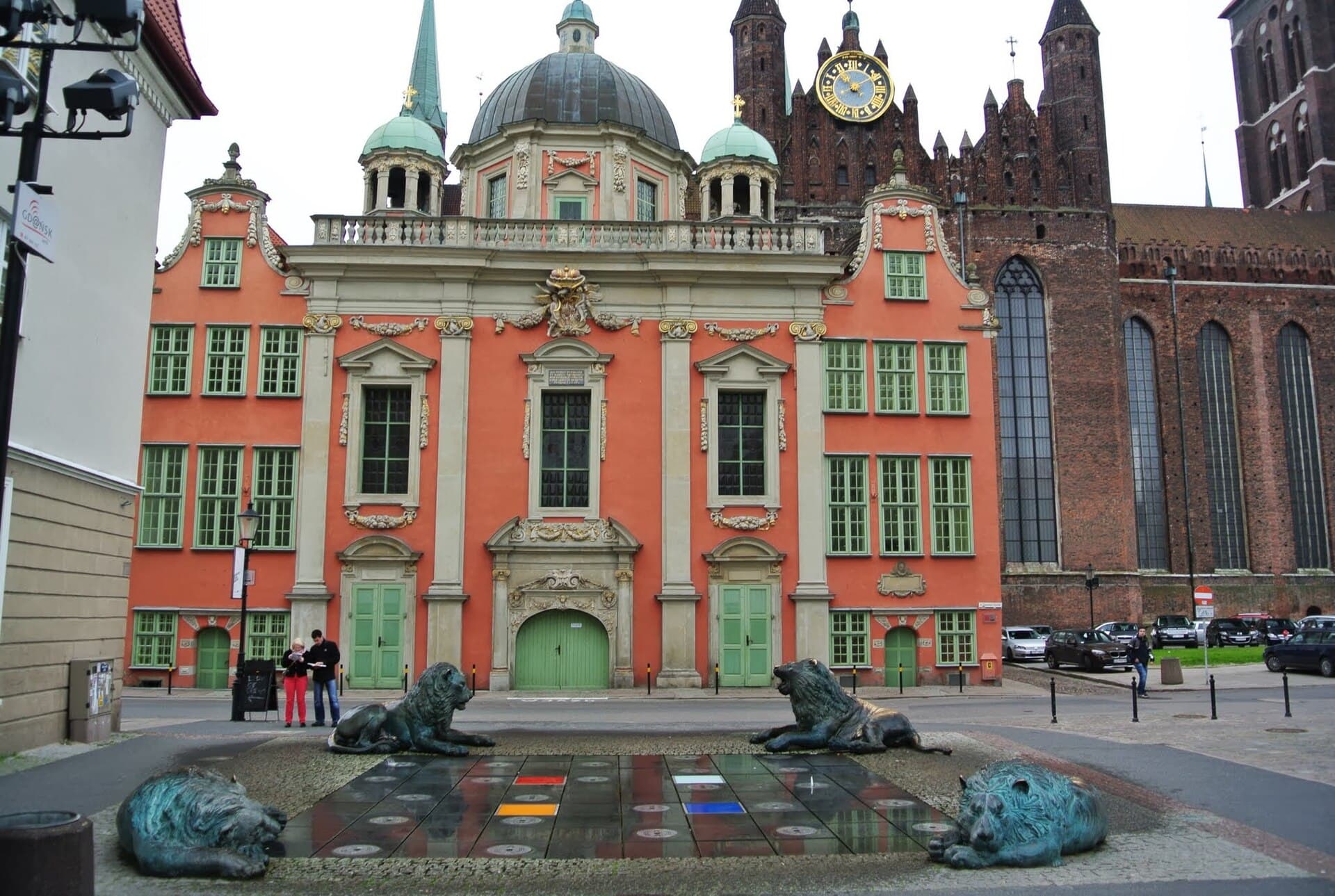 The Four Quarters FountainA contemporary fountain on the Coal Market in Gdansk's Main Town, installed in 23 minutes walk4.6
A deliberately world-blooded city: the Hansa port whose identity Germans, Poles and Dutch shared for centuries — twice a Free City in history — its architecture Flemish-Hanseatic, not Cracovian, its temper maritime and mercantile. And twice the twentieth century's spark: here World War II began, and here communism's fall began — a small city with a world's history.