Open Sunday
A car-free promenade.
Rodrigo Tetsuo Argenton — CC BY-SA 4.0 · Photograph by Mike Peel (www.mikepeel.net). — CC BY-SA 4.0 · Photograph by Mike Peel (www.mikepeel.net). — CC BY-SA 4.0
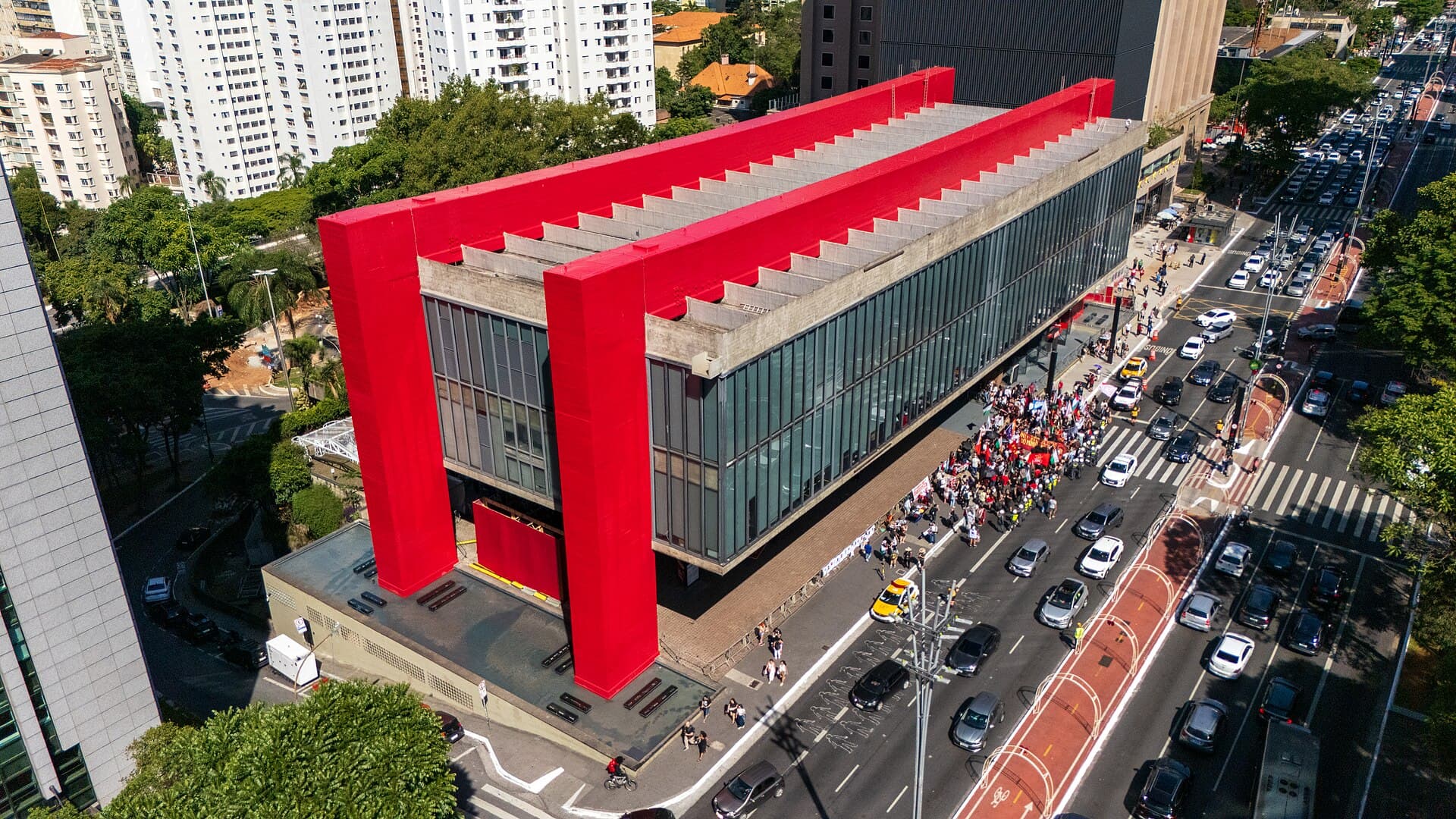
Avenida Paulista is São Paulo's best-known street and the symbol of its financial and cultural weight, running 2.8 kilometres along one of the city's highest points. The engineer Joaquim Eugênio de Lima laid it out in 1891 as a residential street lined with the mansions of coffee and industry barons; in 1909 it became the city's first paved street, and in the 20th century towers replaced most of the mansions. Today it is lined with bank headquarters and institutions, the São Paulo Museum of Art (MASP) in its building raised on red pillars, cultural centres, bookshops, cafés and malls, with broadcast masts on the heights. Metro lines run beneath it, so it is easy to reach from anywhere in the city. Its best day is Sunday, when it closes to cars and becomes a long promenade full of walkers, cyclists and street musicians. It is also the city's main stage for large demonstrations, so keep an eye on local news.
A car-free promenade.
The museum on red pillars.
The city's financial heart.
From Praça Oswaldo Cruz to Rua da Consolação
On Sundays and public holidays, when it becomes a promenade for walkers and cyclists with street music.