
Gdańsk's largest tower
The biggest surviving part of the city's fortifications.
Tomasz Sienicki [user: tsca, mail: tomasz.sienicki at gmail.com] — CC BY 3.0 · Diego Delso — CC BY-SA 3.0 · Juandev — CC BY-SA 3.0
A fifteenth-century defensive tower, the largest surviving of Gdańsk's fortification towers: octagonal, with walls three metres thick and a height of about thirty-six metres. It formed part of the Main Town wall, and its position at the north-eastern corner made it a key point of defence. The exceptional thickness of its walls follows from its function: it carried cannon and had to withstand bombardment. After losing its military purpose it was used as a prison, then a powder store, then a warehouse. The origin of its name is uncertain: one explanation derives it from a personal name, another from a word meaning cap, after the shape of its conical roof. It was destroyed in 1945 and rebuilt, and is today closed most of the time and used occasionally for exhibitions. Seen free from outside, and among the clearest surviving parts of Gdańsk's walls.
The biggest surviving part of the city's fortifications.
Successive uses after its military function ended.
From a personal name or a word meaning cap.
North-east of the Main Town
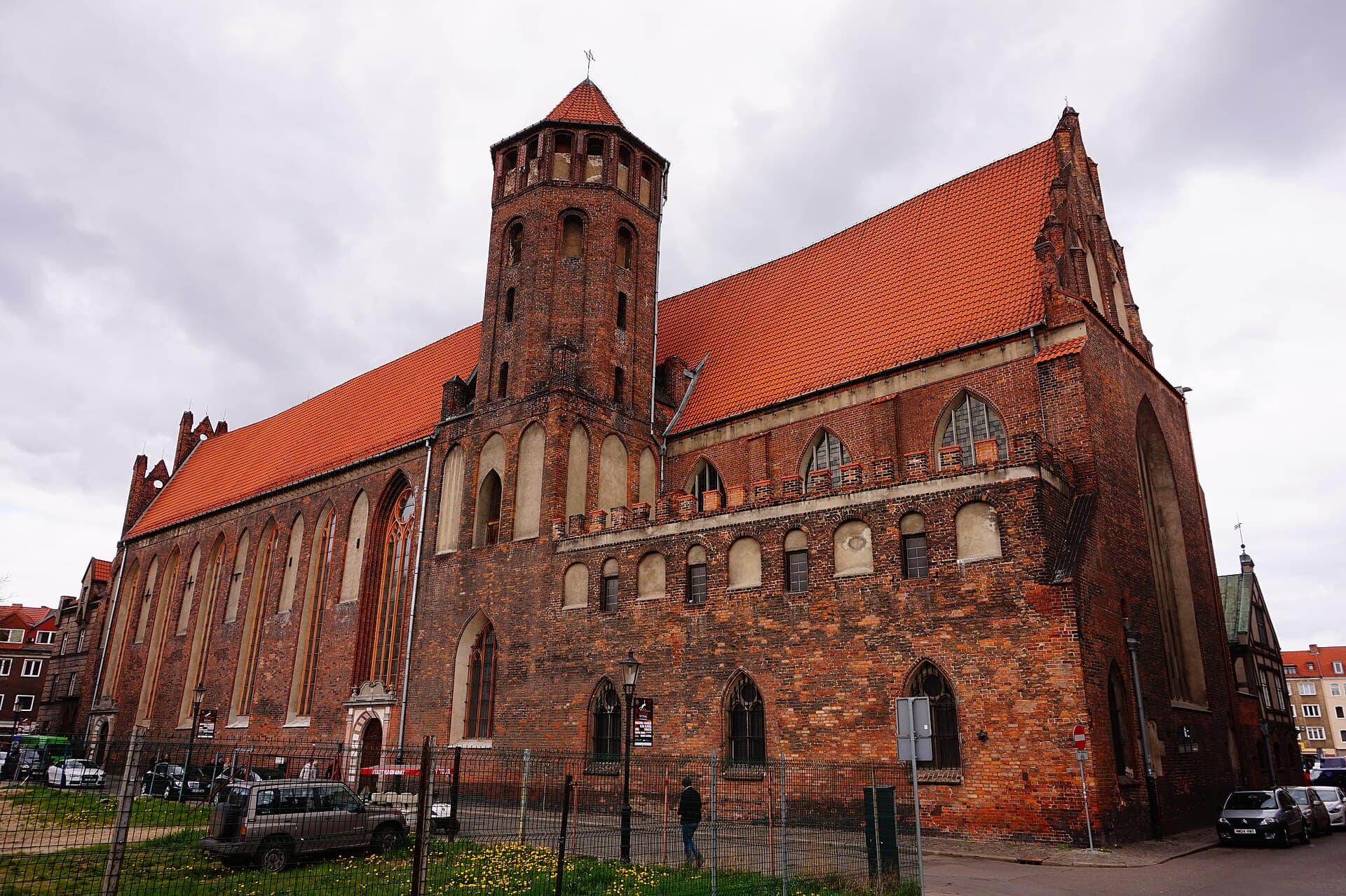 St Nicholas's BasilicaA thirteenth-century Dominican church north of the old town, and the only church1 minute walk4.8
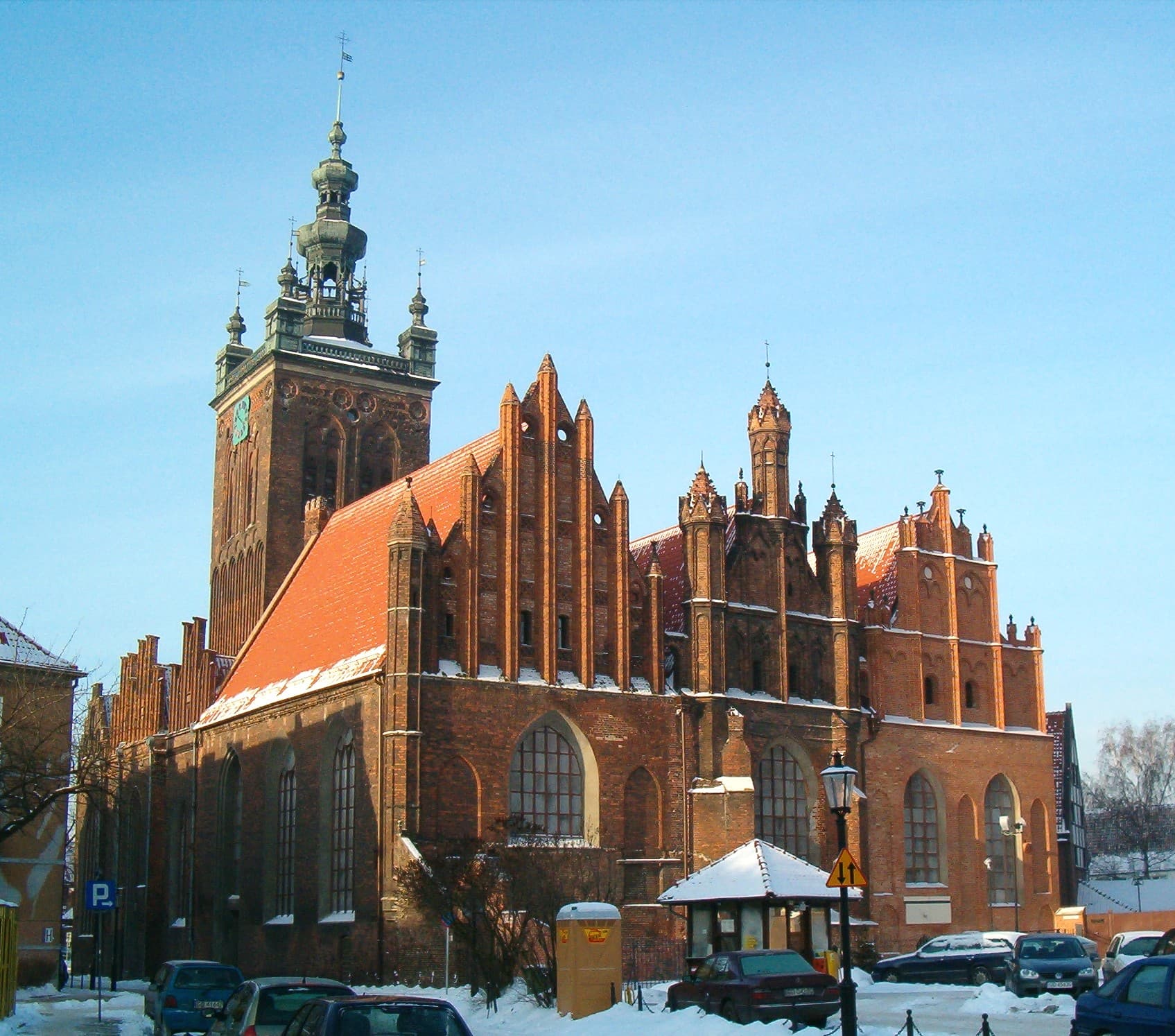 St Catherine's ChurchThe oldest church in Gdańsk, originating in the thirteenth century, north of the1 minute walk4.5
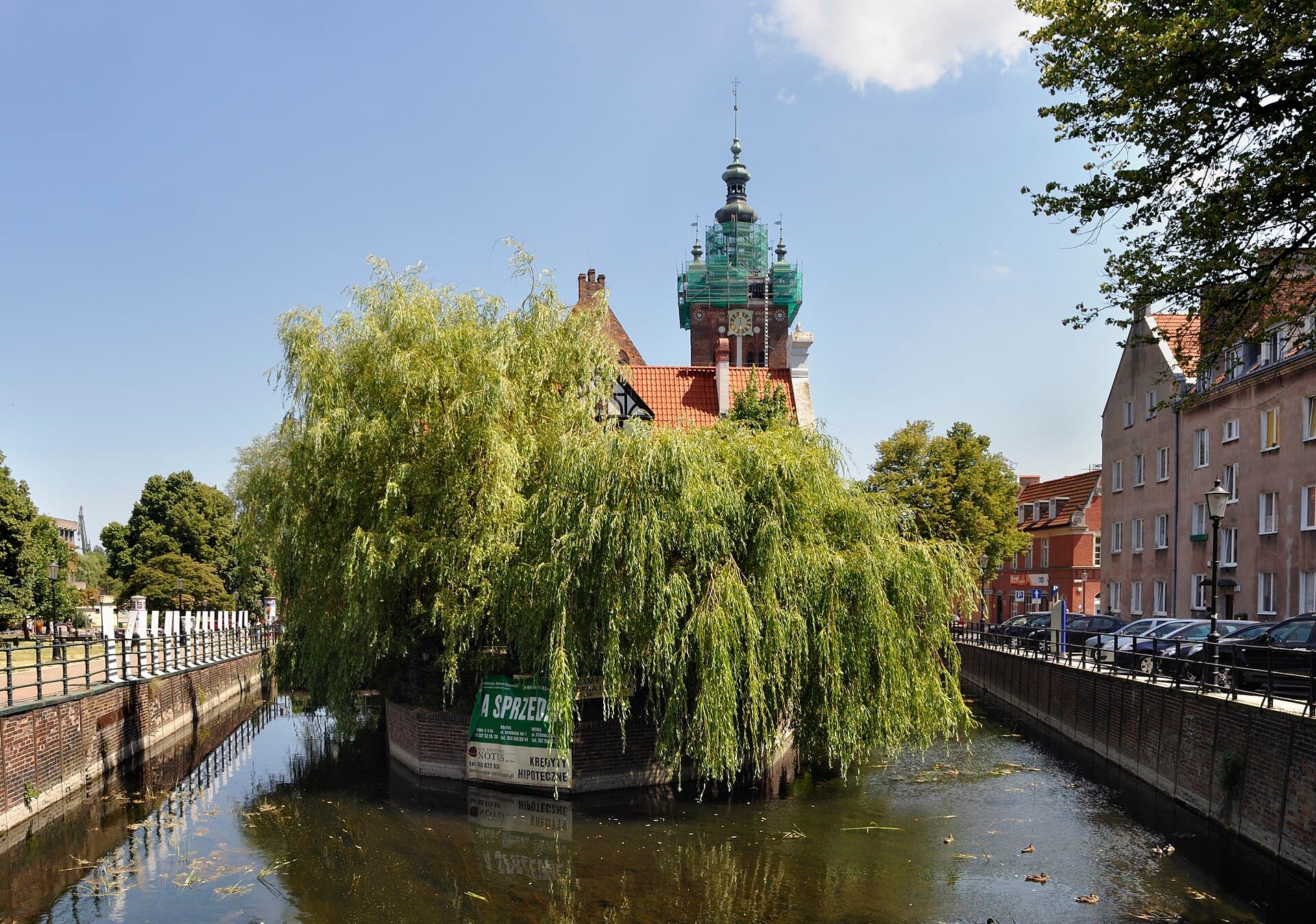 The Radunia CanalAn artificial canal cut in the fourteenth century to bring the water of the Radu2 minutes walk4.9
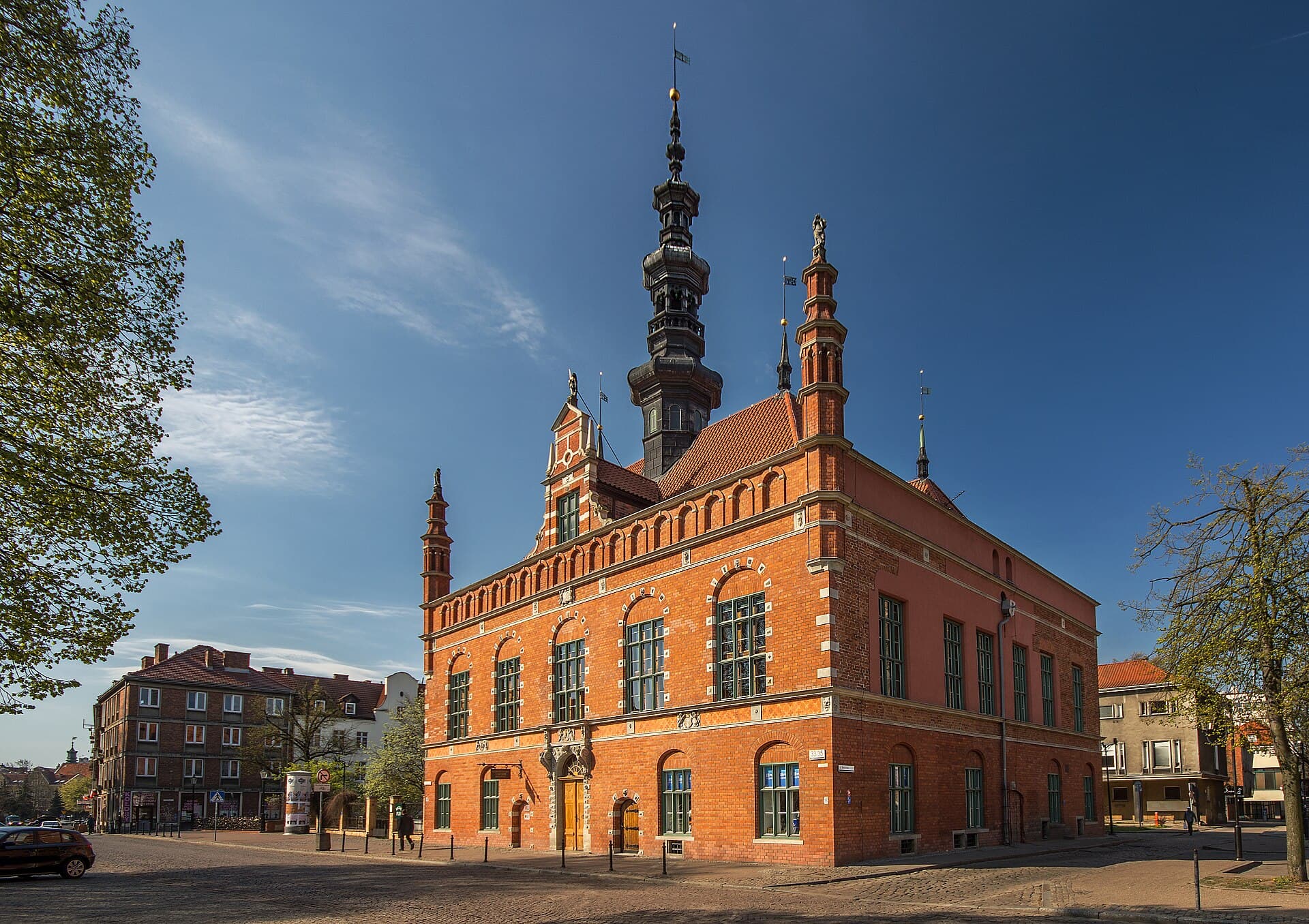 The Old Town HallA late sixteenth-century town hall on the Radunia Canal, built to serve the Old 3 minutes walk4.7
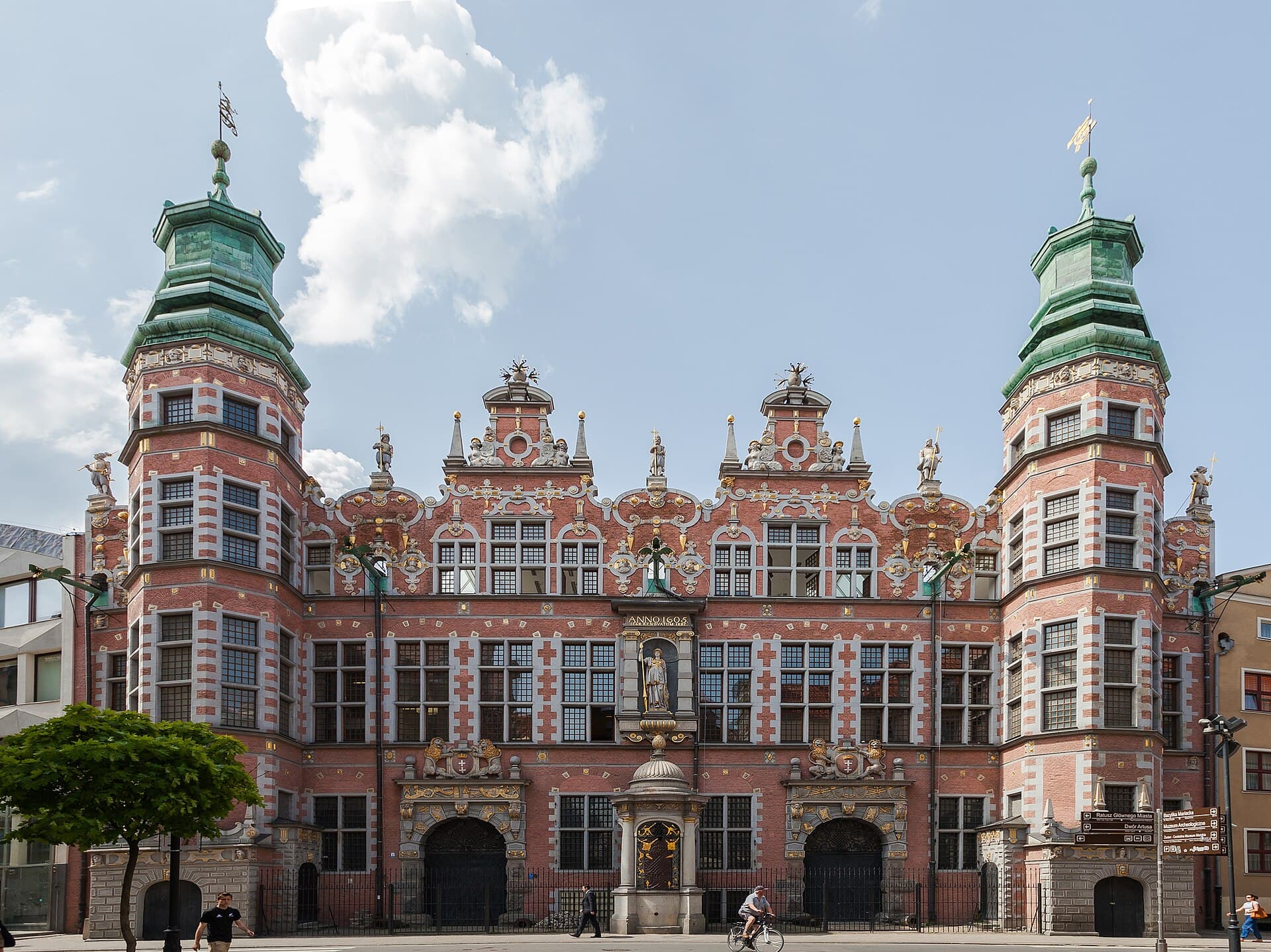 The Great ArmouryAn early seventeenth-century building at the western edge of the old town, and a4 minutes walk4.8
Scattered parts: the Jacek Tower, the Dovecote Tower and stretches of wall between the Main and Old Towns; the Prison Tower, which today holds the Amber Museum; and the High Gate and Golden Gate on the Royal Way. Most of the wall was demolished in the nineteenth century as the city expanded, and what remained was partly destroyed in 1945 and rebuilt.
The street the kings of Poland took when entering the city: it begins at the High Gate to the west, then the Prison Tower, then the Golden Gate, then Długa street with its coloured facades, then the Długi Targ square with the main town hall and the Neptune fountain, ending at the Green Gate on the river. The whole route is about eight hundred metres and is the heart of a Gdańsk visit.