
Three functions in one canal
Drinking water, mill power and a defensive weapon.
DerHexer — CC BY-SA 3.0 · Diego Delso — CC BY-SA 3.0 · Diego Delso — CC BY-SA 3.0 · Diego Delso — CC BY-SA 3.0
An artificial canal cut in the fourteenth century to bring the water of the Radunia river to Gdańsk, and among the oldest large hydraulic works surviving in central Europe. The Teutonic Knights dug it between 1338 and 1356 over about thirteen kilometres. Its purpose was threefold: clean drinking water, power to drive mills, and defence — the surroundings of the city could be flooded by opening the sluices. The gradient is precisely calculated along its length to keep the flow constant, a notable surveying achievement for its age. The canal drove the Great Mill with its eighteen wheels, and dozens of other workshops. It remained Gdańsk's principal water supply into the nineteenth century. Today it runs in an open channel through the Old Town and its banks can be walked. A public space, free to walk.
Drinking water, mill power and a defensive weapon.
A notable fourteenth-century surveying achievement.
The Great Mill was the largest in Europe.
Crossing the Old Town, Gdańsk
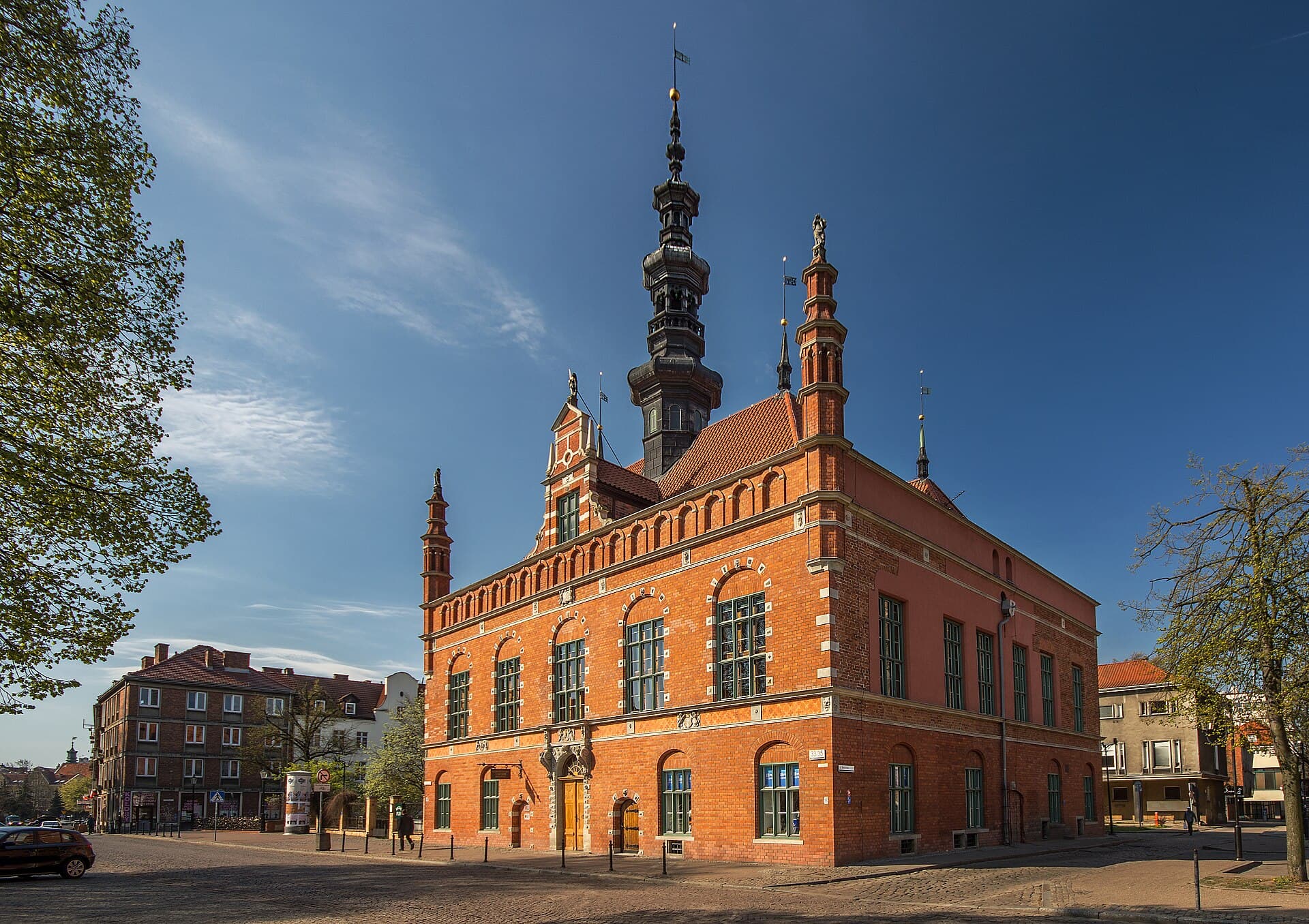 The Old Town HallA late sixteenth-century town hall on the Radunia Canal, built to serve the Old 1 minute walk4.7
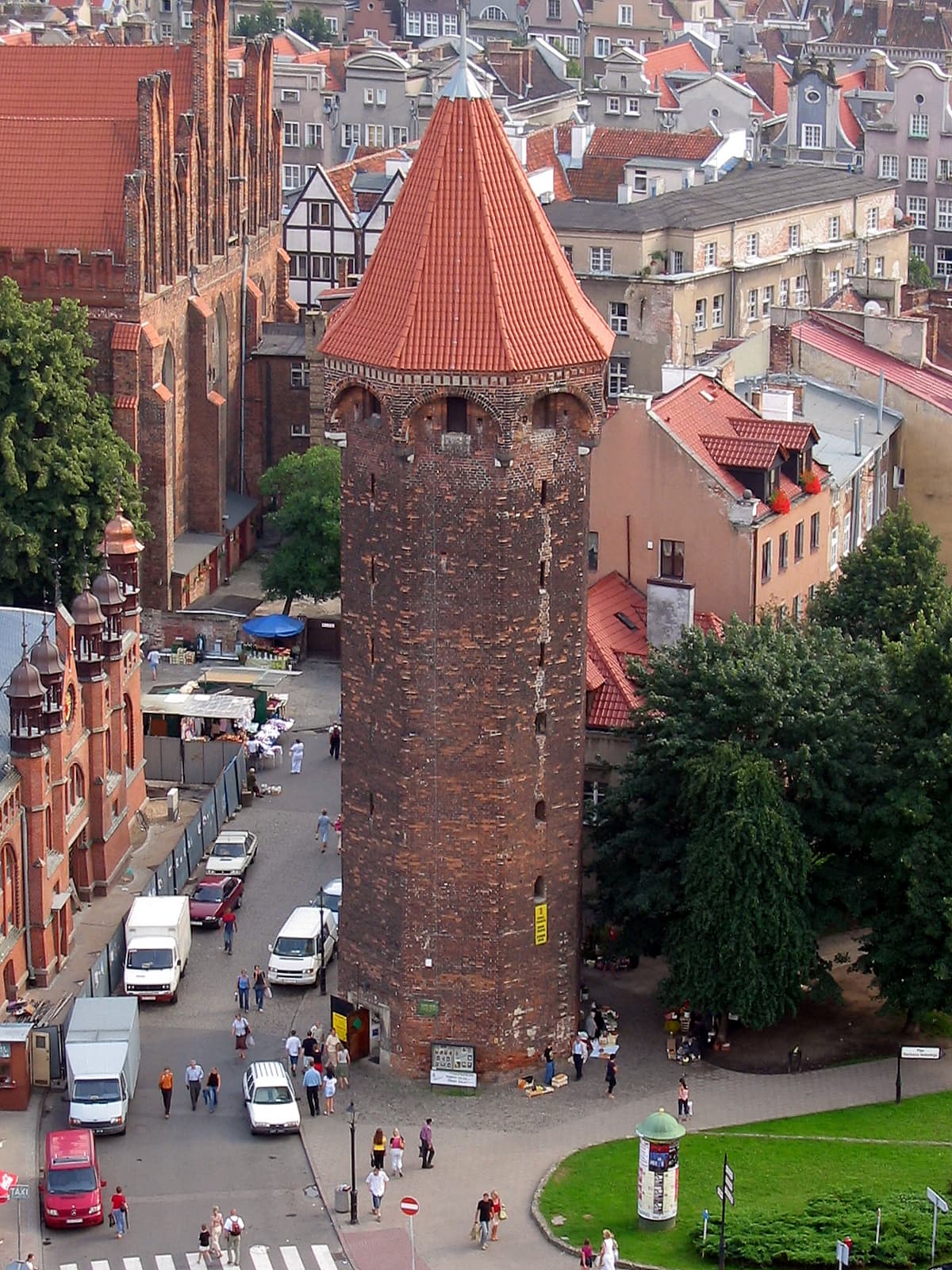 The Jacek TowerA fifteenth-century defensive tower, the largest surviving of Gdańsk's fortifica2 minutes walk4.7
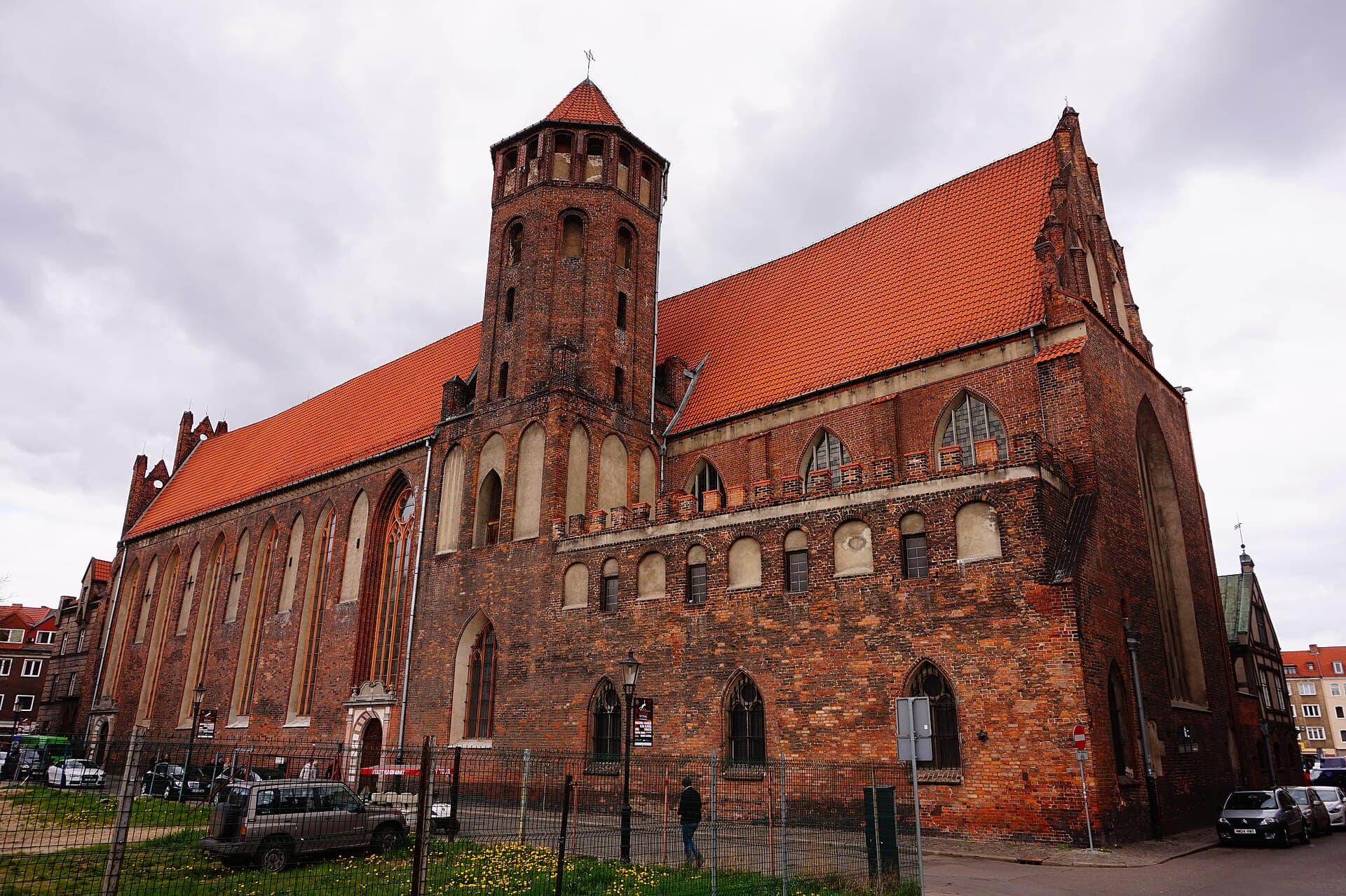 St Nicholas's BasilicaA thirteenth-century Dominican church north of the old town, and the only church3 minutes walk4.8
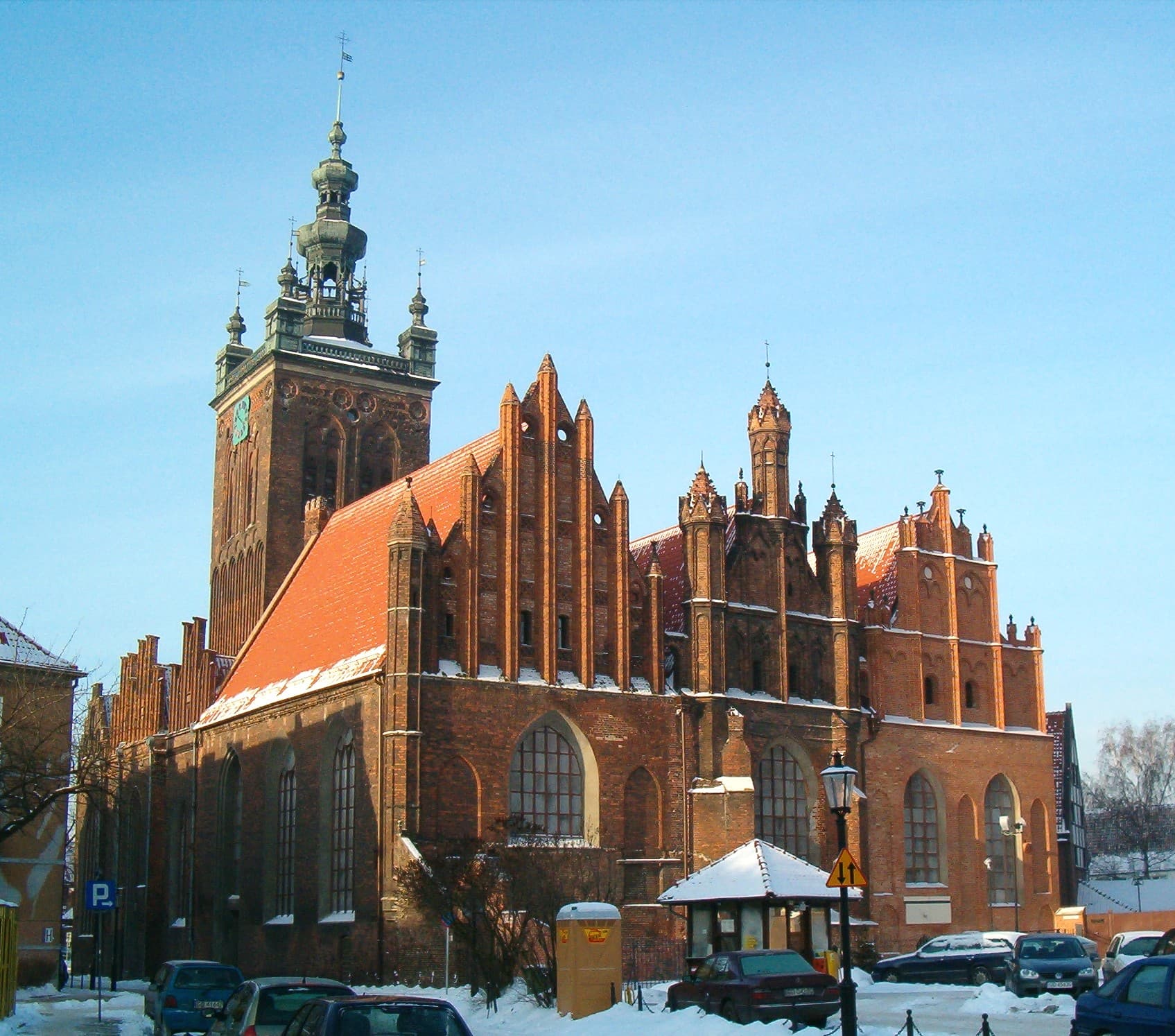 St Catherine's ChurchThe oldest church in Gdańsk, originating in the thirteenth century, north of the3 minutes walk4.5
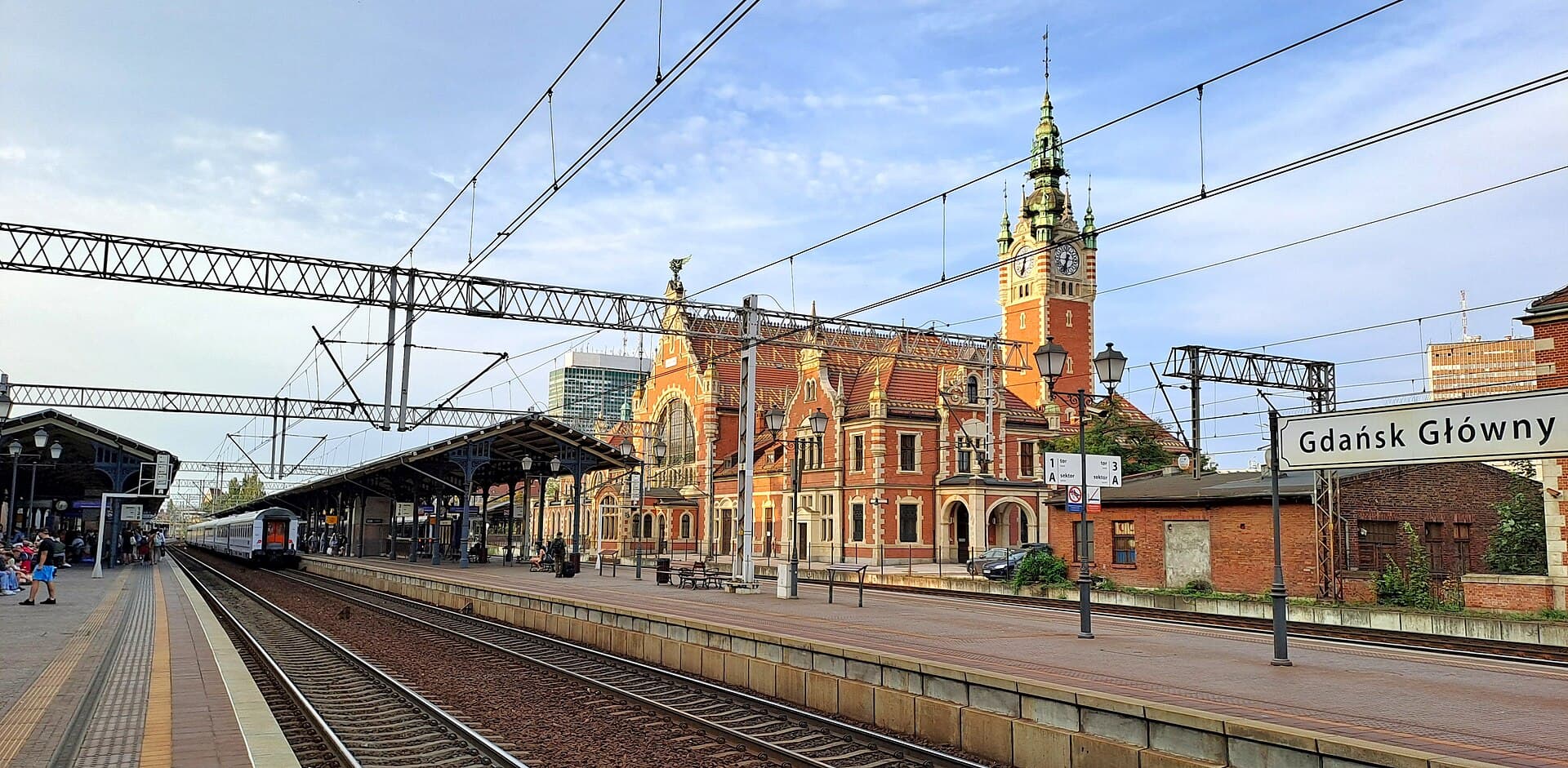 Gdansk Główny StationGdansk's main railway station, whose building is among the most striking put up 4 minutes walk4.3
A German military order founded in Acre in the twelfth century, which then moved to the Baltic where it created a monastic state on the lands of the pagan Prussians. It ruled the region for two centuries and founded towns and castles — the best known being Malbork, the largest brick castle in the world. It was defeated by the Poles and Lithuanians at the battle of Grunwald in 1410, and Gdańsk passed to Poland in 1454.
The building itself is impressive: a huge brick mass under a steeply pitched roof, built in 1350 and working until 1945. It today holds the ticketed Amber Museum, a fitting subject for the place: Gdańsk has been the world's amber capital for centuries, and the museum explains its formation — fossilised tree resin forty million years old — the insects trapped in it, and its uses.