
Character-eight shape
Steps in two directions.
Zhangzhugang — CC BY-SA 4.0 · 猫猫的日记本 — CC BY-SA 3.0 · 猫猫的日记本 — CC BY-SA 3.0 · Zhangzhugang — CC BY-SA 4.0 · 猫猫的日记本 — CC BY-SA 3.0 · Zhangzhugang — CC BY-SA 4.0 · liubozhi — CC BY 3.0 · Zhangzhugang — CC BY-SA 4.0
A Song-dynasty stone bridge counted among the oldest surviving bridges in China, first built between 1201 and 1204, rebuilt in 1256 and restored in 1763 under the Qing dynasty; it became a protected national monument in 2001. Its name means «Character Eight Bridge», because its steps run down from both ends in diverging directions and trace the shape of the Chinese character for «eight»; it was designed this way because it stands where canals meet, linking several banks at once. It is 27 metres long and 3.2 metres wide and rises 5 metres above the water to let boats pass beneath, and around it lies an old quarter of white houses with black roofs facing the canals, threaded by the black-awning boats Shaoxing is known for. The bridge and the quarter are free and always open, per visitor guides. A morning walk through the quarter shows everyday life along the canals.
Steps in two directions.
An old water quarter.
Shaoxing's emblem.
Baziqiao historic quarter, Yuecheng District, Shaoxing
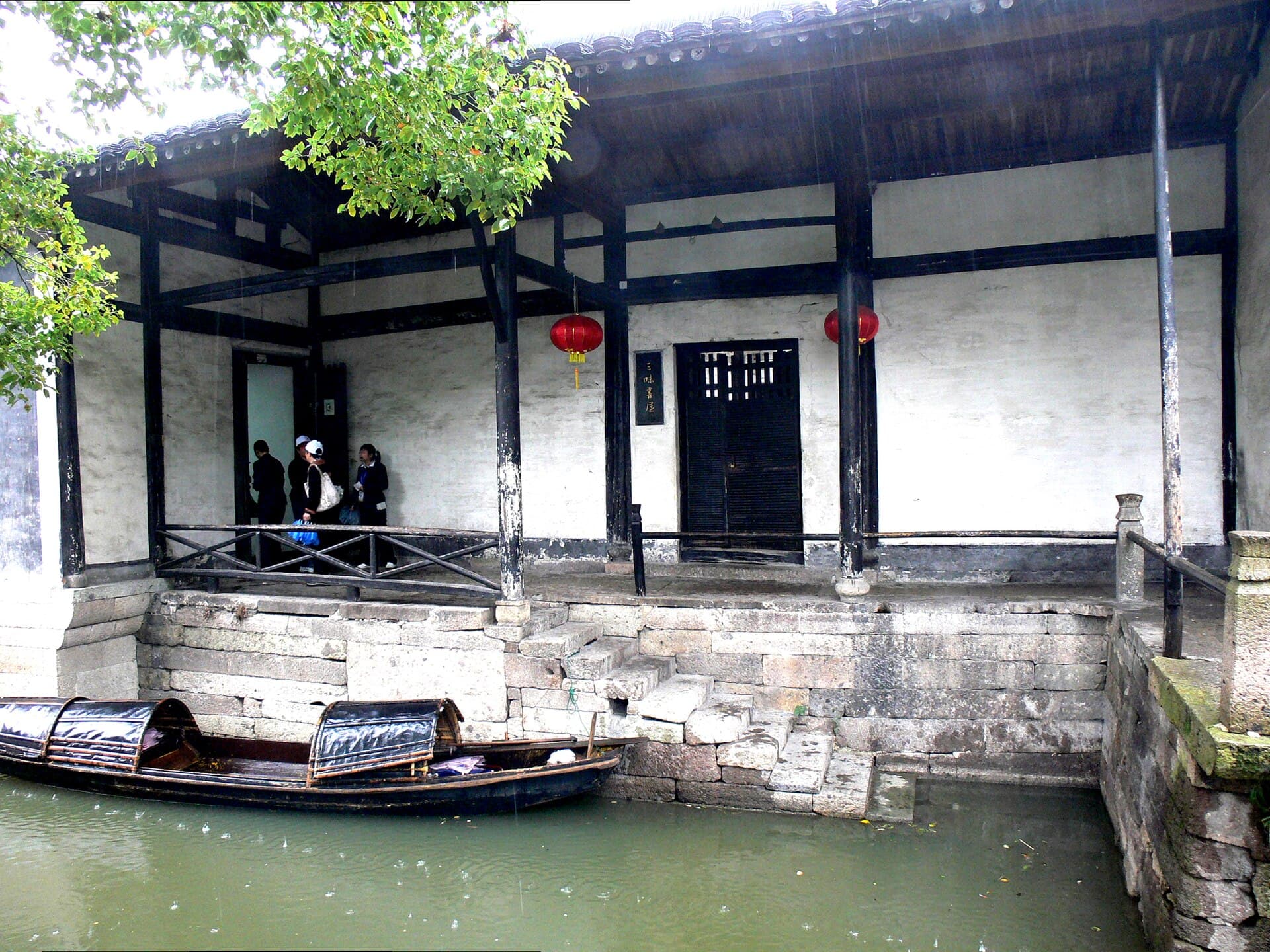 Lu Xun Native PlaceThe neighbourhood where Lu Xun was born and grew up, the pen name of Zhou Shuren12 minutes walk
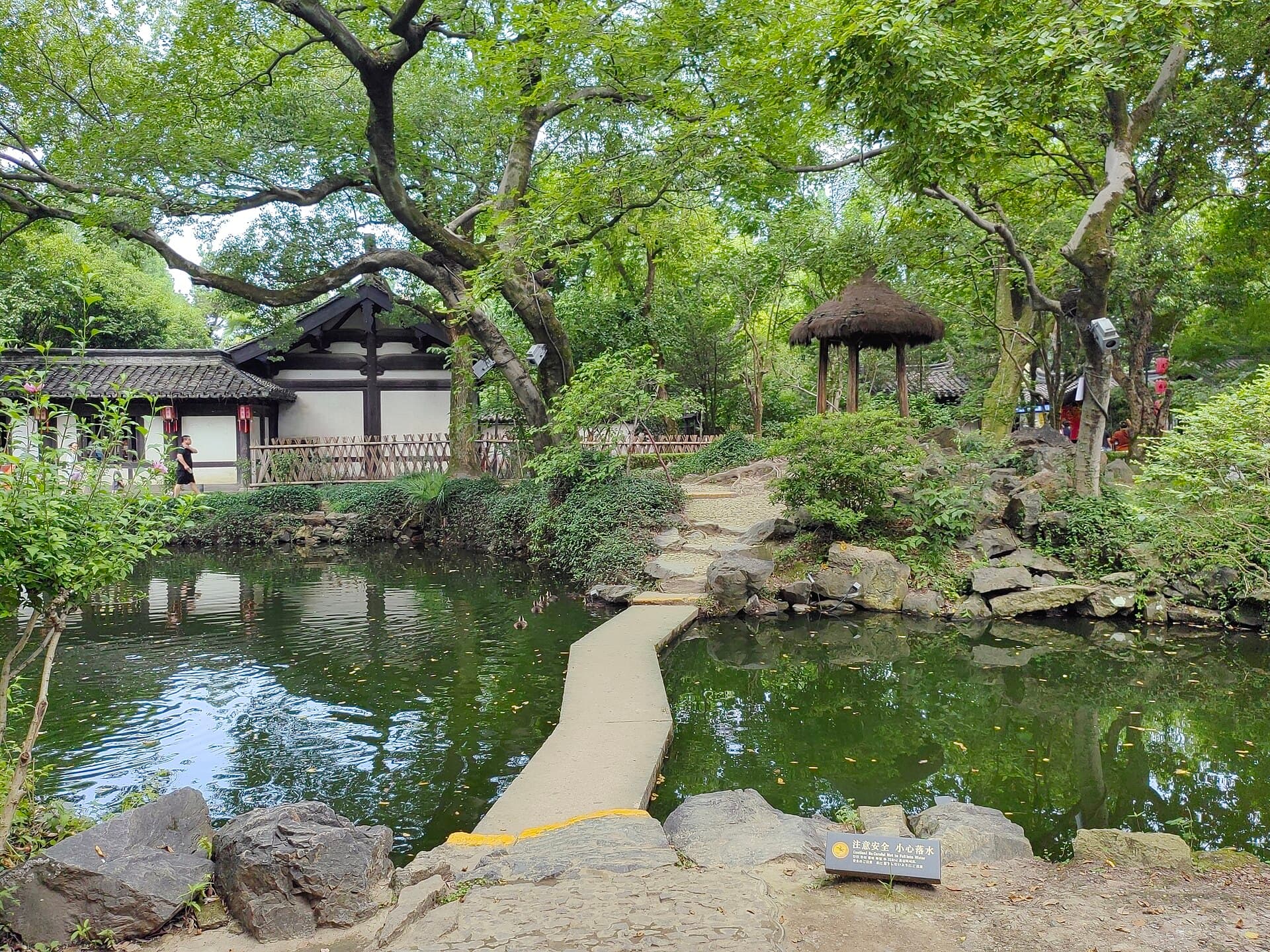 Shen GardenA garden in the style of the lands south of the Yangtze, tied to the most famous13 minutes walk
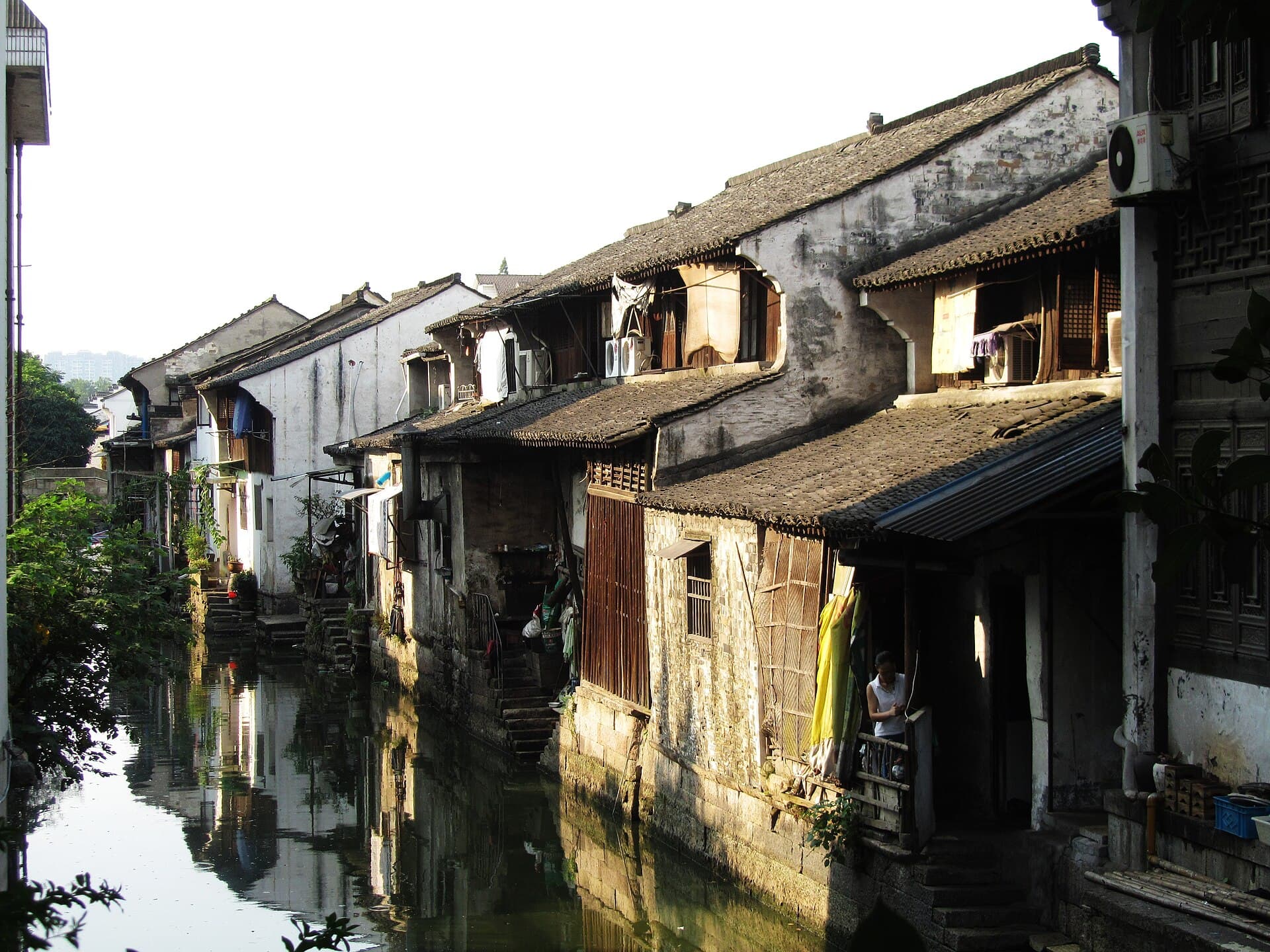 Cangqiao Straight StreetAn old street running a kilometre and a half from north to south through the hea17 minutes walk
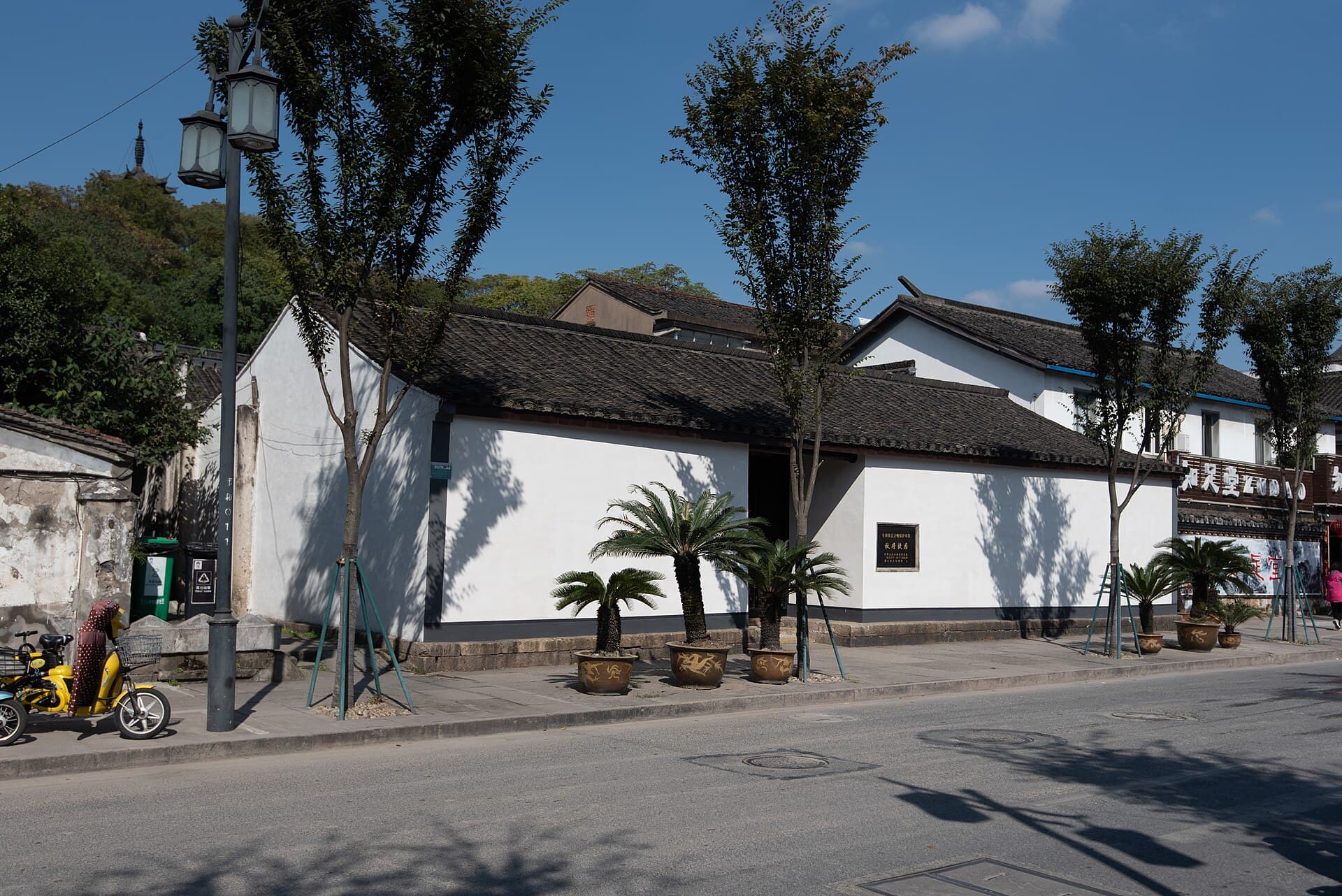 Qiu Jin's Former ResidenceThe home of Qiu Jin (1875–1907), the poet and pioneer of women's rights in China22 minutes walk
Because its steps run down from both ends in diverging directions, tracing the Chinese character for «eight»; the bridge is free and always open, per visitor guides.