
The fire layers
Eight centuries of blazes readable in the walls.
Diego Delso — CC BY-SA 4.0 · Diego Delso — CC BY-SA 4.0 · Diego Delso — CC BY-SA 4.0 · Thomasg74 — CC BY-SA 3.0 no
Bergen Cathedral is the city's witness to centuries of fire: the original St. Olav's church (12th century) burned and was rebuilt successively across eight centuries of Bergen's famous fires (the wooden city ignited over twenty documented times) — so today's interior mixes architectural layers: original Gothic, later Renaissance and baroque repairs, readable as a timeline of catastrophe and resilience together. A cannonball still lodged in its outer tower (from an 1665 Swedish bombardment) was deliberately left as a war witness, never removed — a small detail that surprises every attentive visitor. The church runs simple daily worship, ticketless — a half-hour falling naturally on the centre walk between Bryggen and the fish market, its historic organ hosting seasonal evening concerts open to the public.
Eight centuries of blazes readable in the walls.
An 1665 war witness, never removed.
Domkirkeplassen, 5017 Bergen
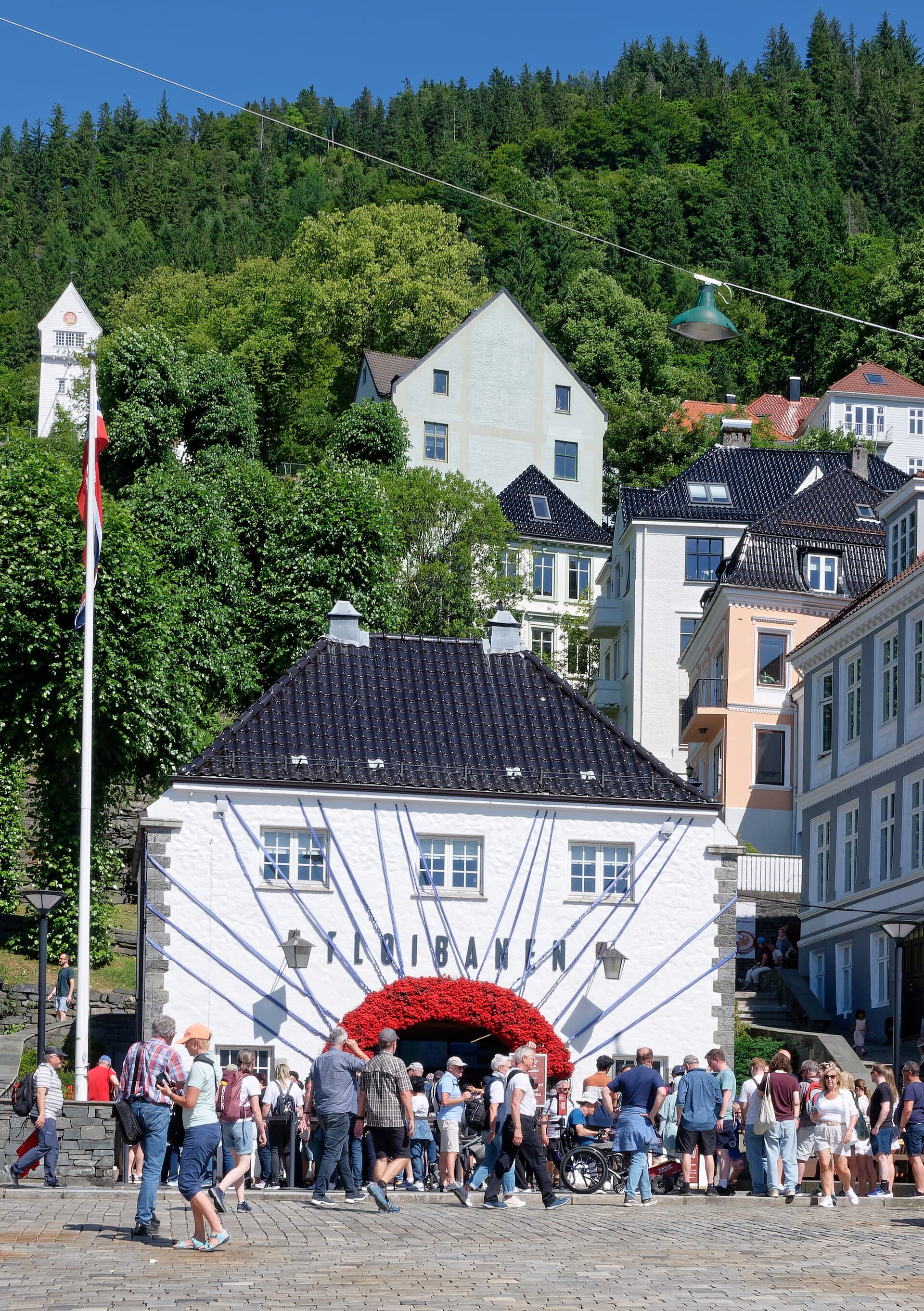 Fløibanen — the Mount Fløyen FunicularFløibanen is Bergen's most famous elevator to the sky: a venerable funicular (194 minutes walk4.8
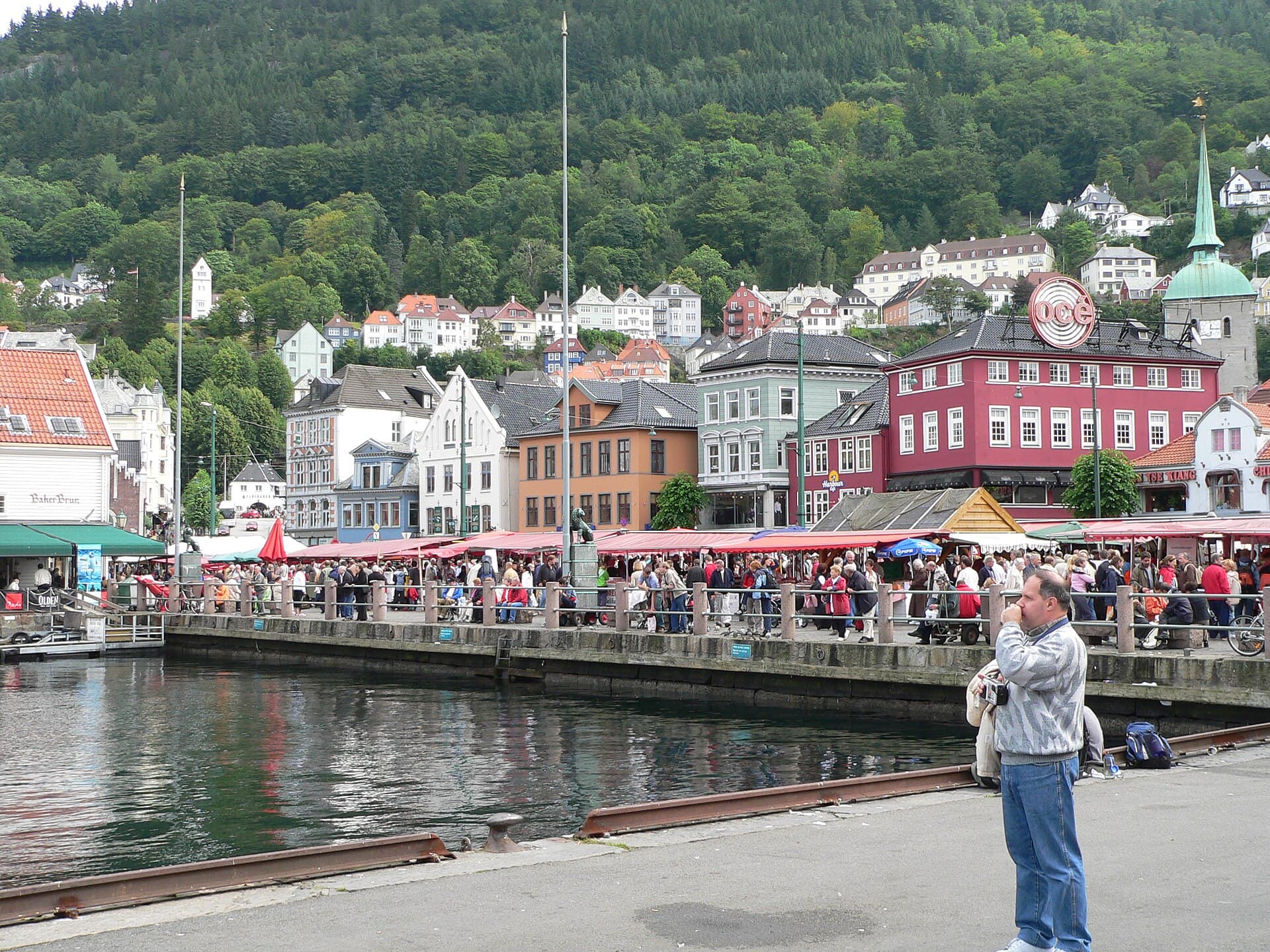 The Bergen Fish MarketThe fish market stands at the head of Vågen, the harbour inlet where the boats t4 minutes walk3.9
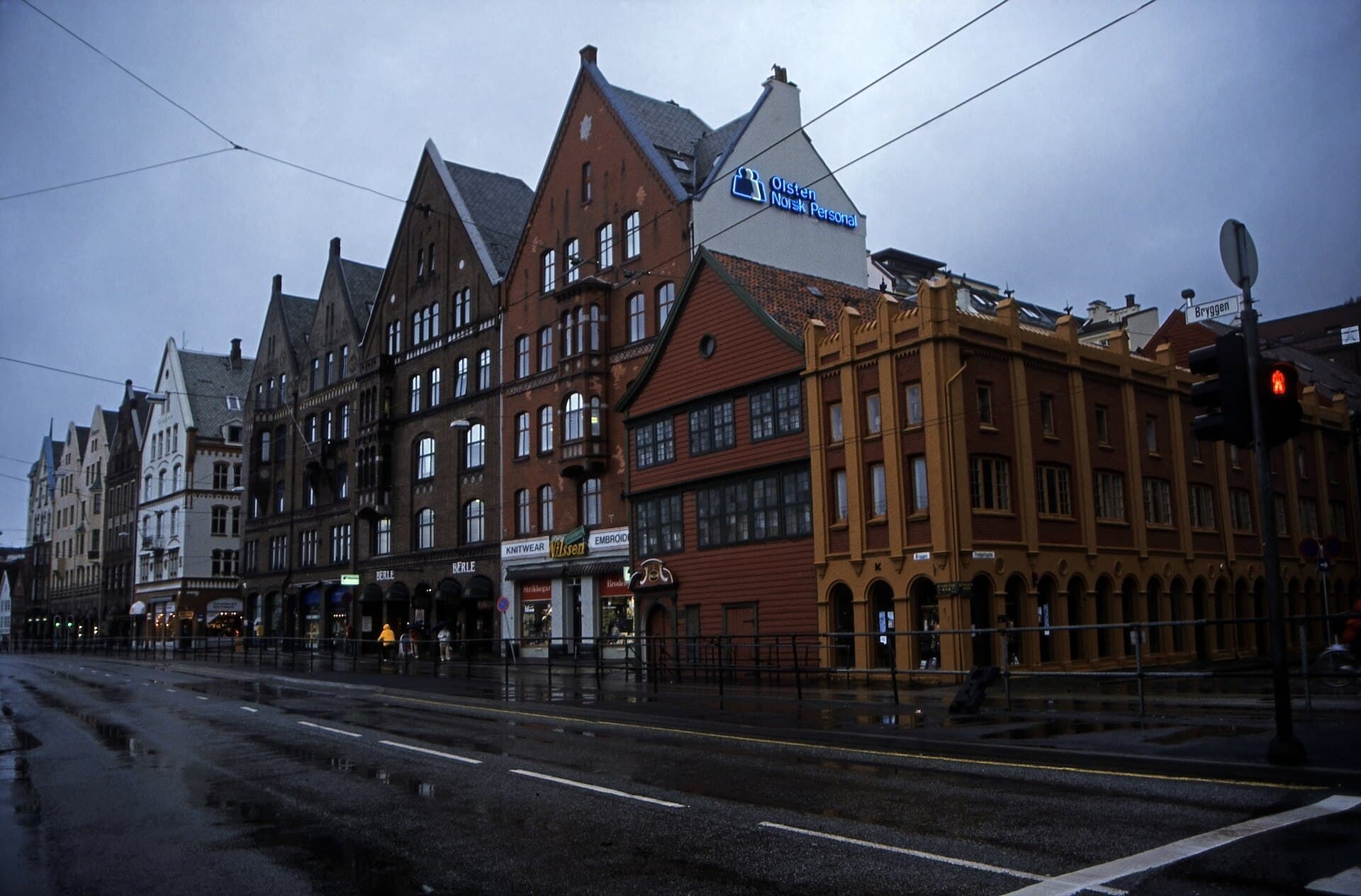 The Hanseatic Museum & SchøtstueneThe Hanseatic Museum is the sole chance to enter a real German merchant's house 4 minutes walk4.4
 Seamen's MonumentA bronze monument on Torgallmenningen square in central Bergen, raised in 1950 i4 minutes walk4.6
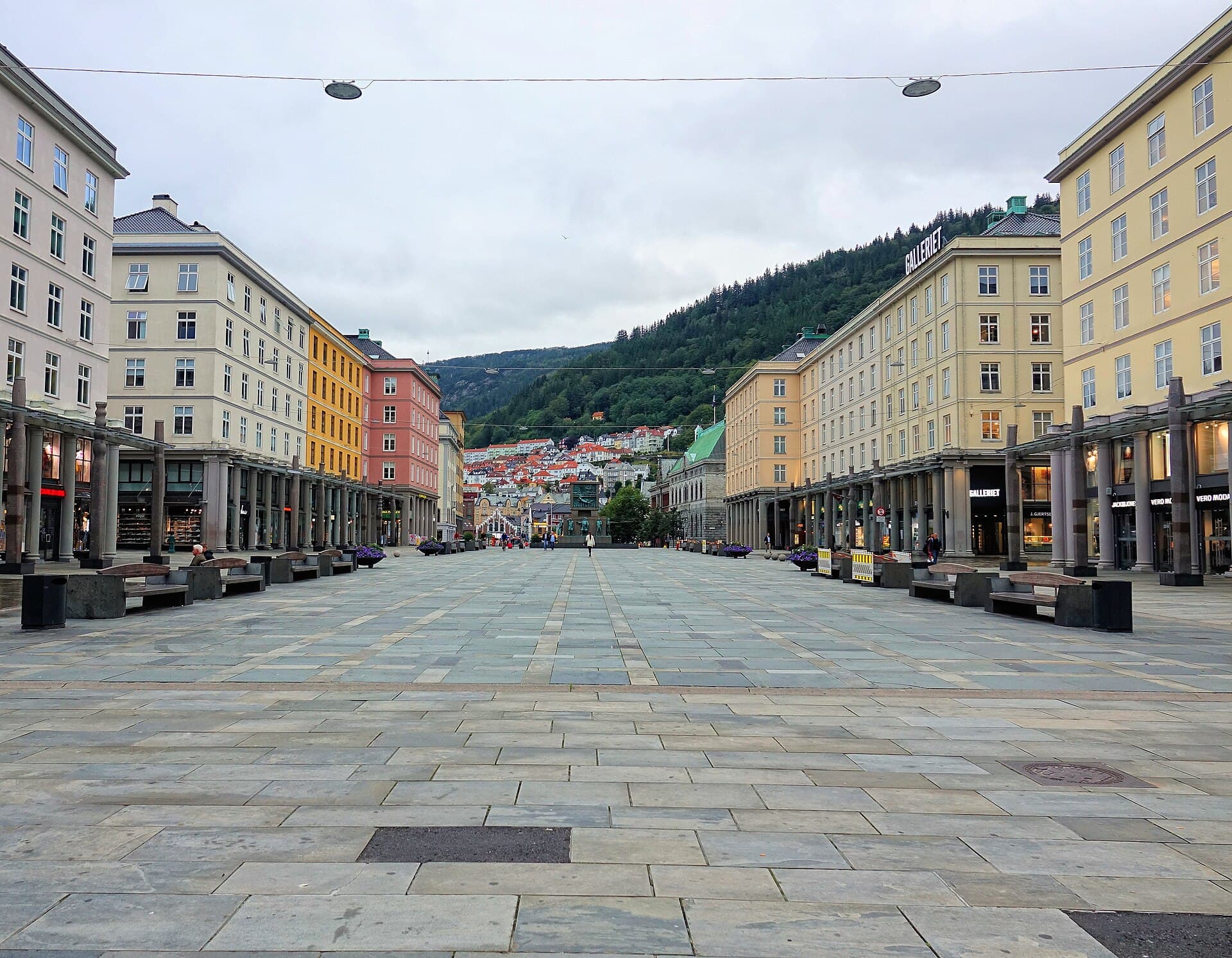 TorgallmenningenTorgallmenningen is Bergen's largest square and its commercial heart: a broad ca5 minutes walk4.1
Over twenty major documented fires since the 12th century — the dense wooden city and its apparently damp weather did not prevent repeated disasters, most famous the 1916 fire that destroyed wide parts of the modern centre (Bryggen itself relatively miraculously survived most). Each fire gradually reshaped Norwegian building codes until stone and brick became mandatory in later construction.