
Designed against artillery
Thick curved walls instead of angles — among Europe's earliest forts so built.
Dennis G. Jarvis — CC BY-SA 2.0 · Bernard Gagnon — CC BY-SA 4.0 · Bernard Gagnon — CC BY-SA 4.0 · Bernard Gagnon — CC BY-SA 4.0
A sea fortress at the western end of Dubrovnik's walls, standing on a rock projecting into the sea and guarding the old city's western approach and the Pile gate. It was built in the fifteenth century to a design by the Italian architect Michelozzo, and is among the earliest European forts designed specifically to withstand artillery: thick curved walls instead of sharp angles, with gun openings at different levels. That detail matters: Dubrovnik was a small trading republic surrounded by greater powers — Venice and the Ottomans — and its centuries of independence rested on diplomacy and fortification rather than a large army. Its forts were an investment in survival. Entry is normally included in the Dubrovnik walls ticket, the same ticket that allows the full circuit walk around the city. From inside you see the Lovrijenac rock opposite, and the sea through the gun openings. Walking the walls is the essential experience in Dubrovnik, and this fortress is a stop on it rather than a separate destination.
Thick curved walls instead of angles — among Europe's earliest forts so built.
Dubrovnik kept its independence through diplomacy and walls, not a large army.
You look at the Lovrijenac rock and the sea from where the cannon stood.
The western end of Dubrovnik's walls
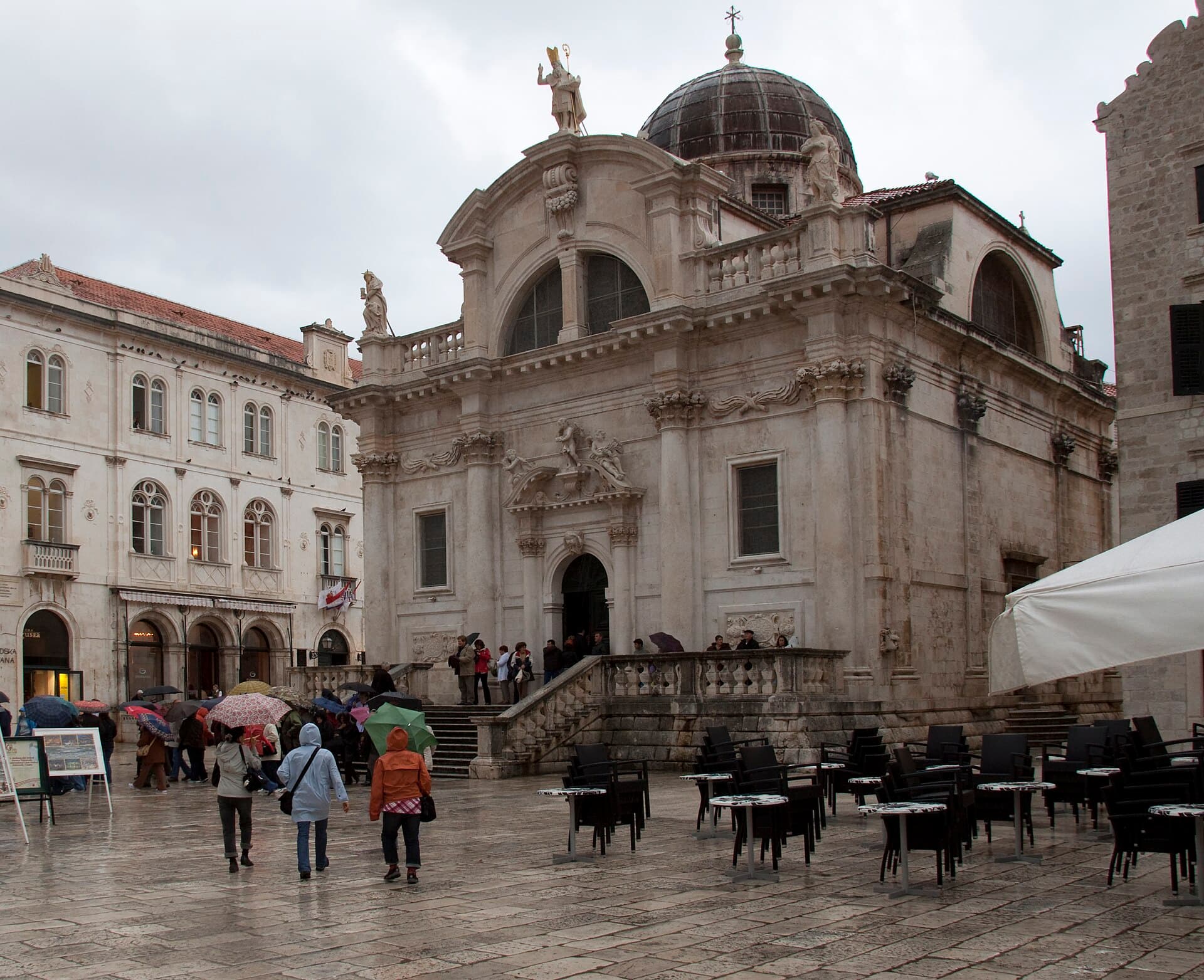 Church of St BlaiseIt stands at the eastern end of the **Stradun** on the Luža square, facing the S1 minute walk4.8
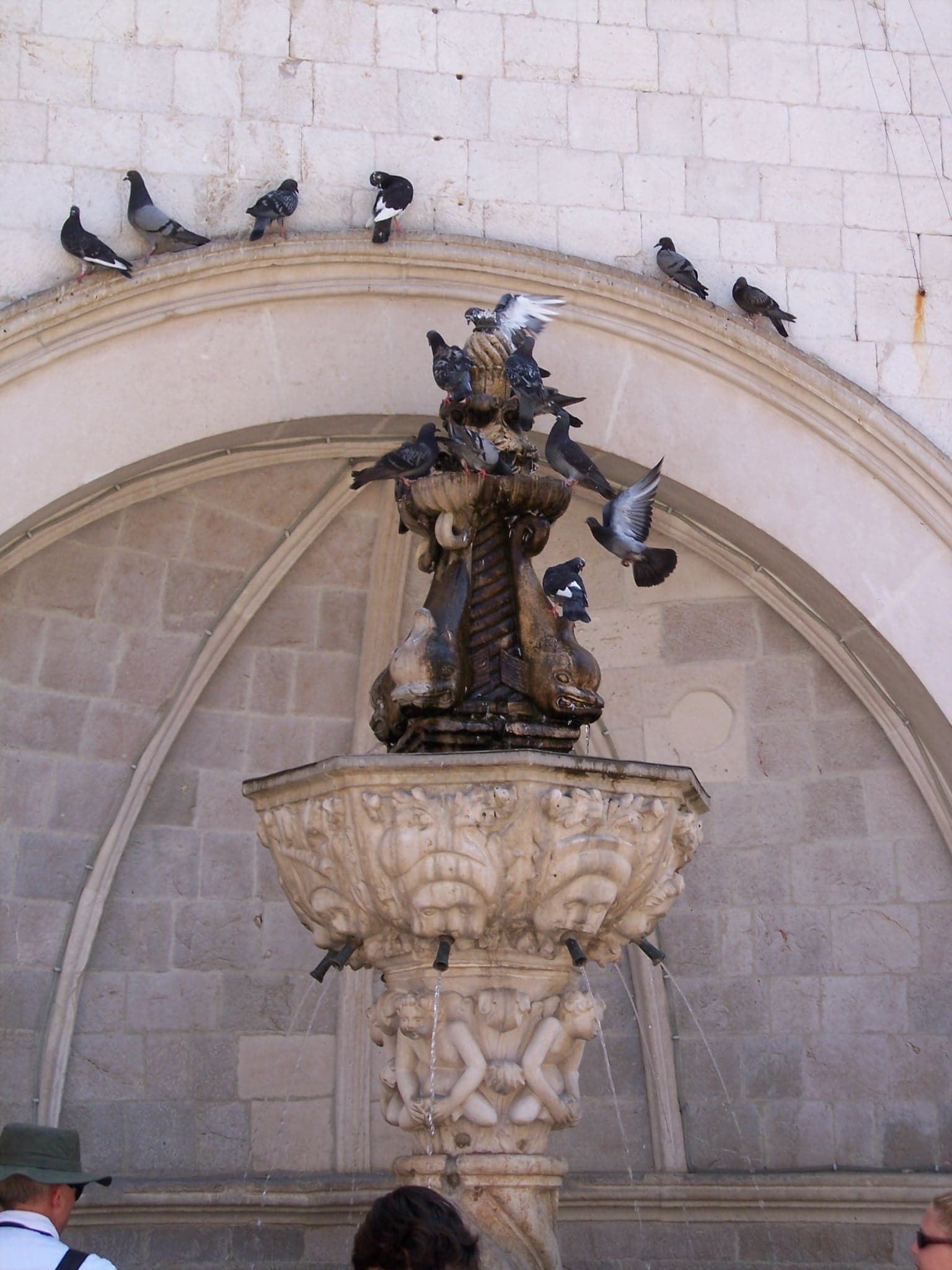 The Small Onofrio's FountainA small stone fountain at the eastern end of Dubrovnik's Stradun, from 1438, by 1 minute walk4.7
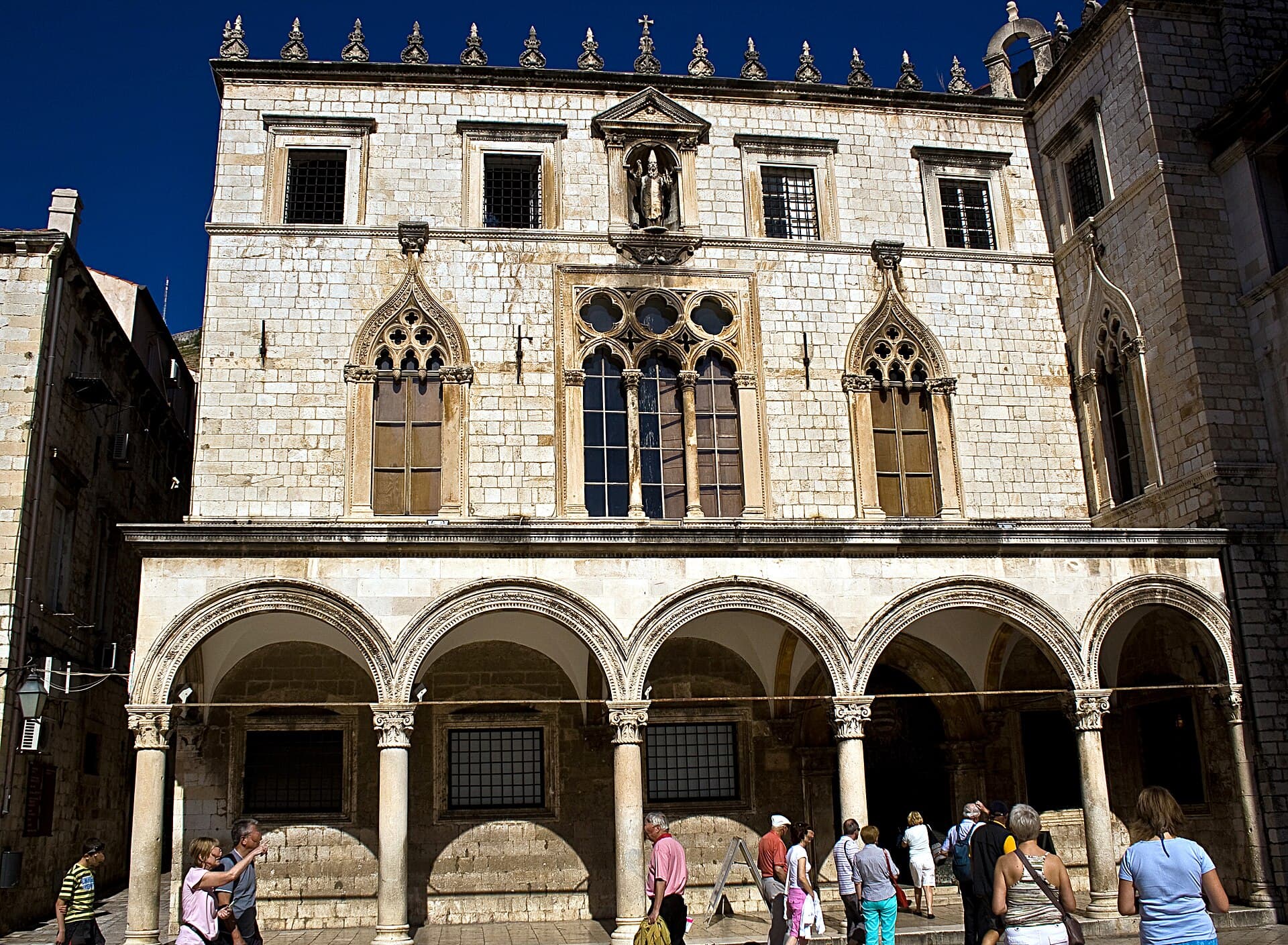 Sponza PalaceThe building that survived. When the **1667 earthquake** destroyed medieval Dubr1 minute walk4.4
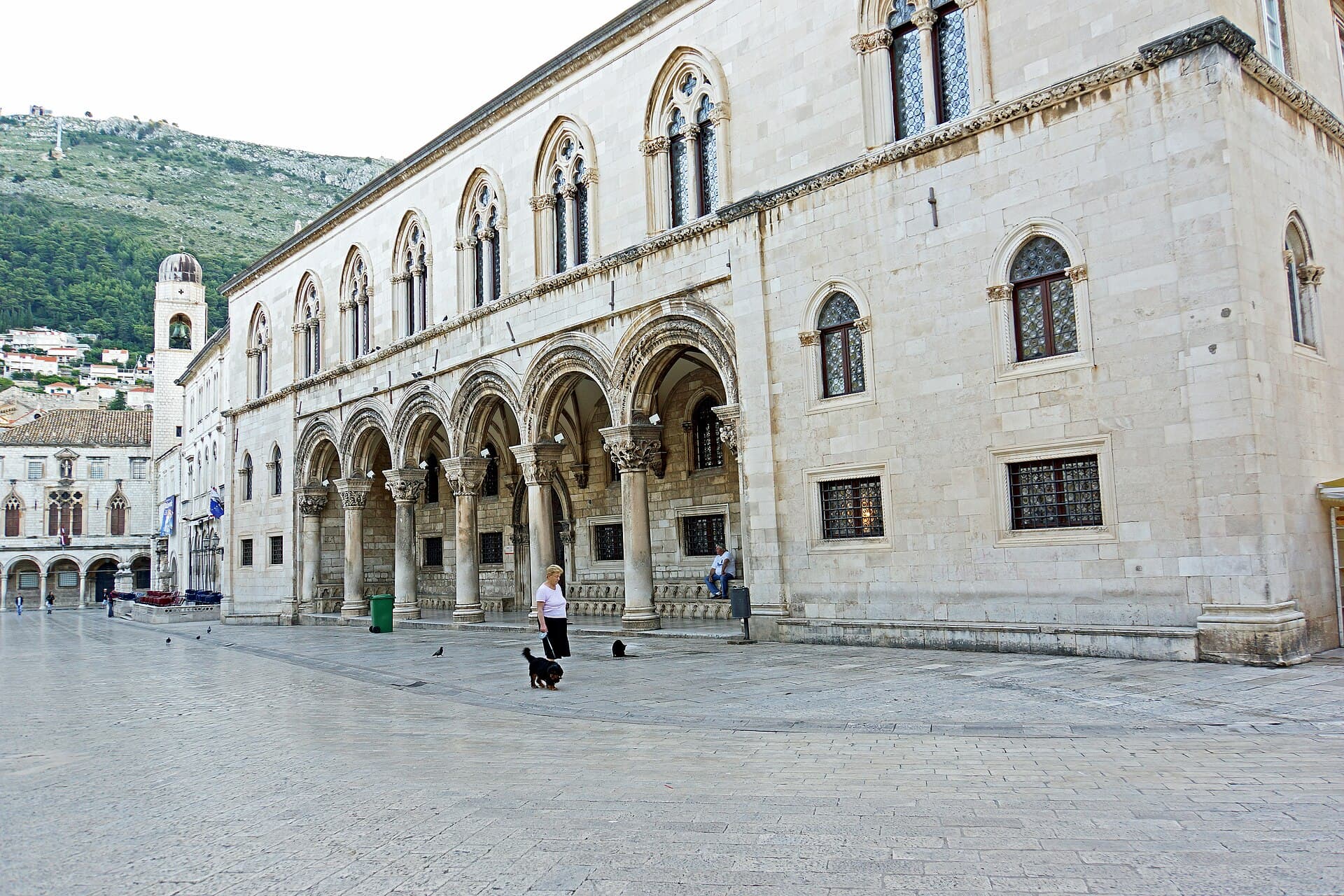 The Rector's PalaceThe Rector's Palace is the Ragusan state as a building: seat of the elected Rect1 minute walk4.4
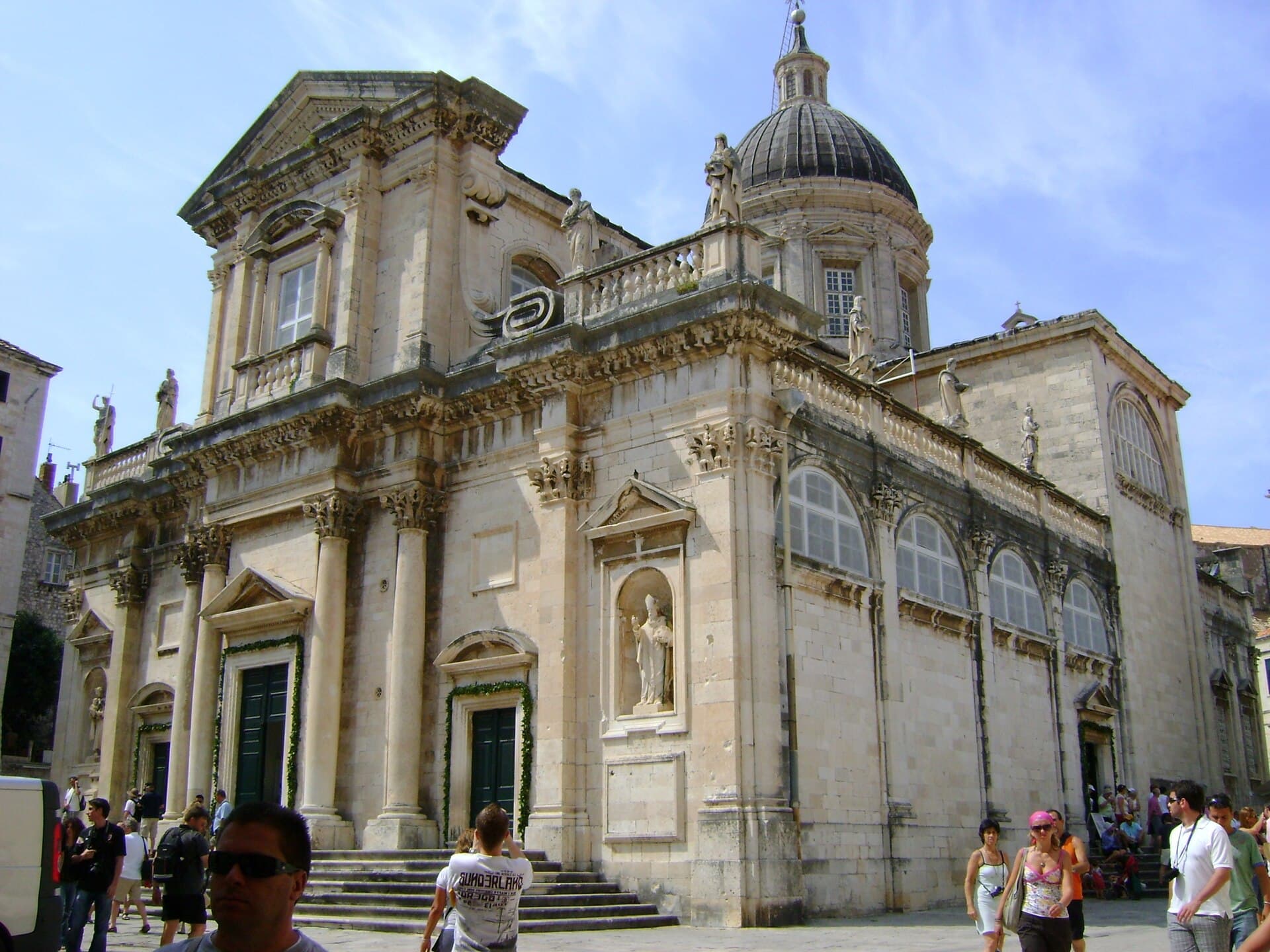 Dubrovnik CathedralA domed Baroque cathedral in the heart of the old town, with layers of history b1 minute walk4.5
Start right at opening or in the last two hours before closing. Avoid midday entirely in summer: there is no shade, the heat is severe and the path is too narrow to pass. Check the cruise ship schedule too — on days when more than one ship arrives the old city becomes hard to move through.
About two hours walking steadily, more if you stop at the forts and take photographs. The route is a closed loop of about two kilometres with steps up and down. Exits are limited, so go in prepared: water, a hat and comfortable shoes.