
A strategic investment
Running water was a defence against siege rather than ornament.
László Szalai (Beyond silence) — Public domain · lienyuan lee — CC BY 3.0 · FrDr — CC BY-SA 4.0 · Sailko — CC BY 3.0
A small stone fountain at the eastern end of Dubrovnik's Stradun, from 1438, by the sculptor Pietro di Martino. It is the smaller of two fountains built by the engineer Onofrio della Cava as part of one project: a water system bringing fresh water into the city from a spring about twelve kilometres away by aqueduct. The large fountain stands at the western end of the street and the small one at the eastern, so the two serve both ends of the city. That project is what deserves attention: in the fifteenth century a walled city depending on rainwater cisterns was vulnerable to thirst in any siege. Bringing running water from the mountain was a strategic investment rather than a decorative one, and it is part of how Ragusa stayed independent. The small fountain is carved with dolphins and faces, and its water still runs and is drinkable. A two-minute stop on the main street — you pass it inevitably.
Running water was a defence against siege rather than ornament.
The large one west and the small one east served the whole city.
Water has run from it since the fifteenth century.
In front of the Sponza Palace, the eastern end of the Stradun
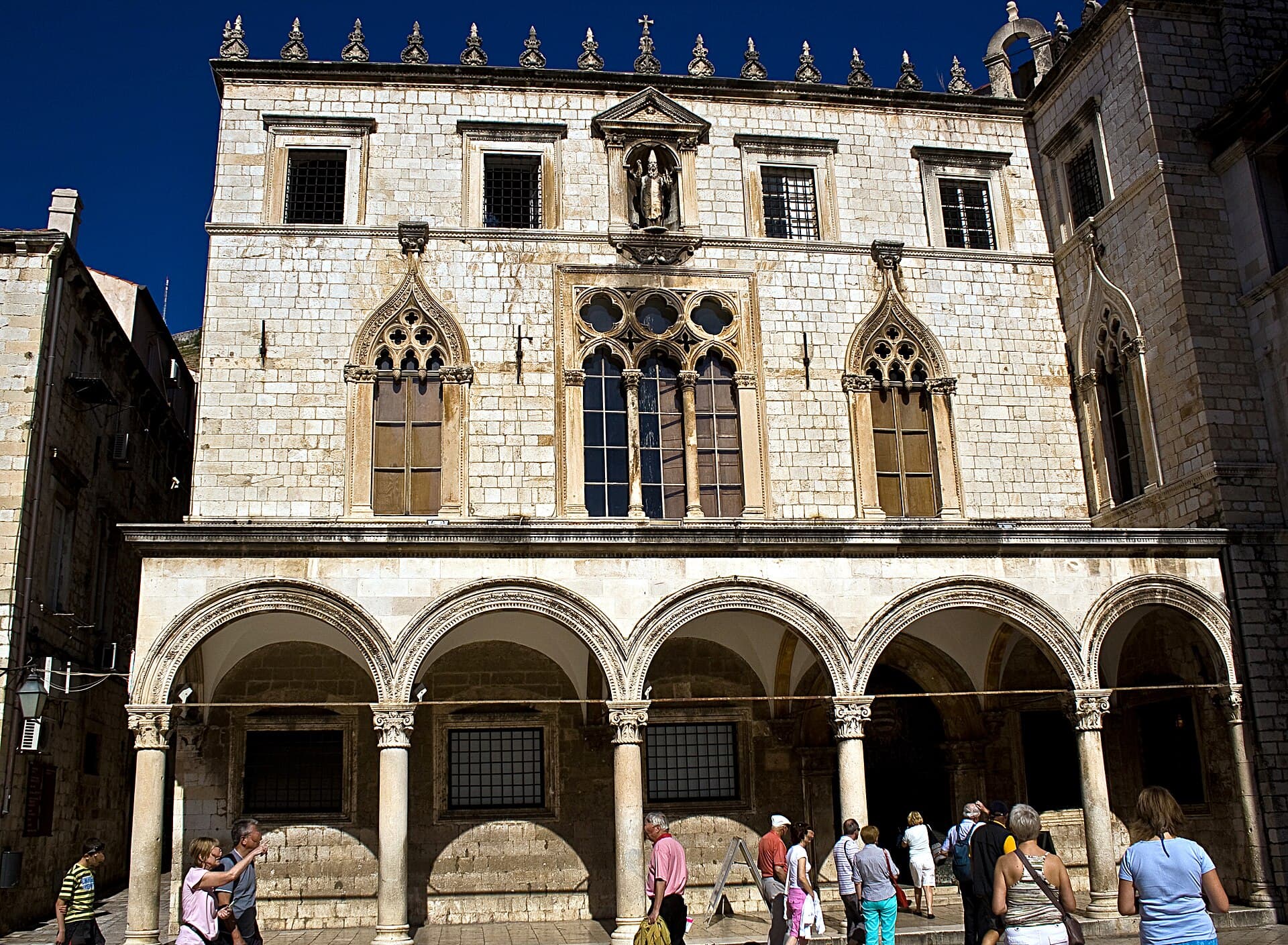 Sponza PalaceThe building that survived. When the **1667 earthquake** destroyed medieval Dubr1 minute walk4.4
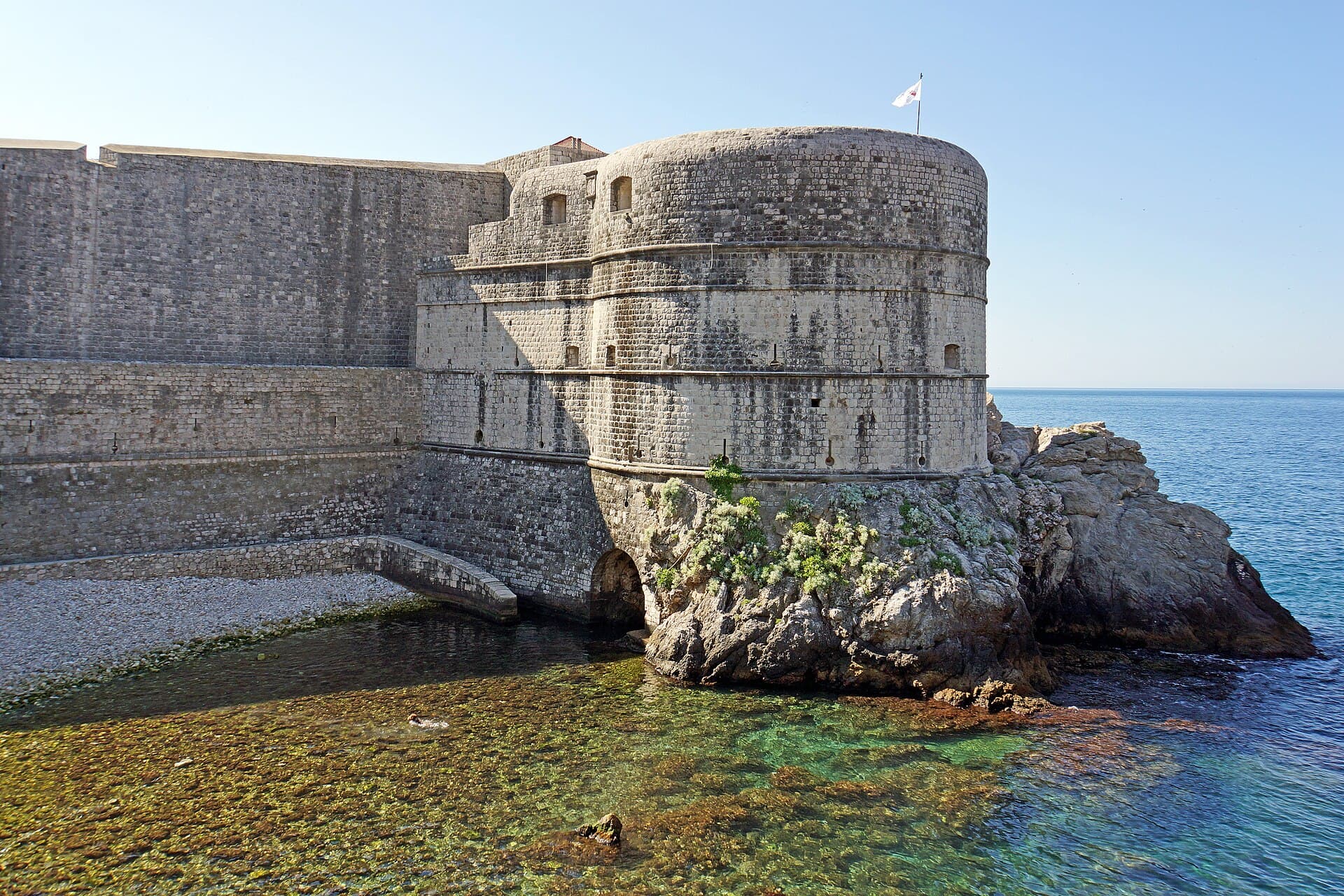 Bokar FortressA sea fortress at the western end of Dubrovnik's walls, standing on a rock proje1 minute walk4.7
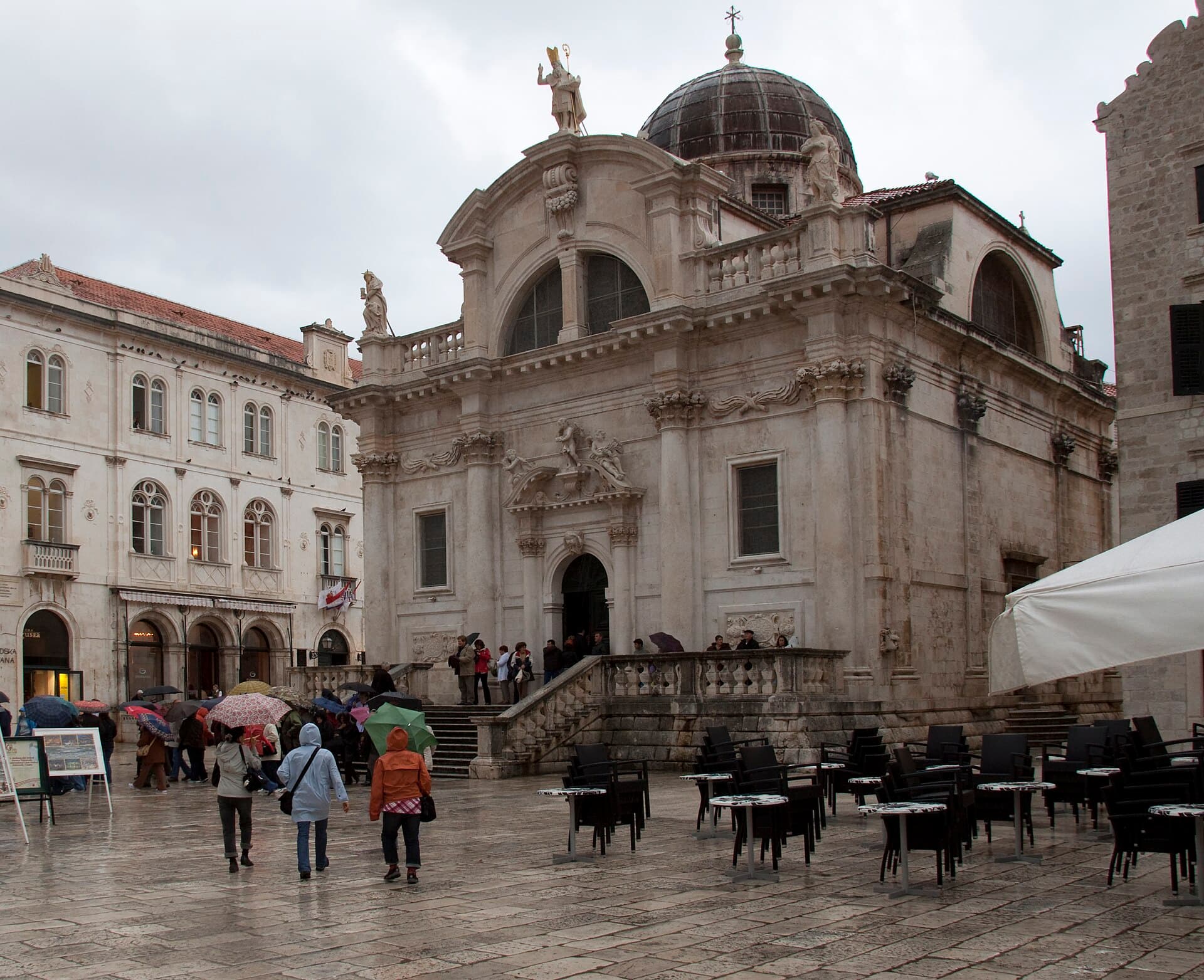 Church of St BlaiseIt stands at the eastern end of the **Stradun** on the Luža square, facing the S1 minute walk4.8
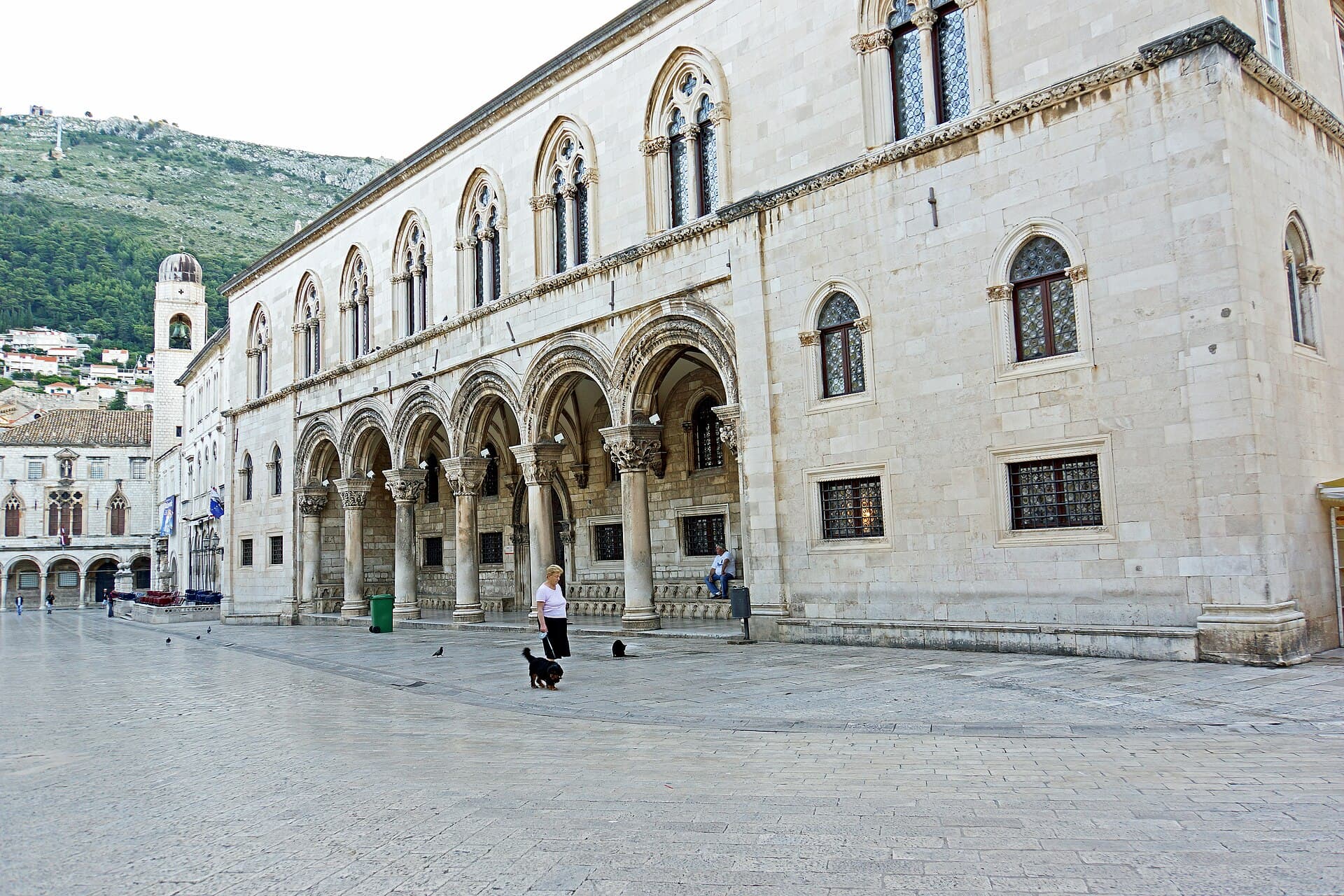 The Rector's PalaceThe Rector's Palace is the Ragusan state as a building: seat of the elected Rect1 minute walk4.4
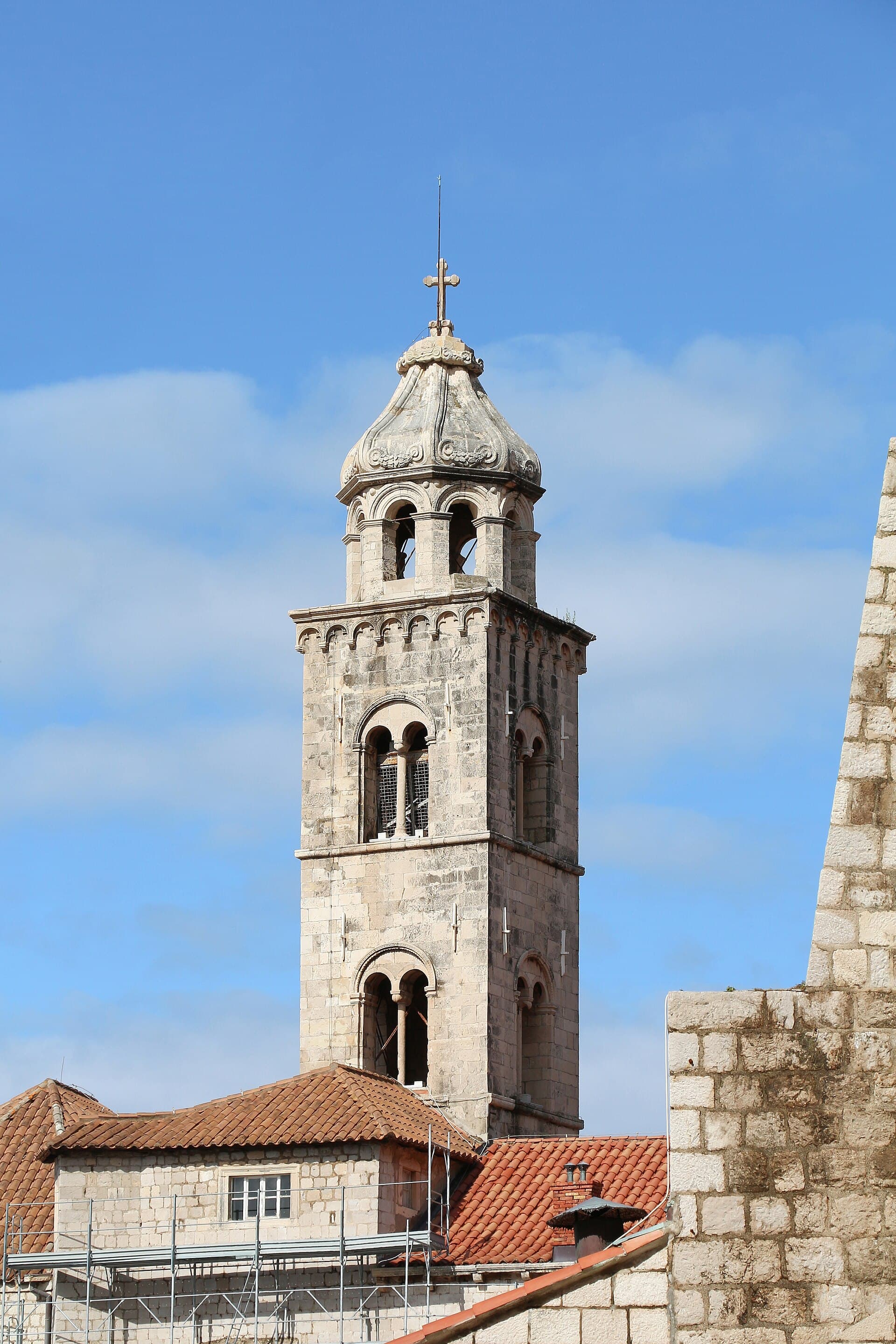 Dominican MonasteryAt the **eastern** end of the old town near the Ploče Gate — the opposite end fr1 minute walk4.1
Dubrovnik's main street, running about three hundred metres between the western and eastern gates, paved in limestone polished by feet until it shines. It was originally a sea channel separating an island from the mainland, filled in during the twelfth century. Its buildings are uniform because they were all rebuilt after the devastating earthquake of 1667 under a single set of rules.
Outside July and August, especially in May and early June or late September and October — the weather is still good and the crowds far thinner. Within the day, early morning before nine and evening after six are much quieter, because cruise passengers fill the old town between those hours. Check the ship arrival schedule if you can.