
The city model
The most accurate surviving image of medieval Dubrovnik.
Tony Hisgett from Birmingham, UK — CC BY 2.0 · Richard Mortel from Riyadh, Saudi Arabia — CC BY 2.0 · Richard Mortel from Riyadh, Saudi Arabia — CC BY 2.0 · Richard Mortel from Riyadh, Saudi Arabia — CC BY 2.0
It stands at the eastern end of the **Stradun** on the Luža square, facing the Sponza Palace and the bell tower — the church most present in the city's life, being dedicated to its patron. The present building is **Venetian Baroque**, put up in the early eighteenth century after a fire in 1706 consumed the Romanesque church that stood here. Its broad steps and ornamented front make it a natural stage for the square in front. On the high altar stands a fifteenth-century **silver-gilt statue of Saint Blaise** that survived the fire, holding in his hand **a model of Dubrovnik as it was before the 1667 earthquake** — which makes it a rare document: the most accurate surviving image of the medieval city before the earthquake erased it. Every **3 February** the **Festa svetog Vlaha** sets out from here, the city's greatest feast: banner processions from every village in the region, and rites more than a thousand years old, inscribed on UNESCO's list of intangible heritage. ⚠ The church is small and the visit short — but it is the city's symbolic centre.
The most accurate surviving image of medieval Dubrovnik.
Sponza Palace, the bell tower and the church in one view.
The 3 February feast, on UNESCO's intangible heritage list.
Luža, 20000 Dubrovnik
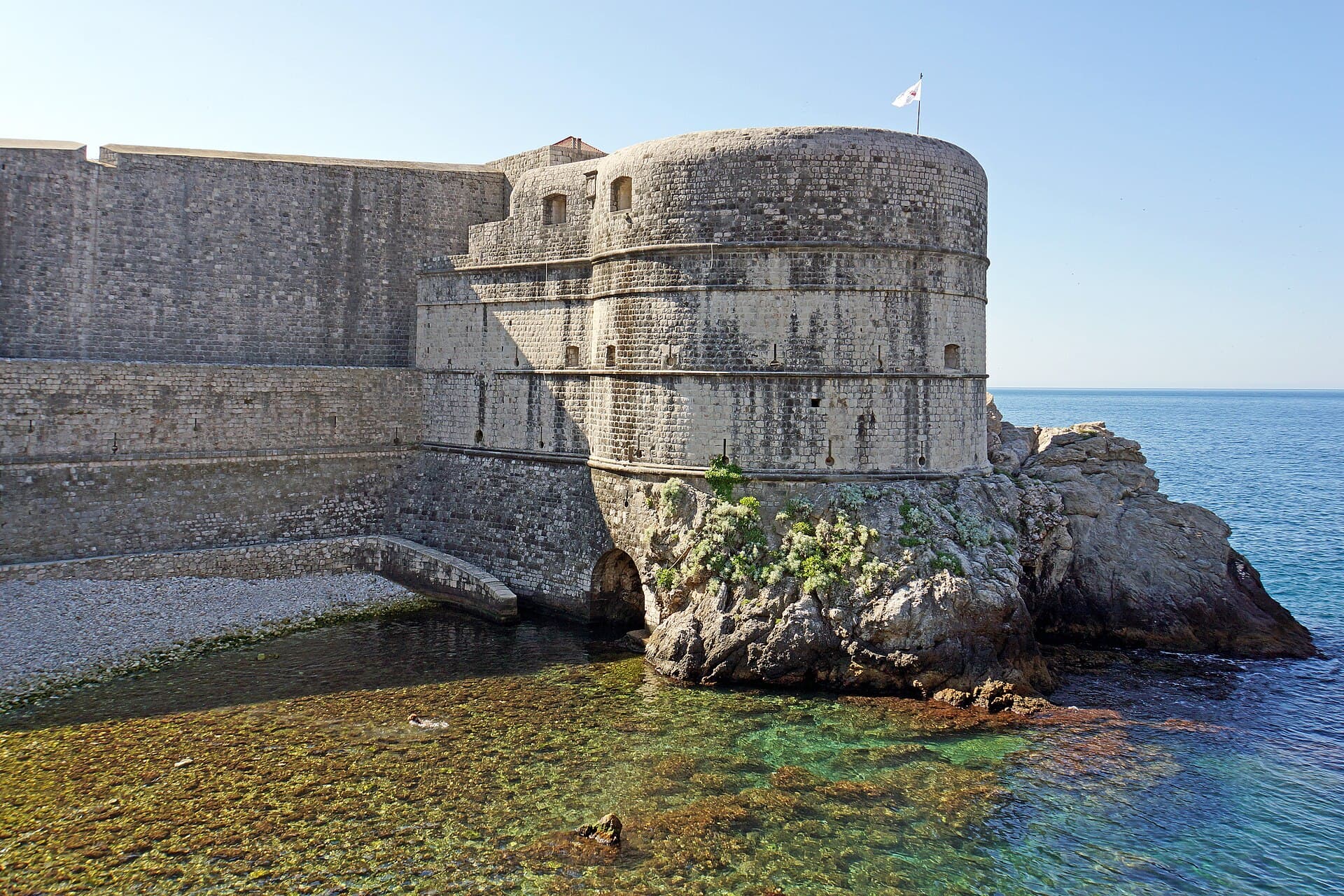 Bokar FortressA sea fortress at the western end of Dubrovnik's walls, standing on a rock proje1 minute walk4.7
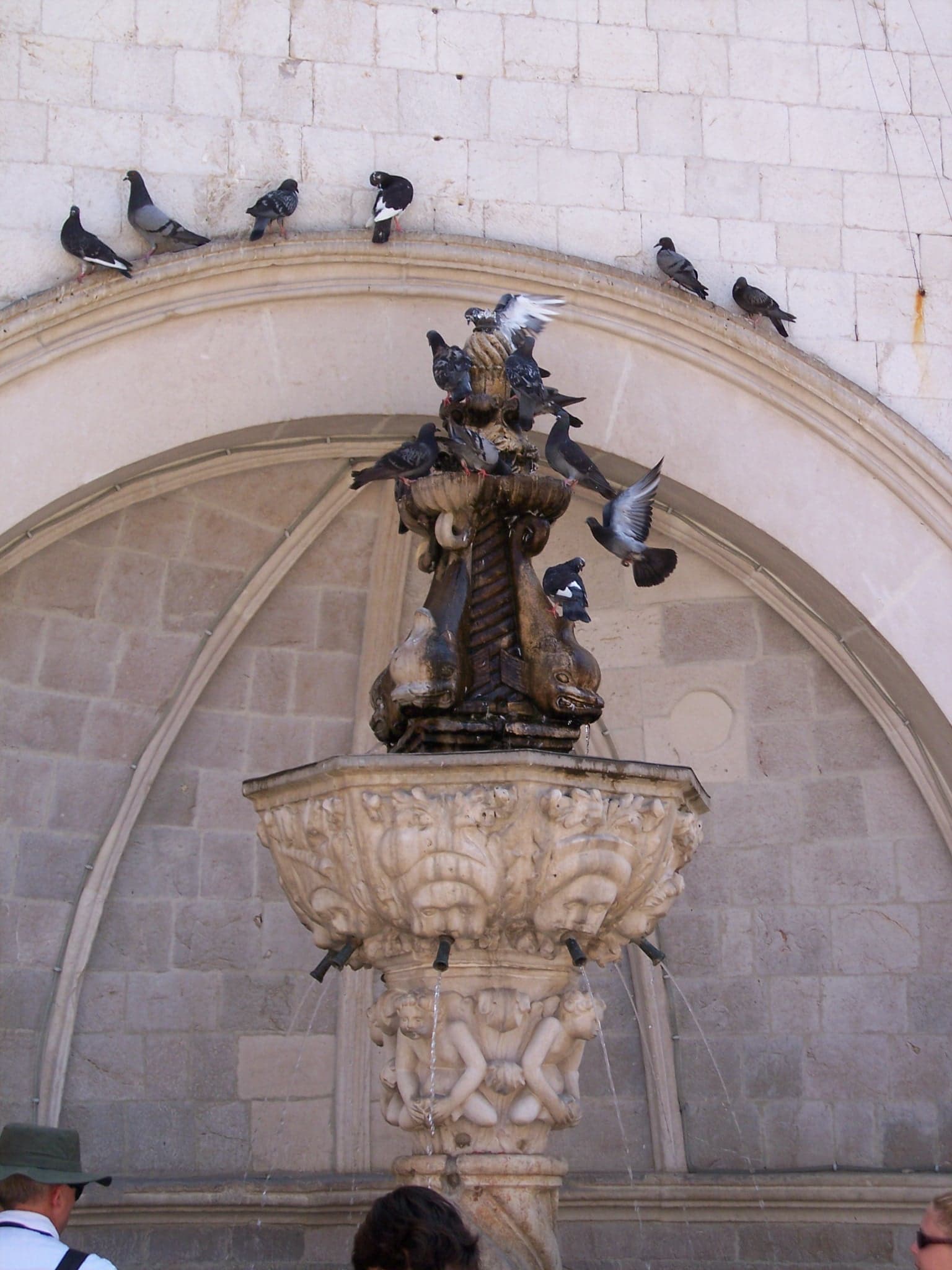 The Small Onofrio's FountainA small stone fountain at the eastern end of Dubrovnik's Stradun, from 1438, by 1 minute walk4.7
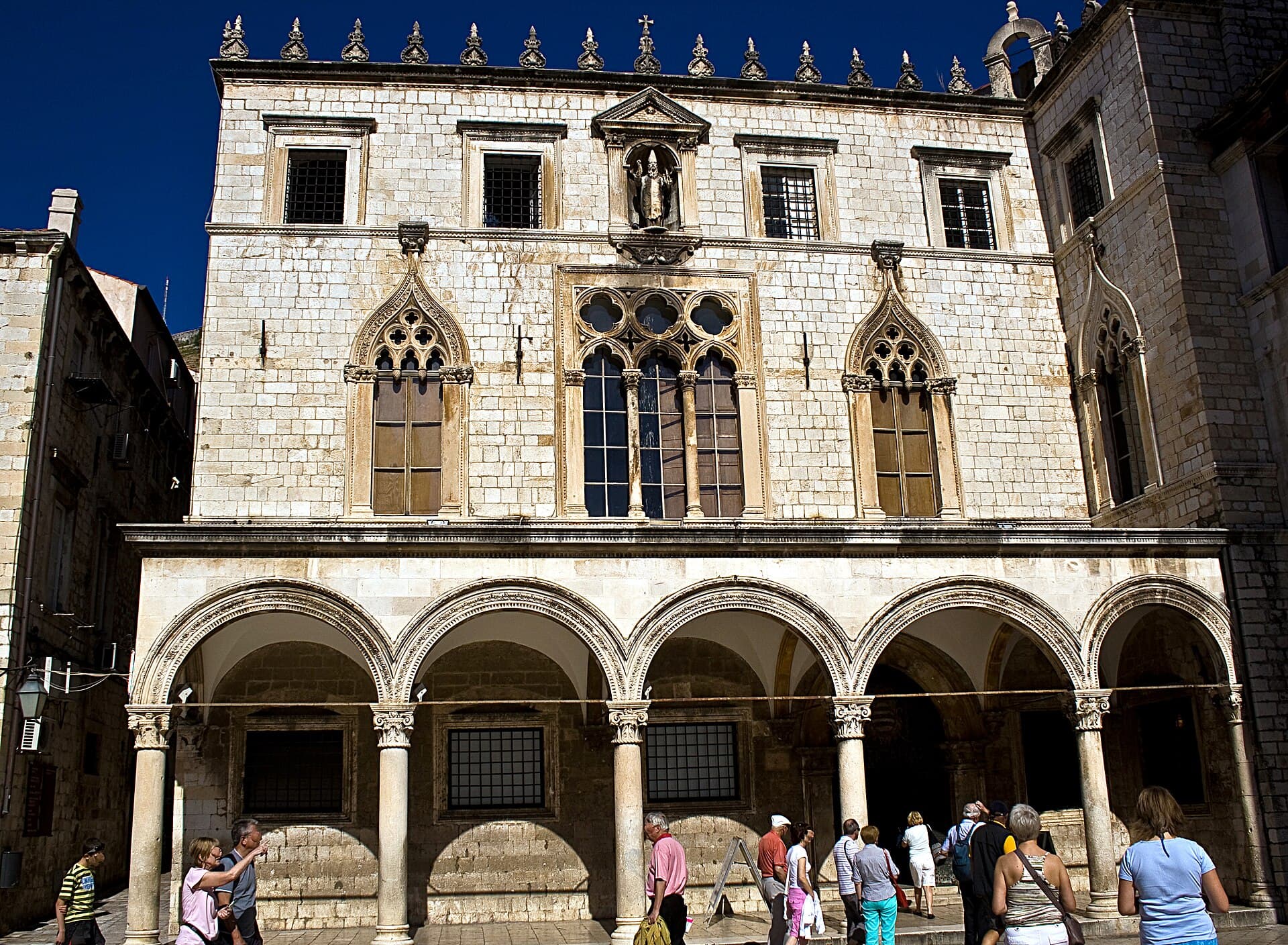 Sponza PalaceThe building that survived. When the **1667 earthquake** destroyed medieval Dubr1 minute walk4.4
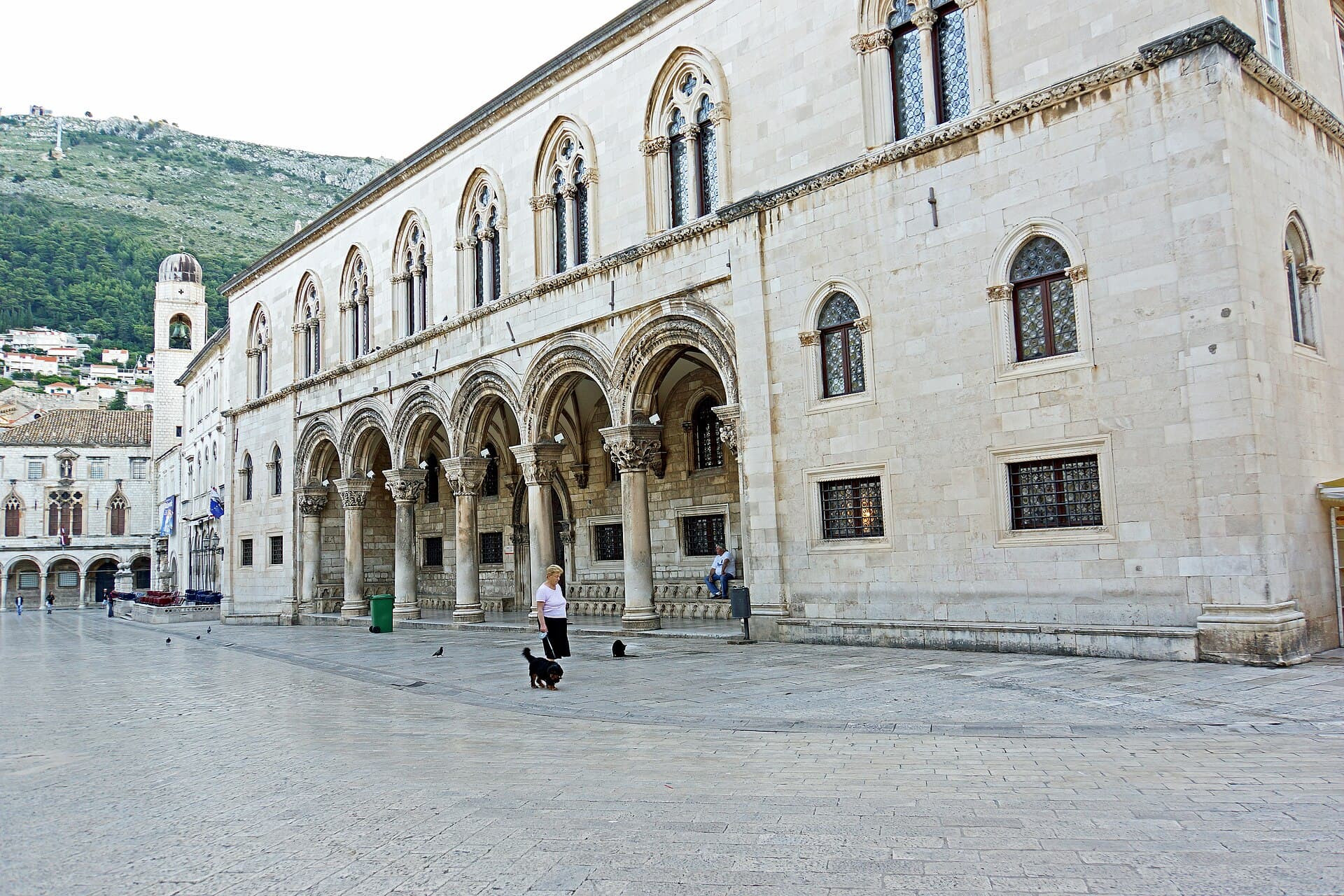 The Rector's PalaceThe Rector's Palace is the Ragusan state as a building: seat of the elected Rect1 minute walk4.4
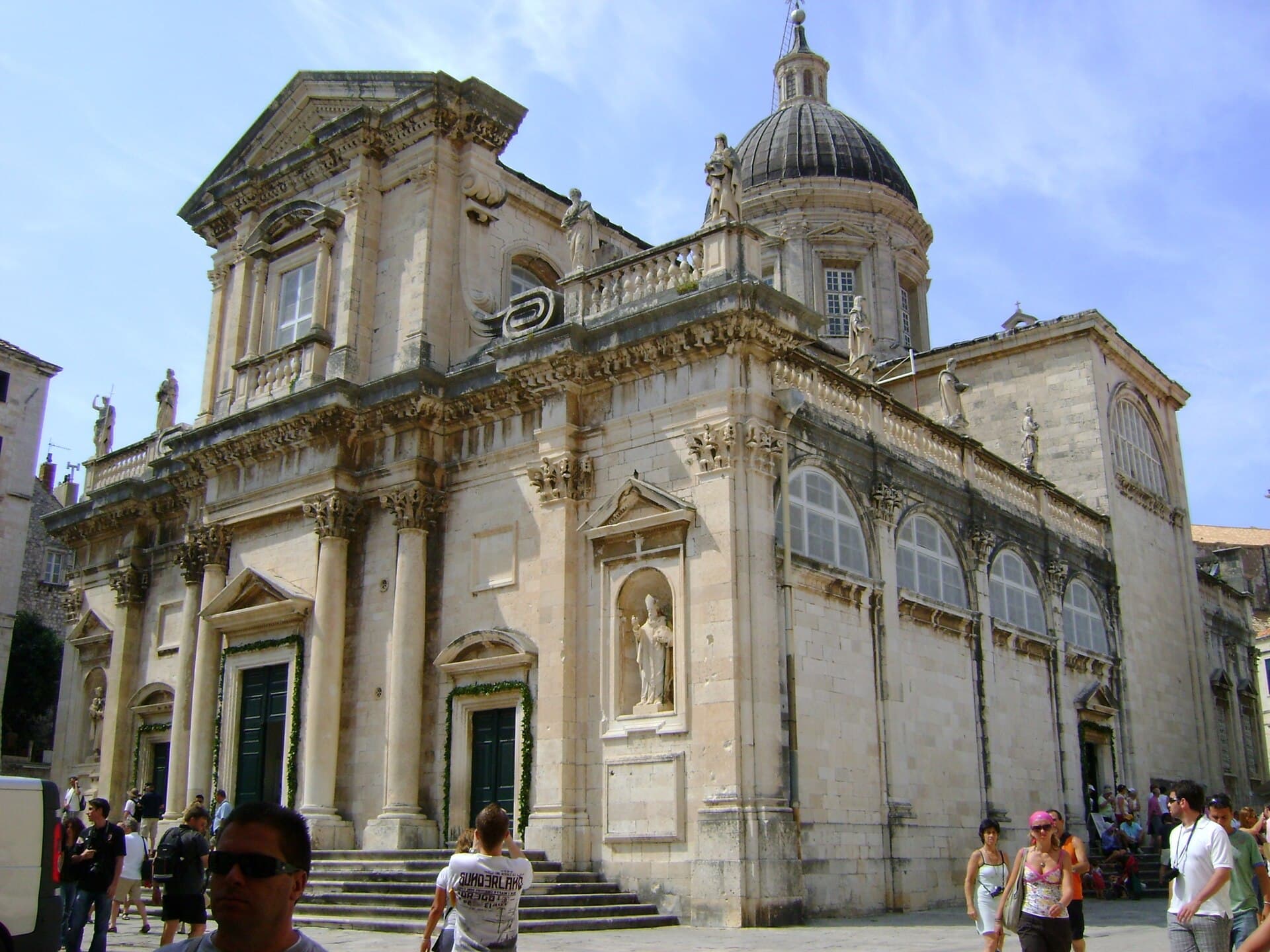 Dubrovnik CathedralA domed Baroque cathedral in the heart of the old town, with layers of history b1 minute walk4.5
Because it is **a historical document, not an ornament**. In 1667 a massive earthquake struck Dubrovnik, destroyed most of the medieval city and killed thousands, and what you see today was rebuilt after it in the Baroque manner — meaning **the original city vanished**. This silver statue is fifteenth century, **two hundred years before the earthquake**, and survived the 1706 fire, and it holds a detailed model of the city as it then stood: its towers, churches and buildings. It is the most accurate surviving image of a Dubrovnik that no longer exists, and historians use it as a source.
The square is **the heart of Dubrovnik**, with four landmarks side by side: the **church of St Blaise**, the **Sponza Palace** with its Renaissance arcade, the **bell tower** with its bell and the two bronze men who strike the hour, and **Orlando's Column** — a stone pillar of 1418 bearing a knight, from which the Republic's flag was flown and its decrees read, and whose forearm was the **official unit of measurement** in Ragusa. All of it within twenty metres, and free. Sit on the church steps and look — it is the best place to understand the city.