
The façade
Gothic and Renaissance in one building — three eras.
Hedwig Storch — CC BY-SA 3.0 · Marcin Konsek — CC BY-SA 4.0 · Marcin Konsek — CC BY-SA 4.0 · Diego Delso — CC BY-SA 3.0
The building that survived. When the **1667 earthquake** destroyed medieval Dubrovnik and erased most of its architecture, the Sponza Palace was left standing with scarcely any damage — so it is today among the clearest survivals of the city before the catastrophe. It was built in the early sixteenth century, and its front is a lesson in the transition between two styles: the **ground floor a Renaissance arcade** of round arches, the **first floor ornamented Gothic windows**, the third Renaissance again — three eras in one façade. Its function explains the city's wealth: it was the **customs house and bonded warehouse**, where incoming goods were weighed, registered and taxed, and it also held the **mint**, the treasury, the bank and the grain store. On the arch of the inner courtyard a Latin inscription says that the scales weighing the goods are themselves weighed by God — a warning to merchants against cheating. Today it houses the **Dubrovnik state archives**: the Republic's documents from the twelfth century onward, among the richest archives in Europe. In its courtyard is the **Memorial Room of the Defenders of Dubrovnik**, for those killed in the 1991–92 siege.
Gothic and Renaissance in one building — three eras.
"God weighs the scales we weigh with" — a warning to merchants.
For those killed in the 1991–92 siege.
Stradun, Luža, 20000 Dubrovnik
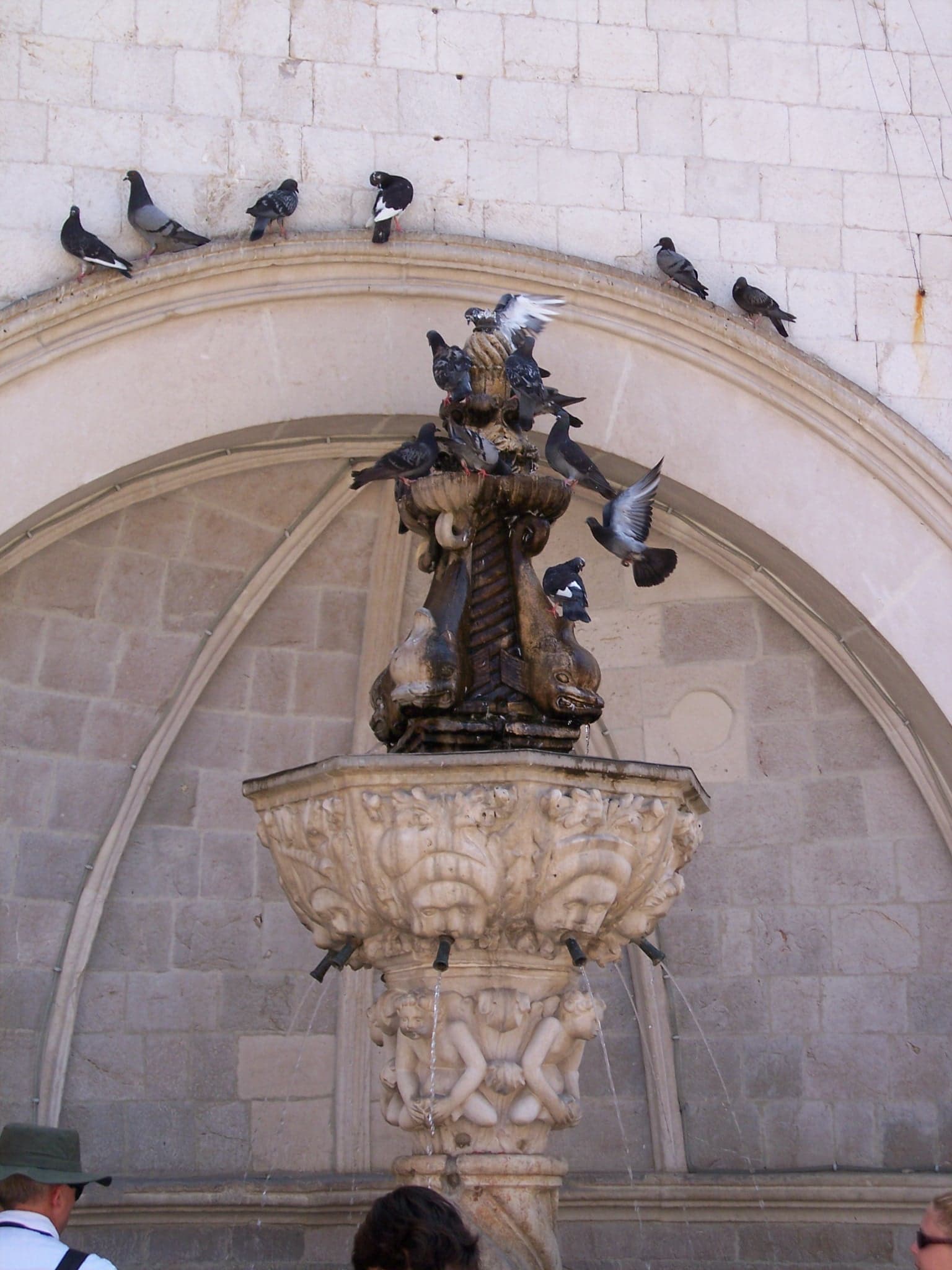 The Small Onofrio's FountainA small stone fountain at the eastern end of Dubrovnik's Stradun, from 1438, by 1 minute walk4.7
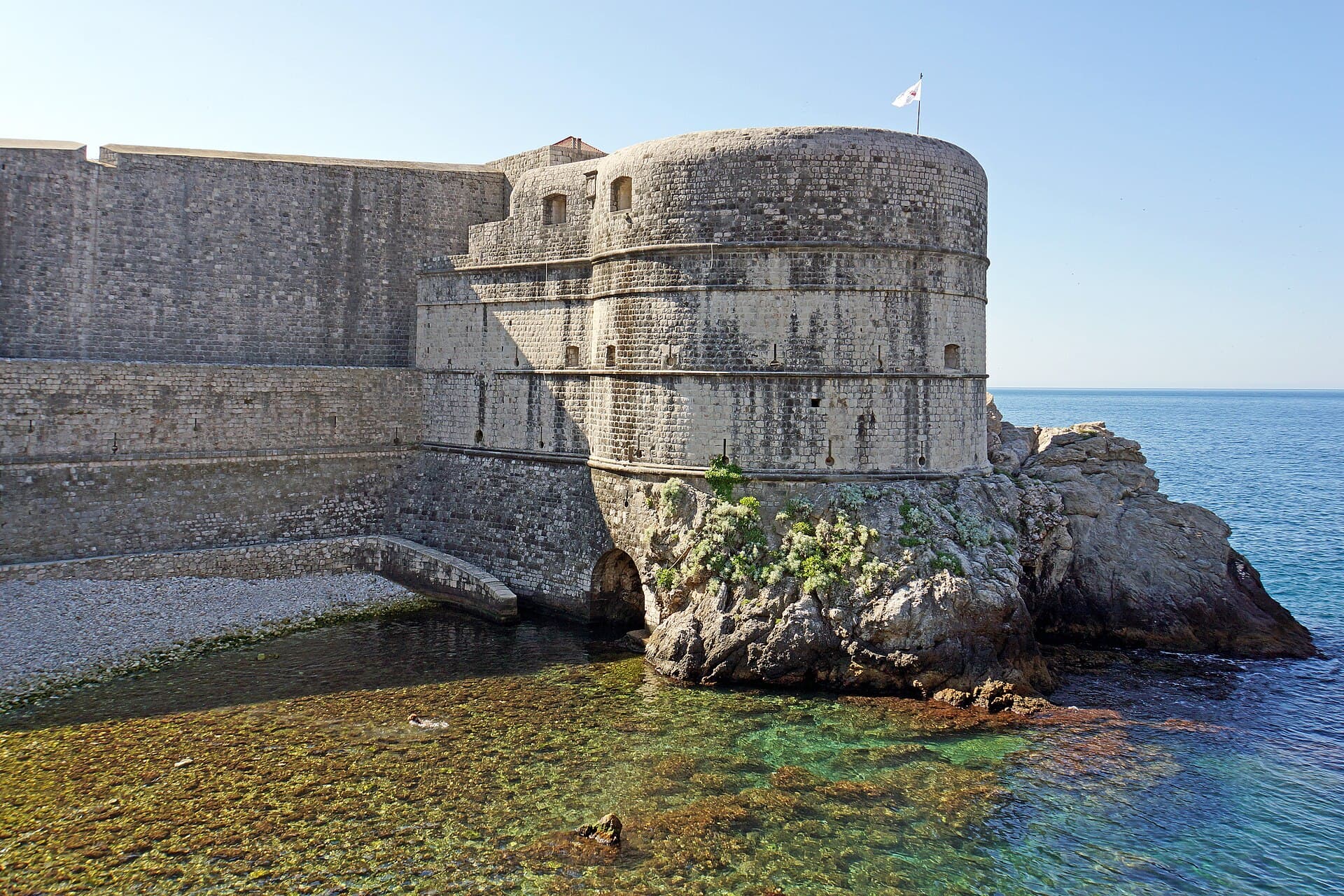 Bokar FortressA sea fortress at the western end of Dubrovnik's walls, standing on a rock proje1 minute walk4.7
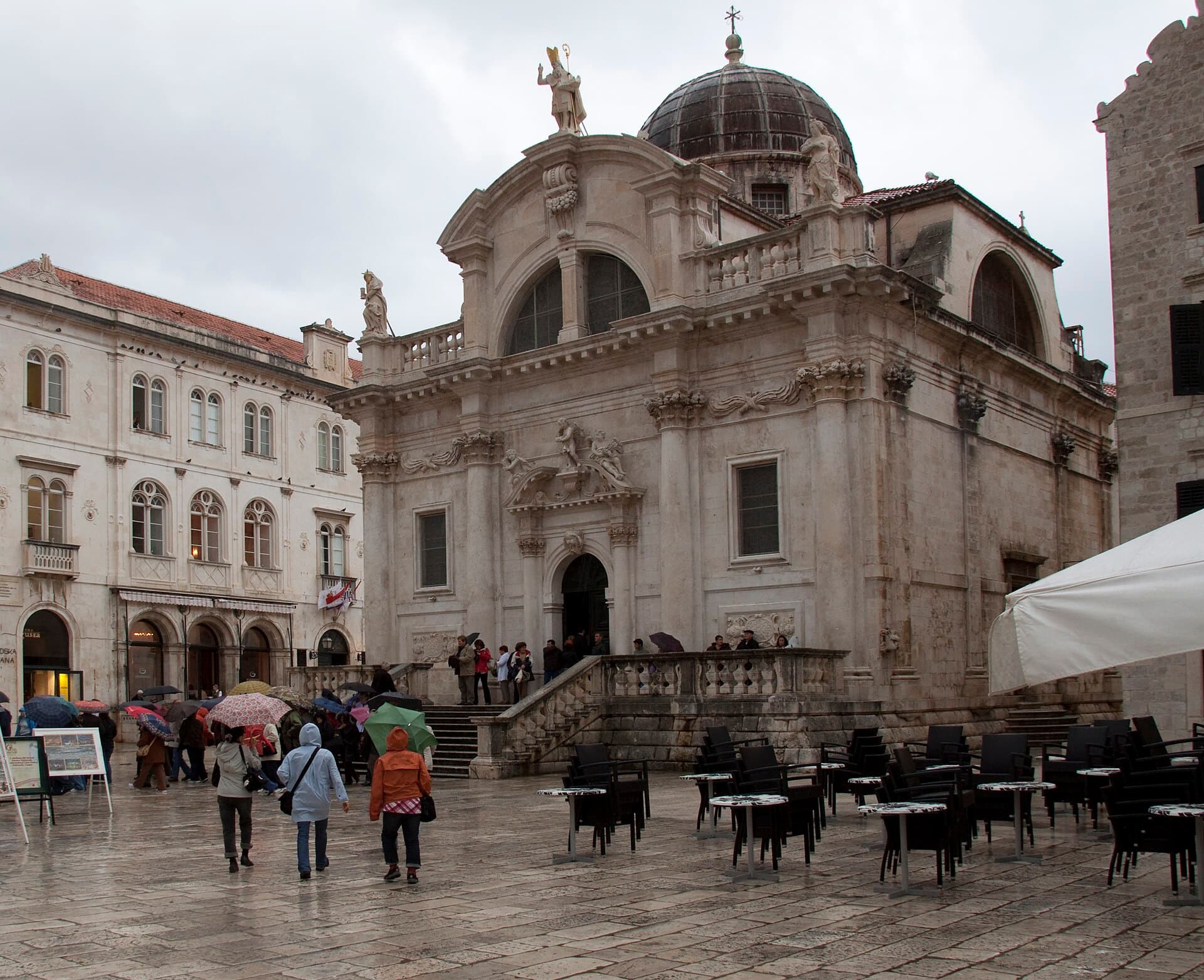 Church of St BlaiseIt stands at the eastern end of the **Stradun** on the Luža square, facing the S1 minute walk4.8
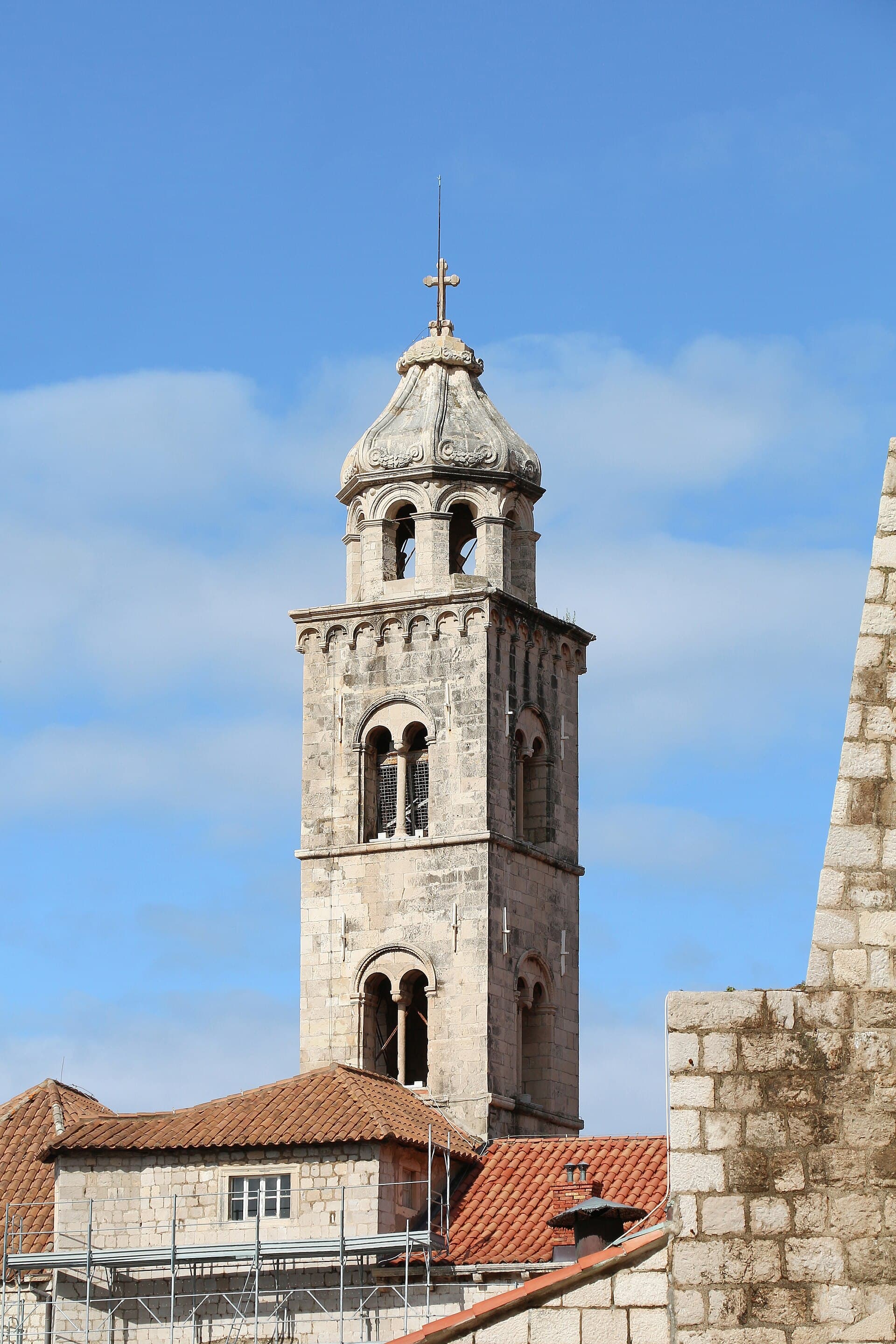 Dominican MonasteryAt the **eastern** end of the old town near the Ploče Gate — the opposite end fr1 minute walk4.1
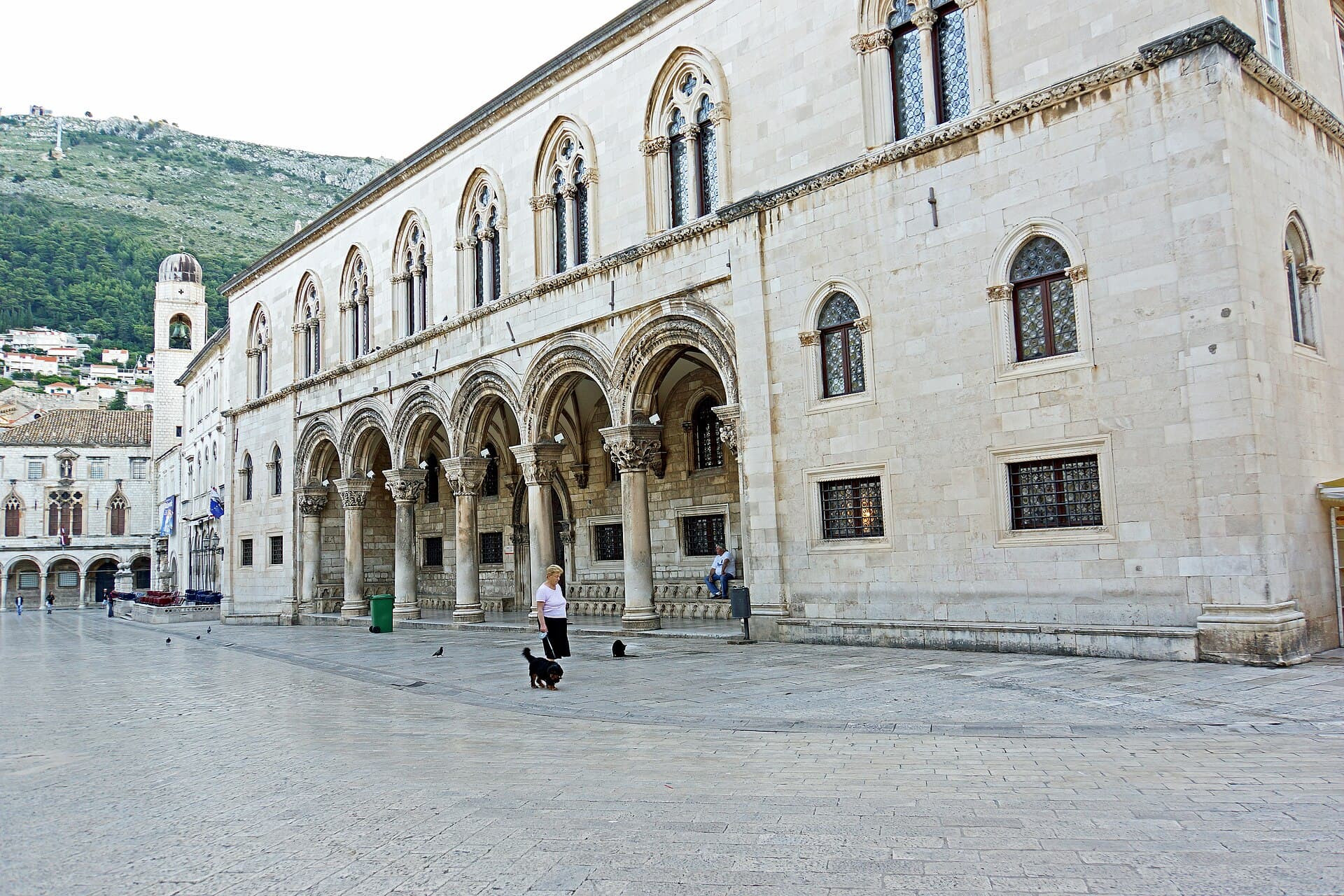 The Rector's PalaceThe Rector's Palace is the Ragusan state as a building: seat of the elected Rect1 minute walk4.4
Because **the Dubrovnik you see is not the original Dubrovnik**. The 1667 earthquake destroyed most of the medieval city and killed thousands, and the Stradun, the churches and the palaces were rebuilt afterwards in the Baroque manner with relatively uniform frontages. So what you walk through today is largely an **eighteenth-century city**. Sponza was left standing as it was — its Gothic, its Renaissance, its inscriptions — a genuine window onto the city the ground erased, which is why it looks visibly different from its neighbours if you look carefully.
A small memorial in the palace courtyard to those killed in the **siege of Dubrovnik in 1991–92** during Croatia's war of independence, when the UNESCO-listed old town was shelled for months. The room shows a **personal photograph** of each of the dead with their name and age, most of them young men. ⚠ It is **emotionally heavy** despite its size, and recent enough that staff around you may have lived through the siege. Entry is free — go in quietly and don't photograph the portraits.