
The detached bell tower
A 13th-century tower standing alone among the foundations, a structure with no parallel left anywhere in Scotland.
Kangarooth — CC BY-SA 4.0 · Kangarooth — CC BY-SA 4.0 · Steven Brown — CC BY-SA 2.0 · Yvesdebxl — CC BY-SA 4.0
A Scottish king and his queen lie in a field at the edge of farmland. That is the scene at Cambuskenneth Abbey: a grey stone tomb behind iron railings, holding what is believed to be the remains of James III, killed after the Battle of Sauchieburn in 1488, and his wife Margaret of Denmark, who had died two years before him. The monument itself is not medieval, since Queen Victoria had it rebuilt in 1865 after the bones were uncovered in 1864 and reinterred, but the idea alone, a royal grave hiding in a riverside meadow, justifies the walk out here. Know before you come that very little of the abbey survives. David I founded it around 1140 for Augustinian canons of the French Arrouaise order, and it stood close enough to Stirling Castle to host Robert the Bruce's parliament of 1326, when the nobles swore loyalty to his son, the future David II. Then the Reformation wrecked it in 1559, and the Earl of Mar is said to have carted the stones off to build Mar's Wark, his townhouse below the castle. What is left today: low foundations tracing the church and cloister across the grass, and a detached 13th-century bell tower standing alone, a structure with no parallel anywhere else in Scotland, restored in 1859 and spared, probably, because it made a useful lookout. The tower is the photograph you will take home. Getting inside it is not guaranteed, so treat a climb as a bonus if you find the door open. Entry is free and no booking is needed. The site opens daily from April to September, 9.30am to 5.30pm, with last entry half an hour before closing, and is formally closed from October to March, though the tower and the field can be seen from outside the wall at any time. The easiest approach from Stirling town centre is on foot: from Riverside you cross the small footbridge built in 1935 to link the village to the town, and you are there in about 20 to 25 minutes. By car the only way in is Ladysneuk Road from Causewayhead, through quiet Cambuskenneth village, where parking is limited to a few spaces on the street, so keep clear of residents' driveways. The last stretch crosses agricultural land and is muddy after rain, which here means often, so sturdy shoes matter more than a pushchair on the grass. Give it 30 to 45 minutes, no more, and fold it into a riverside walk that passes the Old Bridge. The real reward is the quiet and two views at once: the castle on its rock one way, the Wallace Monument on its hill the other. If you have a single day in Stirling, the castle comes first and this abbey can be skipped without regret. If you are staying several days and want an hour away from the crowds, it is a pleasant, free option.
A 13th-century tower standing alone among the foundations, a structure with no parallel left anywhere in Scotland.
A royal grave rebuilt at Queen Victoria's expense in 1865, inside what was the choir, in front of where the high altar stood.
From the meadow you see Stirling Castle on its rock and the Wallace Monument on its hill, with the Forth looping around you.
Cambuskenneth village, Ladysneuk Road, Stirling
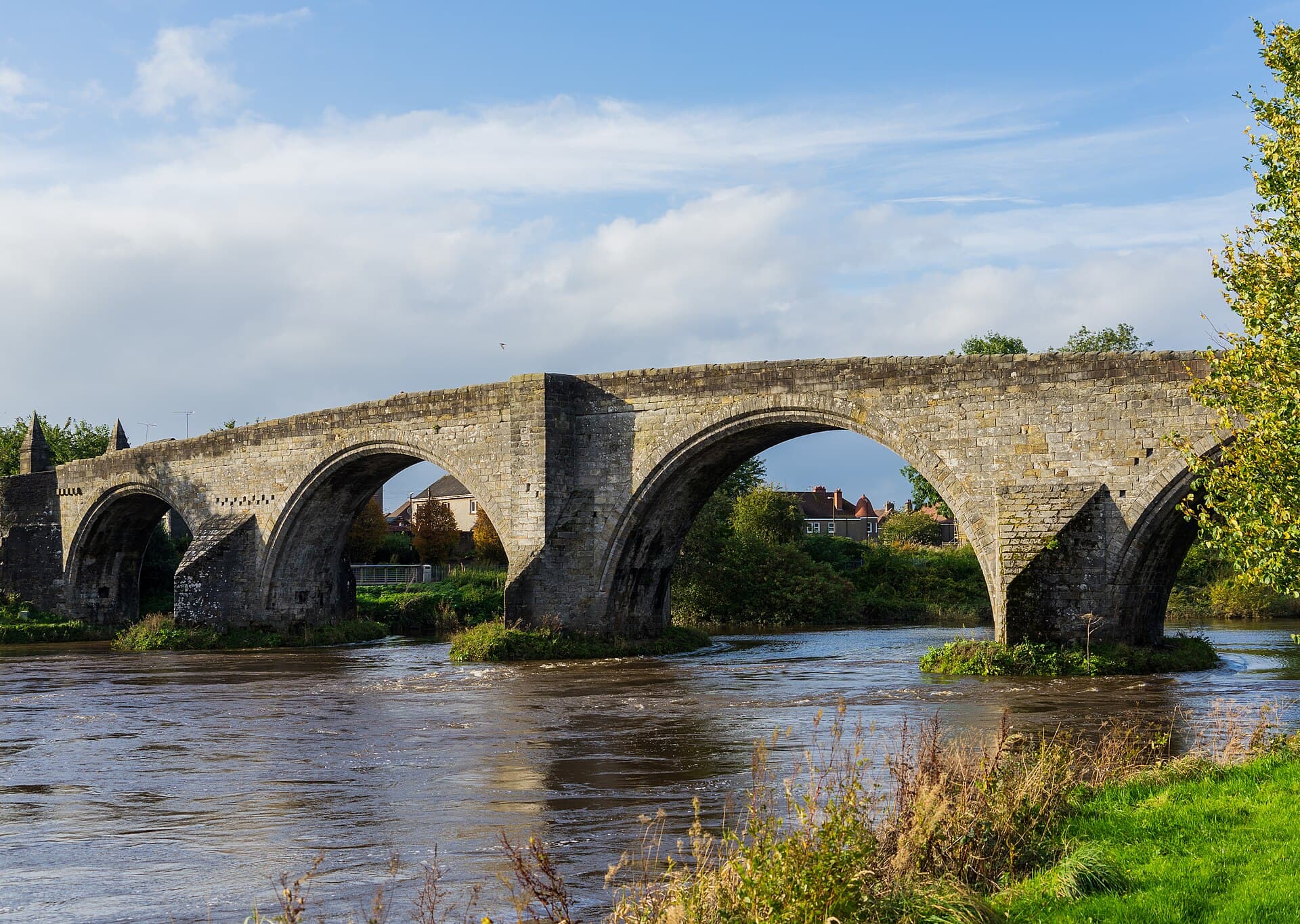 Stirling Old BridgeFor more than three centuries this was the lowest bridge on the River Forth, and17 minutes walk4.7
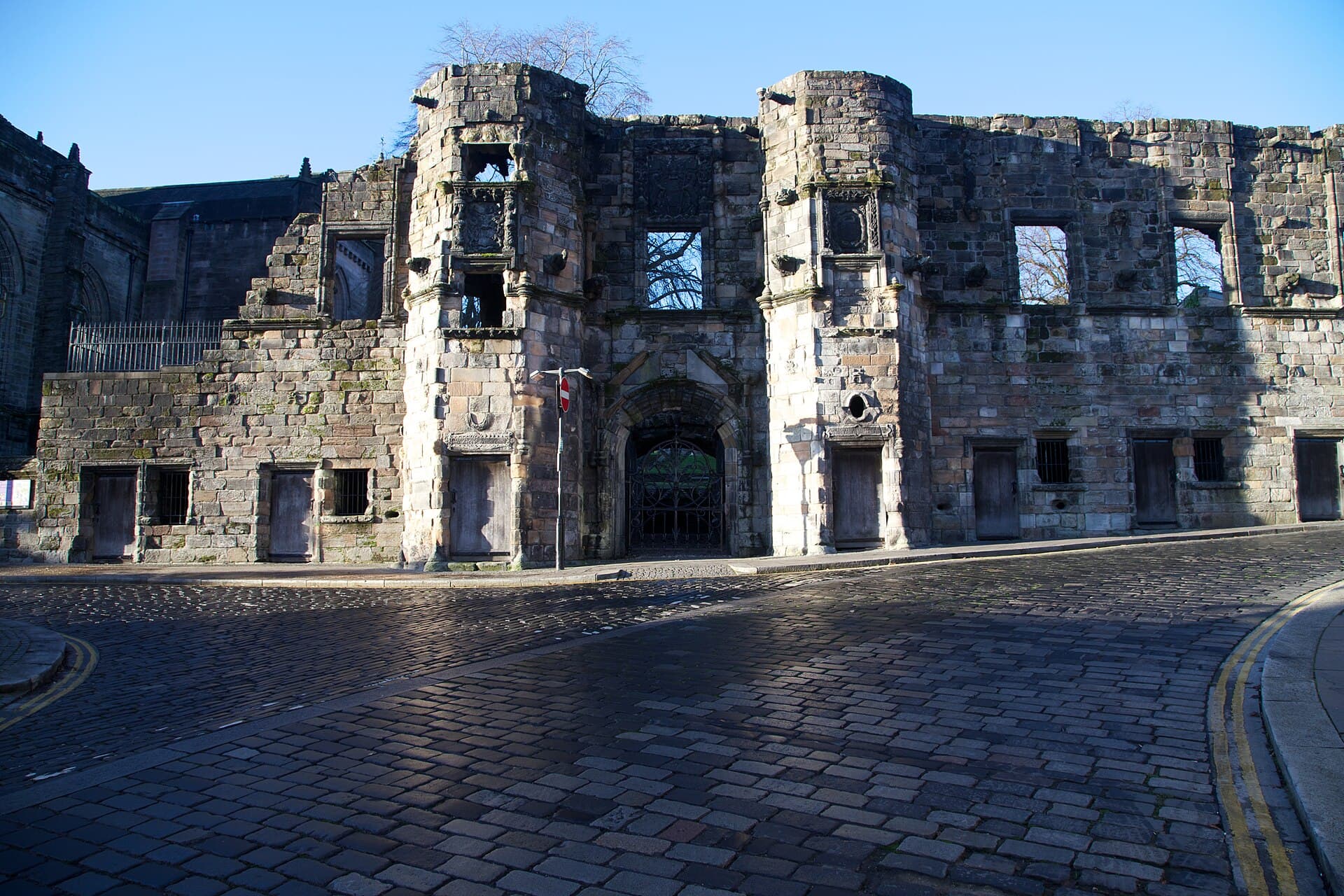 Mar's WarkA facade with no house behind it. That is all that remains of the mansion John E21 minutes walk4.8
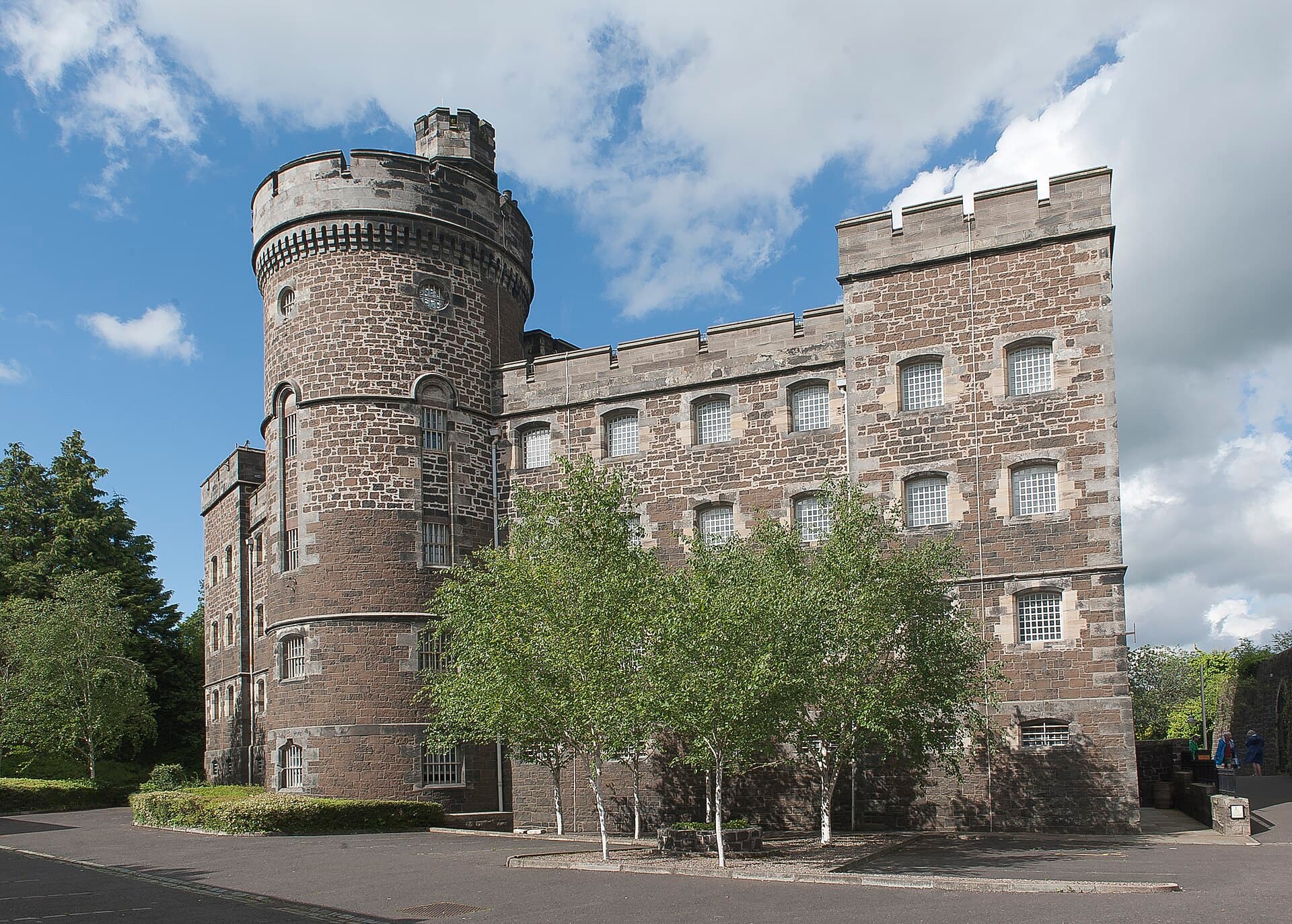 Stirling Old Town JailIn 1842 Frederick Hill, Scotland's first inspector of prisons, called Stirling's21 minutes walk4.6
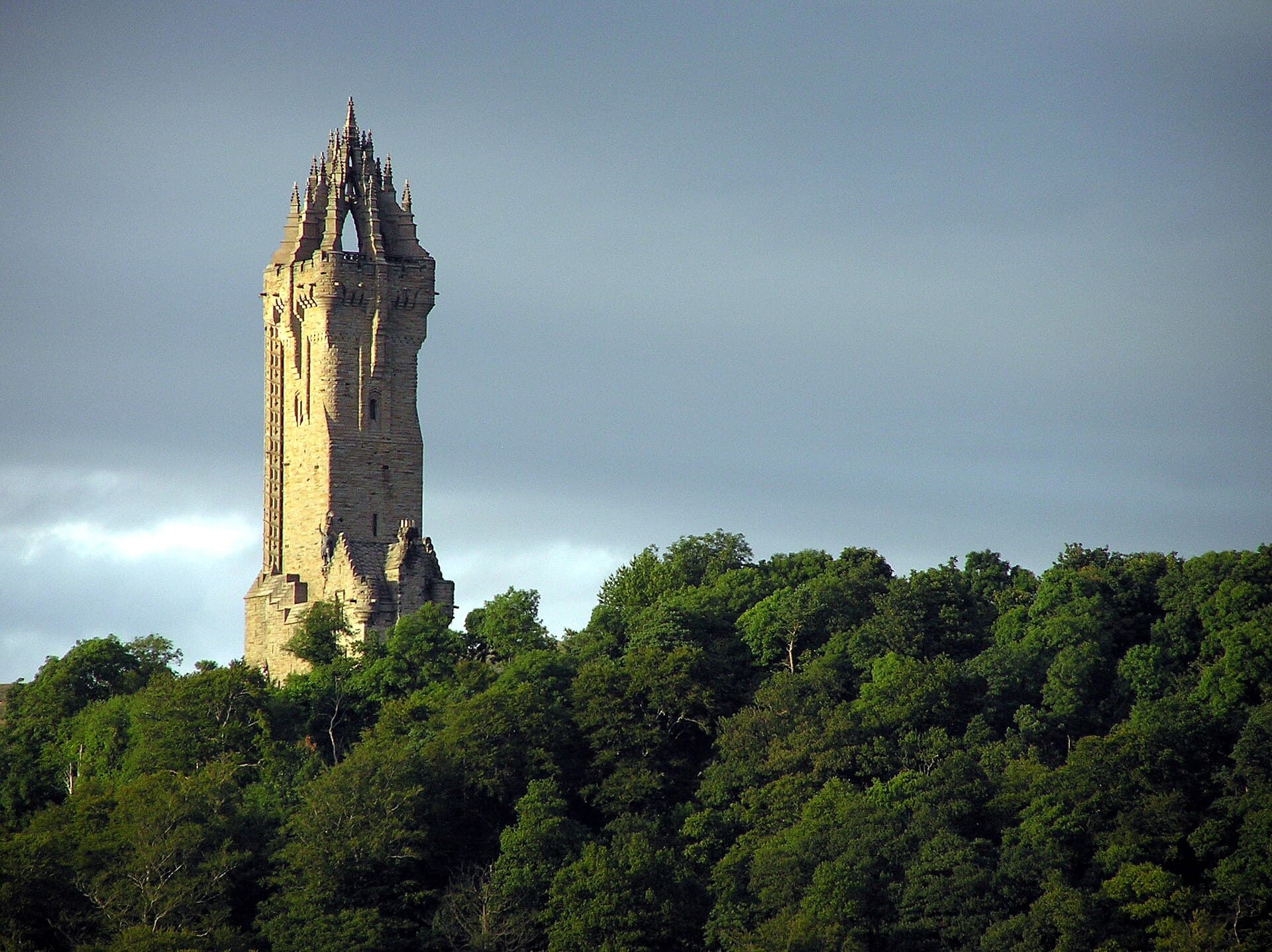 The National Wallace MonumentTwo hundred and forty-six narrow spiral steps, no lift and no handrail: that is 22 minutes walk4.8
 Stirling CastleMary, Queen of Scots was crowned here in September 1543 before her first birthda23 minutes walk4.5
No. The castle, the Old Bridge and the Wallace Monument deserve your day. The abbey is a quiet stop for people staying a few days or wanting a free riverside walk away from the crowds, not a sight to plan a trip around.
Not reliably. The grounds and the tower exterior are open daily in summer, but going inside depends on Historic Environment Scotland's arrangements and is not part of a standard visit. Go for the exterior and the tomb, and count a climb as a bonus if it happens.