
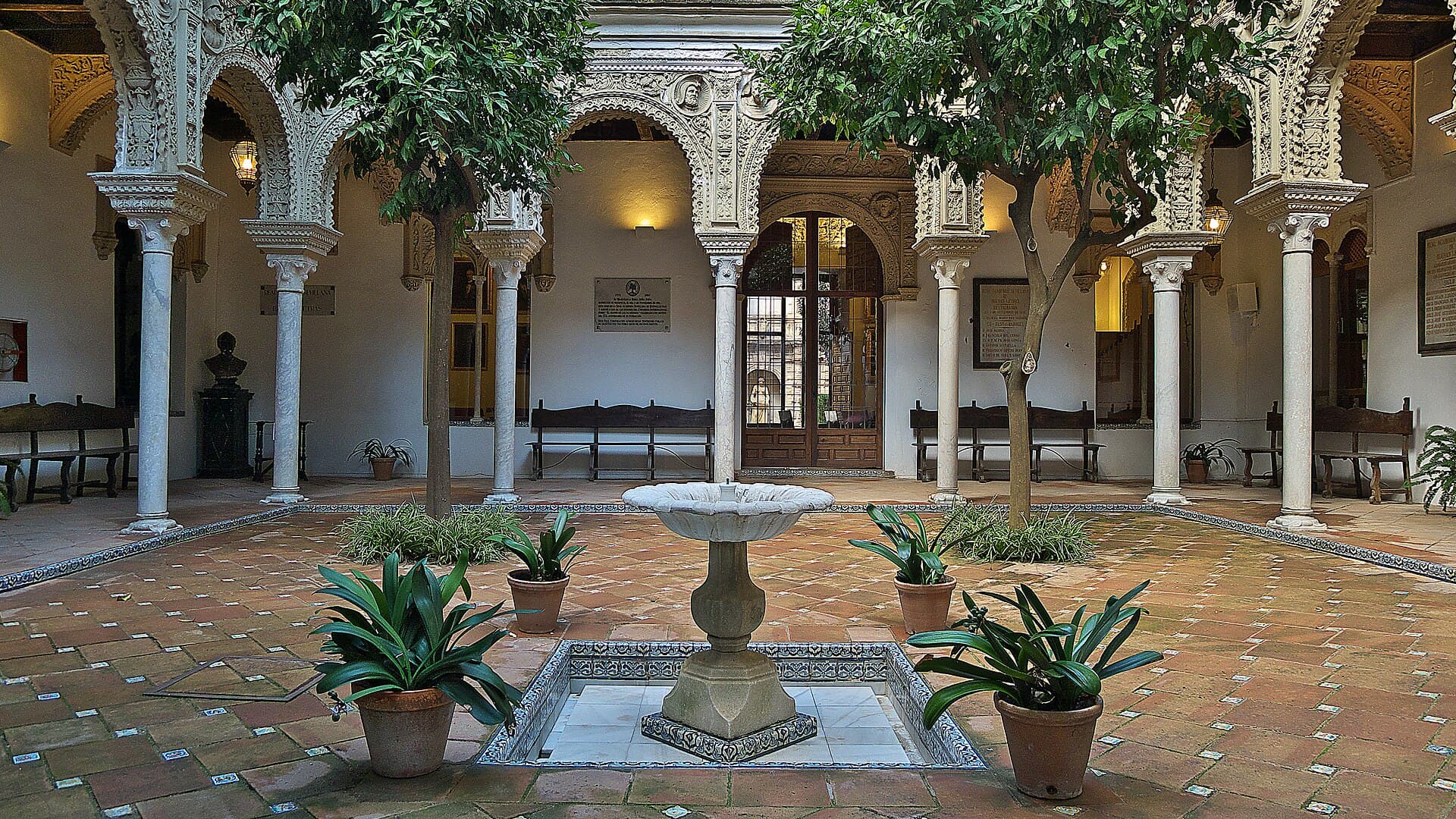
The main courtyard
Marble, a Genoese fountain and Roman statues under Andalusi plasterwork.
Anual — CC BY-SA 4.0 · Benjamin Smith — CC BY-SA 4.0 · Benjamin Smith — CC BY-SA 4.0 · Holger Uwe Schmitt — CC BY-SA 4.0
The Casa de Pilatos is Seville's loveliest private palace — the little Alcázar without its crowds: a sixteenth-century ducal house fusing Mudéjar with Italian Renaissance into the purest Sevillian blend: a marble courtyard with Genoese fountain and four Roman statues, ringed by Andalusi arches and plasterwork over the city's finest azulejo walls — said to hold above a hundred and fifty different tile patterns. The name recalls a pilgrimage: the builder returned from Jerusalem, and his palace was fancied a copy of Pilate's house — in truth it is al-Andalus's heir. Still partly inhabited by the Medinaceli heirs, its upper floor shows the family collections by guided tour. Here you escape the centre's queues for equal beauty: ten minutes from the cathedral, a whole calmer world — Lawrence of Arabia and royal film scenes were shot within its walls.
Marble, a Genoese fountain and Roman statues under Andalusi plasterwork.
Sixteenth-century ceramic in unrepeating patterns.
Fountained, bougainvillea'd — the dukes' sitting ground.
Plaza de Pilatos 1, 41003 Seville
 Royal Academy of Fine ArtsSeville's academy of fine arts, an institution going back to the eighteenth cent6 minutes walk4.8
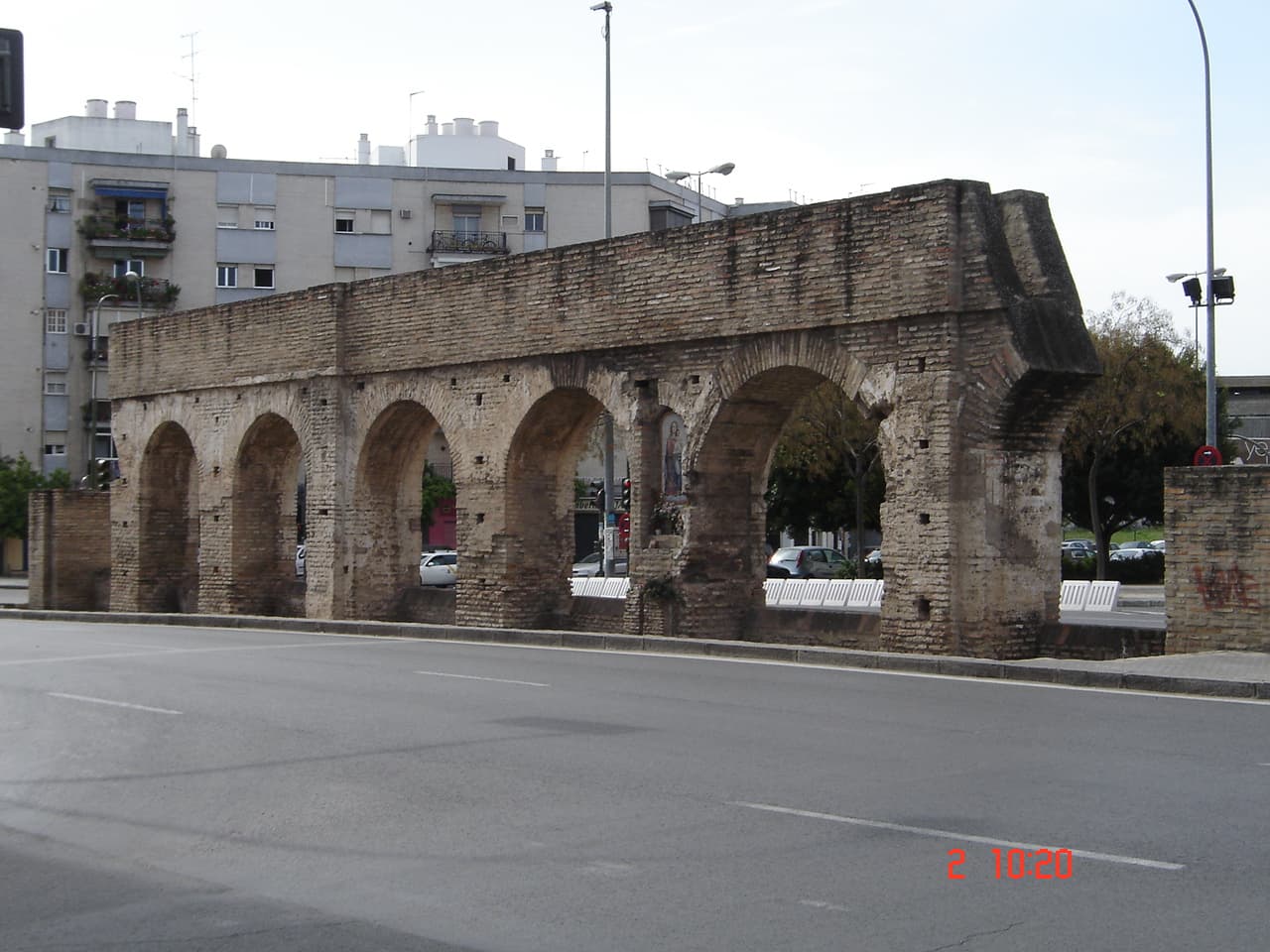 Caños de CarmonaThe remains of an aqueduct that carried water to Seville from springs at Carmona6 minutes walk4.4
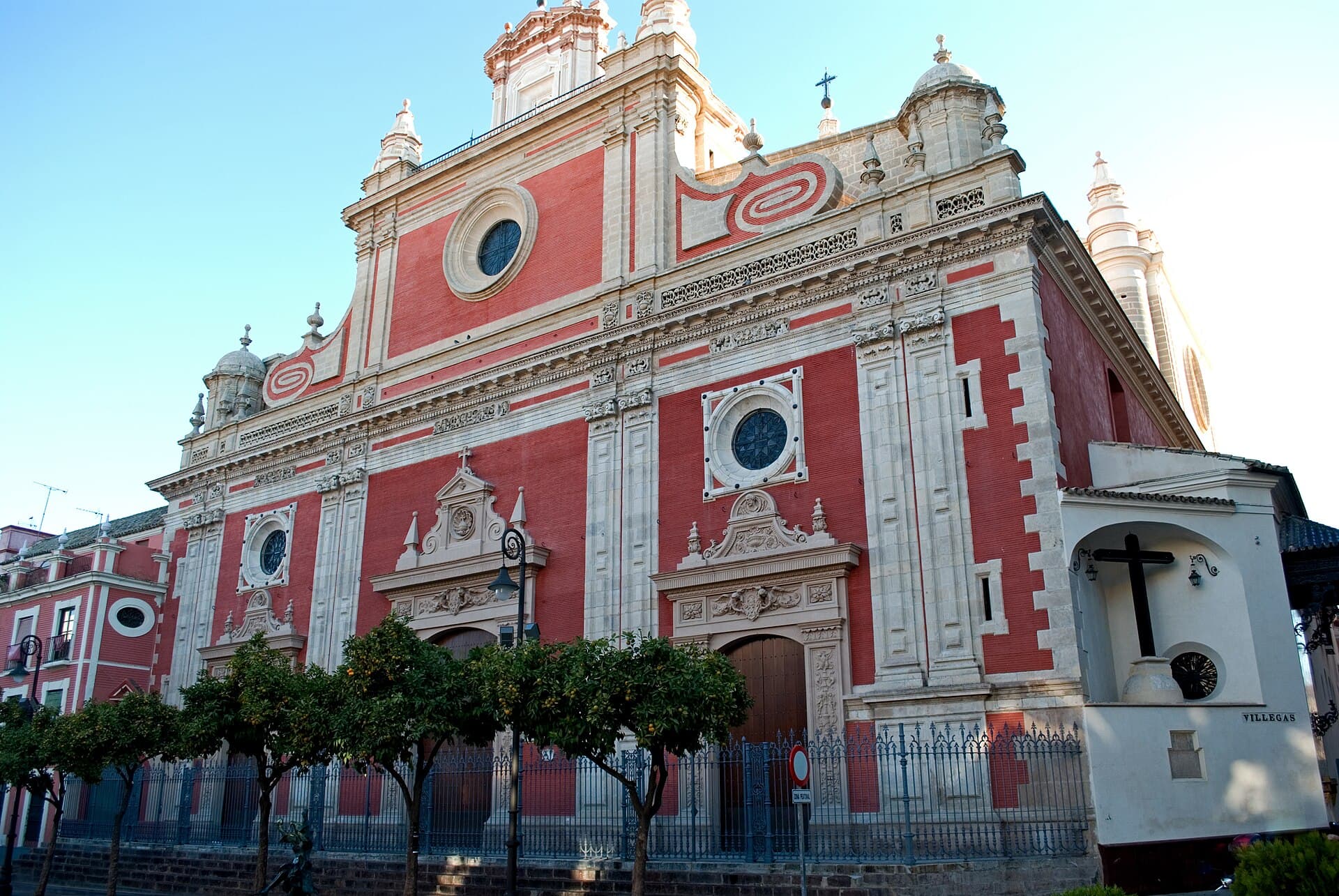 Church of El SalvadorSeville's second largest church after the cathedral, standing on a square in the6 minutes walk4.7
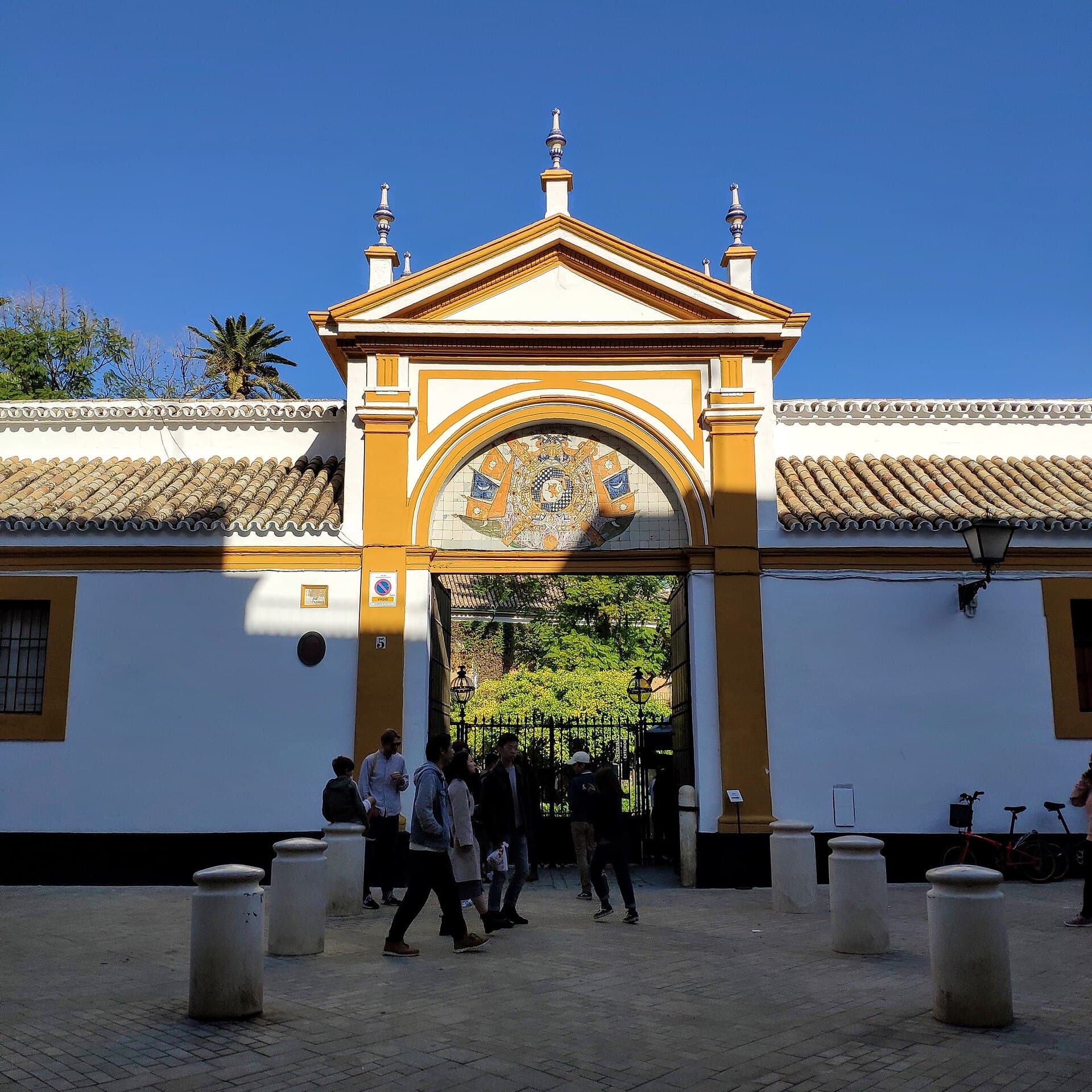 Palacio de las DueñasLas Dueñas is the house of Spain's most famous dukes and Seville's most alive pa6 minutes walk4.5
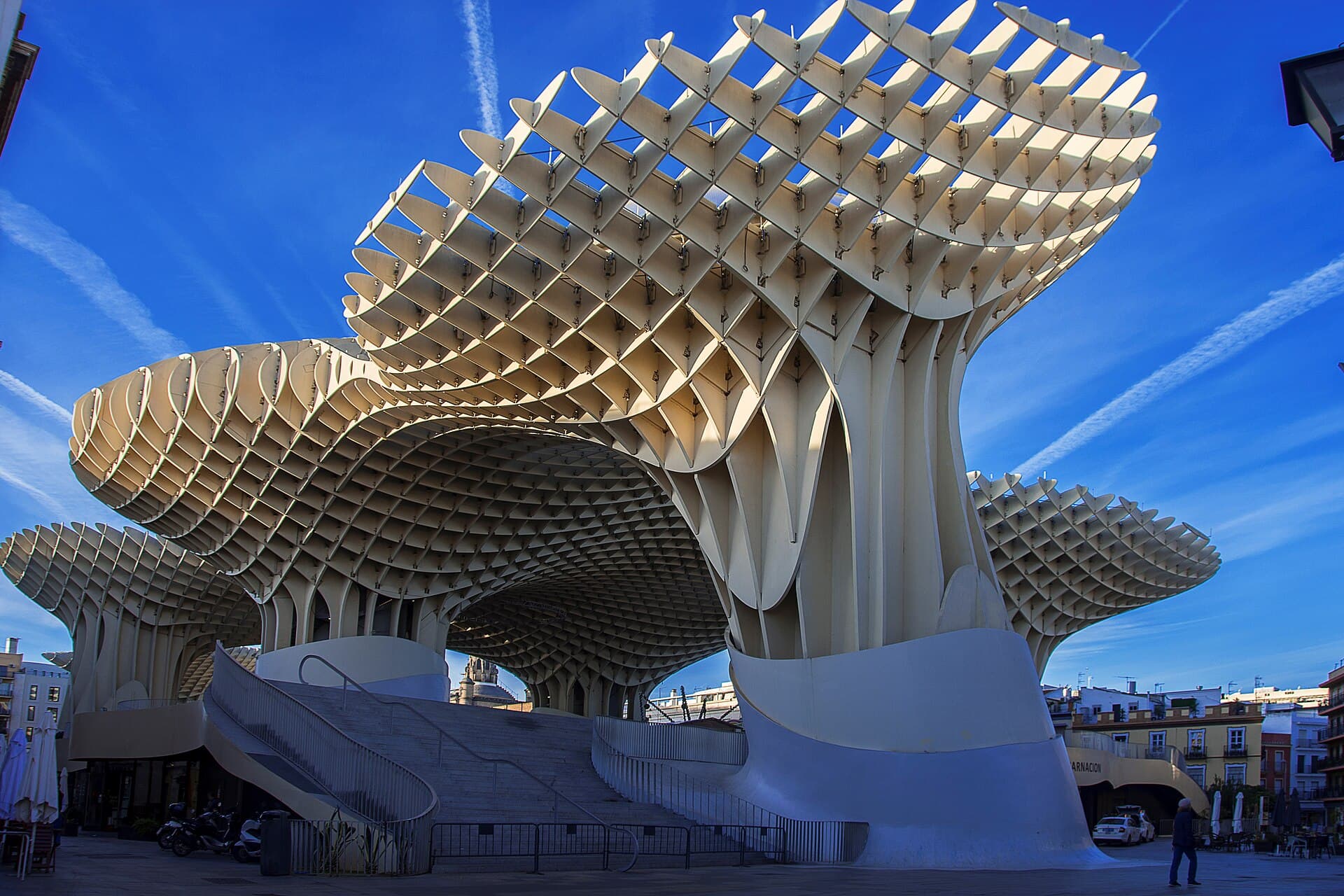 Setas de Sevilla (Metropol Parasol)"The mushrooms" — as Sevillians named them on sight — form the world's largest t7 minutes walk4.3
If the Mudéjar halls captivated you, yes — the same manner here with a home's intimacy rather than royal formality, unbooked and uncrowded. On one compressed Seville day, the big three first.