
The Islamic ablution courtyard
Ninth-century mosque arches and columns standing beneath a baroque building.
Anual — CC BY 3.0 · Aubin Diximus — CC BY-SA 4.0 · CarlosVdeHabsburgo — CC BY-SA 4.0 · CarlosVdeHabsburgo — CC BY-SA 4.0
Seville's second largest church after the cathedral, standing on a square in the heart of the old city. What makes it particularly significant to an Arab visitor is what lies beneath: this site held Seville's first congregational mosque under Muslim rule, built in the ninth century before the greater mosque whose place the cathedral took. When the mosque was demolished in the seventeenth century to build the present church, its ablution courtyard and part of its minaret survived, absorbed into the tower. Today you can enter that courtyard — the Patio de los Naranjos — and see the original Islamic arches and columns standing beneath a baroque building. The church itself is among the strongest examples of Sevillian baroque: vast gilded altarpieces covering the walls from floor to ceiling, and polychrome wooden images carried in the Holy Week processions. The ticket is normally combined with Seville cathedral, meaning you may already have paid for it without knowing. Check your ticket before buying another.
Ninth-century mosque arches and columns standing beneath a baroque building.
Part of the original minaret absorbed into the present bell tower.
Gilded altarpieces covering entire walls — among the style's strongest examples.
Plaza del Salvador, central Seville
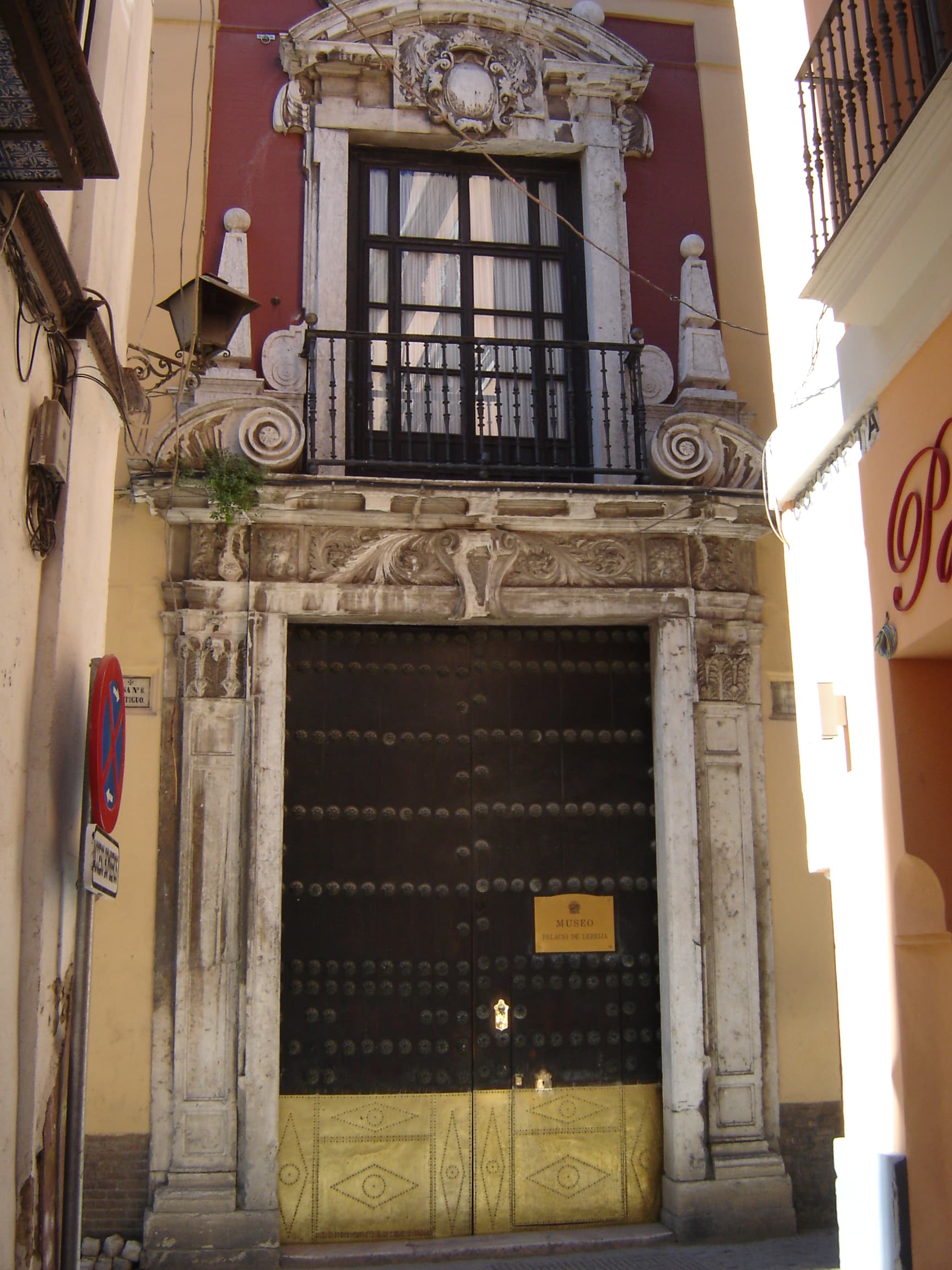 Palace of the Countess of LebrijaThe Lebrija palace houses Seville's strangest passion: the antiquity-loving Coun3 minutes walk4.6
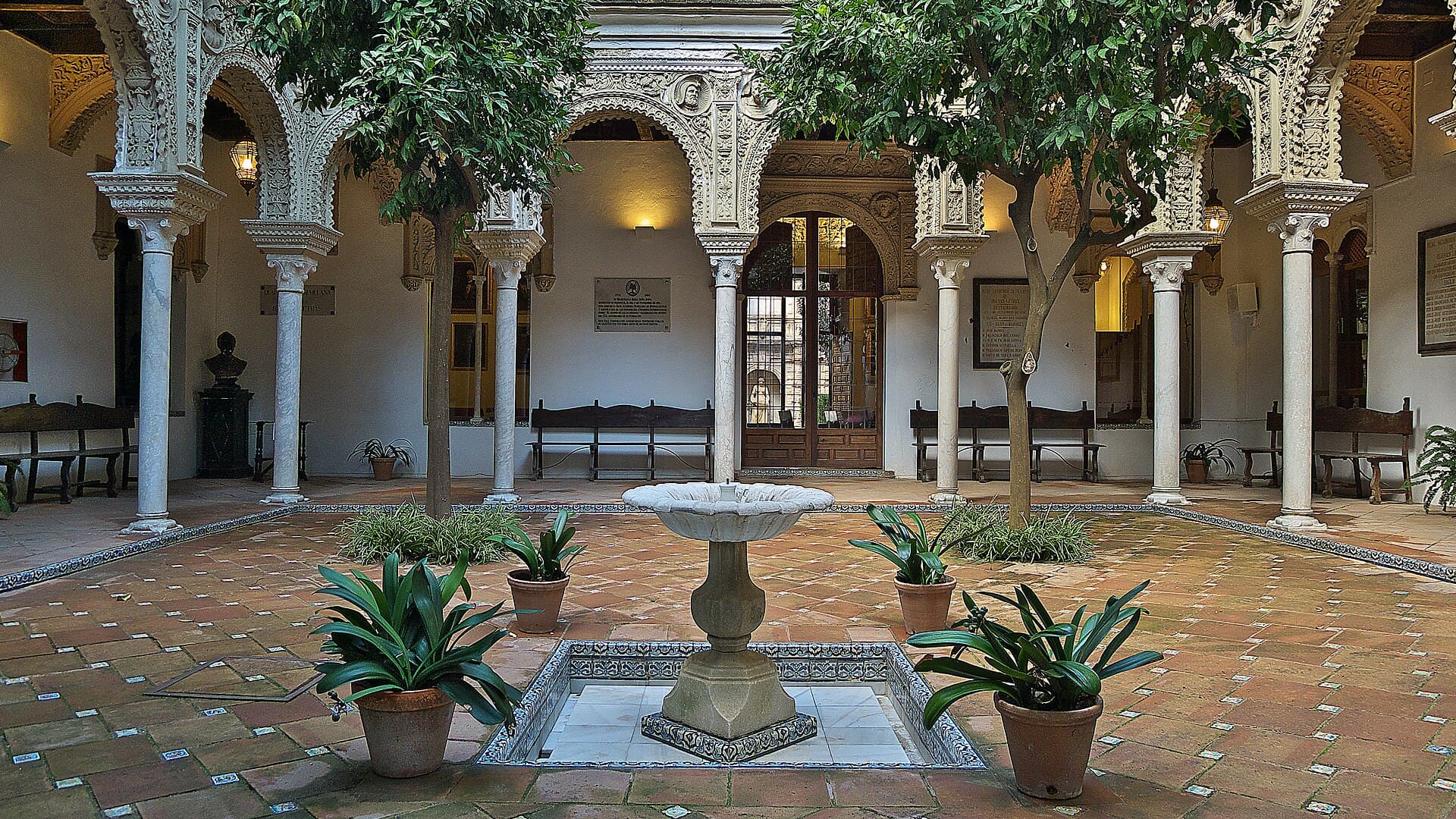 Royal Academy of Fine ArtsSeville's academy of fine arts, an institution going back to the eighteenth cent4 minutes walk4.8
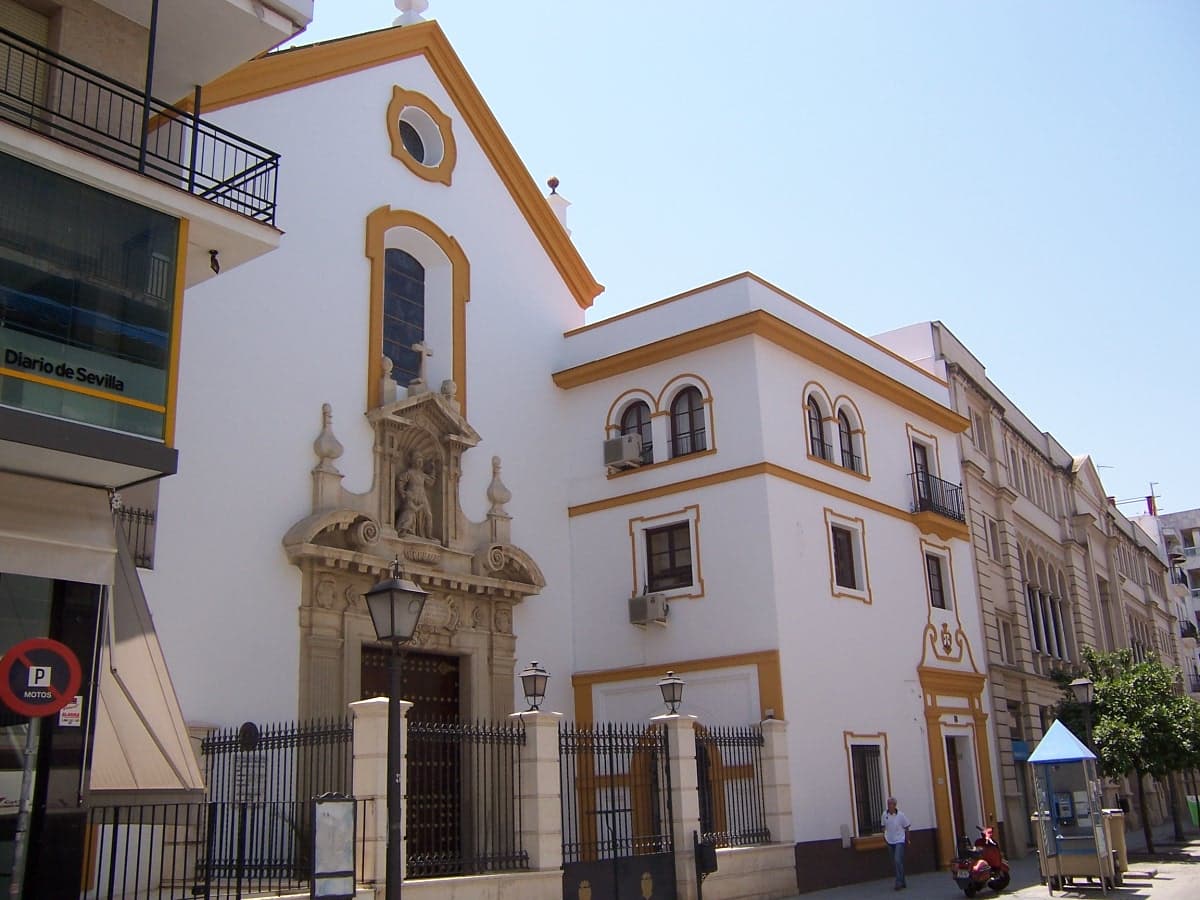 Church and Museum of Santo ÁngelA seventeenth-century church in central Seville, formerly attached to a Carmelit4 minutes walk4.7
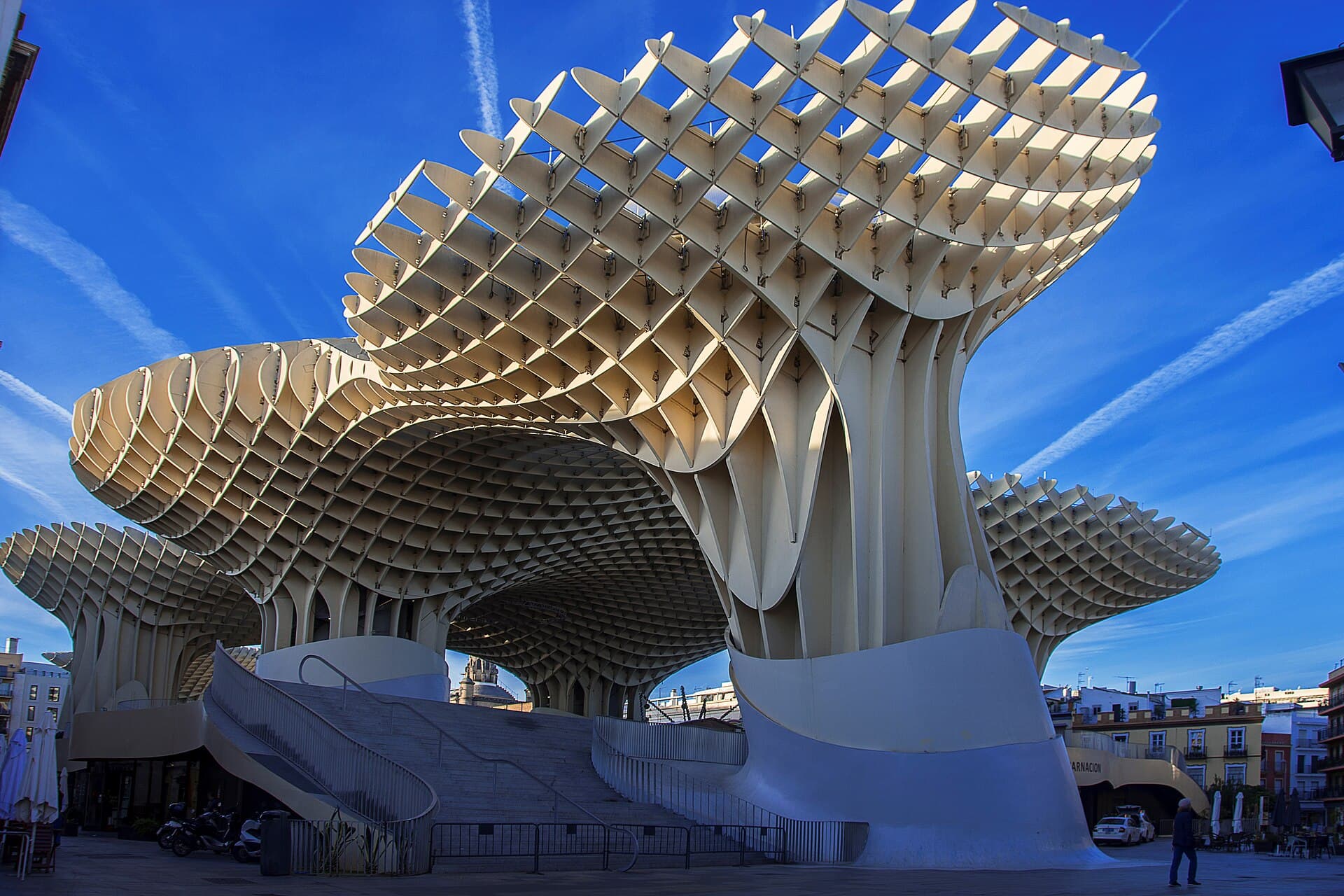 Setas de Sevilla (Metropol Parasol)"The mushrooms" — as Sevillians named them on sight — form the world's largest t5 minutes walk4.3
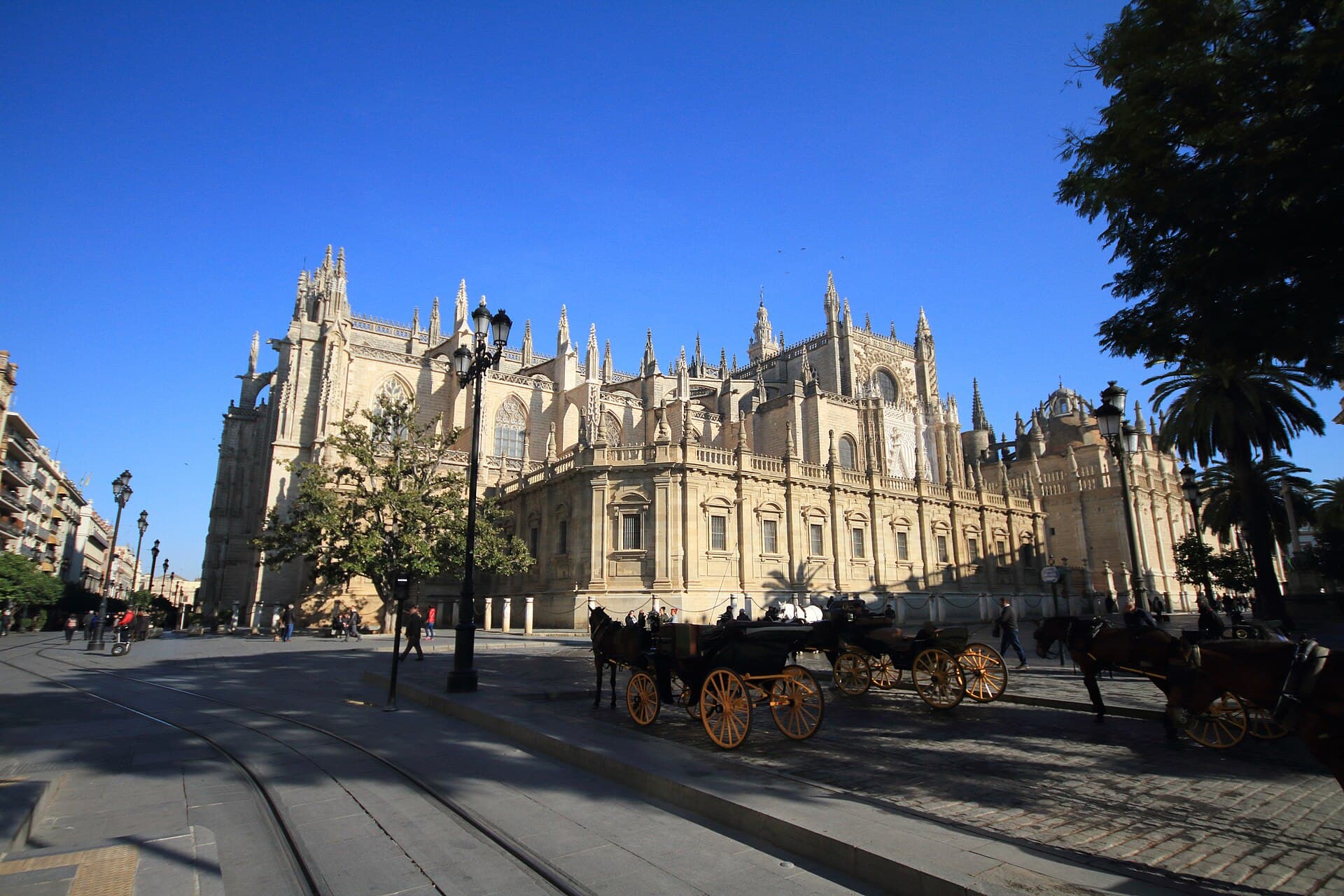 Seville Cathedral & the GiraldaSeville's cathedral is the world's largest Gothic cathedral — and its story begi6 minutes walk4.9
Both were built on mosques: this on the ninth-century first congregational mosque, and the cathedral on the greater Almohad mosque whose minaret is the Giralda. Visiting both gives you the two layers of Islamic Seville, and the combined ticket makes that easy.
Arches and marble columns from the original mosque, remains of the ablution basin, and orange trees in the courtyard as Andalusi mosques were laid out. It is included in the church ticket, and many visitors miss it because it is off to the side rather than on the main route.