
Wholly painted fronts
Mythological scenes and life-size figures on plaster for five centuries.
Didier Descouens — CC BY-SA 4.0 · This Photo was taken by Andrea Bertozzi. Feel free to use my photos, but please mention me as the author and send me a message. — CC BY-SA 4.0 · This Photo was taken by Andrea Bertozzi. Feel free to use my photos, but please mention me as the author and send me a message. — CC BY-SA 4.0 · This Photo was taken by Andrea Bertozzi. Feel free to use my photos, but please mention me as the author and send me a message. — CC BY-SA 4.0
A group of buildings on the Piazza delle Erbe in central Verona whose fronts are entirely covered in Renaissance wall painting. Those façades are why the square is so photographed: mythological scenes and life-size figures painted directly onto plaster, in colours still legible after five centuries. The practice itself explains Verona in the sixteenth century: the city was under Venetian rule, and wealthy householders competed in decorating their fronts rather than their interiors — the display was for the street. Verona was then called the painted city for the number of such façades, and few survive. The buildings themselves are residential and commercial and are not entered. What you do is stand in the square and look up, and that takes a few minutes. Light matters: the fronts read best in the raking daylight of morning or late afternoon, while at midday direct sun washes them out. Free and always open, and you are in the square anyway.
Mythological scenes and life-size figures on plaster for five centuries.
Verona's sixteenth-century name — and few of those fronts survive.
The wealthy decorated their fronts rather than their interiors — public competition.
Piazza delle Erbe, central Verona
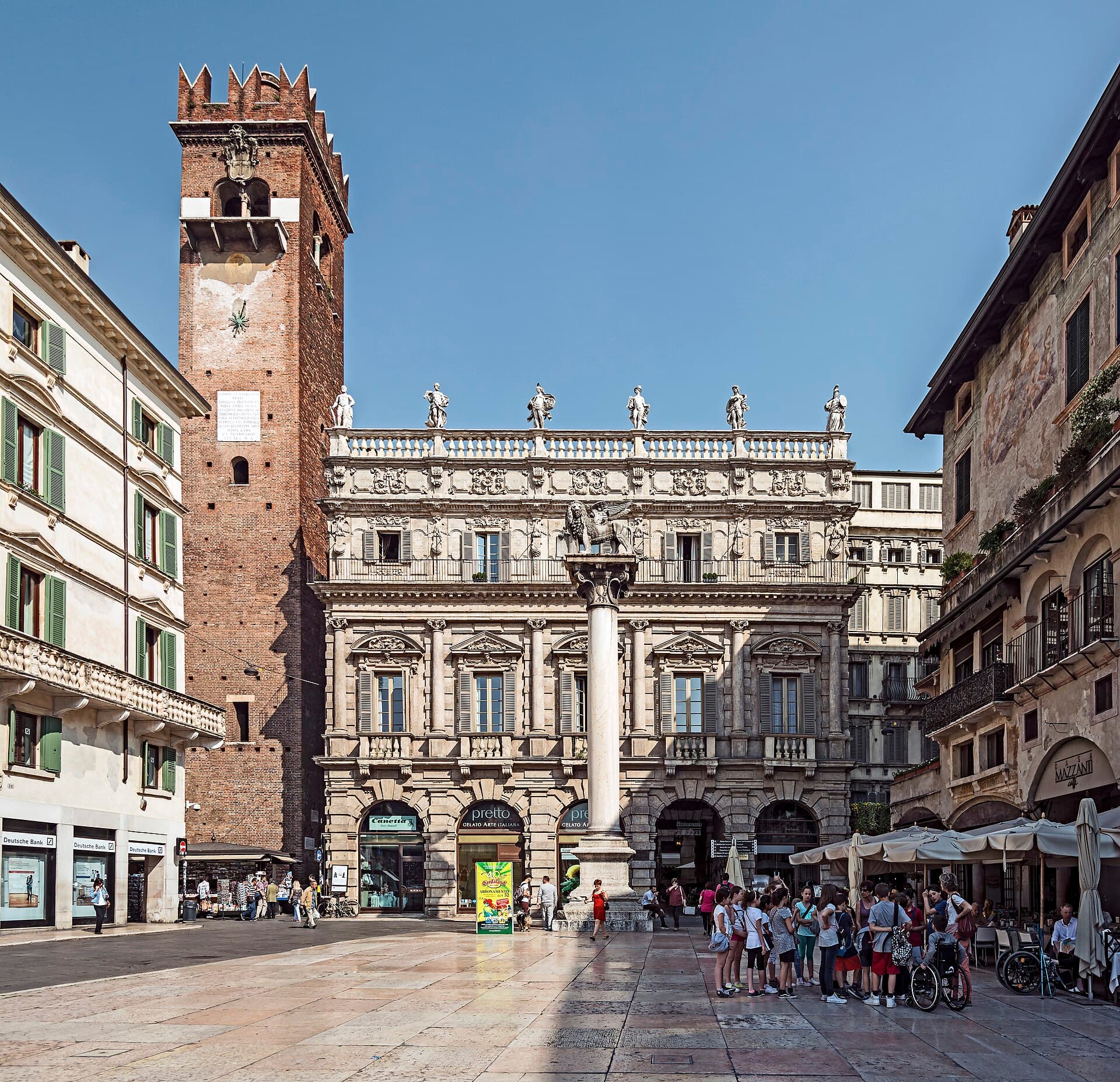 Piazza delle ErbePiazza delle Erbe is Verona's Roman forum that never stopped working — two thous1 minute walk4.8
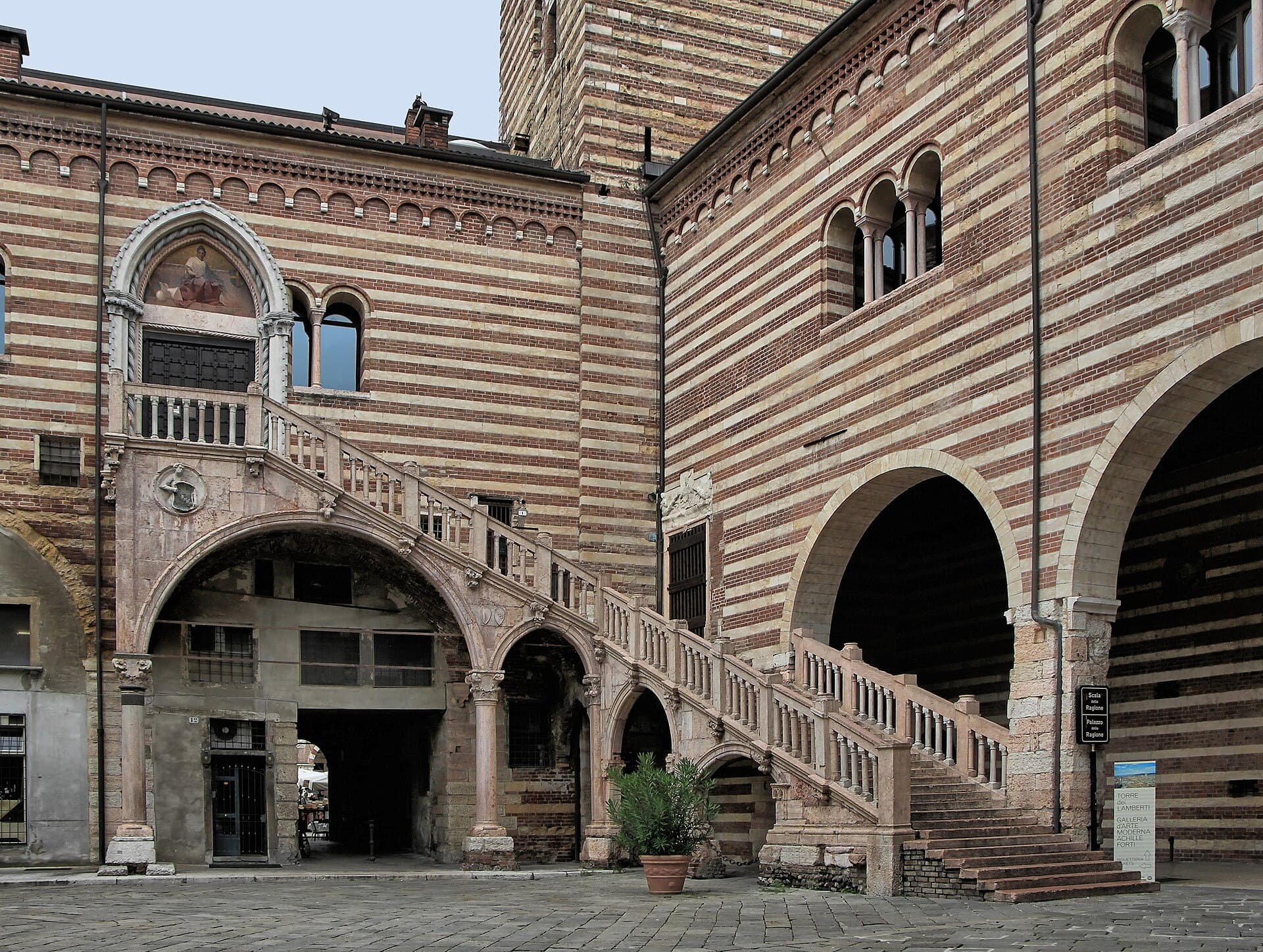 Palazzo della RagioneA complex of twelfth-century buildings between Piazza delle Erbe and Piazza dei 1 minute walk4.4
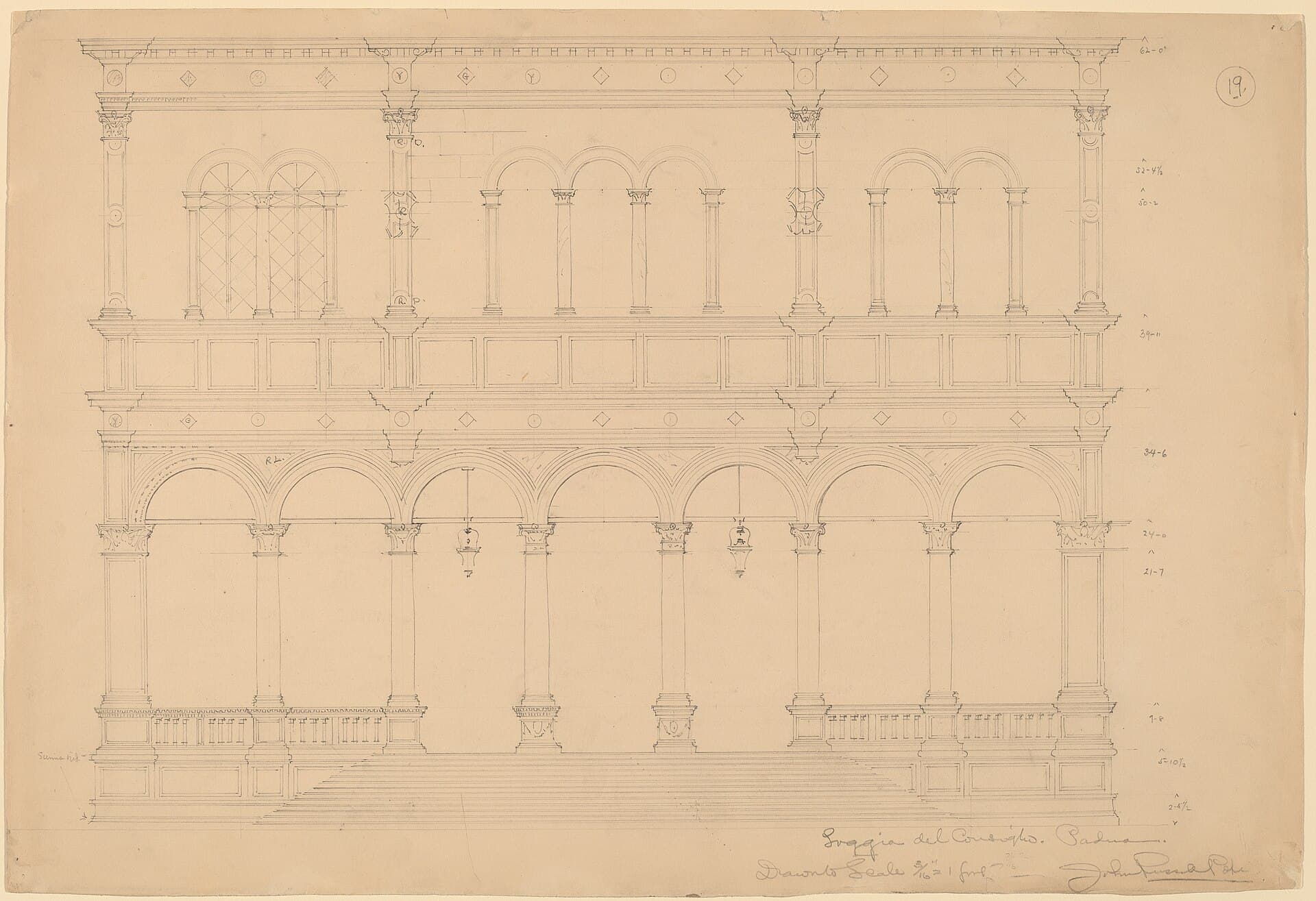 Loggia del ConsiglioFive ancient Romans have stood along the roofline since 1493, looking down on th1 minute walk4.7
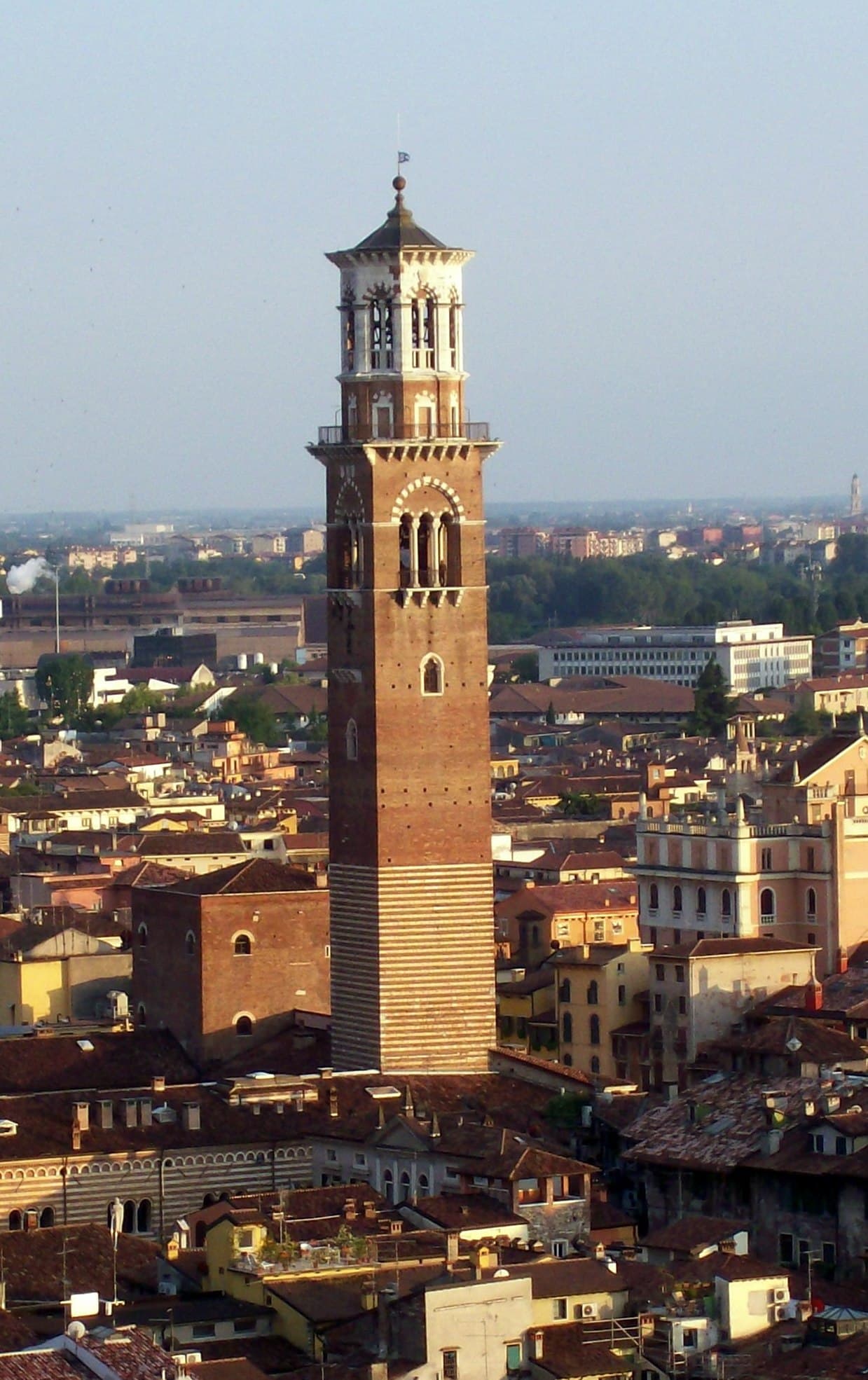 Torre dei LambertiThe Lamberti tower is Verona's highest point: eighty-four metres grown across ce1 minute walk4.4
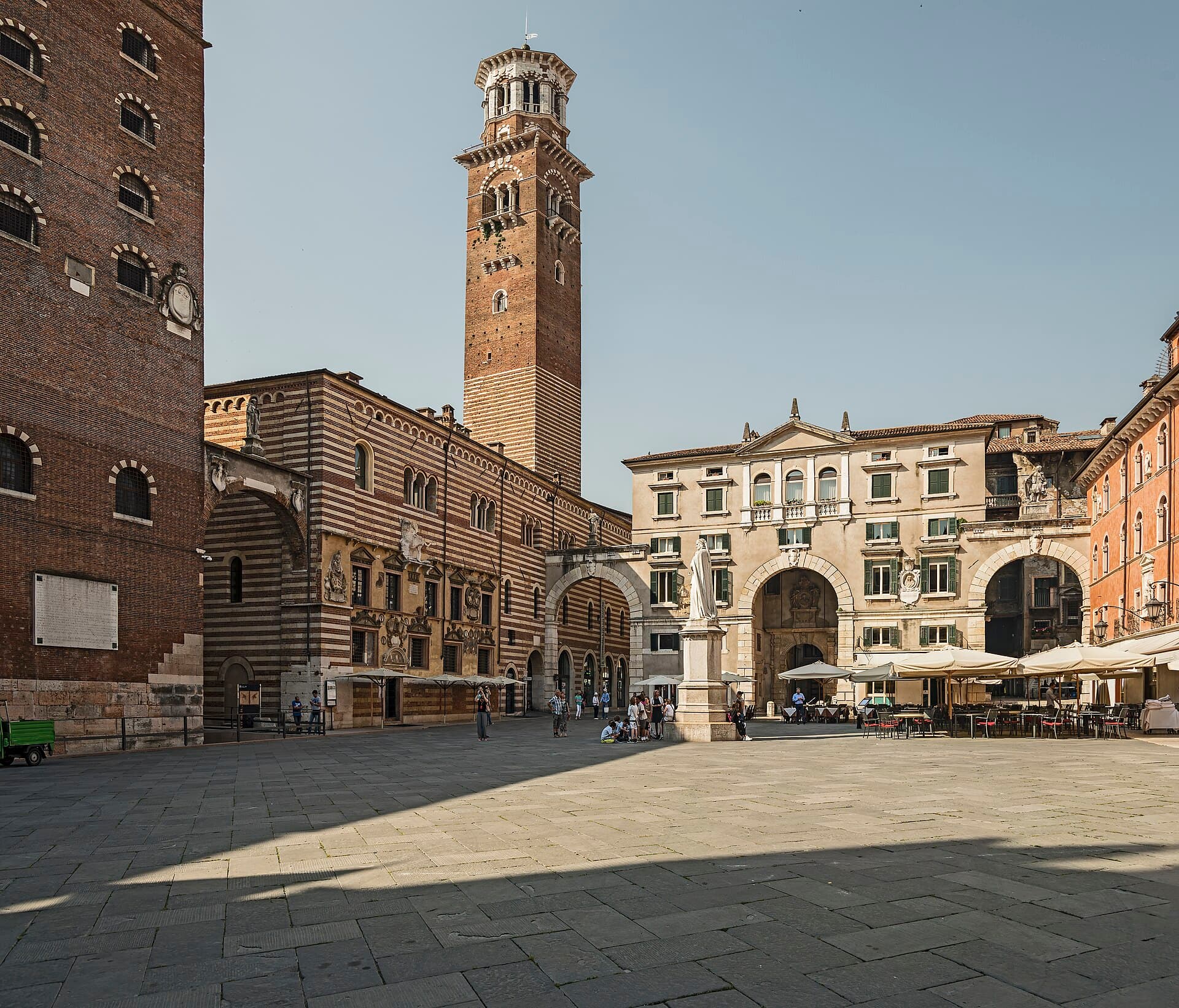 Piazza dei SignoriOne step under the whale-rib arch moves you from the Erbe market's clamour into 1 minute walk4.6
Because painted plaster in the open does not last: rain, frost and pollution eat it over centuries. Add that tastes changed and many fronts were painted over, and that wars and poor restorations destroyed others. What survives in Verona is a small part of what existed, which is why it matters.
The Madonna Verona fountain at its centre, whose statue is Roman in origin; the Lamberti tower above the square; the Arco della Costa with a whale's rib hung beneath it for centuries; and the market stalls. The square was the Roman forum and remains the centre of the city's life.