
The five on the roofline
Catullus, Pliny the Elder, Vitruvius, Aemilius Macer and Cornelius Nepos, set up in 1493 to remind Venice that Verona had Romans of its own.
John Russell Pope — CC0 · This Photo was taken by Andrea Bertozzi. Feel free to use my photos, but please mention me as the author and send me a message. — CC BY-SA 4.0 · Didier Descouens — CC BY-SA 4.0 · Syrio — CC BY-SA 4.0
Five ancient Romans have stood along the roofline since 1493, looking down on the square: the poet Catullus, Pliny the Elder, the architect Vitruvius, Aemilius Macer and Cornelius Nepos, carved by the Lombard stonemason Alberto da Milano. Verona claimed all five as its own sons, which is a generous reading of the record — Como has claimed Pliny for centuries and almost certainly has the better case, and nobody knows where Vitruvius was born at all. But the message landed perfectly well in the fifteenth century: this is an old Roman city with a roll of famous names, not merely a province of Venice. The building went up between 1476 and 1493 to house the city council, and it is usually called the first fully Renaissance building in the Veneto: an arcade of round arches at street level, paired windows above, and a façade of polychrome marble that rewards a close look far more than it overwhelms from a distance. It was attributed for generations to the friar-architect Fra Giocondo, an attribution hardened by eighteenth- and nineteenth-century writers and rejected by modern scholarship. Above the entrance a Latin inscription placed there by Venice addresses the councillors: the greatest love in return for the greatest loyalty. Here is the thing that saves you time: do not look for a ticket desk, and do not look for a visitor entrance. The building today holds the provincial council chamber and offices of the Province of Verona, and the ground-floor loggia and interior hall open only for occasional cultural events on no published schedule. The façade is the whole monument, and standing under the arcade is as far in as you get. Know that in advance and you will enjoy a clean five minutes; arrive expecting a museum and you will leave disappointed for no fault of the building. It occupies one side of Piazza dei Signori, and the square is tight enough that photographing the whole façade from close up is awkward — back off to the opposite side, past the Dante statue that stands in the middle of the square, and the arches and all five statues drop into one frame. Fold it into a short circuit with the neighbouring Scaliger Tombs and Torre dei Lamberti rather than treating it as a destination of its own.
Catullus, Pliny the Elder, Vitruvius, Aemilius Macer and Cornelius Nepos, set up in 1493 to remind Venice that Verona had Romans of its own.
An arcade and polychrome marble on a small, carefully proportioned façade that arrived generations ahead of the rest of the region.
There is nothing to tour inside; know it before you stand at the door hunting for an entrance that is not there.
Piazza dei Signori, 37121 Verona VR, Italy
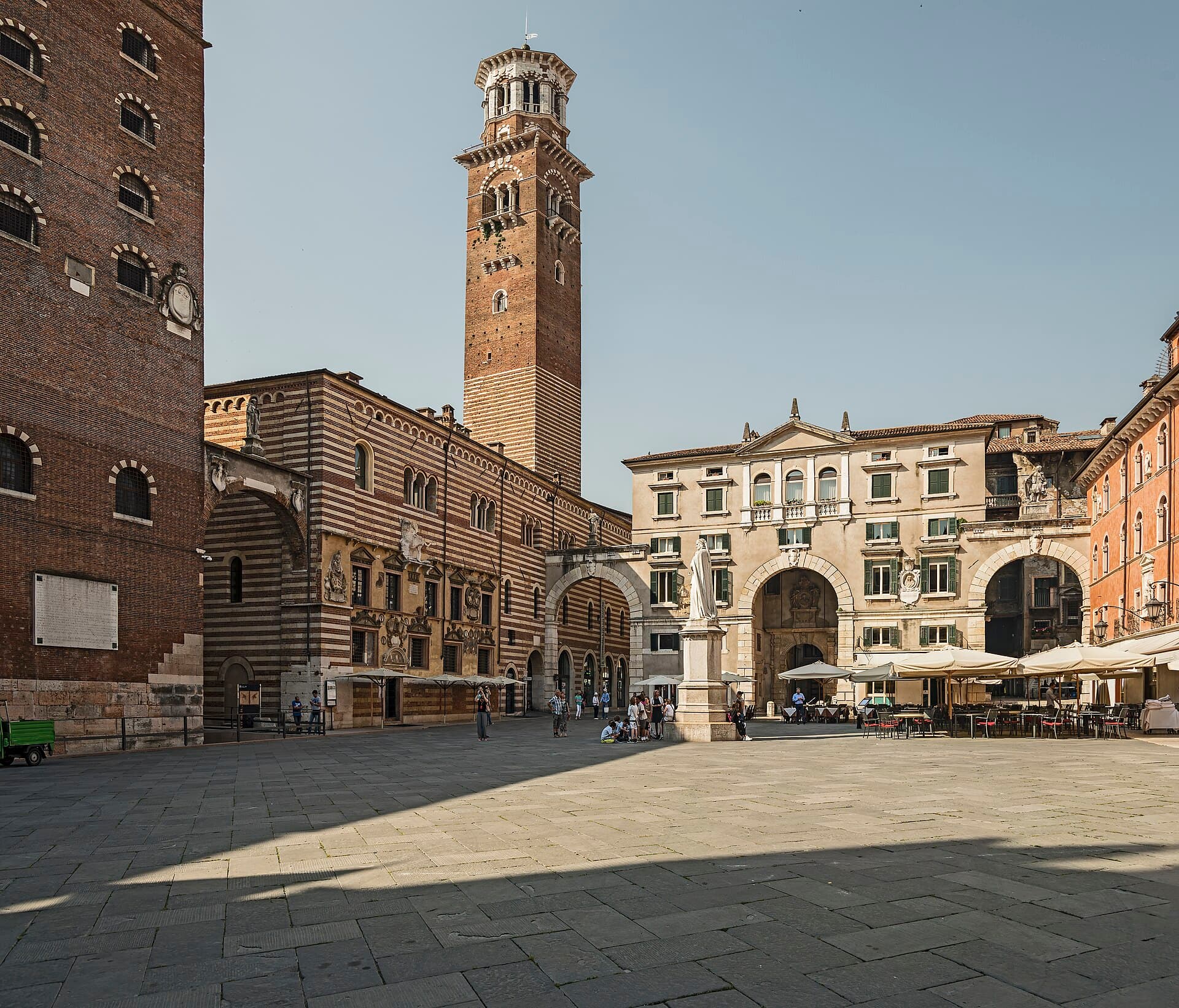 Piazza dei SignoriOne step under the whale-rib arch moves you from the Erbe market's clamour into 1 minute walk4.6
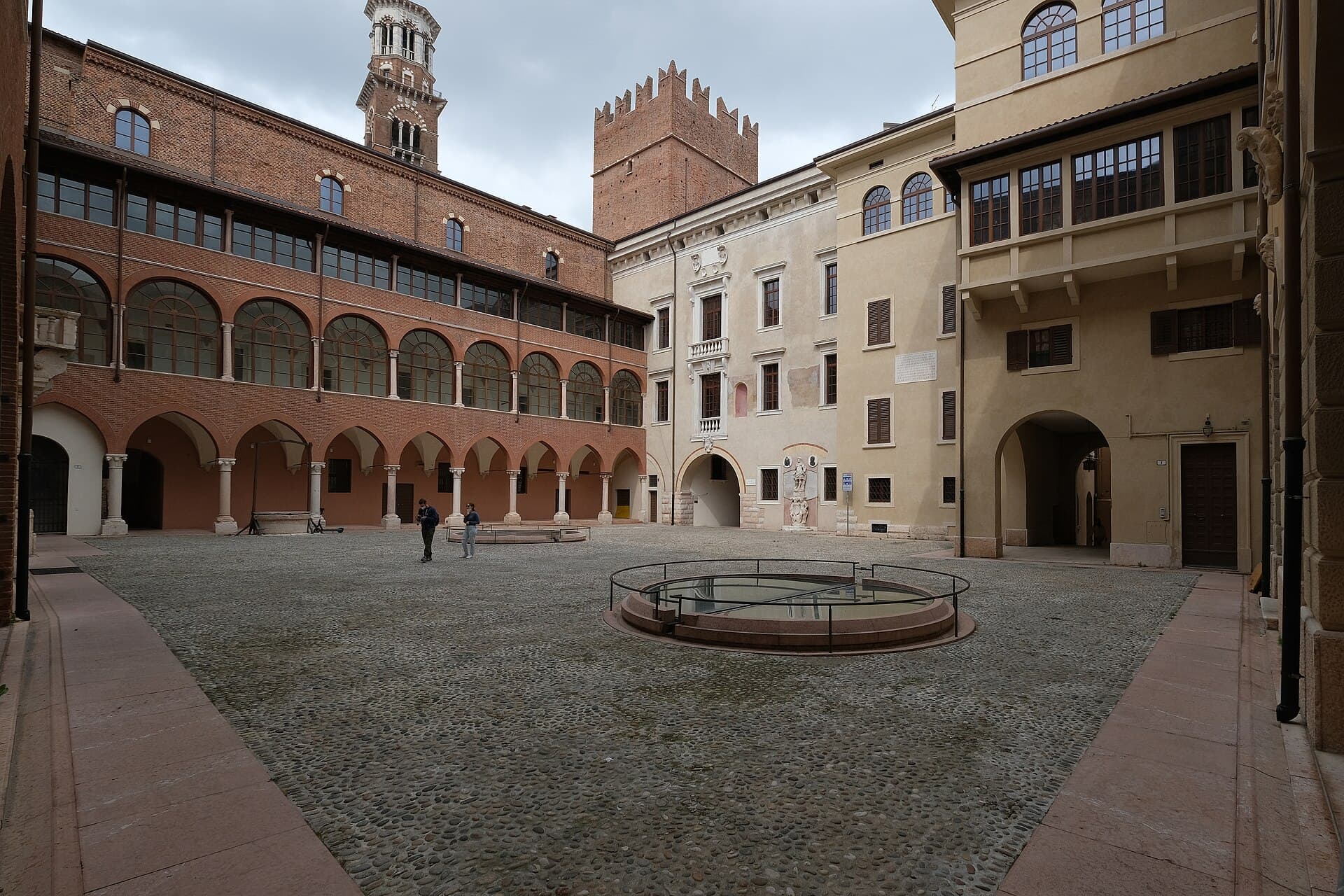 Palazzo del CapitanioA palace on Piazza dei Signori in the heart of Verona, the seat of the Venetian 1 minute walk4.7
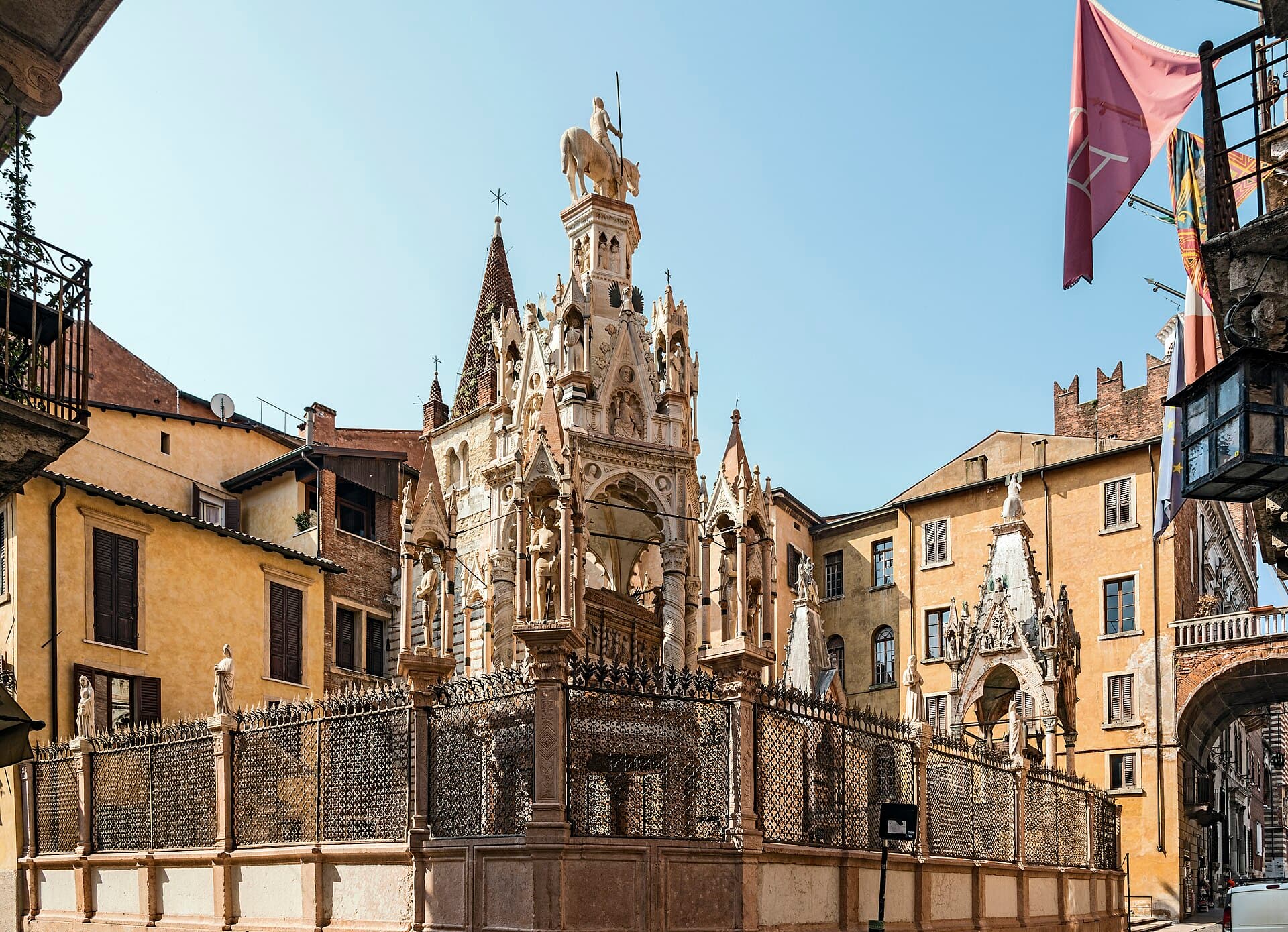 The Scaliger TombsIn a small fenced court behind Piazza dei Signori rise the Scaliger Tombs: the g1 minute walk4.6
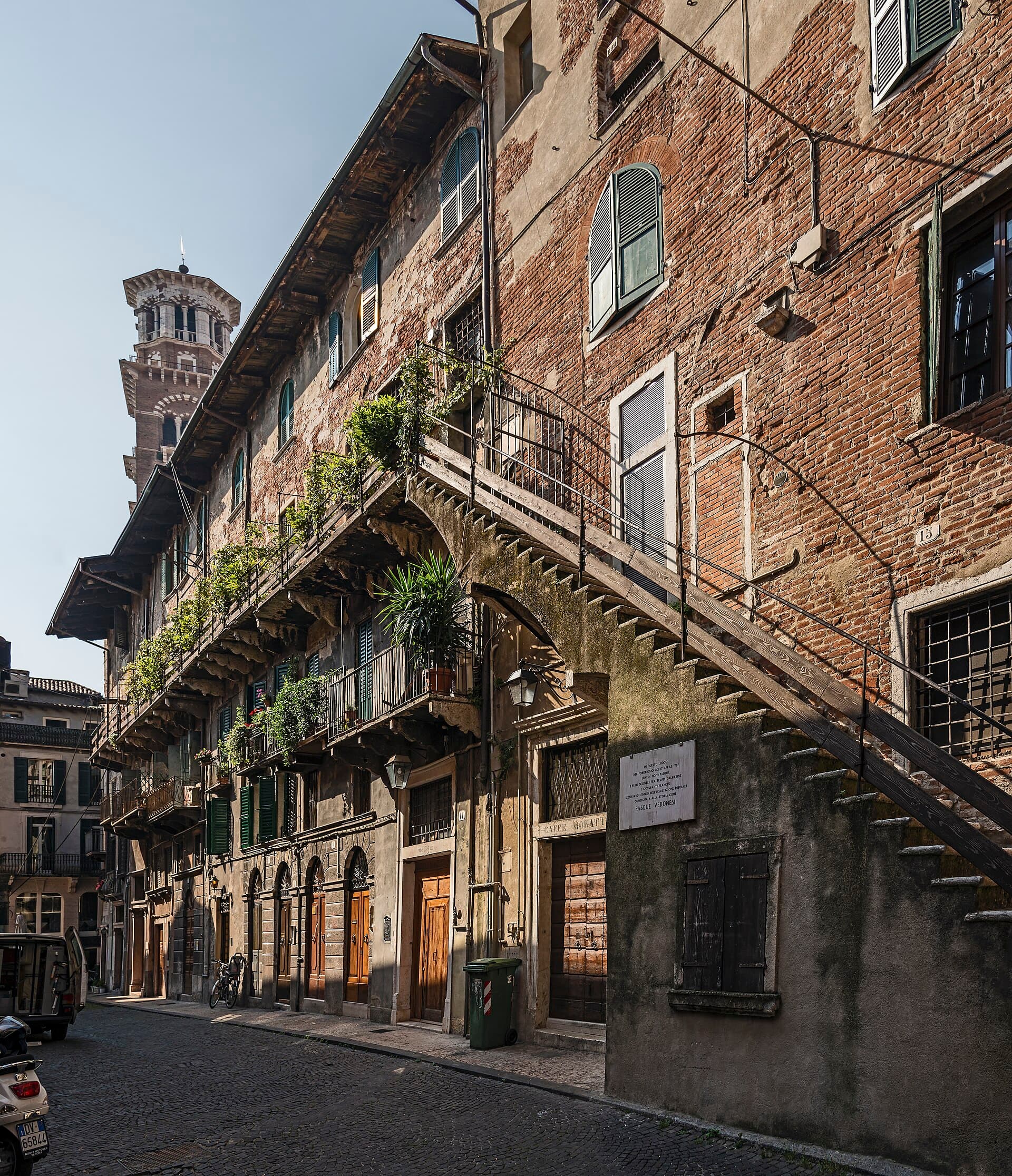 Case MazzantiA group of buildings on the Piazza delle Erbe in central Verona whose fronts are1 minute walk4.5
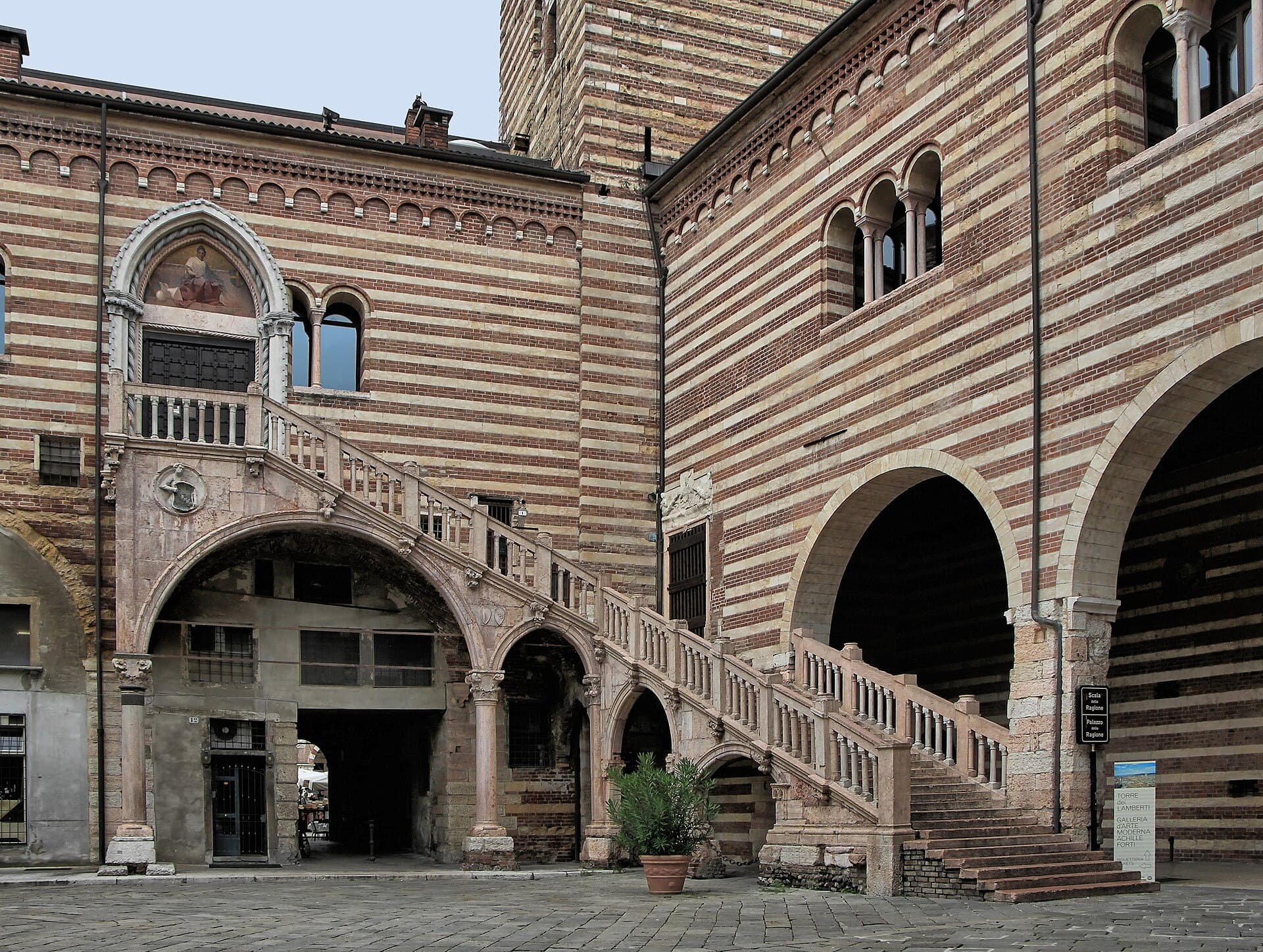 Palazzo della RagioneA complex of twelfth-century buildings between Piazza delle Erbe and Piazza dei 1 minute walk4.4
Normally, no. The building houses the provincial council and offices of the Province of Verona, and there is no organised tourist visit. The interior hall does open occasionally for cultural events or heritage days, but those are unscheduled and not something to build a trip around. Treat it as a façade seen from the square; if you find a door open, that is a bonus, not a plan.
Yes, but as a pause rather than a visit. It stands on Piazza dei Signori, which you will cross anyway between Juliet's House and the Scaliger Tombs, so it costs you a few minutes. Do not make a special detour for it, and do not give it a slot in your schedule.