
The tower galleries
Old town, lake and Jet in a complete circle.
Yann (talk) — CC BY-SA 4.0 · Yann (talk) — CC BY-SA 4.0 · Torbjorn Toby Jorgensen — CC BY-SA 2.0 · Hayden Soloviev — CC BY 4.0
Atop the old town sits Geneva's cathedral in its strange mixture: a twelfth-century Romanesque-Gothic body dressed in the eighteenth with a Greek temple portico — eight hundred layered years in one building. Here Calvin ruled: from 1536 he made it the pulpit of 'Protestant Rome' for twenty years that forged Geneva's ethic — the work, precision and austerity you see in the city today are its descendants. His plain wooden chair remains in a nave his Reformation stripped bare. The climb is the visit's jewel: 157 steps between the towers to galleries circling old town, lake, Jet and Alps — historic Geneva's highest point. And beneath the cathedral an archaeological site uncovers the first-centuries churches and their mosaics.
Old town, lake and Jet in a complete circle.
The reformer's plain seat — Protestant Rome's throne.
First-centuries churches and mosaics beneath the present floor.
Place de la Taconnerie, 1204 Geneva
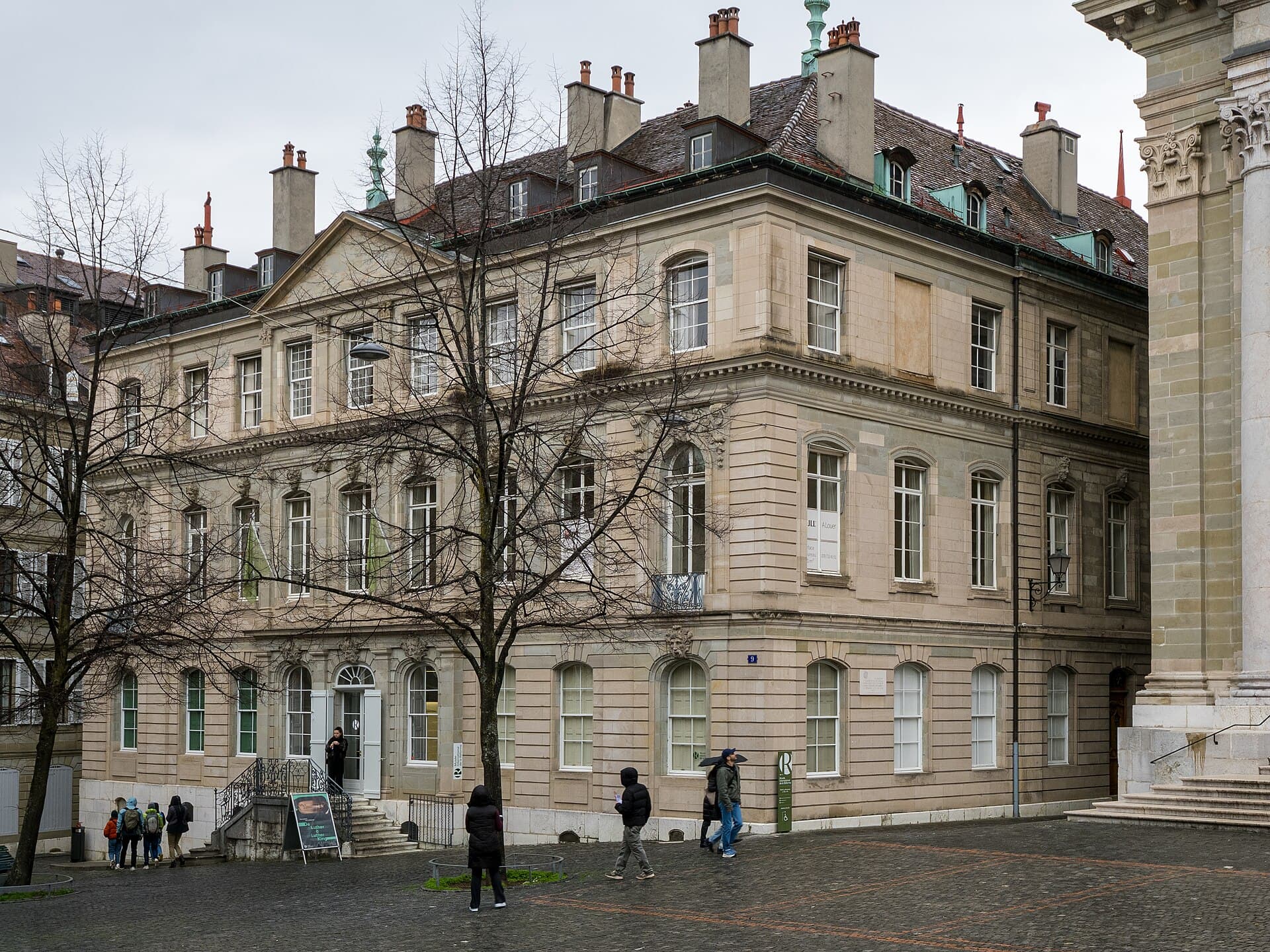 International Museum of the ReformationThe museum occupies the **Maison Mallet**, a small mansion built in 1723 by the 1 minute walk4.6
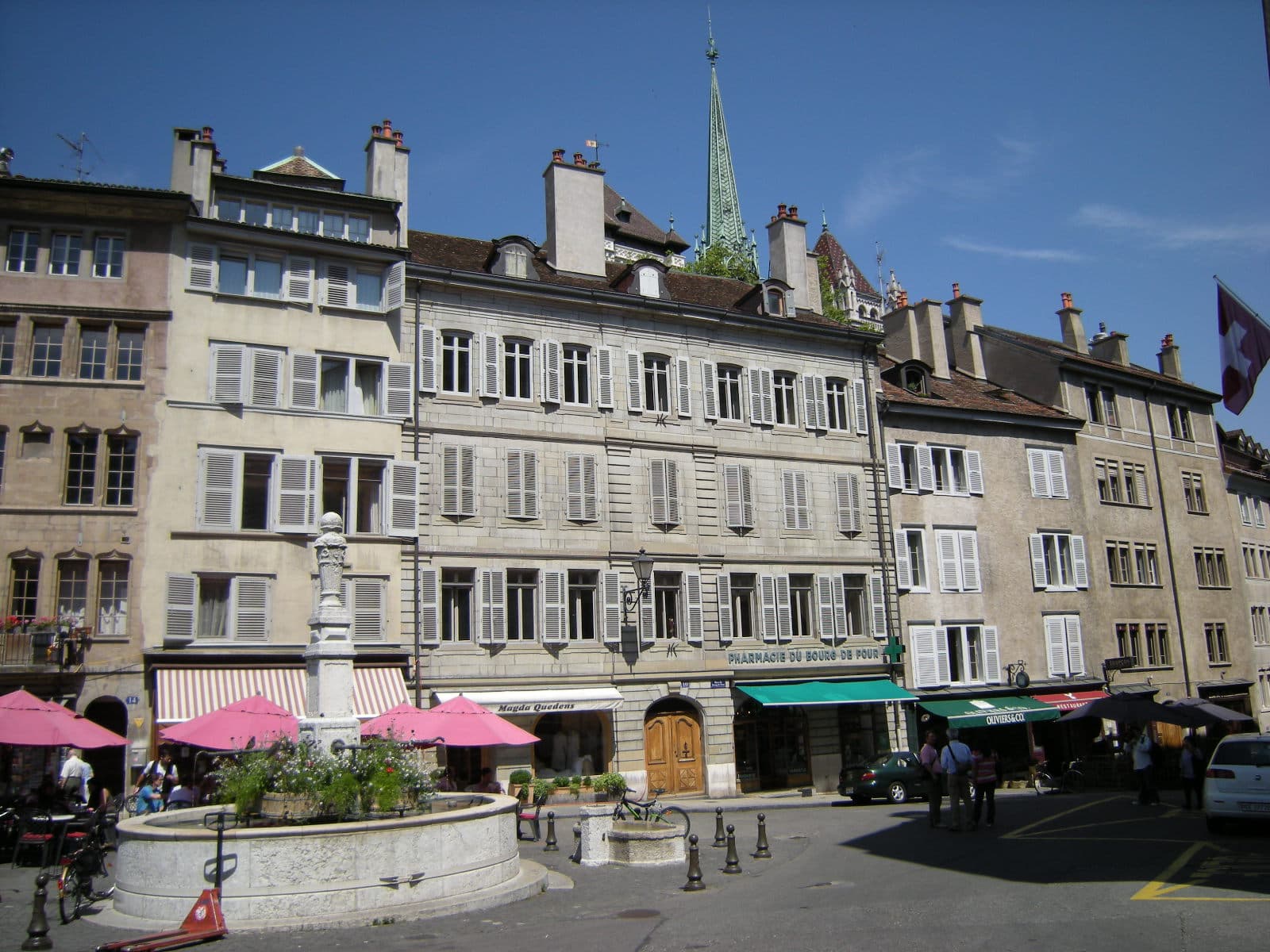 Place du Bourg-de-FourGeneva's oldest square and the upper town's heart: the Bourg-de-Four was a Roman1 minute walk4.4
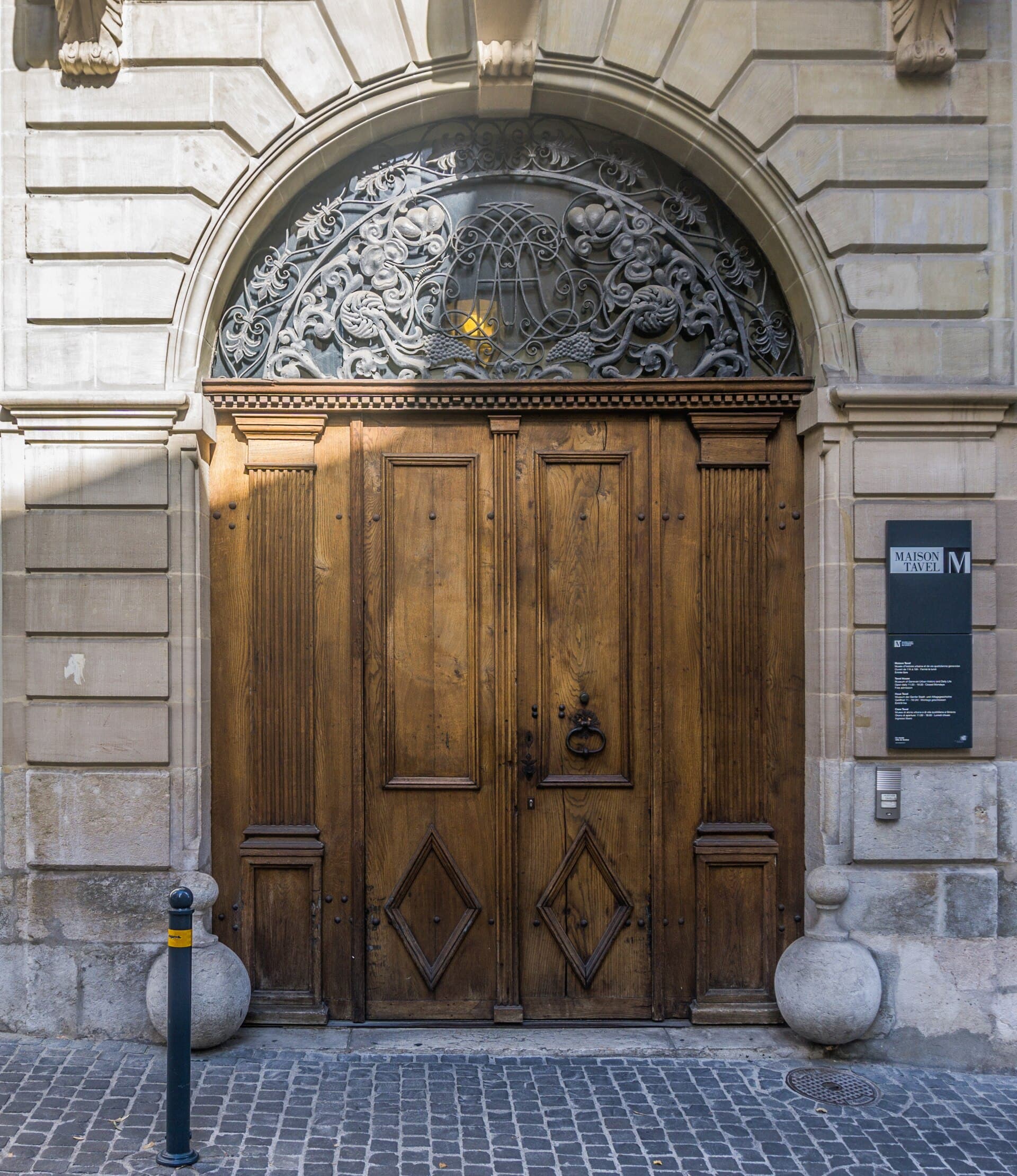 Maison TavelMaison Tavel is **the oldest surviving private house in Geneva**, standing a few1 minute walk4.6
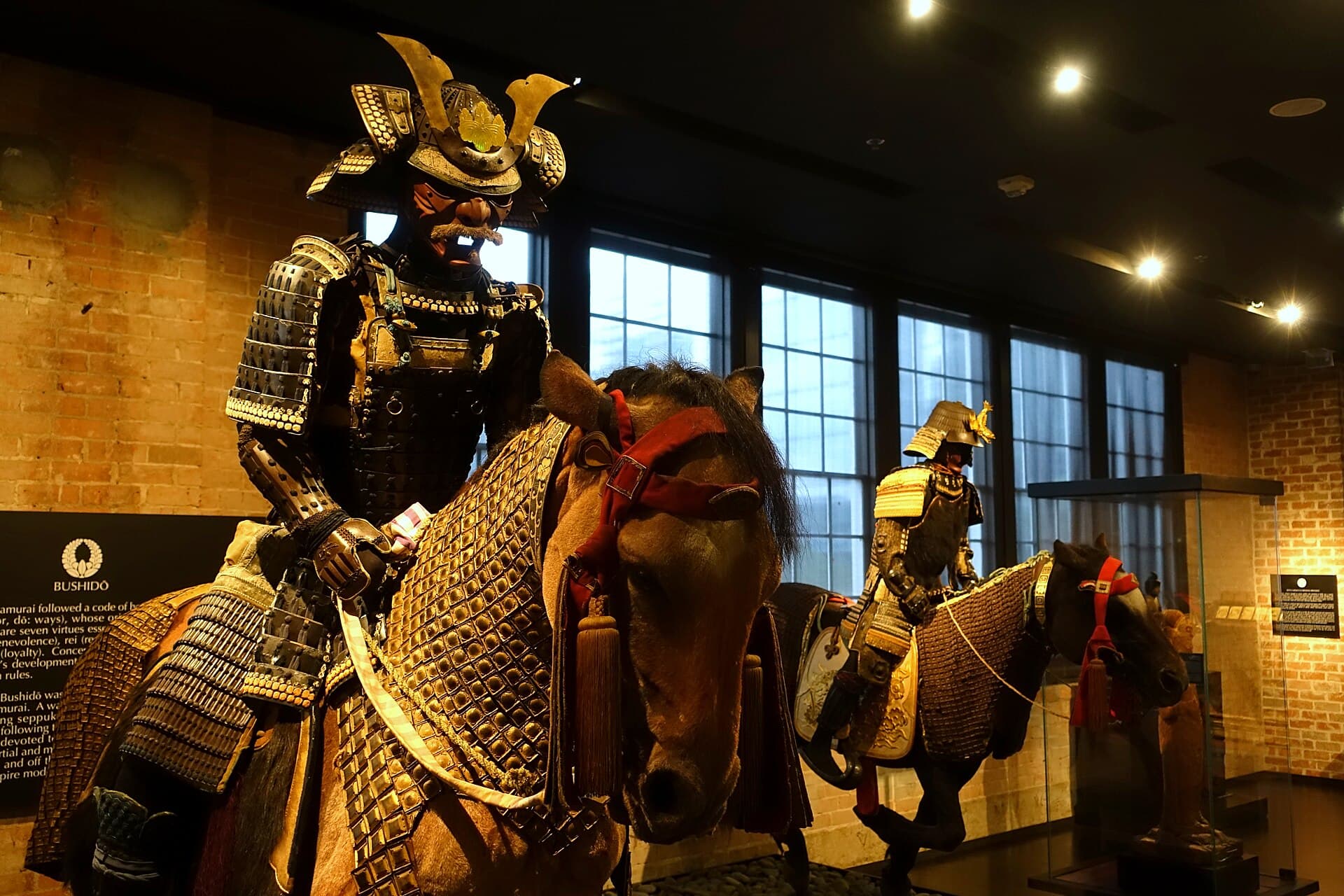 Musée Barbier-MuellerA small private museum in a sixteenth-century house in the heart of Geneva's old2 minutes walk4.4
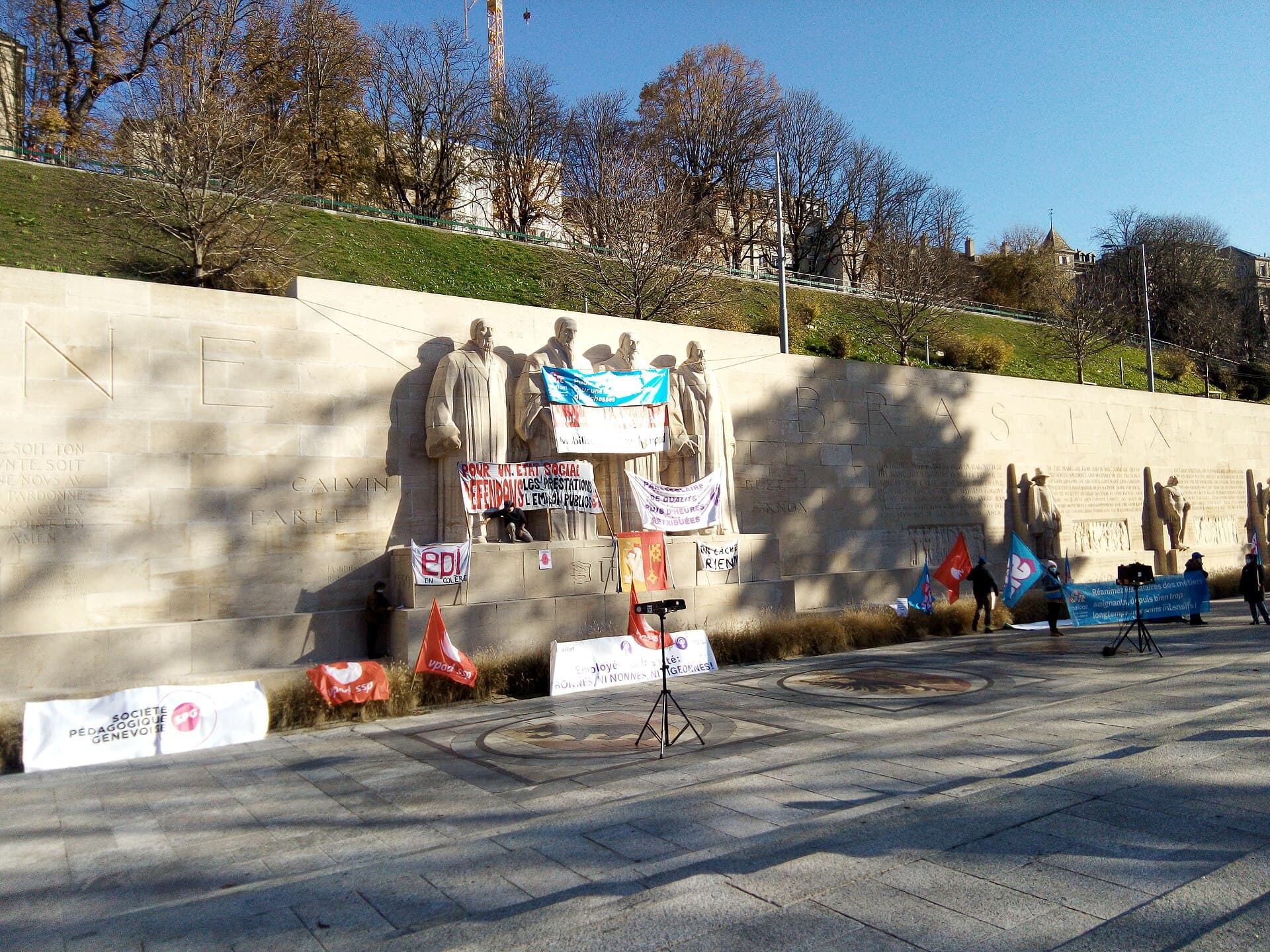 Reformation Wall & Parc des BastionsIn the Bastions park below the old-town ramparts runs the Reformation Wall's hun3 minutes walk4.6
A French reformer refuged in Geneva who ruled it intellectually twenty years: a church-city of stern laws, universal schooling and sacred work ethic — drawing Europe's Protestant refugees with their crafts and watches, so banking-and-watch Geneva was born straight from Calvin's. The city is secular now; his mark is in its bones.
The archaeological site first for depth-lovers (side entrance), then nave, chair and the painted Maccabees chapel — the stripping's sole survivor — with the towers last, leaving from the top visually mapped for the city.
Bourg-de-Four steps away, the Tavel House (Geneva's oldest), the International Reformation Museum next door for the story's full door, and the Grand-Rue lanes descending with their antique bookshops — the summit is one coherent afternoon.