
The mismatched towers
Eighty metres of spiked Gothic, one deliberately broader than the other — a detail you only notice on a second look.
Ray Swi-hymn from Sijhih-Taipei, Taiwan — CC BY-SA 2.0 · Ray Swi-hymn from Sijhih-Taipei, Taiwan — CC BY-SA 2.0 · Ray Swi-hymn from Sijhih-Taipei, Taiwan — CC BY-SA 2.0 · ŠJů — CC BY 4.0
The two spiked Gothic towers in every photograph of the Old Town Square belong to the Church of Our Lady before Týn. Construction began in the 14th century and continued for a century and a half, and the towers stand about eighty metres high. Look carefully: they are not identical — one is slightly broader than the other, traditionally explained as representing the "masculine" and "feminine" sides of the world, a symbolic reading rather than an engineering one. The church has an odd position: it has no frontage on the square at all but hides behind a row of houses, entered through a narrow arcaded passage between buildings. Many visitors stand in the square photographing the towers without ever finding the door. In the 15th century this was the main stronghold of the Hussites, the reforming followers of Jan Hus, before it returned to Catholic hands after 1620 and was fitted with Baroque altars. Inside lies the Danish astronomer Tycho Brahe, who served at the court of Rudolf II and died in Prague in 1601 — his carved tomb slab is still in place near the high altar.
Eighty metres of spiked Gothic, one deliberately broader than the other — a detail you only notice on a second look.
A carved stone slab for the Danish astronomer who served Rudolf II's court and died in Prague in 1601.
Among the oldest surviving organs in Prague, from the 17th century — used for concerts on some evenings.
It was the main stronghold of Jan Hus's reforming movement in the 15th century — the church's story is far heavier than its picture.
Old Town Square, east side, Prague 1
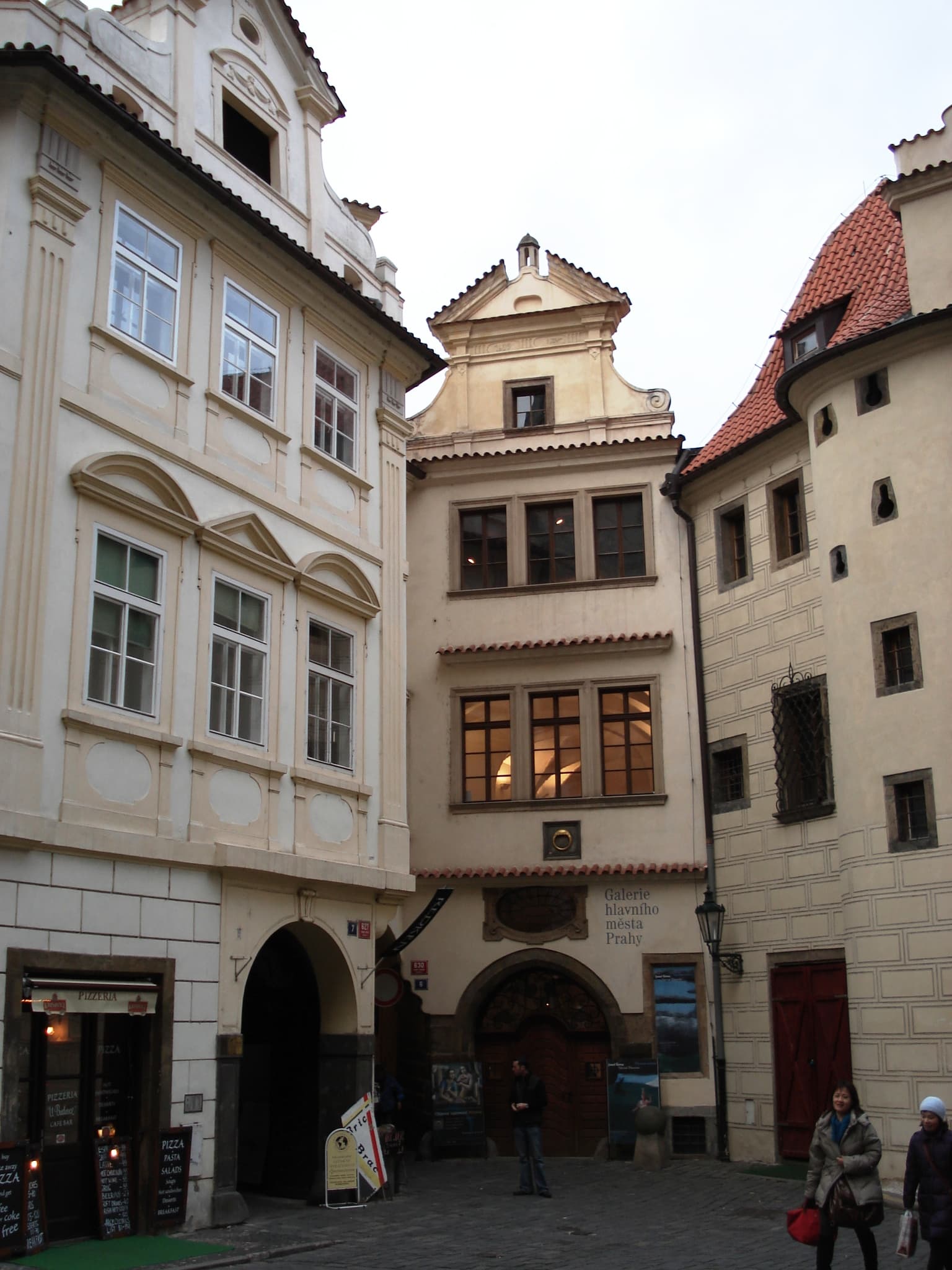 House at the Golden RingA fourteenth-century house directly behind the Church of Our Lady before Týn, on1 minute walk4.7
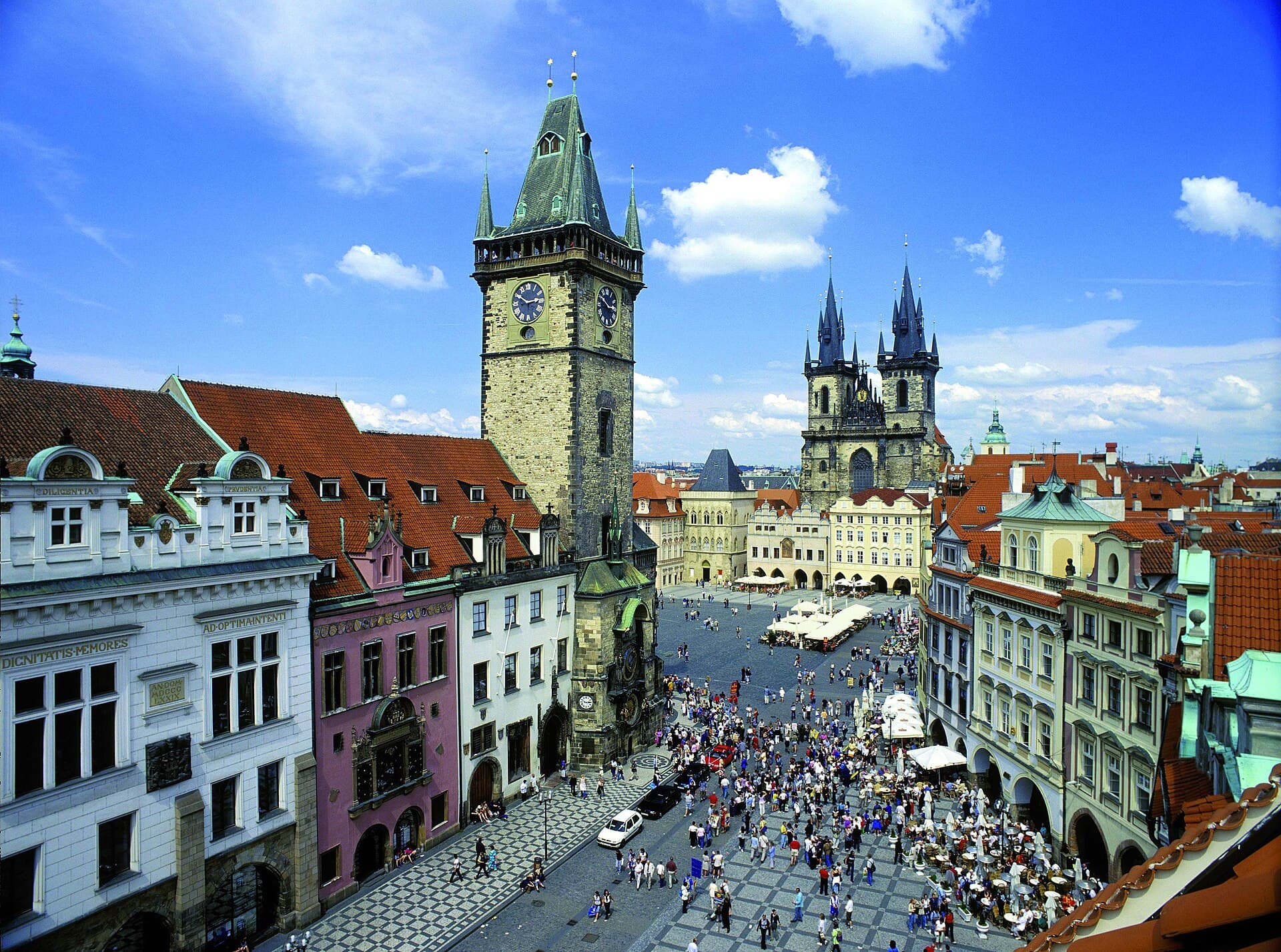 Old Town SquareThe Old Town Square has been Prague's living room since the 12th century: first 1 minute walk4.9
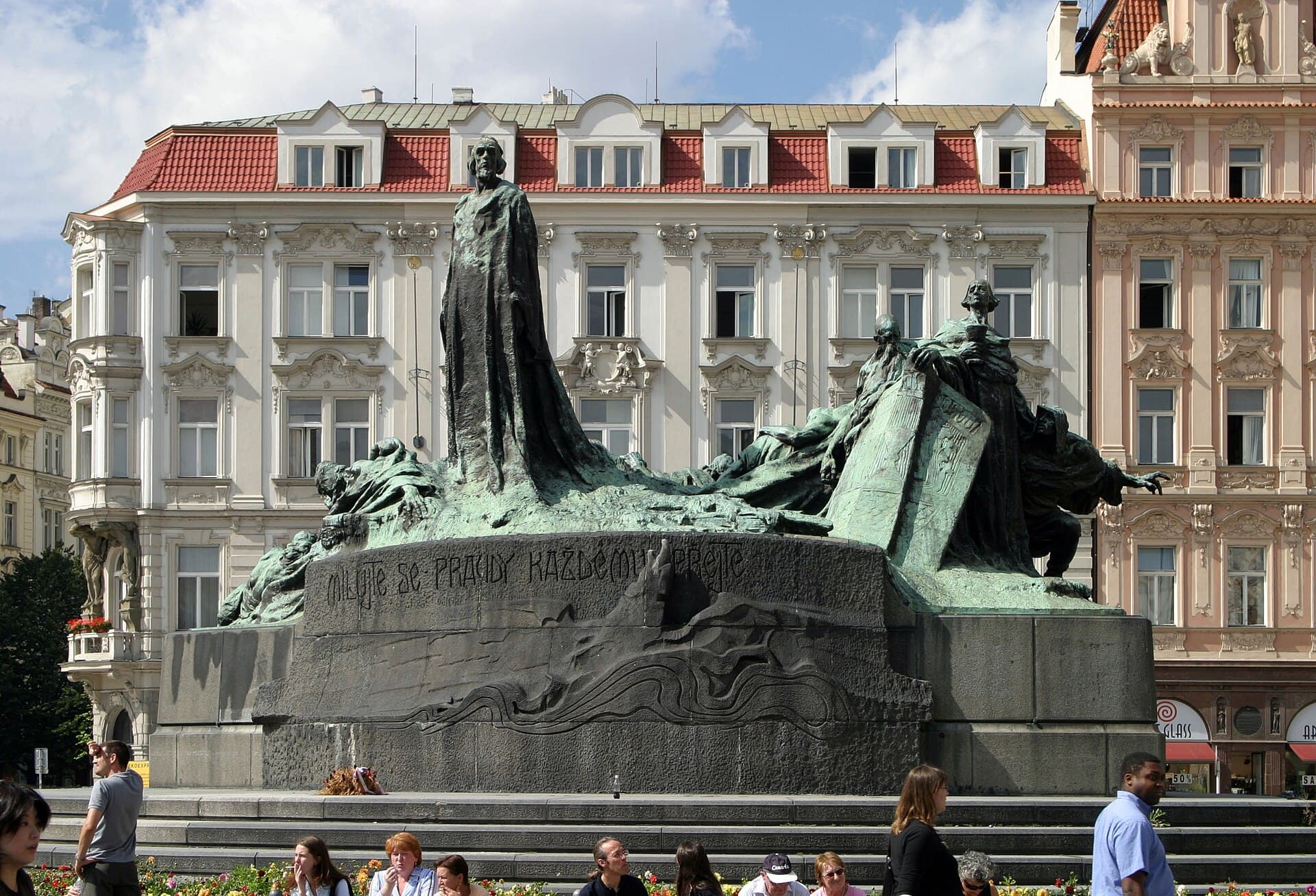 Jan Hus MemorialRight in the middle of the Old Town Square stands a dark bronze mass: the Jan Hu1 minute walk4.7
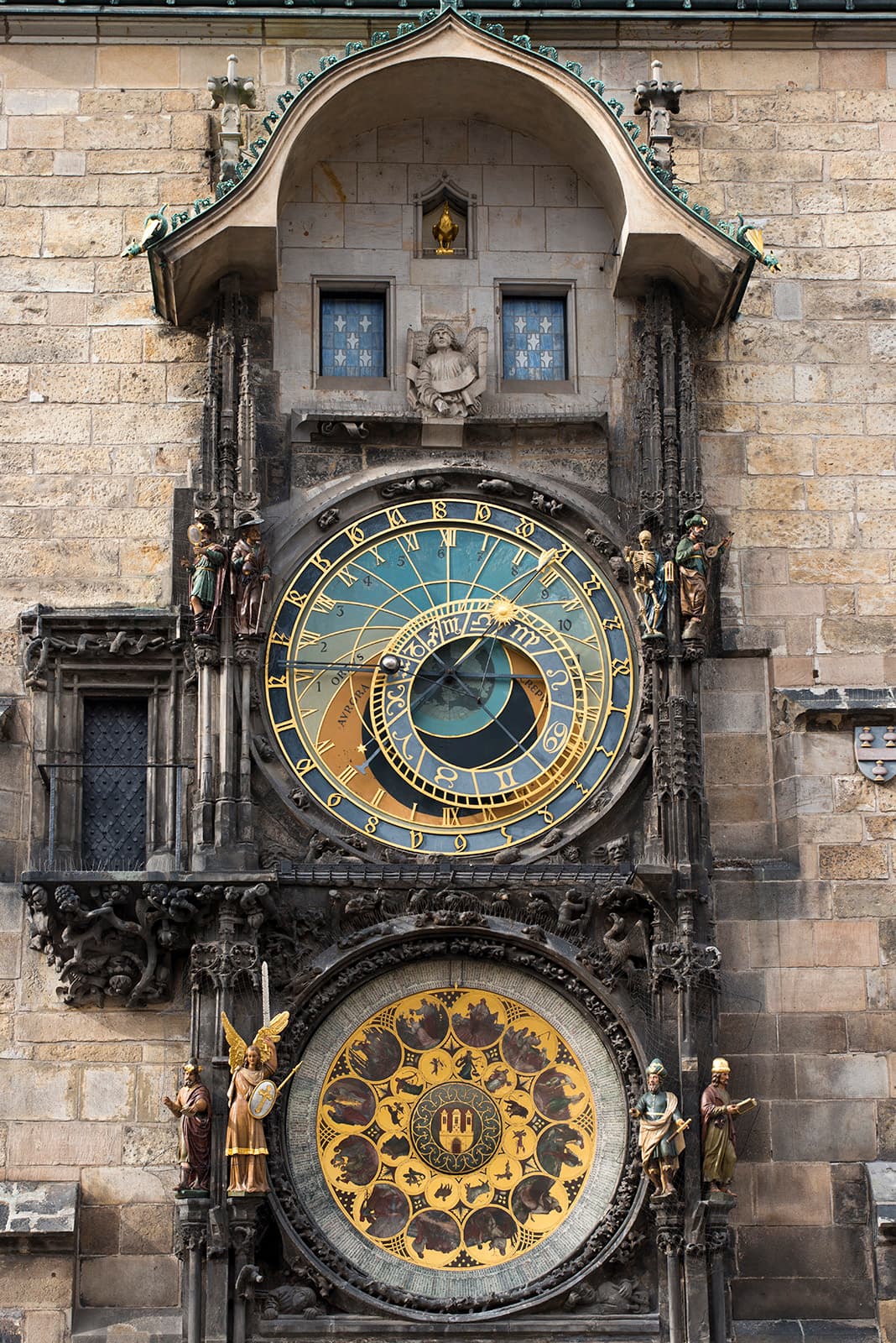 Prague Astronomical ClockPrague's astronomical clock was mounted on the wall of the Old Town Hall in 14102 minutes walk4.6
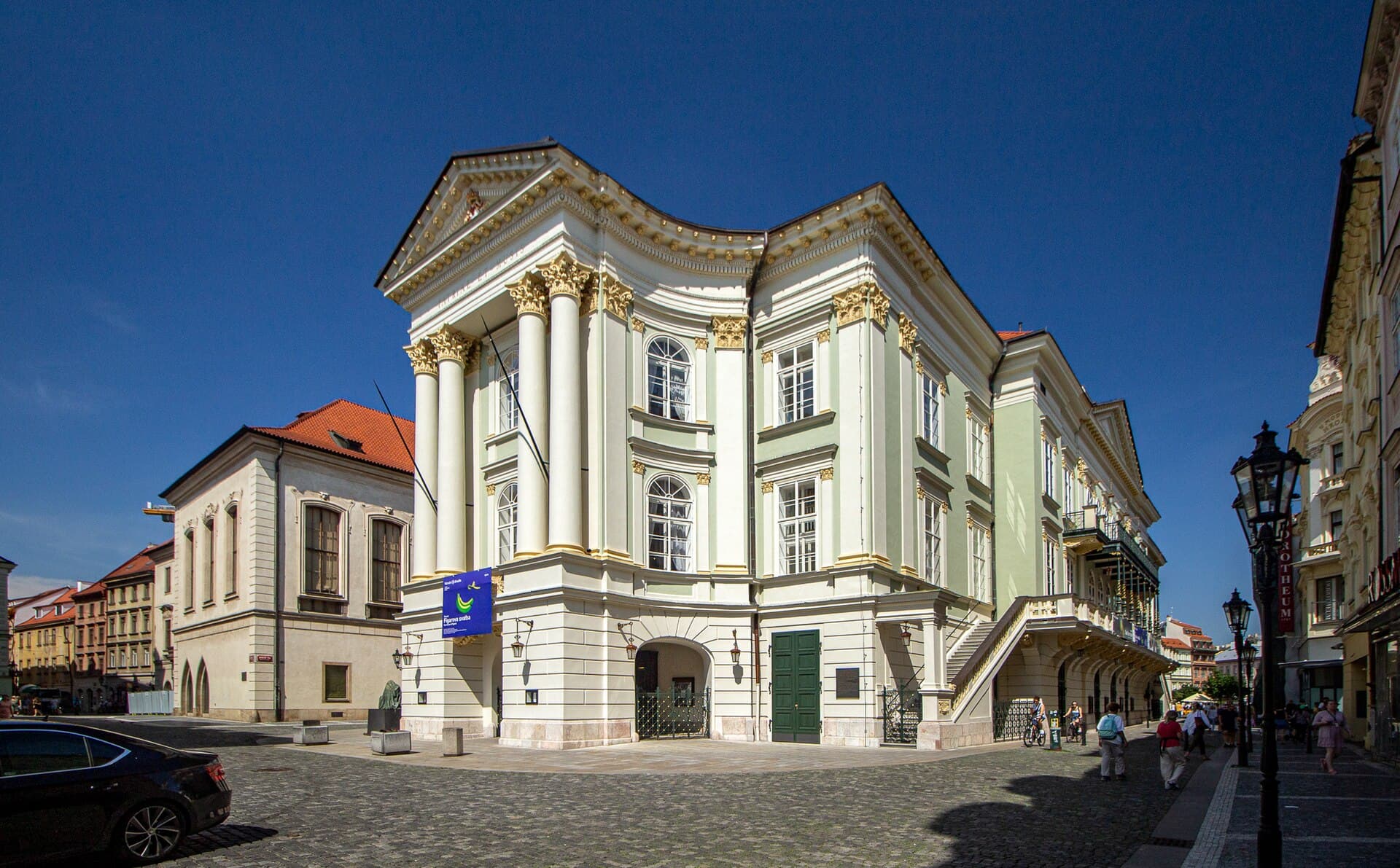 Estates TheatreThe Estates Theatre is a green-and-white classical building in the Old Town, ope2 minutes walk4.6
Not on the square. Go to the row of houses in front of the church and find the narrow arcaded passage running beneath them — it leads to a small courtyard and then the church door. A small sign marks it.
No, they are closed to visitors. For a view over the square, climb the Old Town Hall tower opposite — and from there you get the best photograph of the Týn towers themselves.
A 15th-century Czech reformer who attacked church corruption a century before Martin Luther, and was burned in 1415. His followers, the Hussites, made this church their centre, and his memorial stands in the square directly in front of it.
Twenty minutes covers the interior. It is a short stop within an Old Town Square walk rather than a visit of its own.