
The parade of apostles
Two doors open, the twelve apostles pass, and the skeleton turns his hourglass — one minute, repeated hourly for six hundred years.
Steve Collis from Melbourne, Australia — CC BY 2.0 · Jacek Halicki — CC BY-SA 4.0 · Ray Swi-hymn from Sijhih-Taipei, Taiwan — CC BY-SA 2.0 · Ray Swi-hymn from Sijhih-Taipei, Taiwan — CC BY-SA 2.0
Prague's astronomical clock was mounted on the wall of the Old Town Hall in 1410, and is the oldest astronomical clock in the world still running on its original mechanism. What you are looking at is not one clock but three instruments stacked together: the astronomical dial above, showing sun and moon against the zodiac; the calendar dial below, with twelve painted panels for the months; and a small theatre of moving figures between them. On the hour the show begins. Two small doors open and the twelve apostles file past, while the skeleton — Death — rings his bell and turns his hourglass, and the other four figures shake their heads in refusal. It ends with a golden cockerel crowing and a trumpeter on the tower balcony. The whole thing lasts under a minute, and hundreds of people have stopped for it, every hour, for six centuries. Watching from the square costs nothing. The ticket is for something else: the town hall itself, its historic halls, the medieval cellars, and the glass lift up the tower — and that, rather than the show, is the part genuinely worth paying for.
Two doors open, the twelve apostles pass, and the skeleton turns his hourglass — one minute, repeated hourly for six hundred years.
The lower disc, with twelve scenes of Bohemian country life painted by Josef Mánes in the 19th century — what hangs here is a copy; the original is in the city museum.
A modern glass spiral inside a 14th-century tower, ending on a balcony that takes in the square and the castle together.
Below the building runs a network of vaults that were once ground level, before Prague's streets were raised several metres against flooding.
Old Town Hall, Old Town Square, Prague 1
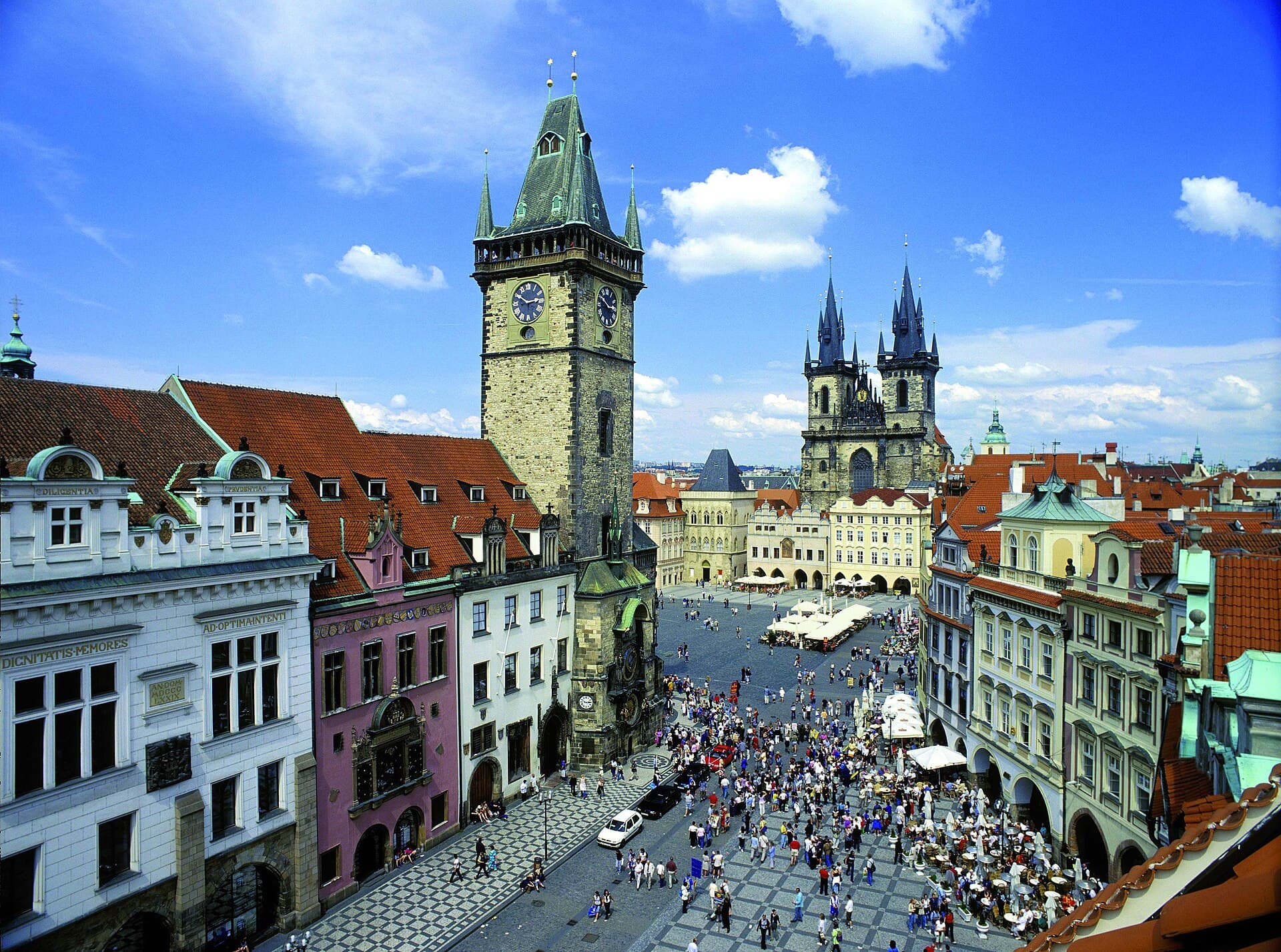 Old Town SquareThe Old Town Square has been Prague's living room since the 12th century: first 1 minute walk4.9
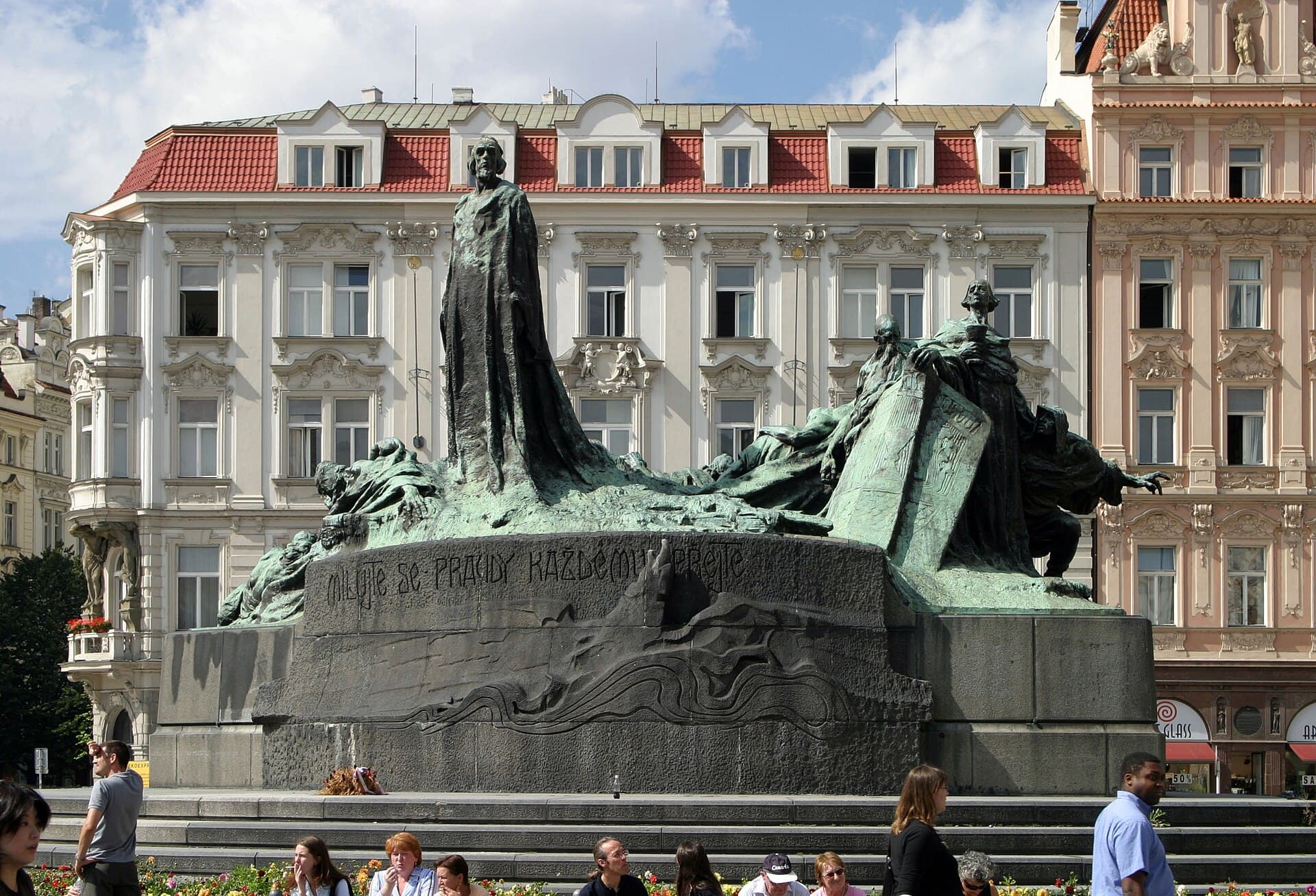 Jan Hus MemorialRight in the middle of the Old Town Square stands a dark bronze mass: the Jan Hu1 minute walk4.7
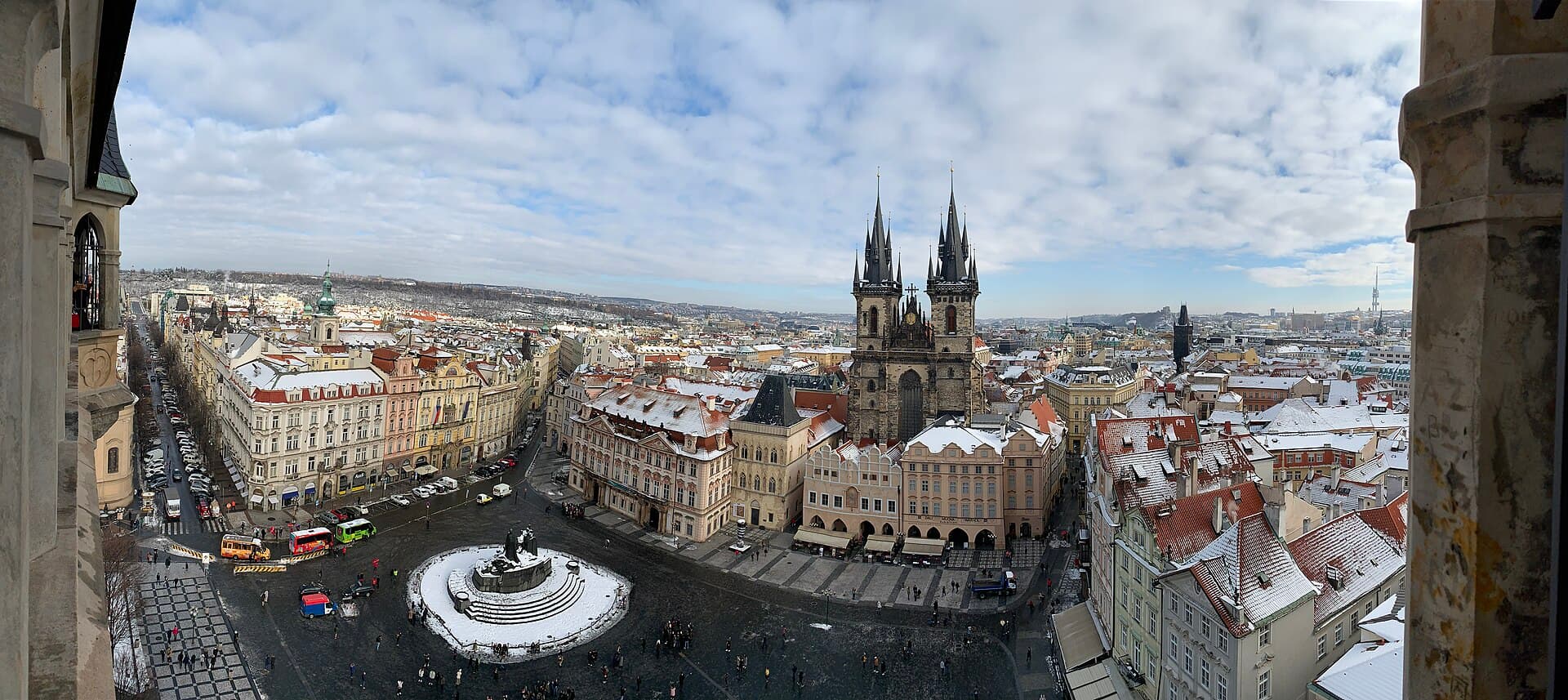 Church of Our Lady before TýnThe two spiked Gothic towers in every photograph of the Old Town Square belong t2 minutes walk4.6
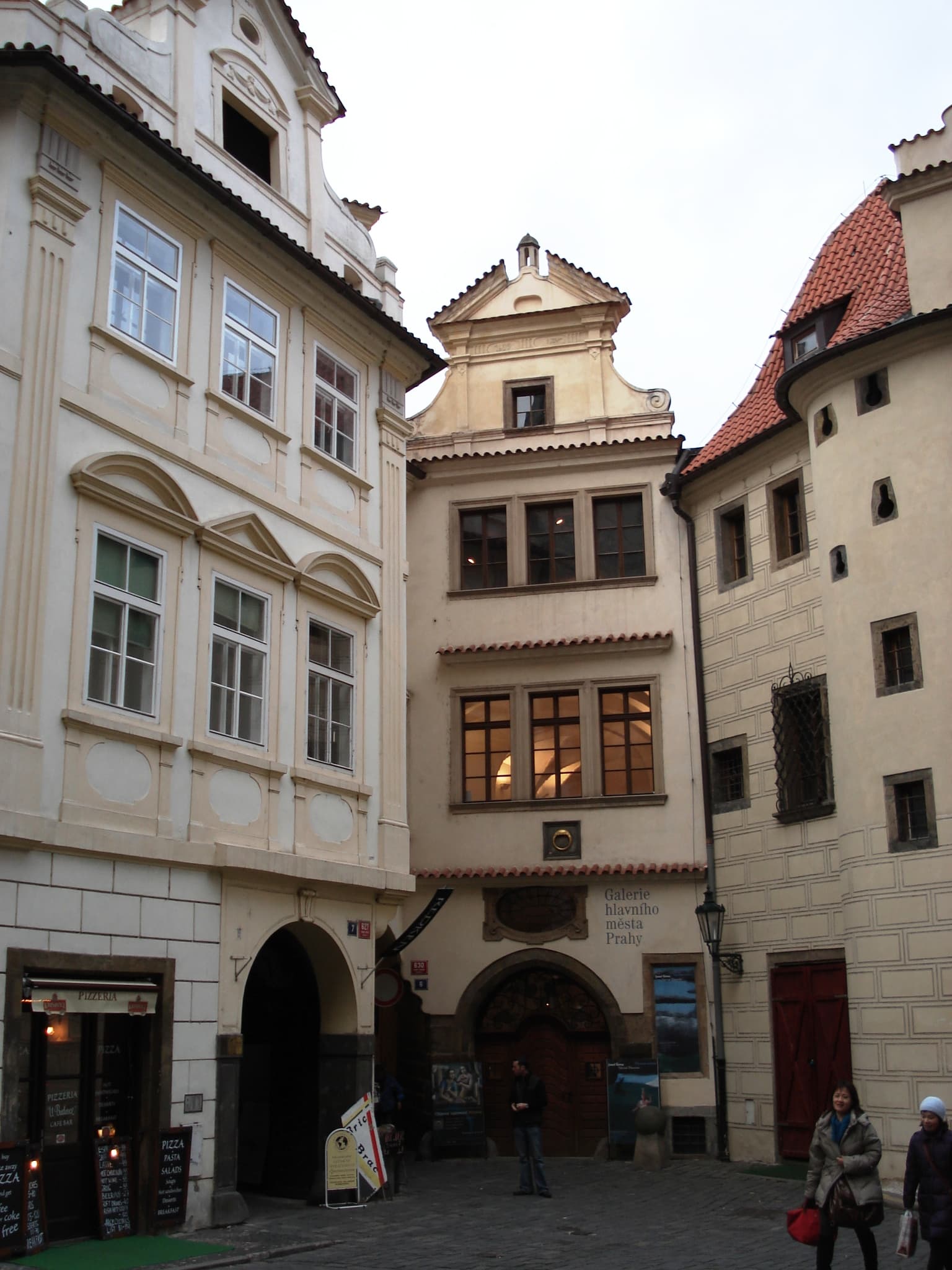 House at the Golden RingA fourteenth-century house directly behind the Church of Our Lady before Týn, on3 minutes walk4.7
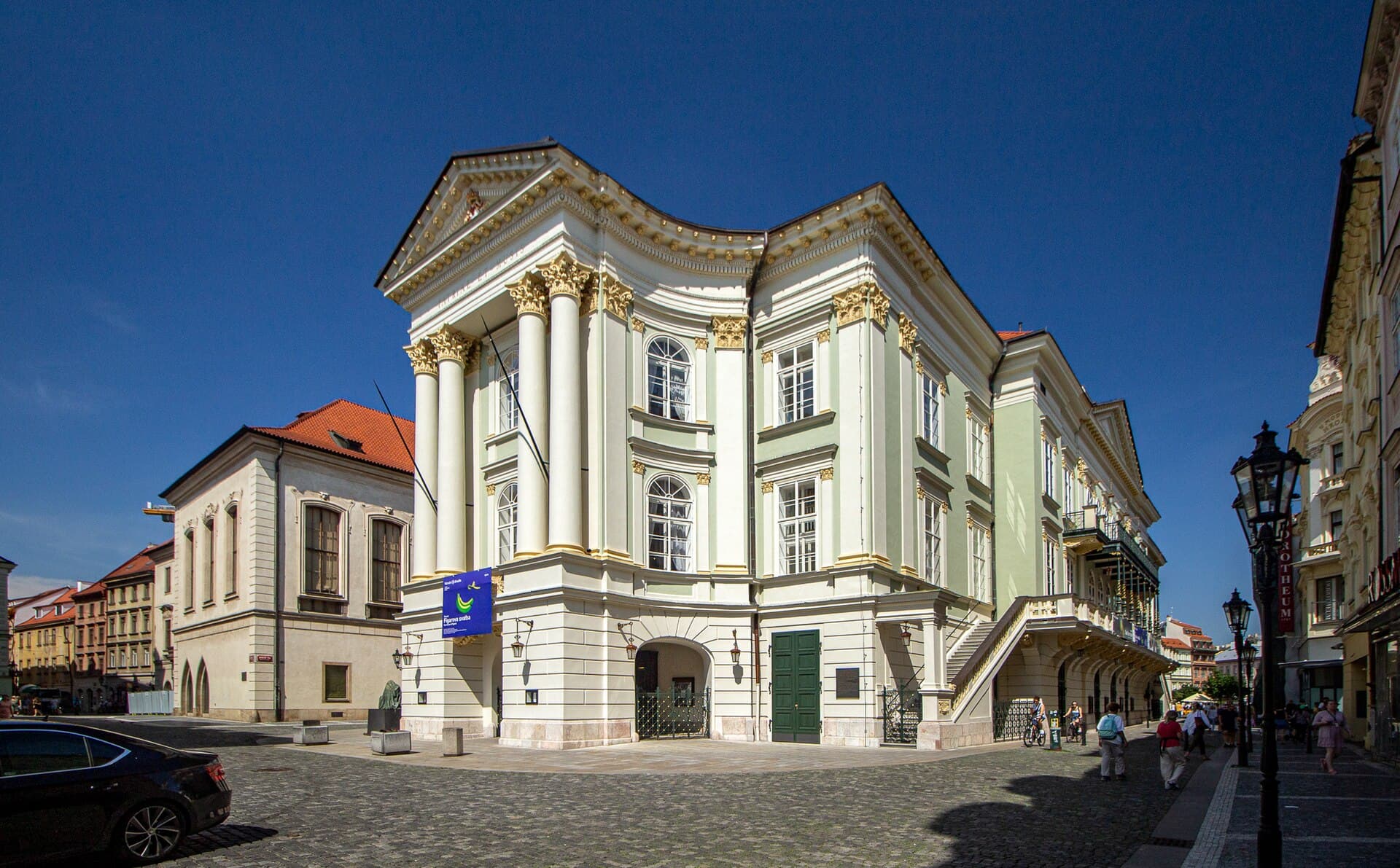 Estates TheatreThe Estates Theatre is a green-and-white classical building in the Old Town, ope3 minutes walk4.6
Honestly: the show itself is short and simple, and disappoints plenty of people. What is genuinely worth it is the clock as a six-century-old piece of engineering, and the tower climb. Catch the show in passing; do not rearrange your day for it.
The golden sun hand gives the current hour on the Roman ring, Old Bohemian time on the outer golden ring, and the sun's position in the zodiac. The black-and-silver ball shows the moon phase. All of it turns on a single mechanism from 1410.
That is a legend with no historical basis: the story says the city council blinded him so he could not repeat the work elsewhere. In fact it was built by the clockmaker Mikuláš of Kadaň with the astronomer Jan Šindel advising, and the tale was invented centuries later.
Half an hour before sunset: you get the square in golden light and can stay while the lights come on. Queues are shortest in the first hour after opening and the last before closing.