
Peacock Gate
Bright colours.
Sourabh.biswas003 — CC BY-SA 4.0 · Hiroki Ogawa — CC BY 3.0 · Daniel VILLAFRUELA — CC BY-SA 3.0 · Jon Connell from Cambridge, UK — CC BY 2.0 · Fernando Nunes from Cacau — CC BY-SA 2.0 · Rakesh Krishna Kumar — CC BY-SA 2.0 · Jean-Pierre Dalbéra from Paris, France — CC BY 2.0 · Thomas Fuhrmann — CC BY-SA 4.0
The royal residence and former seat of the rulers of Jaipur State, begun by Maharaja Sawai Jai Singh II, the city's founder, after he moved his court from Amber in 1727 and completed in 1732; the royal family still lives in part of it today. The palace blends Rajput, Mughal and European architecture in a series of courtyards, gardens and buildings, the best known being the Mubarak Mahal, home to a museum of royal costumes and textiles, and the seven-storey Chandra Mahal. One of its loveliest corners is the Pritam Niwas Chowk, with four decorated doors representing the seasons, the most famous being the brightly coloured Peacock Gate; there's also an armoury and two huge silver urns said to be among the largest silver vessels in the world. It is run by the palace trust rather than the state, so it is not on the composite ticket; foreign visitors pay about ₹1,000, per visitor guides, which disagree, so check at the counter. It stands next to Jantar Mantar and the Hawa Mahal.
Bright colours.
Royal costume.
Enormous.
Old city, Jaipur
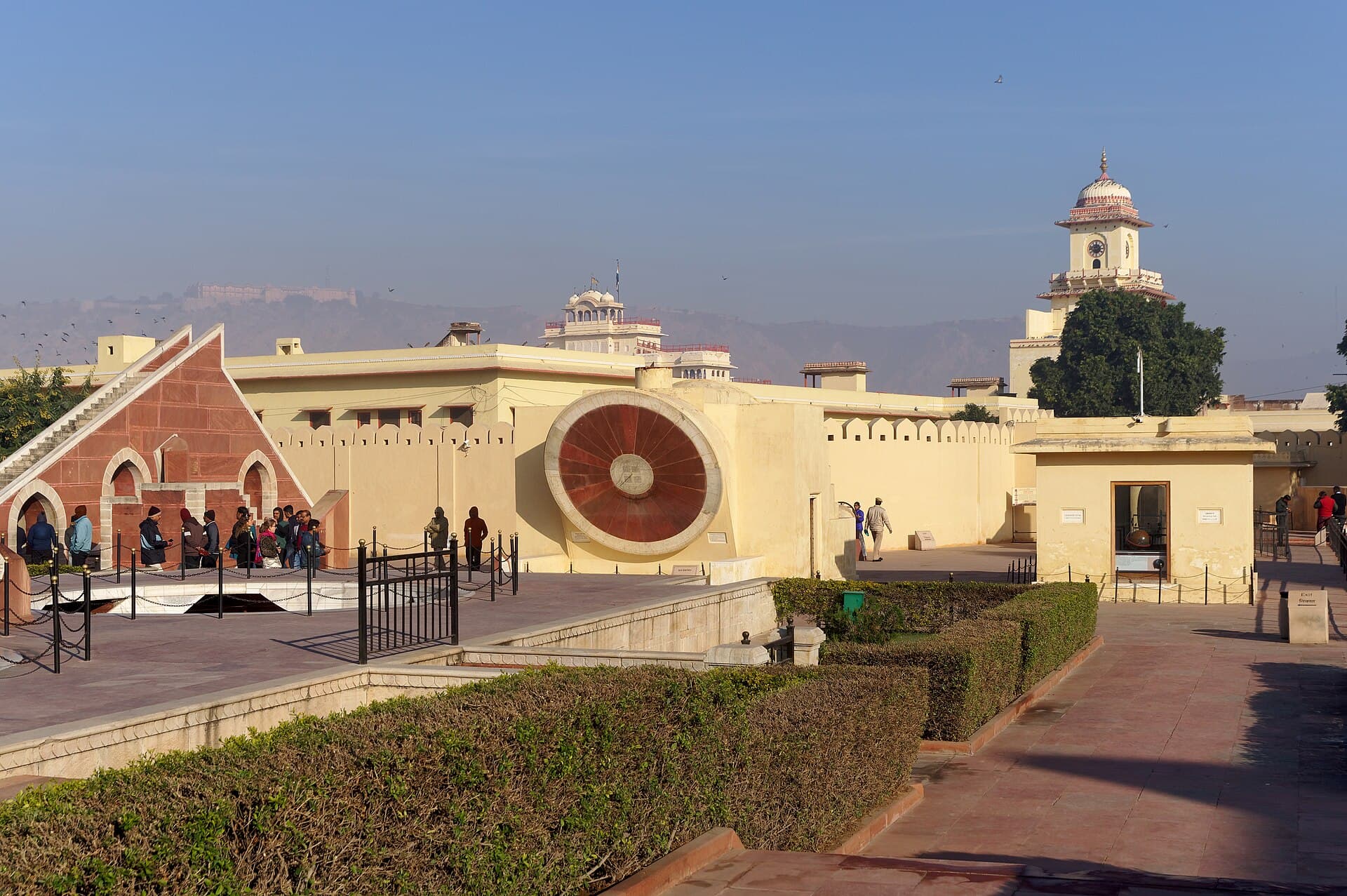 Jantar Mantar, JaipurAn open-air observatory of 19 huge stone astronomical instruments built by Mahar2 minutes walk4.4
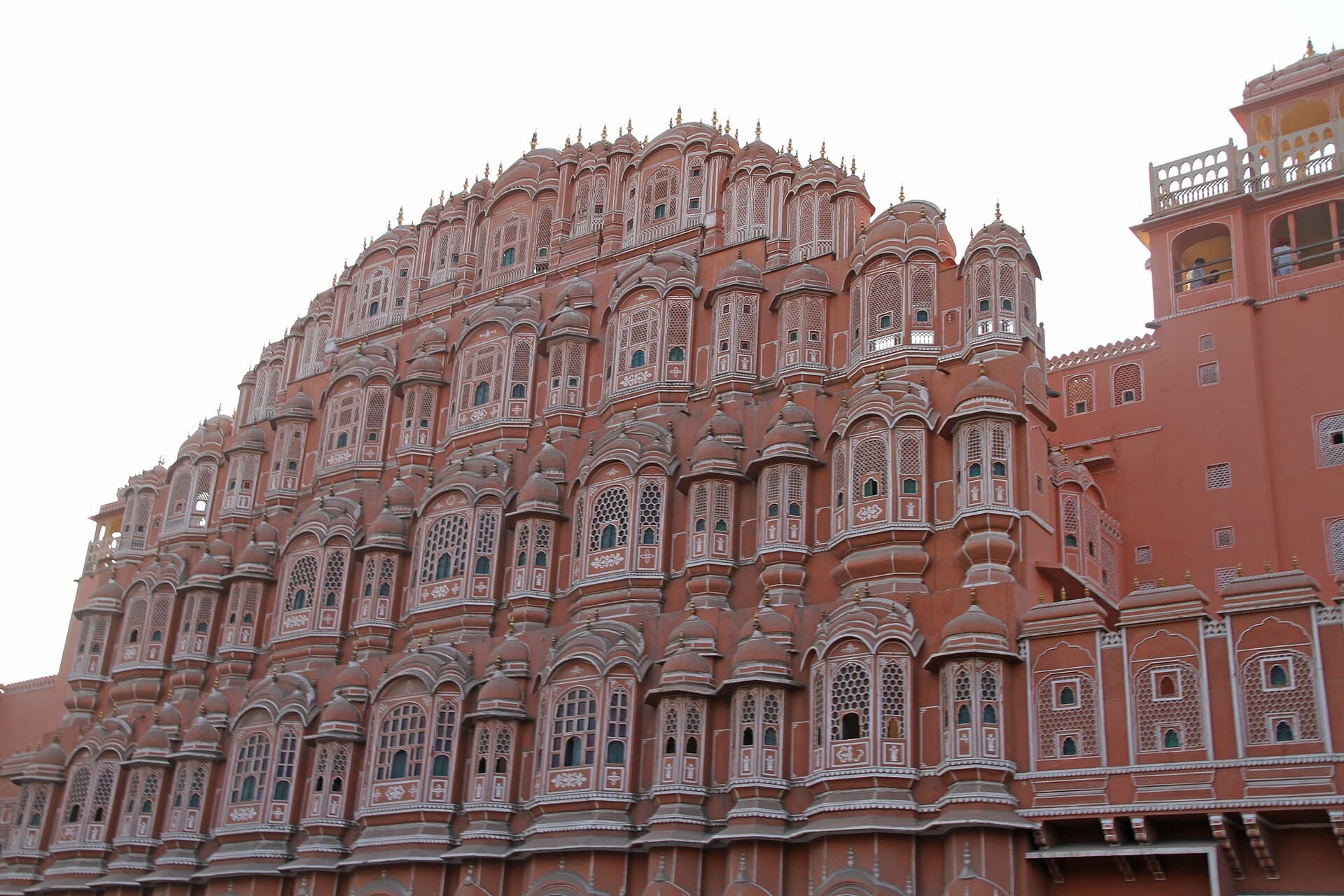 Hawa MahalJaipur's best-known symbol, a palace of pink and red sandstone built in 1799 by 4 minutes walk4.4
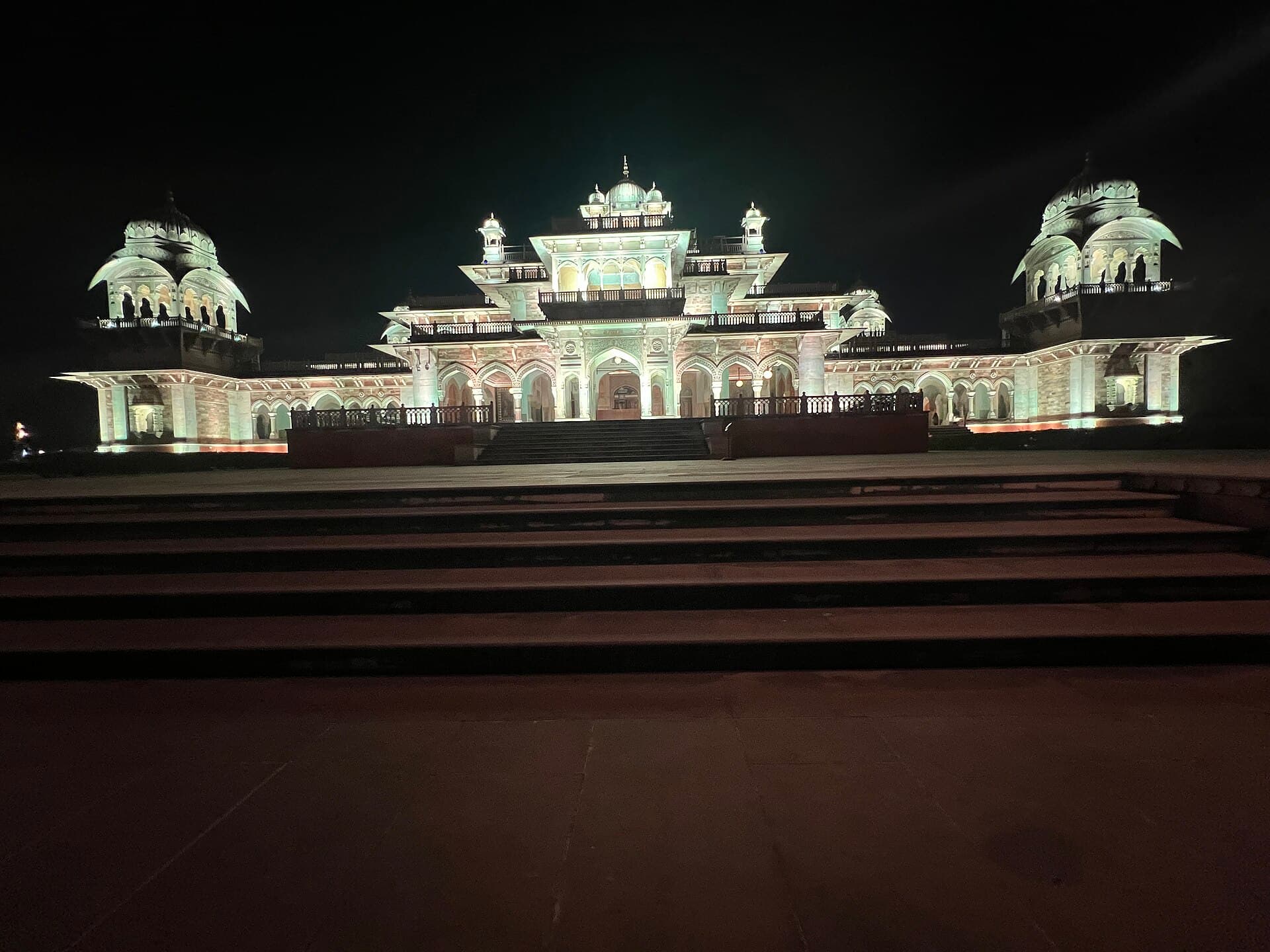 Albert Hall MuseumRajasthan's oldest museum and its state museum, in a grand Indo-Saracenic buildi20 minutes walk4.4
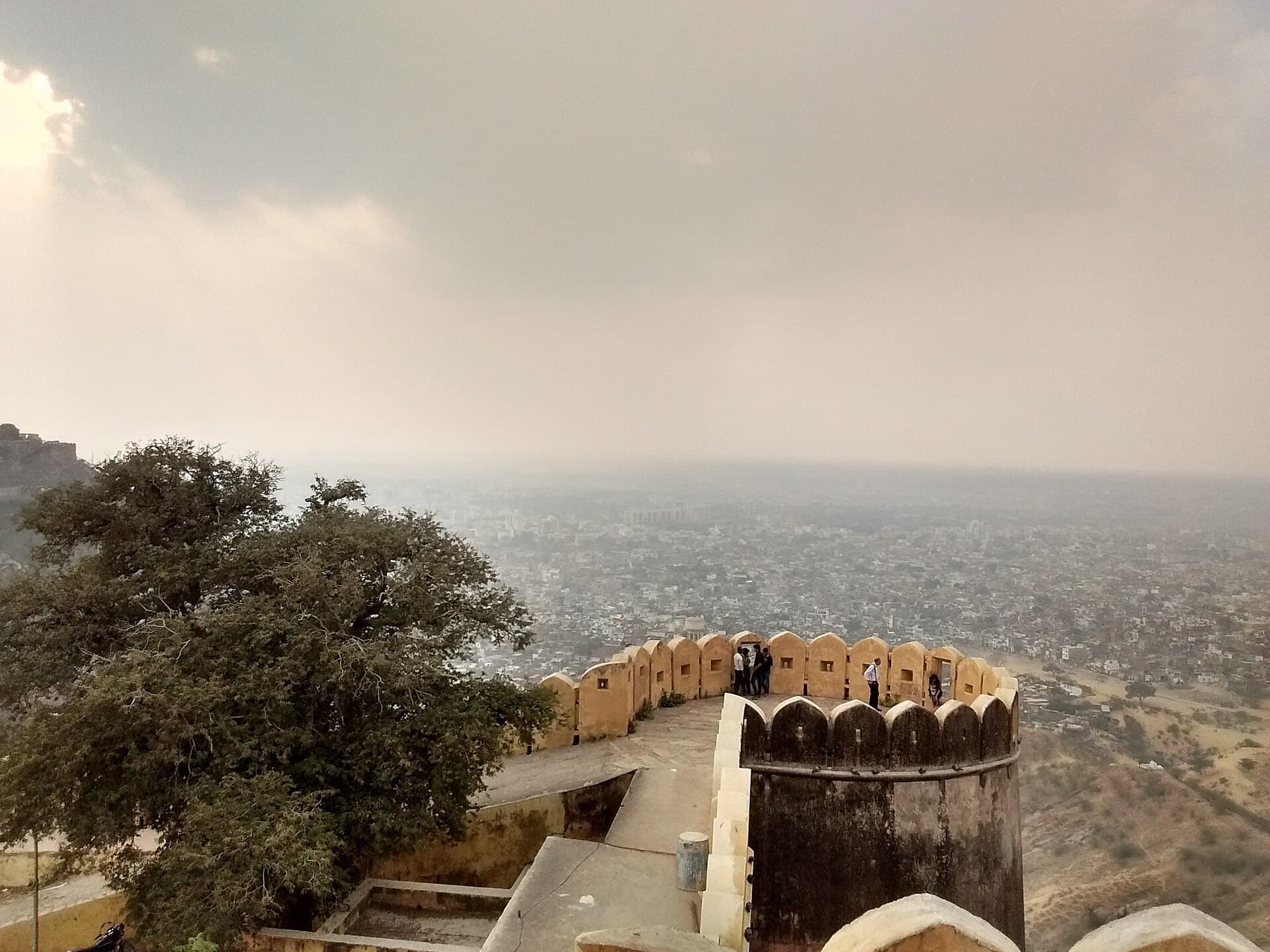 Nahargarh FortA fort on the edge of the Aravalli Hills overlooking Jaipur, built by Maharaja S22 minutes walk4.4
No. It's run by the palace trust, not the state, with its own ticket of about ₹1,000 for foreign visitors, per visitor guides.