
The clock, back at last
A period mechanism installed in 2024 chimes on the hour, when it is running, after four decades of absence and plastic stand-ins.
Cobija — CC0 · Bernard Gagnon — CC BY-SA 3.0 · Bernard Gagnon — CC BY-SA 3.0 · Bernard Gagnon — CC BY-SA 3.0
The clock on the four faces of this tower is not the one Antalya got in 1901. That one was stolen in 1985, and for years the tower made do with plastic dials that ate into the stonework. The current mechanism, a piece of the same period that once served another tower, was donated by an Istanbul collector, restored by the clockmaker Recep Gürgen and installed in February 2024. It is meant to chime on the hour, though it has stopped more than once since. The lead-clad dome above it is newer still: the original blew off in a 1930s storm and was only put back on 2 November 2022, six metres across and four and a half tonnes, hoisted by crane before dawn. What you see today is the tower as it appears in old Ottoman photographs, not as most twentieth-century Antalyans ever knew it. The tower itself is far older than its clock. It began as a five-sided bastion of the city walls, generally dated to the Byzantine period on Hellenistic foundations, guarding the gate into the citadel. In 1901 Grand Vizier Küçük Said Pasha had it raised into a clock tower to mark the twenty-fifth anniversary of Sultan Abdülhamid II's accession, one of dozens of such towers that sprouted across Ottoman cities in those years. It stands about 14 metres from the ground, a little over 20 to the top of the dome, and carries its original bell, returned to the summit with the dome; by local account the first clock was a gift from Kaiser Wilhelm II. Be clear about what this is: a two-minute stop, not a destination. There is no interior to visit, no ticket, nothing but the outside. Its value is its position. It marks Kalekapısı, the main entrance to Kaleiçi, Antalya's old town, a few steps from the Fluted Minaret and the Tekeli Mehmet Paşa Mosque, with the nostalgic tram stopping at its feet and the lanes down to the harbour opening beside it. Take the photograph, catch the chime if you are there on the hour and the clock happens to be running, and move on. The square is paved and level, so pushchairs are no trouble, but it is completely exposed and turns into a hotplate at midday in August; pass through early or after sunset, when the facade is lit and the crowds thin a little. In winter, under clear skies and with the old town half empty, the tower looks its best.
A period mechanism installed in 2024 chimes on the hour, when it is running, after four decades of absence and plastic stand-ins.
A six-metre lead dome restored the tower's Ottoman silhouette after a 1930s storm carried the original off.
The old town starts here: the Fluted Minaret to your left, the lanes to the harbour ahead, the nostalgic tram behind you.
Kalekapısı, Cumhuriyet Caddesi, Selçuk Mahallesi, Muratpaşa
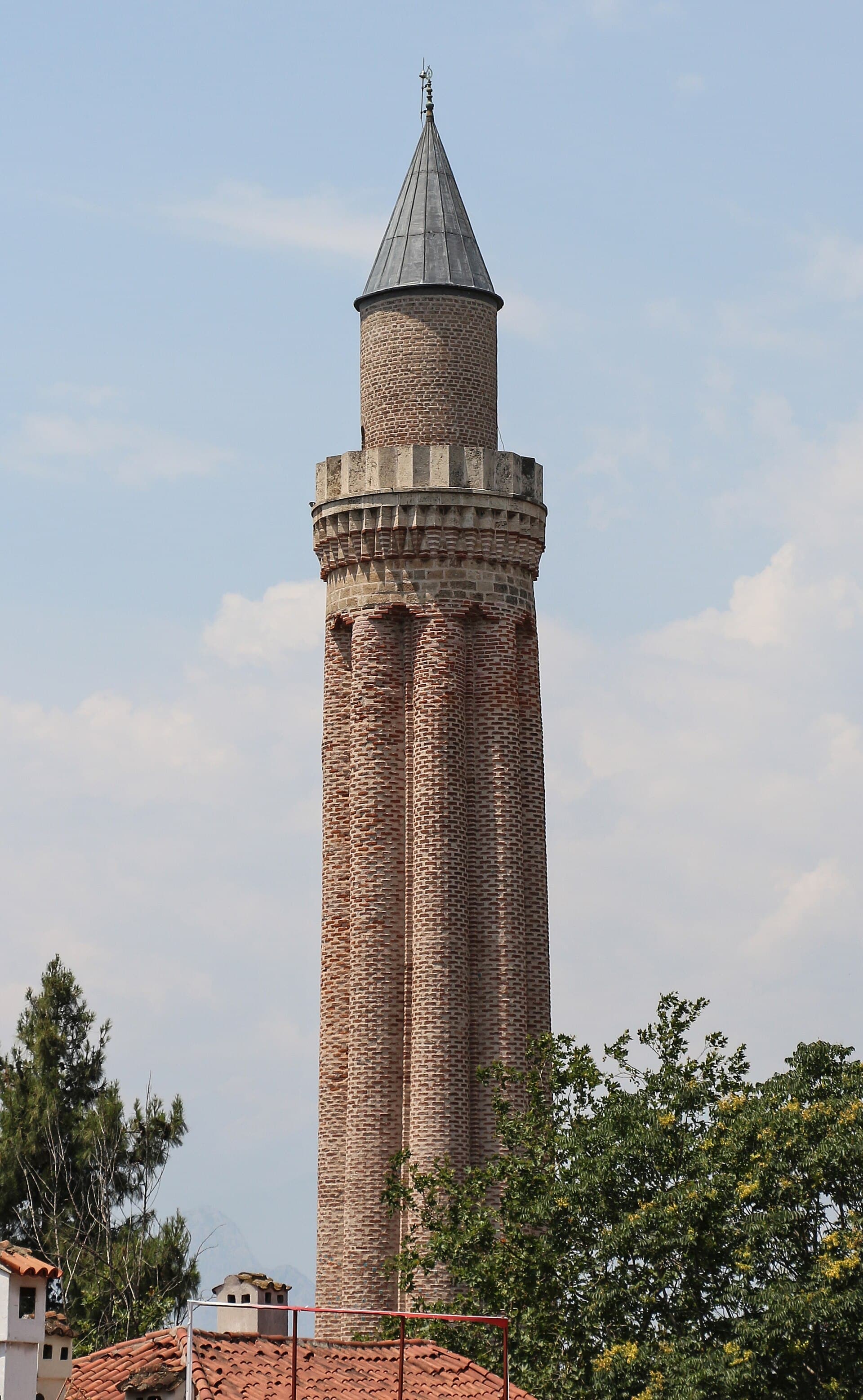 Yivli Minare MosqueThe 38-metre fluted brick minaret rising over the entrance to Kaleiçi is Antalya2 min walk
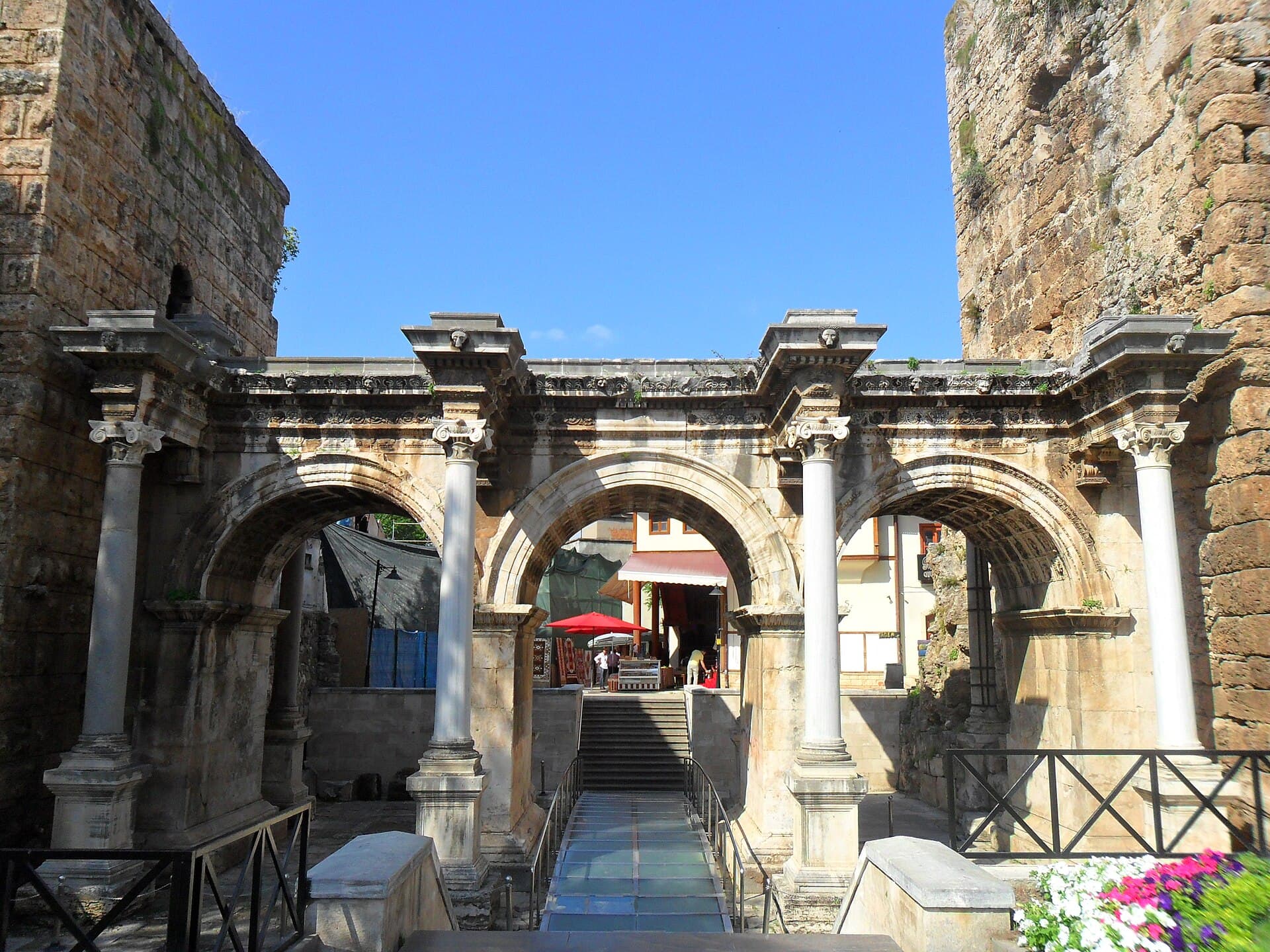 Hadrian's GateLook down before you look up. Beneath the central arch a glass panel exposes the4 min walk
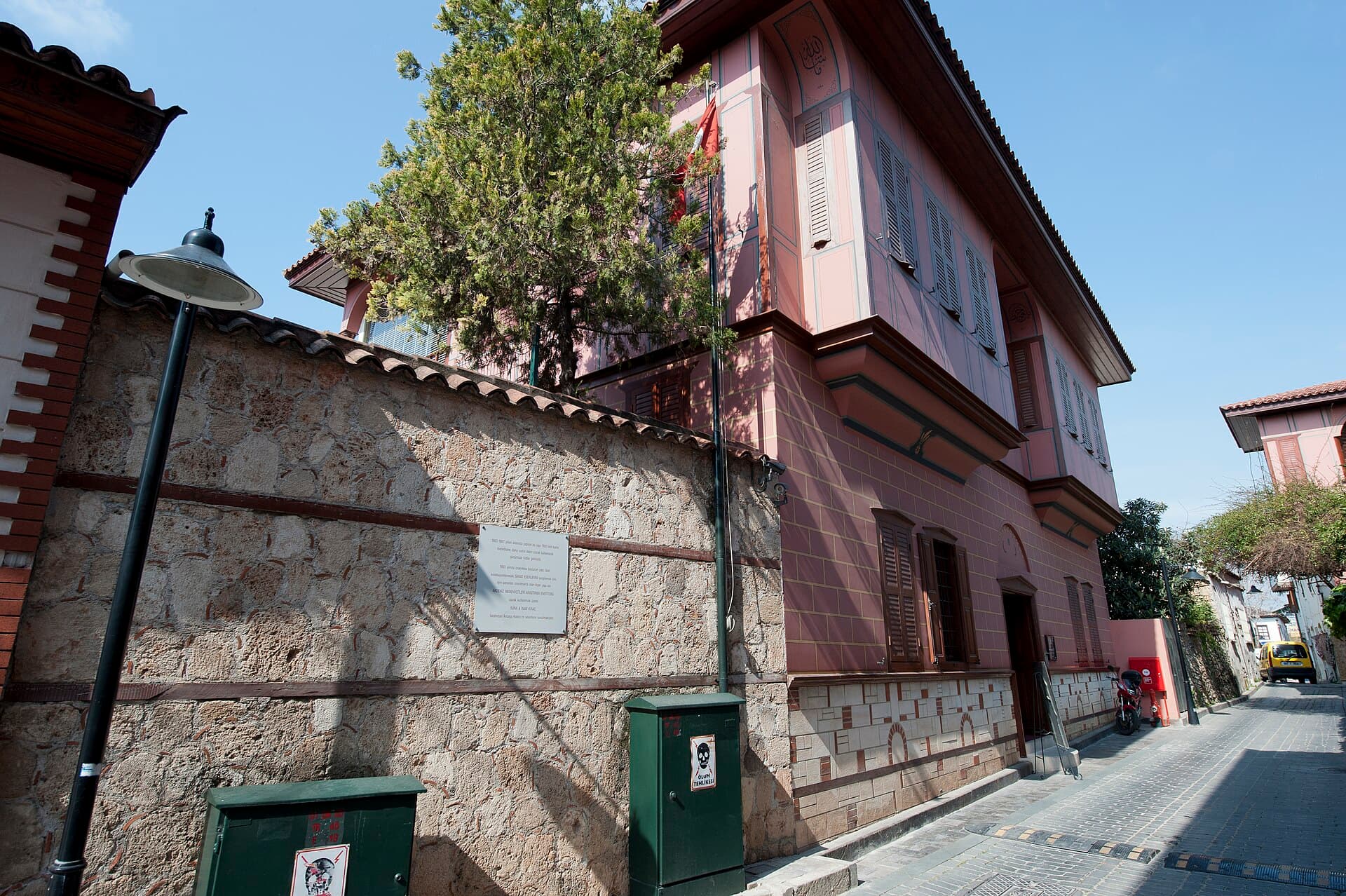 Kaleiçi Museum (Suna & İnan Kıraç)A small Greek church that spent decades as a derelict storehouse, and a nineteen4 min walk
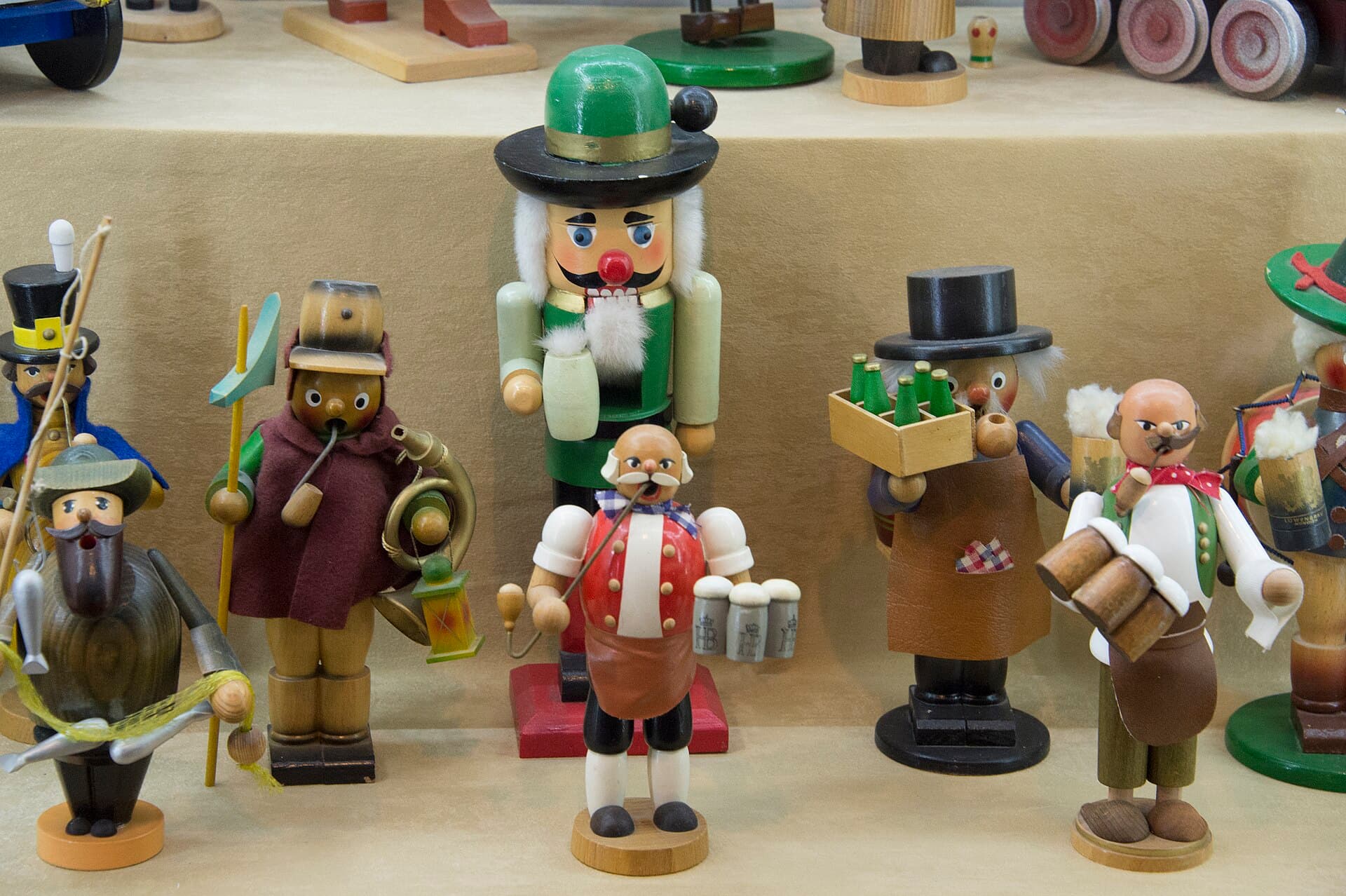 Antalya Toy MuseumOn the quay of Antalya's old harbour, where the boat touts are loudest, a restor5 min walk
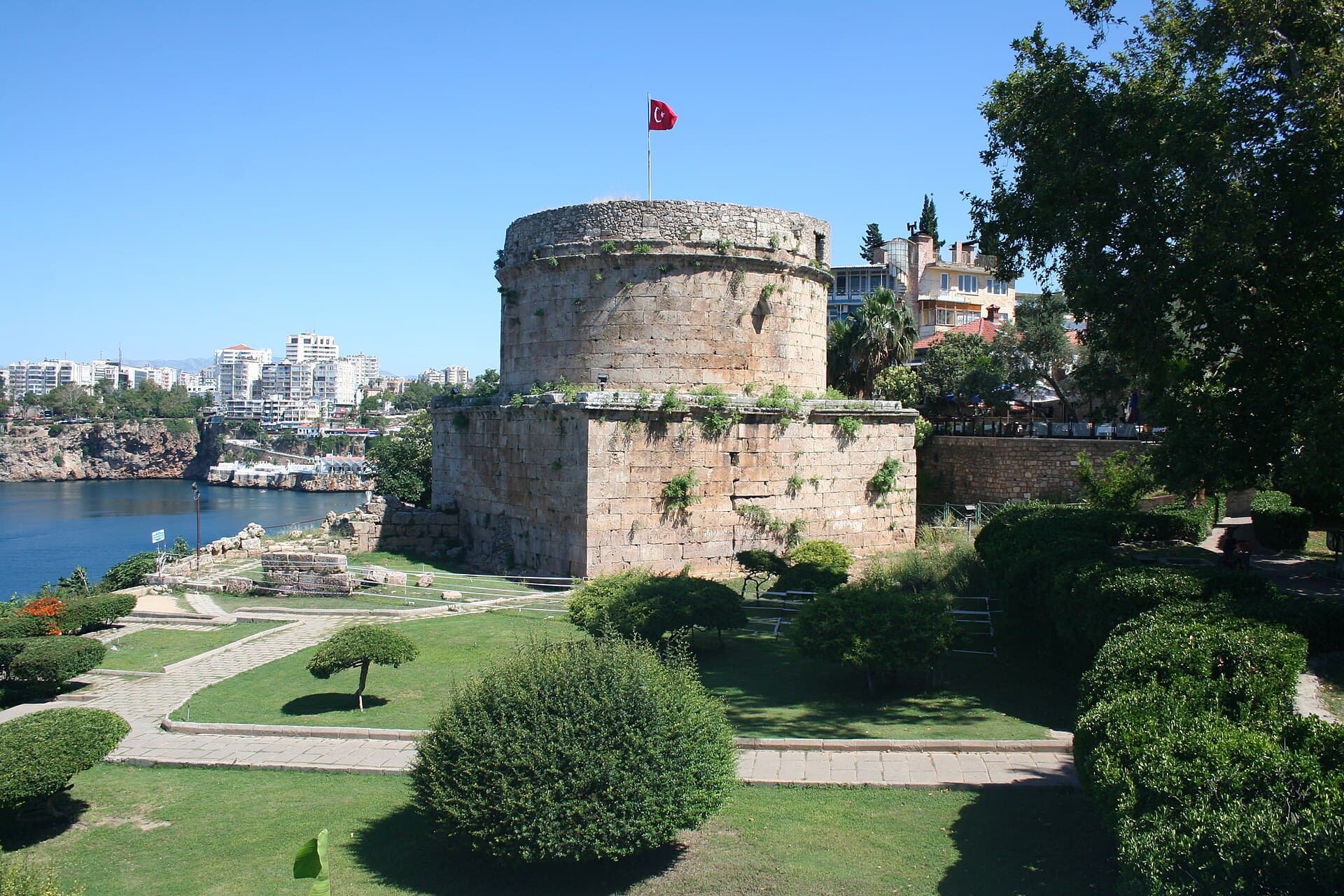 Hıdırlık TowerClose to two thousand years on the edge of a cliff, and nobody can say for certa8 min walk
Not remotely worth a dedicated trip; it is a stone bastion you look at from outside for two minutes. But you will pass it anyway, since it stands at the main entrance to Kaleiçi and the tram stop, so fold it into one walk with the Fluted Minaret and the old harbour.
No, the interior is not open to visitors. For a view over the old town and the sea, walk to Hıdırlık Tower on the cliff edge of Karaalioğlu Park at the far end of Kaleiçi; the outlook there is far better than anything the clock tower could offer.
Sign in to write your review of this place.
No reviews yet — be the first.