
The kantounia
Lanes too narrow for two, with washing and iron balconies overhead.
Martin Falbisoner — CC BY-SA 4.0 · User:Ggia — CC BY-SA 3.0 · Misa.stefanovic.07 — CC BY-SA 4.0 · Misa.stefanovic.07 — CC BY-SA 4.0
**The Greek town that does not look Greek** — because it is the one part of Greece that **never fell to Ottoman rule**, so its history was shaped in an entirely different direction. The **Venetians held it for four centuries** (1386–1797), and the Ottomans besieged it repeatedly and were turned back by its walls. Then came the **French**, then the **British** (1815–1864), before it joined Greece. Every layer left its mark on the stone. The result is a town **Italian in shape**: six-storey houses in faded ochre and dull crimson, extremely narrow lanes called **kantounia** that barely take two people abreast, washing lines strung between them, iron balconies and shaded arcades — nearer to Naples or Venice than to Athens. Above it stand two Venetian fortresses, and at its centre a green square on a scale you will not find in any other Greek town. It has been a **UNESCO World Heritage Site** since 2007.
Lanes too narrow for two, with washing and iron balconies overhead.
Faded ochre and crimson on six-storey houses.
Vaulted passages under the buildings, out of the sun and rain.
Old Town, 49100 Corfu, Greece
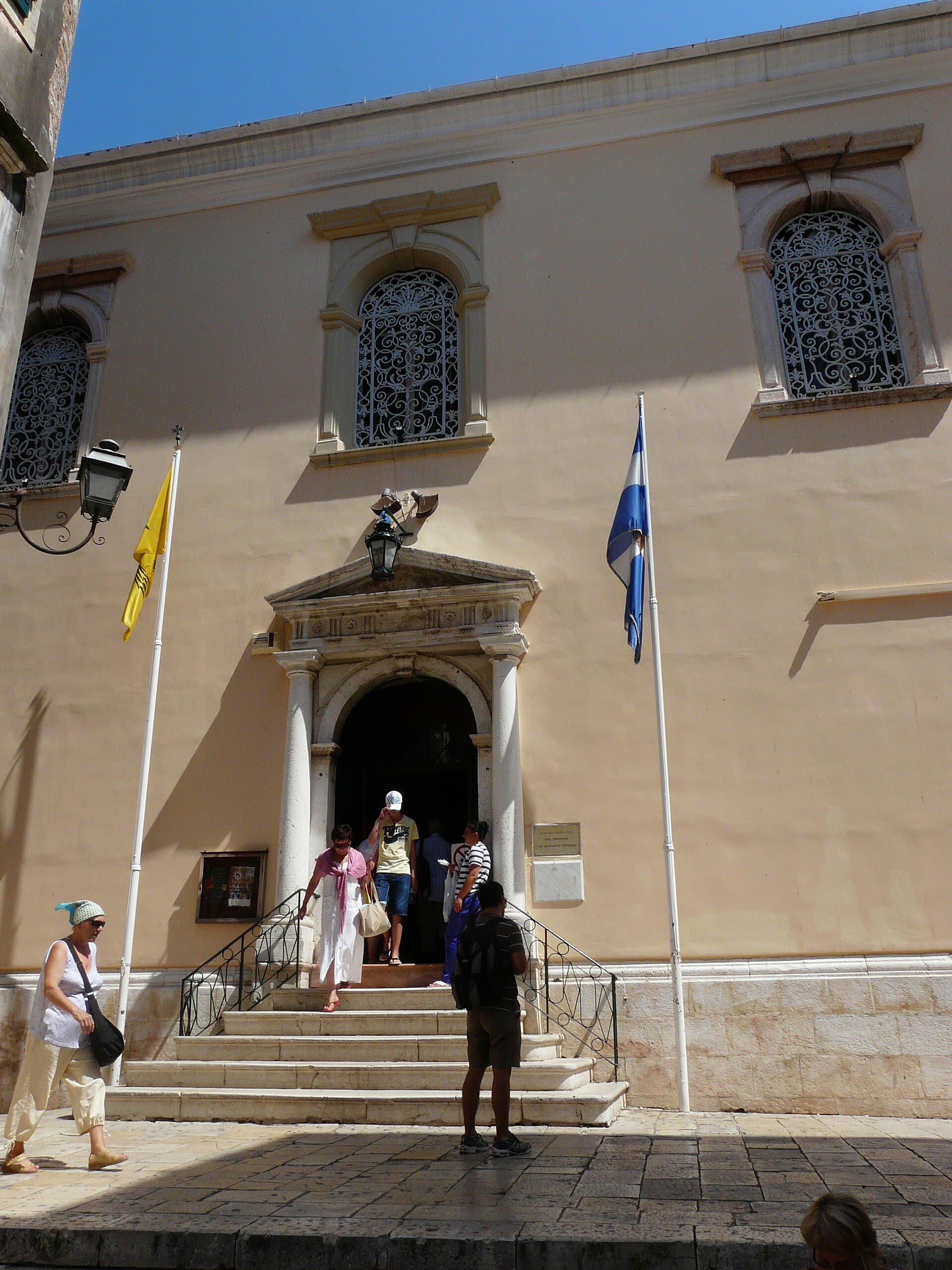 Church of Saint Spyridon**The most important place in Corfu to the people who live there** — not the fin1 minute walk4.9
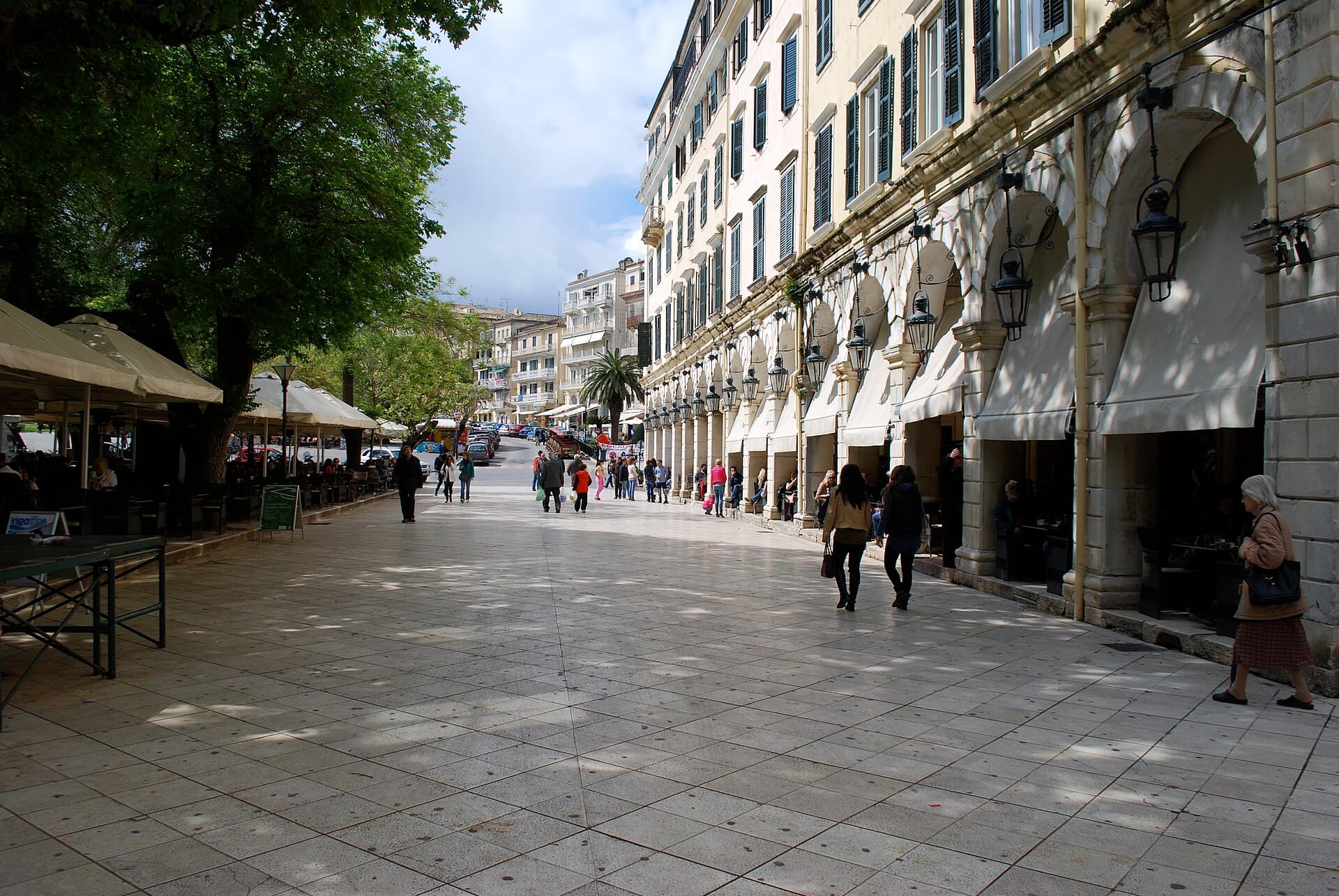 Spianada Square**The largest square in Greece** — and its huge scale is not architectural gener4 minutes walk4.8
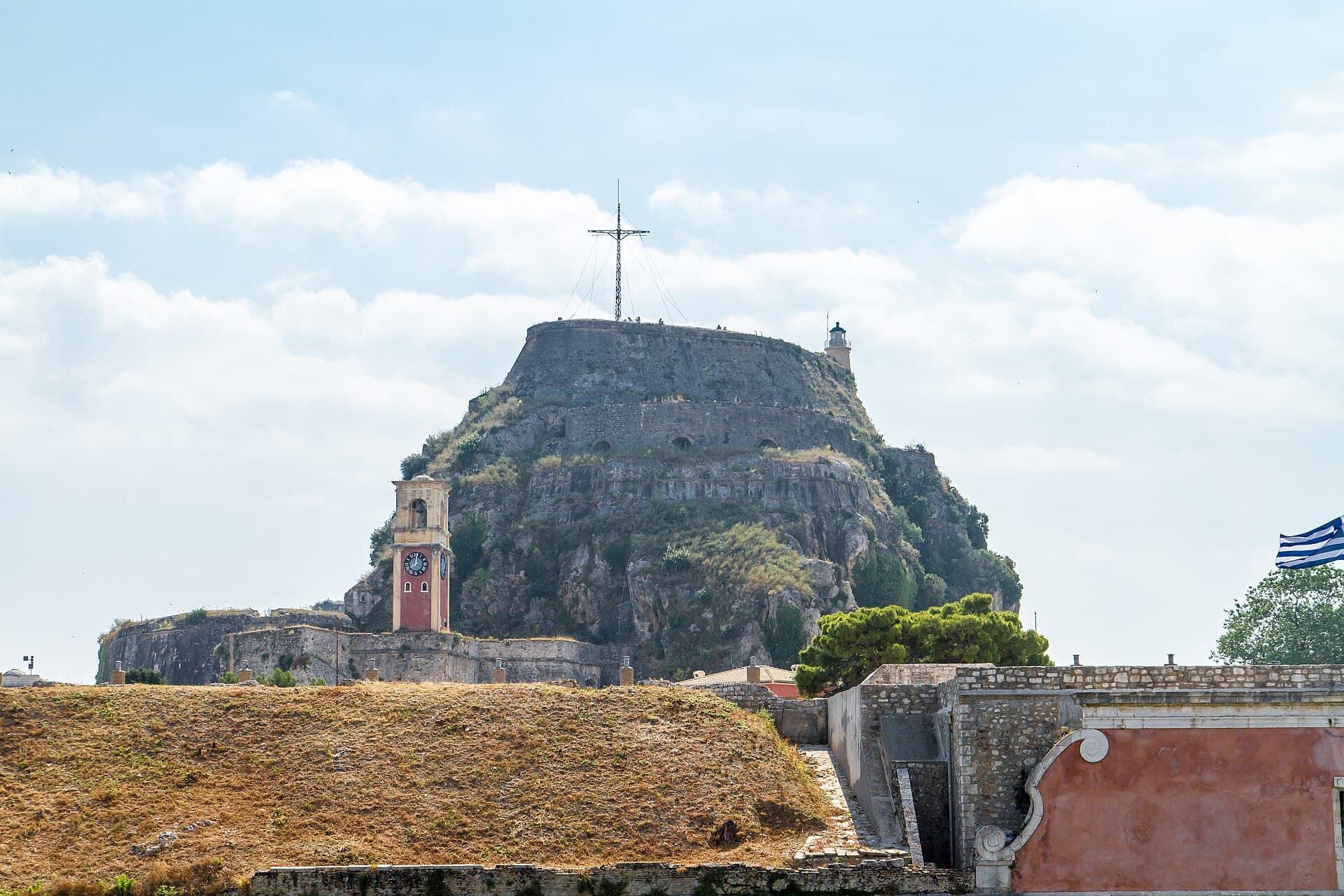 Old Fortress**A fortress on a rocky peninsula with two peaks** — and those two peaks are the8 minutes walk4.7
**Because its walls held — and that changed everything.** The Ottomans besieged Corfu several times, most famously in **1537** and **1716**, and the two Venetian fortresses turned them back each time. So while the rest of Greece spent centuries under Ottoman rule, Corfu stayed **Western in administration and culture**. ✅ **The effect is in front of you**: no minarets, no Ottoman baths, no covered bazaar as in Thessaloniki or Rhodes; instead **tall Venetian houses**, Italian-style squares, a **Catholic cathedral** beside the Orthodox churches, family and shop names with Italian roots, and a local dialect full of Italian words. ✅ Even the **cricket** you see played on the square is a British legacy found nowhere else in Greece — as is the local **ginger beer** (tsitsibira).
**Two days for the old town and three to five for the island — and yes, sleep in it.** ✅ **The old town** is entirely walkable and deserves **two days**: one for the lanes, the Old Fortress and St Spyridon, one for the square, Mon Repos and the museums. ✅ **Staying inside it is the right choice**: you get the town **before 8 am and after 9 pm** — by far its best hours, when the cruise ships have gone and the place returns to the people who live there. ⚠ But know what you are accepting: **the rooms are small and old** in buildings without lifts, **there are a lot of stairs**, **evening noise** in lanes near the restaurants, and **arriving by car is close to impossible** — ask the hotel where to park before you book. ✅ For the rest of the island (Paleokastritsa, the Achilleion, Pantokrator), **two more days with a car** is enough.