
The sea moat
A channel cut in the rock dividing fortress from town, crossed by a bridge.
Максим Улитин — CC BY 3.0 · Own work I am the author. Dr.K. 15:51, 6 September 2006 (UTC) — CC BY-SA 3.0 · Jean Housen — CC BY-SA 3.0 · Jean Housen — CC BY-SA 3.0
**A fortress on a rocky peninsula with two peaks** — and those two peaks are the origin of the island's name: *koryphi* is Greek for summit, and from it came "Corfu". The site is Byzantine in origin, but most of what you see is **Venetian**: 15th and 16th-century walls, corner bastions, and a **sea moat cut into the rock** separating the fortress from the town, called the **Contrafossa** — a real channel of water you cross on a bridge. It was from here that the great Ottoman sieges were repulsed, and that is why Corfu stayed outside Ottoman rule. Inside is a surprise: the **church of St George**, built by the British in 1840 in the form of a complete **Doric Greek temple** with its columns — a Christian church shaped like a pagan temple, and one of the strangest buildings in Greece. ✅ And the view from the upper peak is the best there is over the whole old town.
A channel cut in the rock dividing fortress from town, crossed by a bridge.
A colonnaded Doric temple the British built as a church.
The best view over the old town, the sea and the New Fortress.
Palaio Frourio, 49100 Corfu, Greece
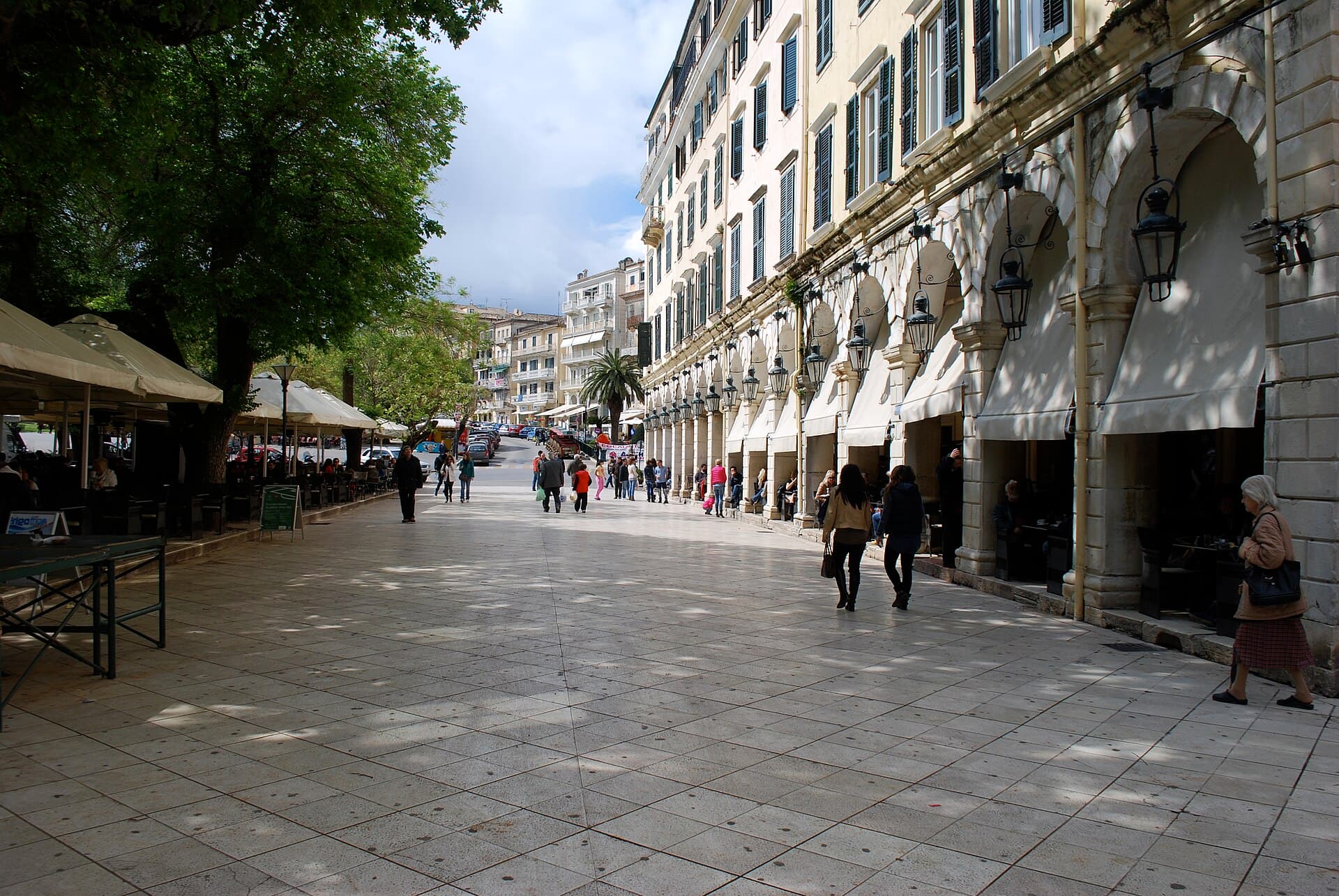 Spianada Square**The largest square in Greece** — and its huge scale is not architectural gener5 minutes walk4.8
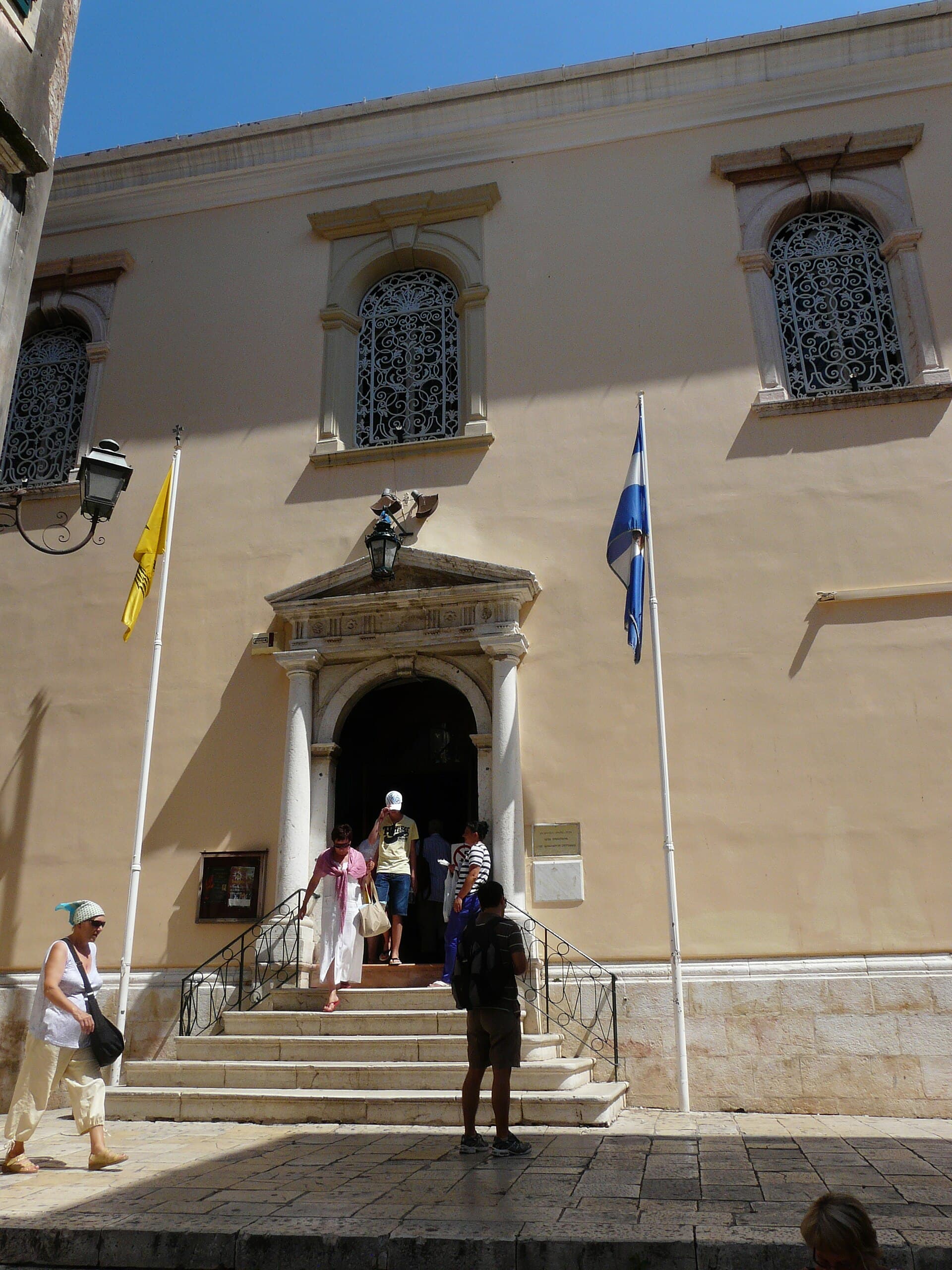 Church of Saint Spyridon**The most important place in Corfu to the people who live there** — not the fin8 minutes walk4.9
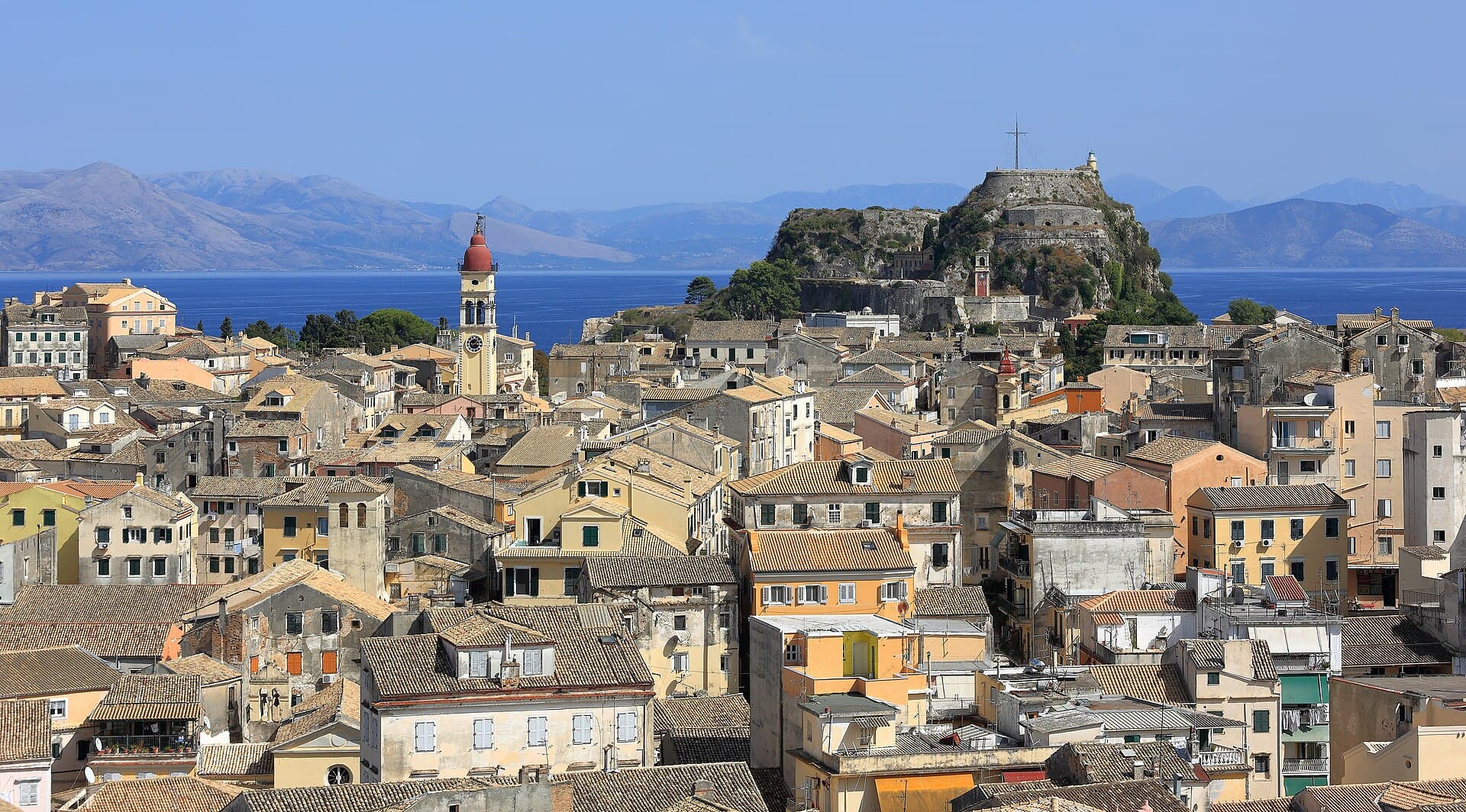 Corfu Old Town**The Greek town that does not look Greek** — because it is the one part of Gree8 minutes walk
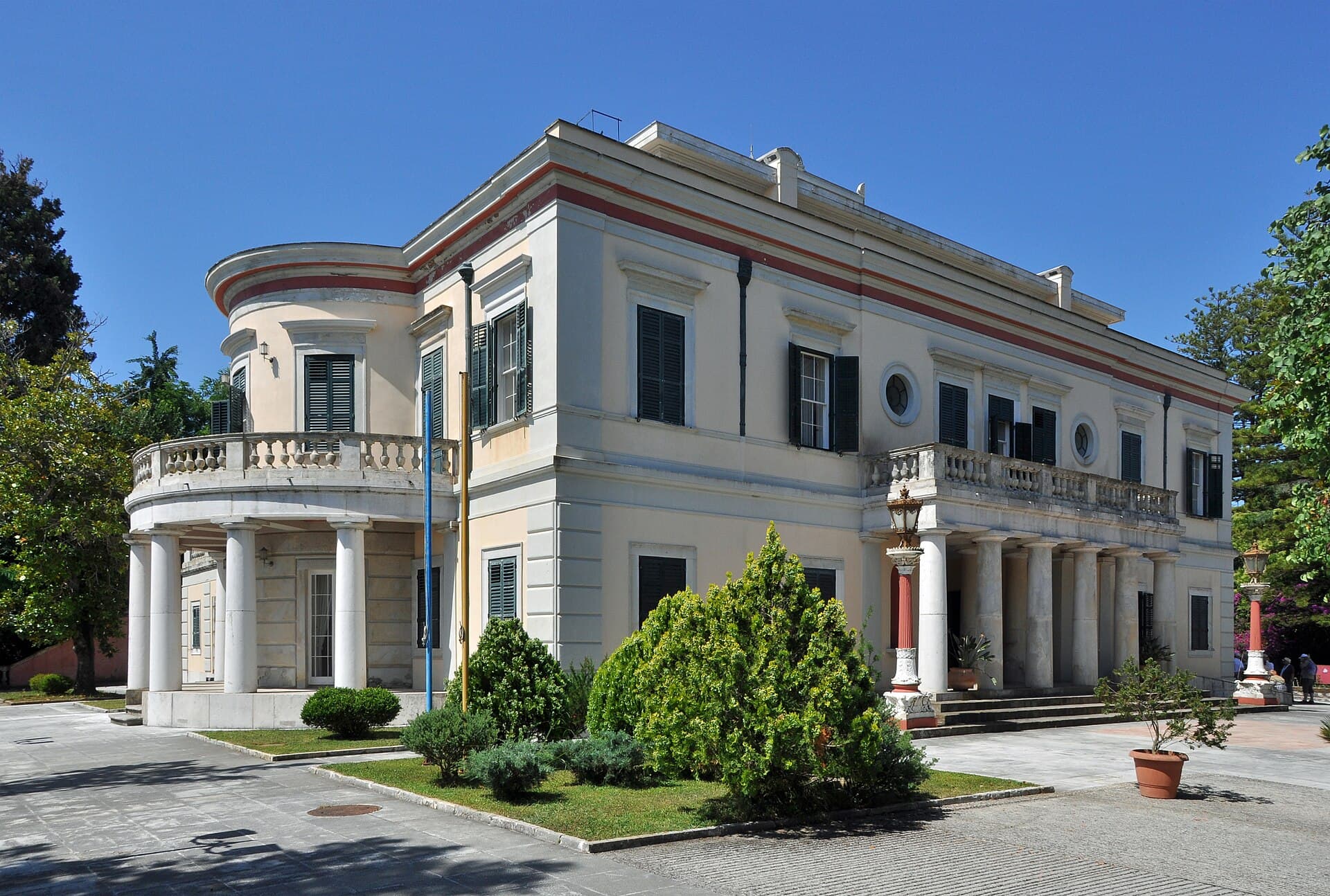 Mon Repos**A British villa inside a forest, on top of a buried Greek city** — and that la24 minutes walk4.4
**The Old — clearly.** ✅ **The Old Fortress** is bigger, older and richer: the sea moat, the Doric-temple church, the Venetian walls, **the best view over the town**, and it is the one that made the island's history by turning back the sieges. ⚠ Its drawbacks: exposed, a hard climb and a higher charge. ✅ **The New Fortress** ("new" meaning 16th century, no more) is smaller, quicker and cheaper, with atmospheric tunnels and vaulted passages and a good view over the port — **the better choice if you have one hour or children who tire on climbs**. ⚠ But it has less content, and which parts are open varies. **The rule:** one slot → the Old, in the morning. Two → the Old first, then the New on another day at sunset.
**Because it was built for their soldiers at the height of the Greek Revival taste.** Between 1815 and 1864 Corfu was a **British protectorate**, and the garrison in the fortress needed an Anglican church. In exactly that generation the **Greek Revival** was the dominant style in Britain and Europe: public buildings, museums and banks were going up with Doric and Ionic columns modelled on classical temples. ✅ So St George's was given a complete Doric temple front — **an aesthetic decision of its time rather than a deliberate paradox**. ⚠ What is amusing is that building a classical temple **in Greece itself** looks stranger now than it did then: the British imported into Corfu a style originally inspired by the very ground they built on. It is today an **Orthodox** church rather than an Anglican one.