
The bell tower
The tallest in Corfu — it shows you the way from any lane.
Piotrus — CC BY-SA 3.0 · Dietmar Rabich — CC BY-SA 4.0 · Dietmar Rabich — CC BY-SA 4.0 · Dietmar Rabich — CC BY-SA 4.0
**The most important place in Corfu to the people who live there** — not the finest building or the largest, but the church that explains the town if you want to understand it. It was built in **1590**, and its **red-tiled bell tower is the tallest on the island** and your orientation point in every lane: however lost you are, look for it. Inside — in a silver casket in a side chapel — lies **Saint Spyridon**, Corfu's patron. His story is the reason for the place's standing: **he is credited with saving the island four times**, from plague, from famine and from Ottoman siege, and each has its own **annual procession** in which the casket is still carried through the streets today. The ceiling is **gilded and painted**, the hanging silver lamps are dense, and the interior is dark, warm and smells of incense. ⚠ But it is **a working church full of worshippers**, not a monument — and that changes how you go in.
The tallest in Corfu — it shows you the way from any lane.
Painted panels with dense silver lamps hanging beneath.
The silver casket, where Corfiots stand in silence.
Agiou Spyridonos, 49100 Corfu, Greece
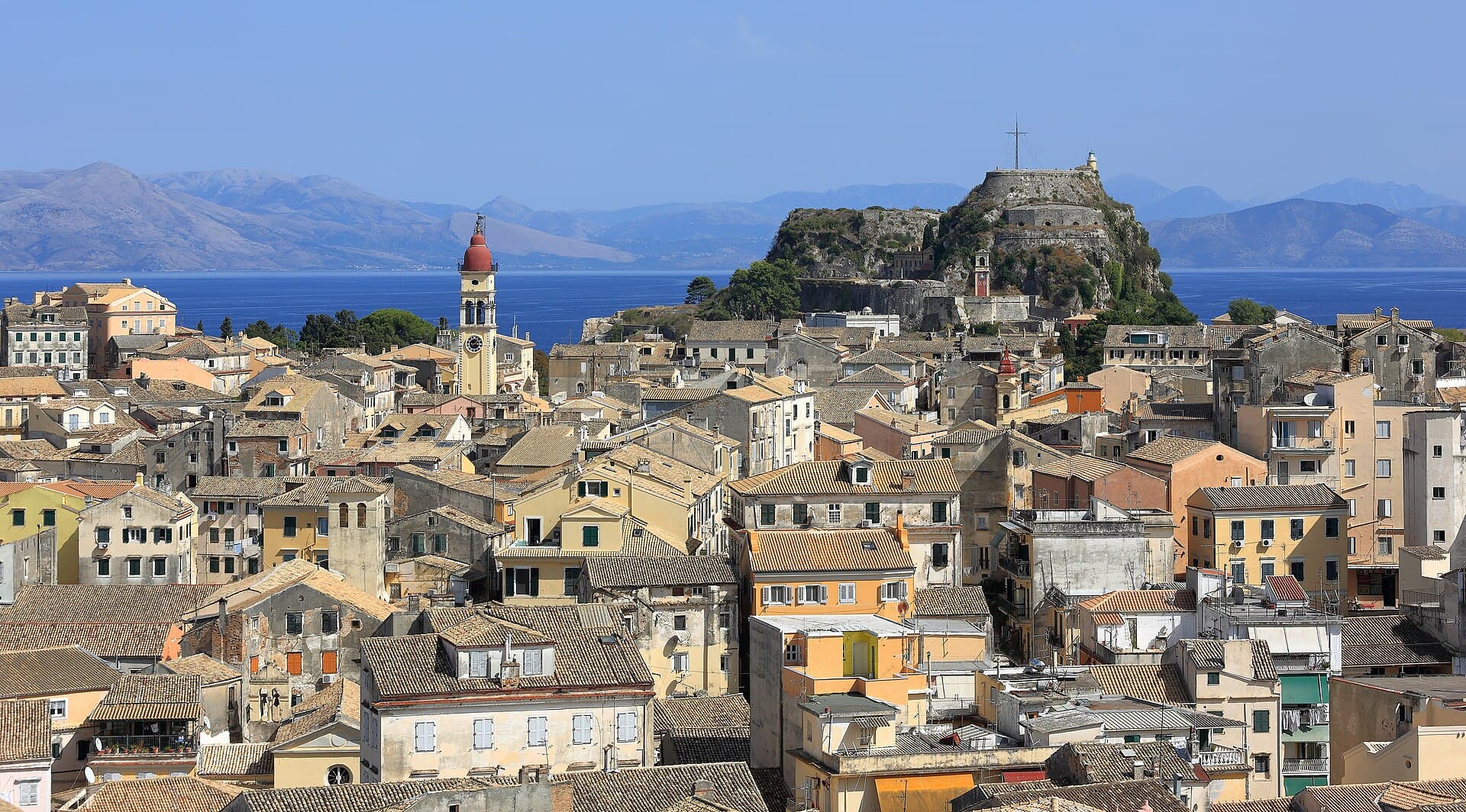 Corfu Old Town**The Greek town that does not look Greek** — because it is the one part of Gree1 minute walk
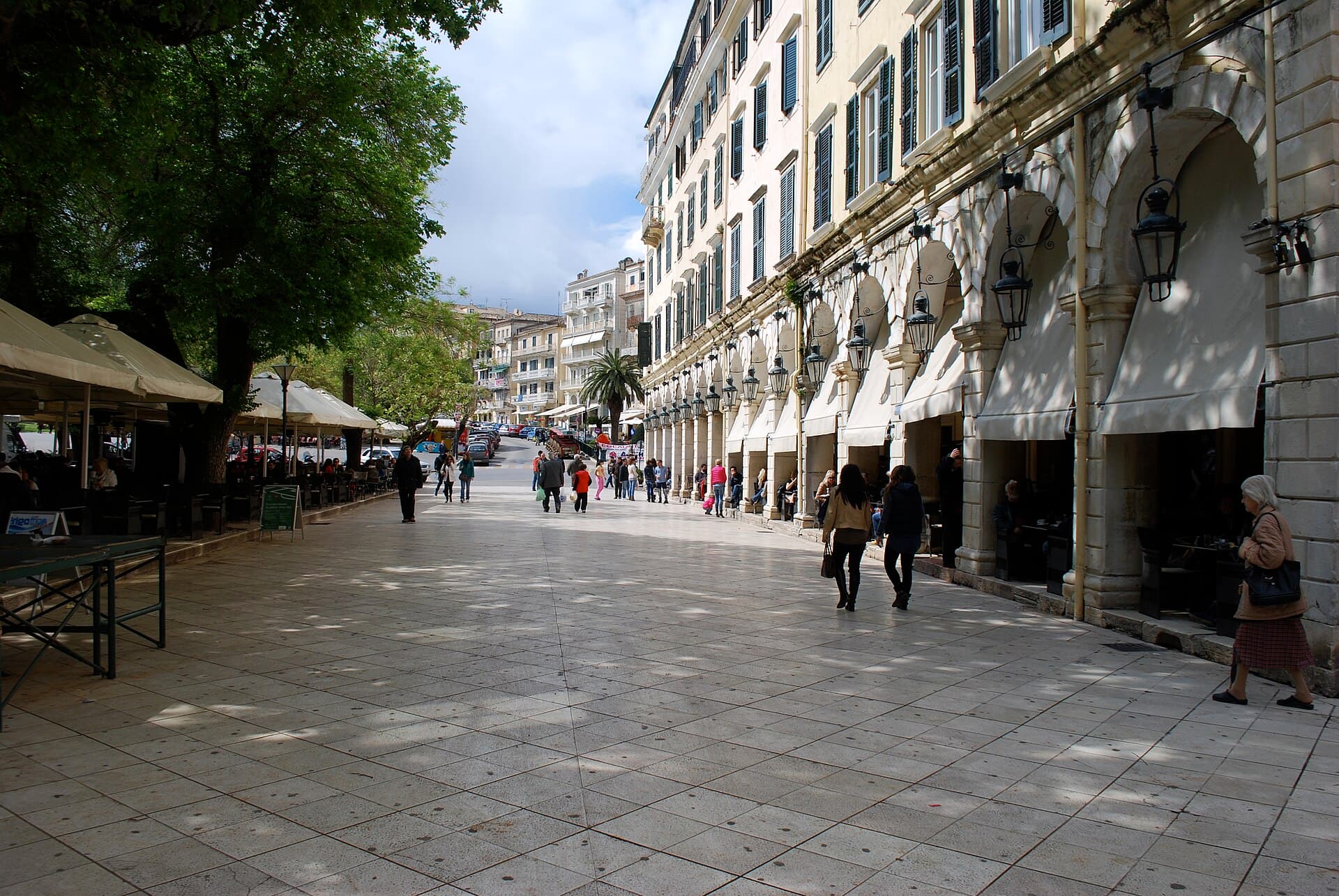 Spianada Square**The largest square in Greece** — and its huge scale is not architectural gener4 minutes walk4.8
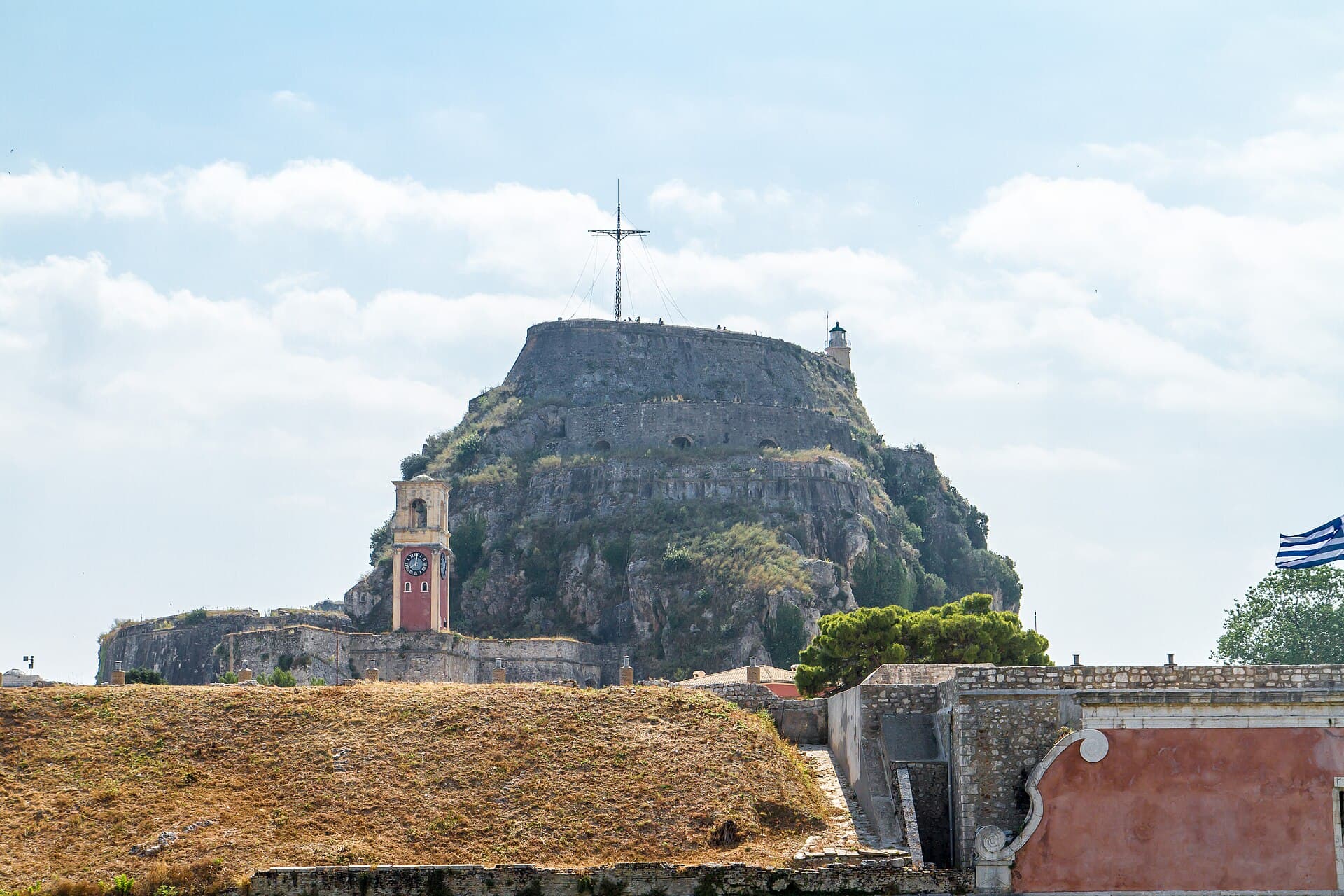 Old Fortress**A fortress on a rocky peninsula with two peaks** — and those two peaks are the8 minutes walk4.7
**With the same courtesy you would expect of a visitor to your own mosque — and the rules are simple and clear.** ✅ **Do**: go in quietly, silence your phone, cover shoulders and knees (men and women alike), walk at the sides rather than up the middle of the nave, and **stand back and simply look** — no religious act is asked of you and nobody expects one. ⚠ **Do not**: photograph at all (it is forbidden and enforced), walk in front of anyone praying, sit in seats set aside for worshippers during a service, talk even in a whisper inside the chapel, or go in during the height of a service if you can wait. ✅ **And the reassuring part**: Greek Orthodox churches are **entirely used to visitors of every faith**, and nobody will ask about yours — respect is the only condition.
**A 4th-century Cypriot bishop — but his connection to Corfu formed a thousand years after his death.** When **Constantinople fell in 1453**, his relics were smuggled west and reached Corfu in **1456**, where they have stayed. Since then Corfiots have **credited him with four great deliverances**: from a famine, from two outbreaks of plague, and from the **great Ottoman siege of 1716** — popular account has him appearing in the storm that scattered the fleet. ✅ That is why he is present in daily life rather than only in church: **"Spiros" is among the commonest men's names on the island**, four annual processions close the streets, and shops and boats carry his name. ⚠ As a visitor, understand this: walking into the church you are not entering a historic monument but **a living centre of collective identity**.