
The Dead Class
The 1975 piece that became an international reference — actors carrying child mannequins of themselves.
Jakub Hałun — CC BY-SA 4.0 · Adrian Grycuk — CC BY-SA 3.0 pl · Adrian Grycuk — CC BY-SA 3.0 pl · Adrian Grycuk — CC BY-SA 3.0 pl
A documentation centre and museum of the work of Tadeusz Kantor, in a striking building on the Vistula bank in Podgórze. The building itself is worth stopping for: an old brick power station, above which a vast black metal mass rests on two enormous supports shaped like human legs — as though the old building were carried on shoulders. Designed in 2014, it caused wide controversy in the city and is among the most divisive contemporary buildings in Kraków. Kantor (1915-1990) was a theatre director and visual artist, and his company Cricot 2 produced some of the most important European theatre of the twentieth century. His 1975 piece The Dead Class became an international reference: actors carrying child-sized mannequins representing themselves as children, in a work about memory and death. Kantor stood on stage at every performance, directing the actors in front of the audience. The centre displays mannequins, costumes, constructions and documents from his productions, along with his visual art. This is a specialised place: anyone unfamiliar with experimental theatre may find it opaque.
The 1975 piece that became an international reference — actors carrying child mannequins of themselves.
Kantor stood at every performance, directing his actors in front of the audience.
Among the most argued-over contemporary buildings in Kraków since 2014.
Nadwiślańska street, the riverbank in Podgórze
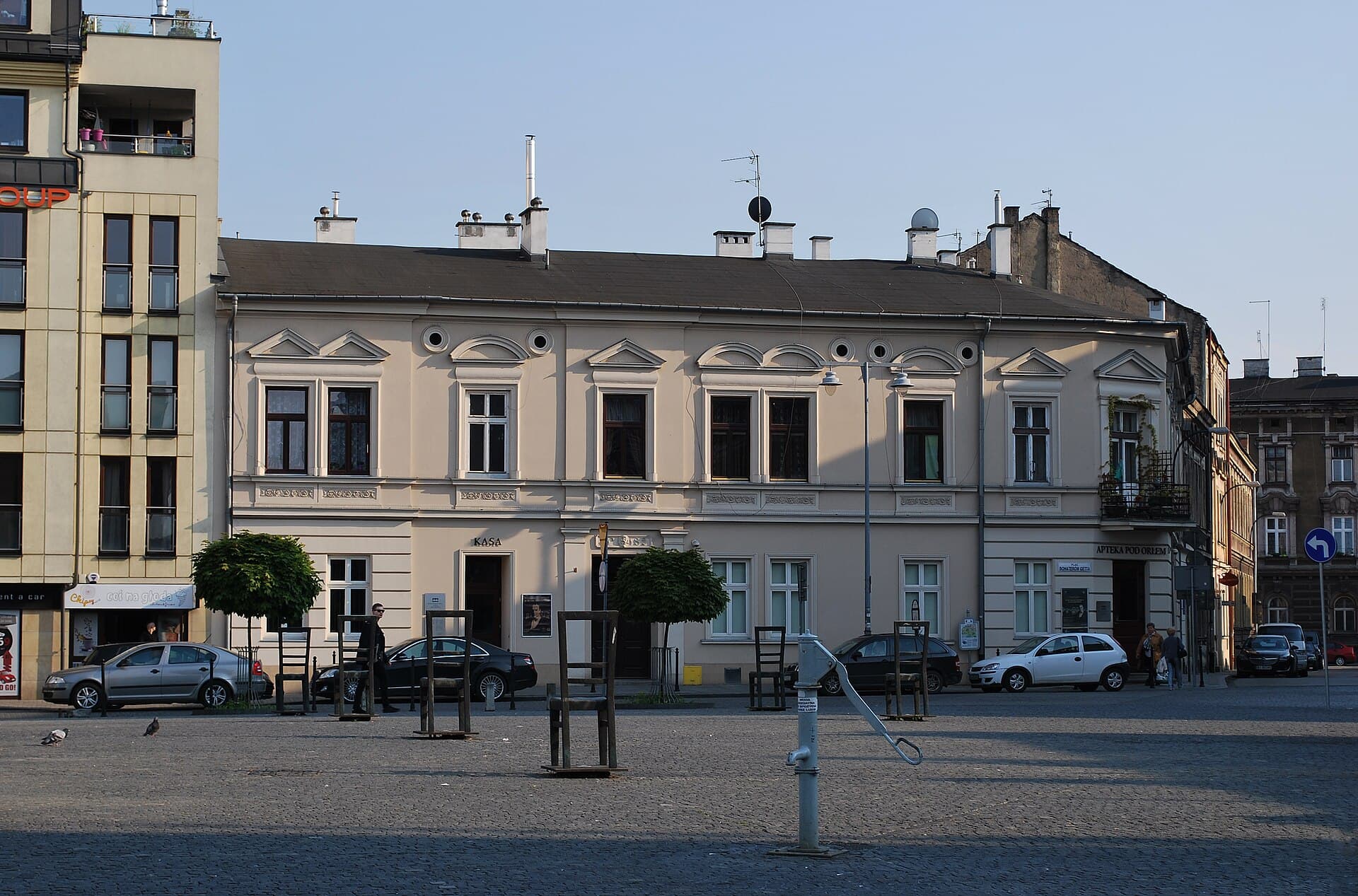 Eagle PharmacyA pharmacy on Ghetto Heroes Square in Podgórze that was the only pharmacy inside3 minutes walk4.6
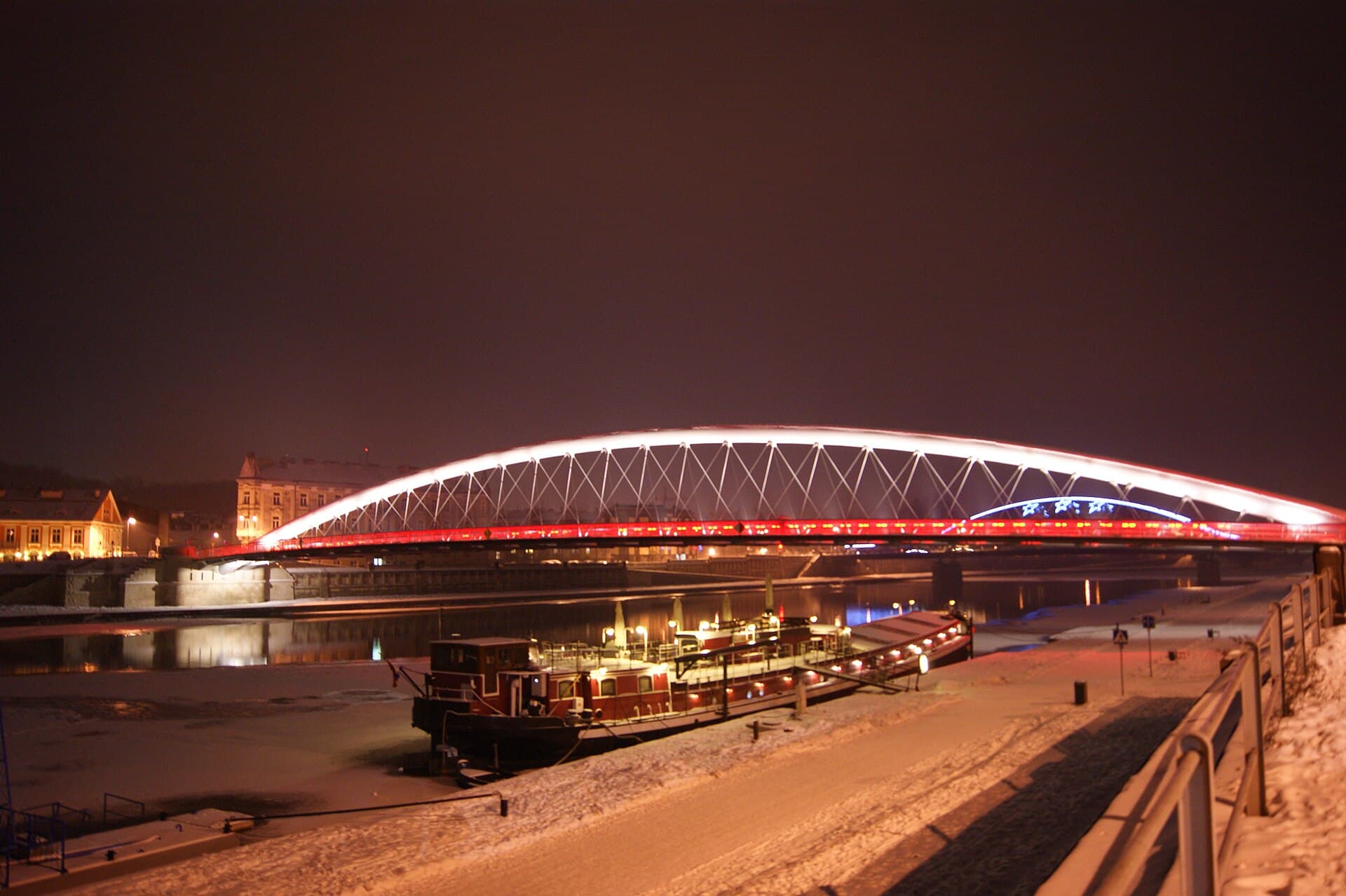 Father Bernatek FootbridgeA pedestrian and cycle bridge over the Vistula linking Kazimierz with Podgórze, 3 minutes walk4.9
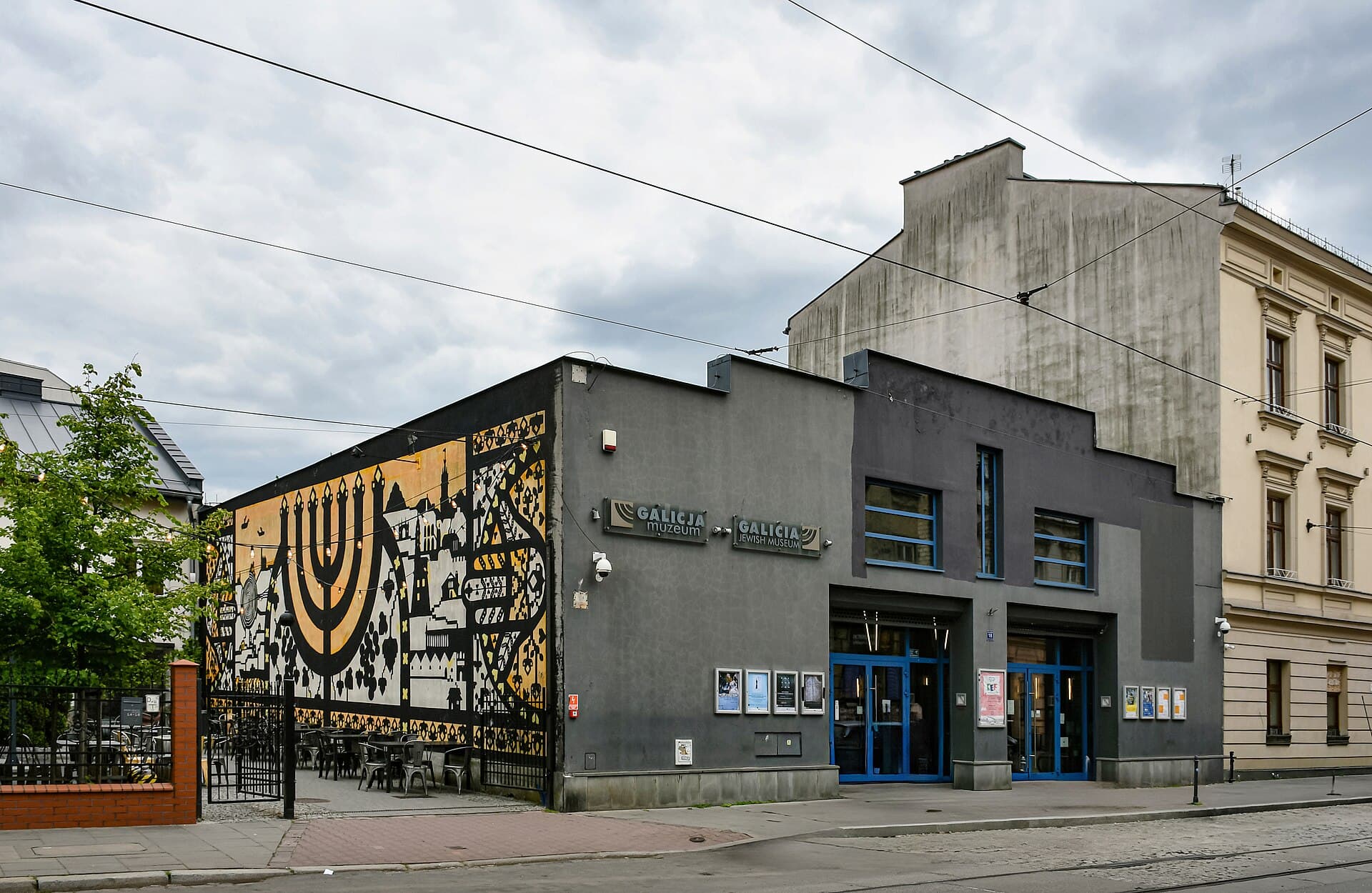 Galicia Jewish MuseumA museum in a former furniture warehouse in Kazimierz that treats the Jewish his5 minutes walk4.5
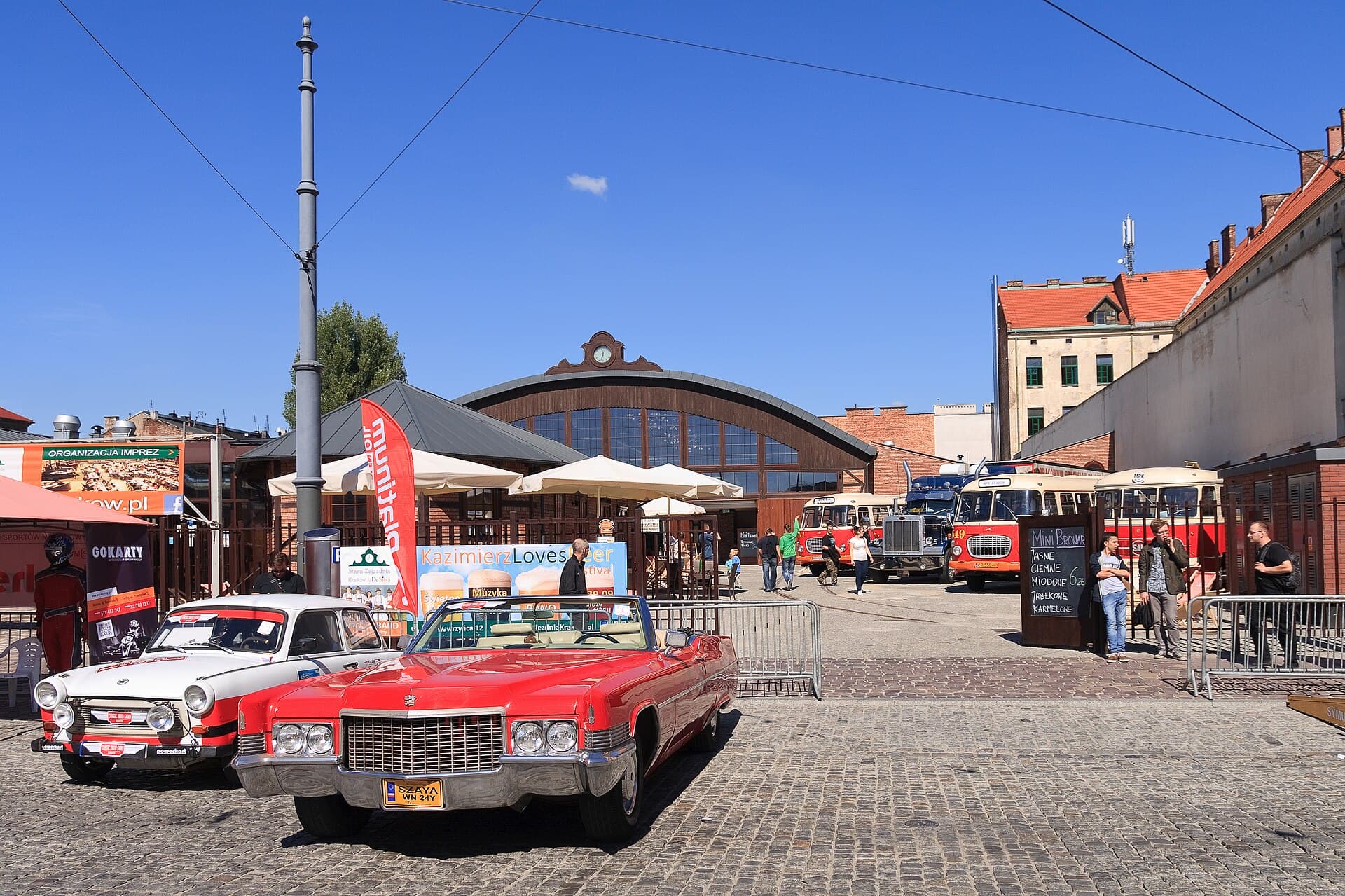 Museum of Engineering and TechnologyA technical museum in a former tram depot in Kazimierz, covering the history of 5 minutes walk4.3
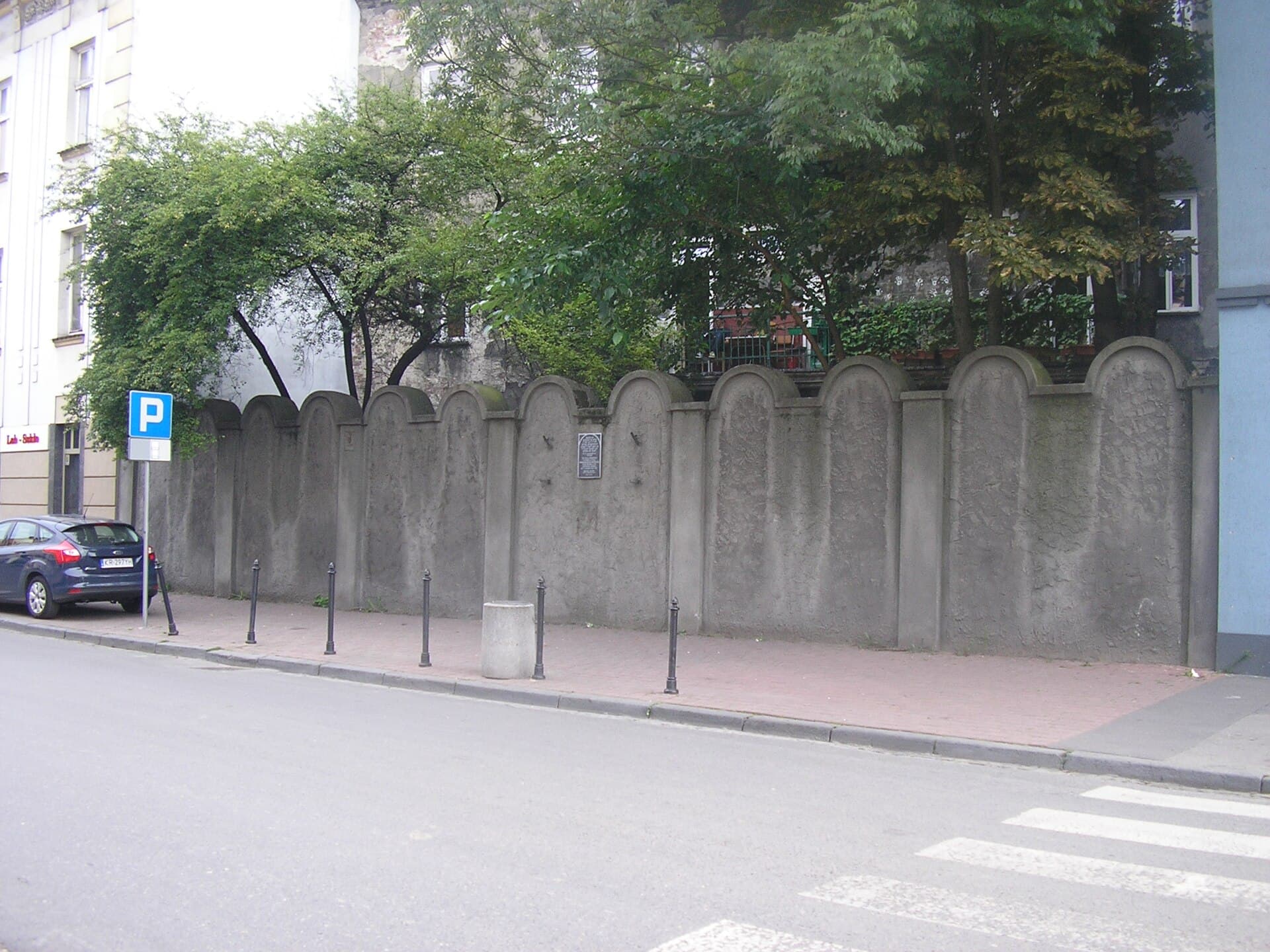 The Remains of the Ghetto WallTwo surviving sections of the Kraków ghetto wall in the Podgórze district, all t7 minutes walk4.3
Partly. The exhibits are visual and powerful in themselves — mannequins, costumes, strange machines — and can be enjoyed as visual art. But the full meaning needs context. If you do not know Kantor, watch a clip of The Dead Class beforehand; ten minutes changes the experience entirely.
A pedestrian bridge over the Vistula linking Kazimierz with Podgórze, opened in 2010. It has become one of Kraków's best-known modern landmarks, with its arches, the acrobat sculptures suspended beneath it, and the padlocks visitors attach to its railings. Crossing takes minutes, and it connects the old Jewish quarter to the museum area in Podgórze.