
The tiled portal
Blue and green.
Bgag — CC0 · Bgag — CC0 · Екатерина Борисова — CC BY-SA 4.0 · Jamshid Nurkulov — CC BY-SA 4.0 · Jamshid Nurkulov — CC BY-SA 4.0 · Bgag — CC0 · Jamshid Nurkulov — CC BY-SA 4.0 · Jamshid Nurkulov — CC BY-SA 4.0
The necropolis of the Kokand khans, whose name means «tomb of the kings», built in the 1820s. Narbuta Bey and his descendants of the ruling house lie here, including Umar Khan, per visitor guides. The mausoleum is entered through a tall western portal faced with glazed brick and blue, green and white tiles. The tomb's wooden door is finely carved with plant motifs and Arabic inscriptions, and a blue dome rises above. Beside it stands a small mosque with a two-columned iwan and a painted ceiling divided into four panels. Nearby is the Modari Khan mausoleum, «the khan's mother», built in 1825 for Umar Khan's mother, with a blue dome and unusual red, green, yellow and blue tilework. The poet Nodira (1792-1842), Umar Khan's wife, who wrote in Chagatai Turkic and Persian, is said to be buried beside it. Visitors report a ticket of about 20,000 som covering the necropolis, the Modari Khan mausoleum and the Norbutabey Madrasa, per visitor guides. It is a burial place, so keep quiet and dress modestly.
Blue and green.
Arabic inscriptions.
A blue dome.
Near the Norbutabey Madrasa, Kokand
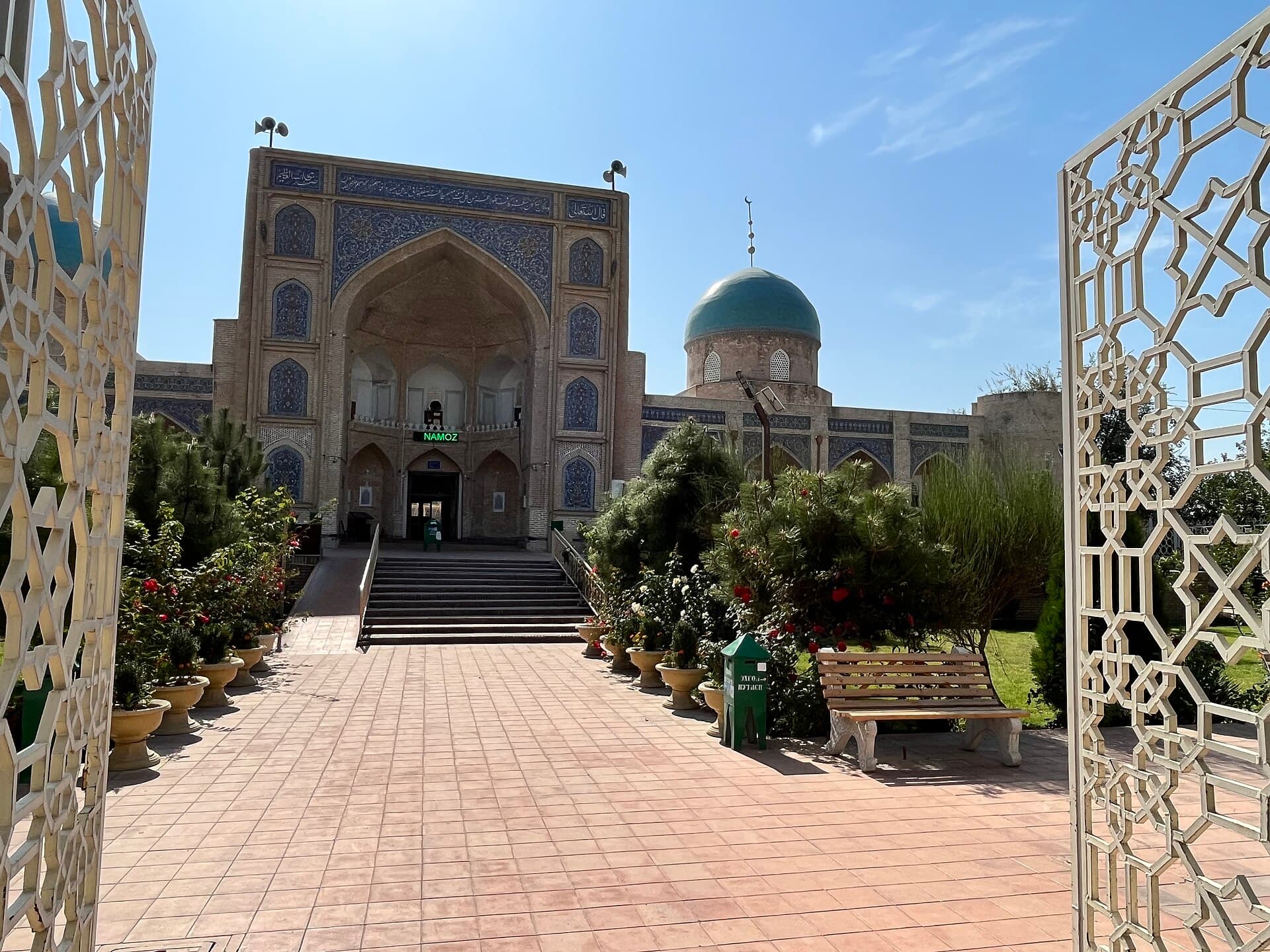 Norbutabey MadrasaKokand's oldest surviving building and the largest of its remaining madrasas, bu3 minutes walk4.4
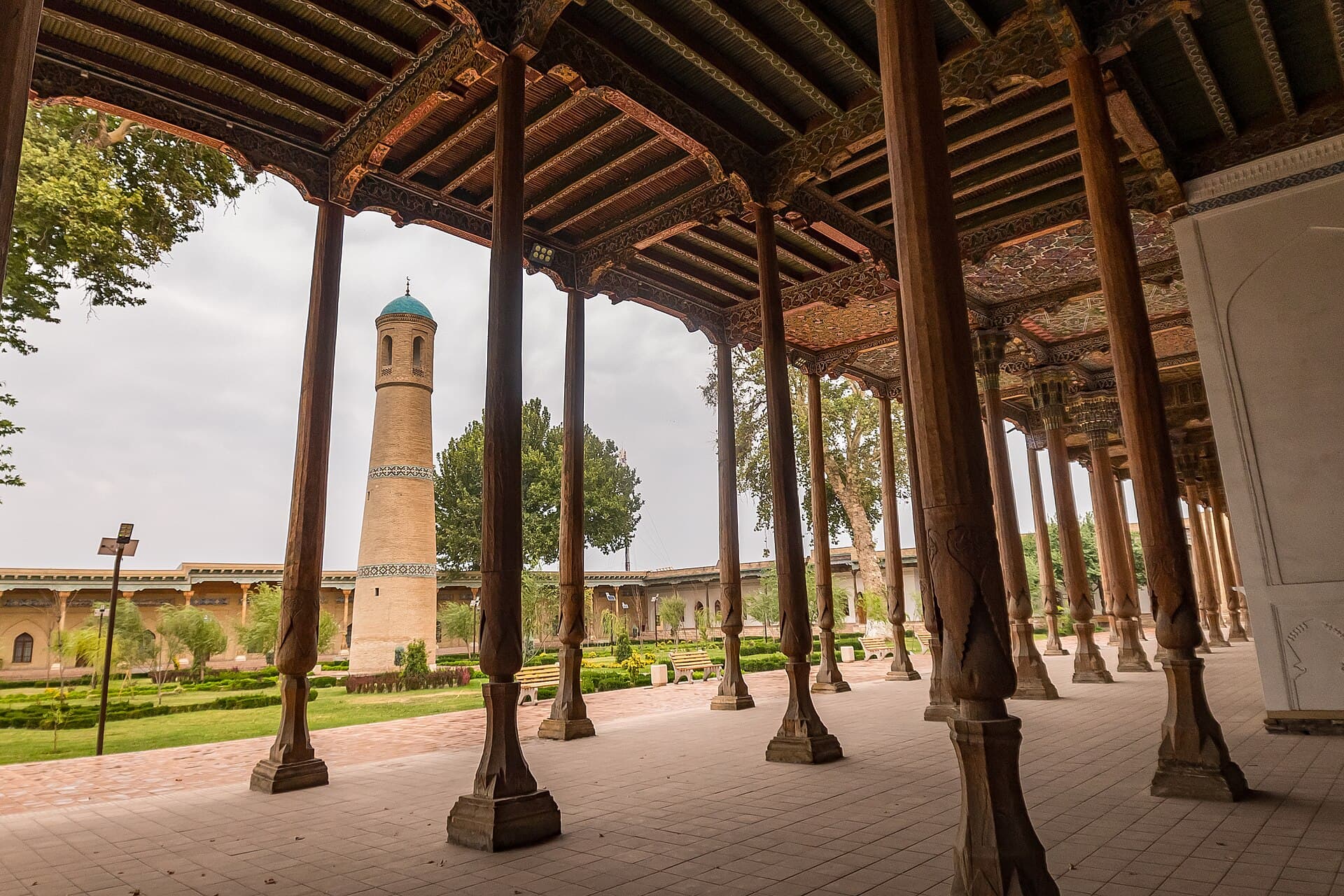 Jami Mosque, KokandKokand's Friday mosque on Chorsu Square, built by order of the khan Umar Khan be10 minutes walk4.6
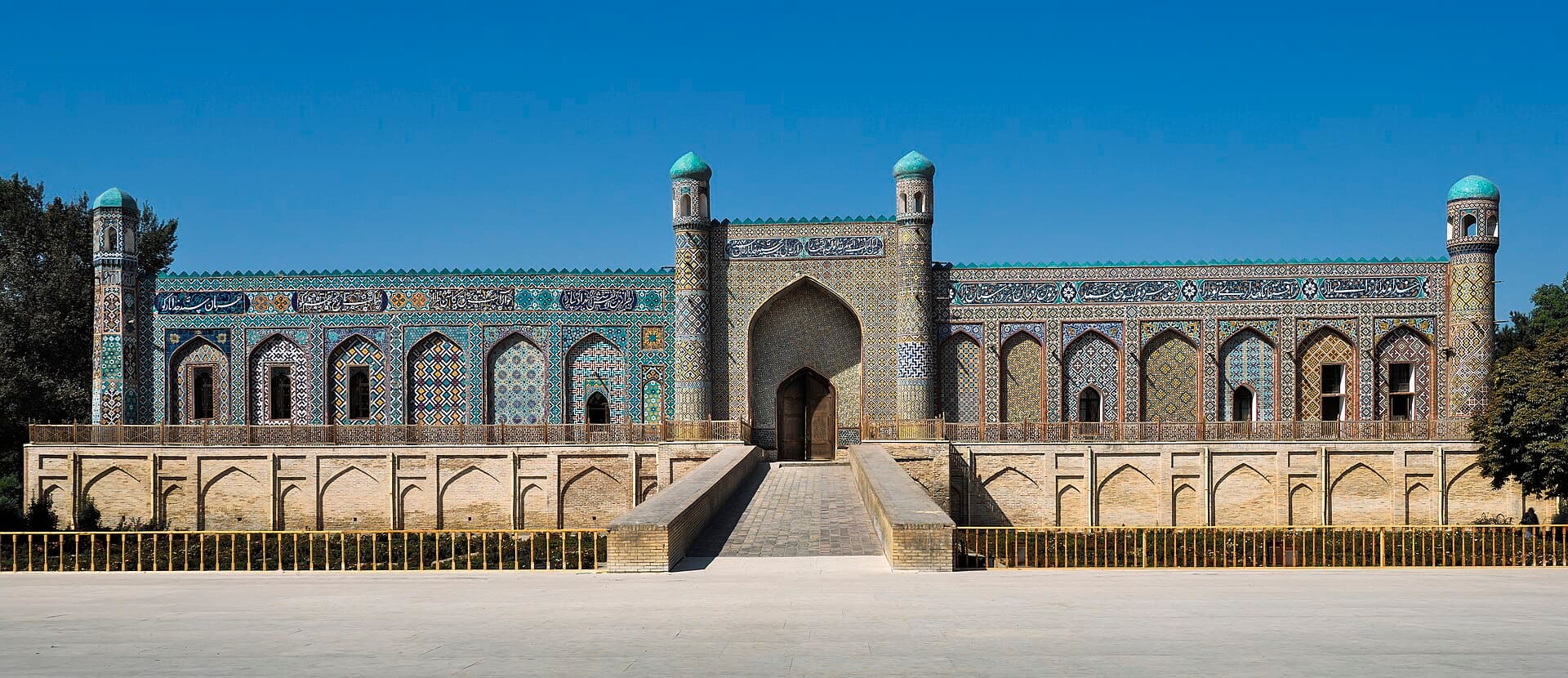 Khudayar Khan PalaceThe palace of Khudayar Khan, last ruler of the Kokand Khanate, nicknamed the Pea18 minutes walk4.8
Narbuta Bey and his descendants of the Kokand khans, including Umar Khan per visitor guides; beside it is the Modari Khan tomb, built in 1825 for Umar Khan's mother.