
The tiled façade
Yellow and green.
Petar Milošević — CC BY-SA 4.0 · UzbekistanWikiEditor — CC BY 4.0 · Jamshid Nurkulov — CC BY-SA 4.0 · upyernoz from Haverford, USA — CC BY 2.0 · Nikolai Bulykin — CC BY-SA 4.0 · Jamshid Nurkulov — CC BY-SA 4.0 · Nikolai Bulykin — CC BY-SA 4.0 · ElenaLitera — CC BY-SA 4.0
The palace of Khudayar Khan, last ruler of the Kokand Khanate, nicknamed the Pearl of Kokand and the most visited sight in the Fergana Valley. Built in the early 1870s, it was the last of seven palaces, each grander than the one before, designed by the architect Mir Ubaydullo; 80 master builders and 16,000 conscripted labourers are said to have worked on it. Its long façade is clad in glazed tiles with geometric patterns and inscriptions, and its yellows and greens set it apart from the mostly blue and turquoise monuments elsewhere in Uzbekistan. Above the gateway an Arabic inscription reads «High Palace of Sayyid Muhammad Khudayar Khan», reached by a ramp rising 5 m above the ground. The palace once had seven courtyards and about 114 rooms, but the Bolsheviks demolished most of it in 1918, including the whole harem, leaving five courtyards and 19 rooms. It has housed the local history museum since 1925, and its restored halls keep carved and painted wooden ceilings and wall paintings. Tickets are about 50,000 som and it opens daily from 9 am to 6 pm, per visitor guides. From Tashkent the road to Kokand crosses the Kamchik mountain pass, and trains run there too.
Yellow and green.
In the halls.
Over the gateway.
Central Kokand, in landscaped gardens
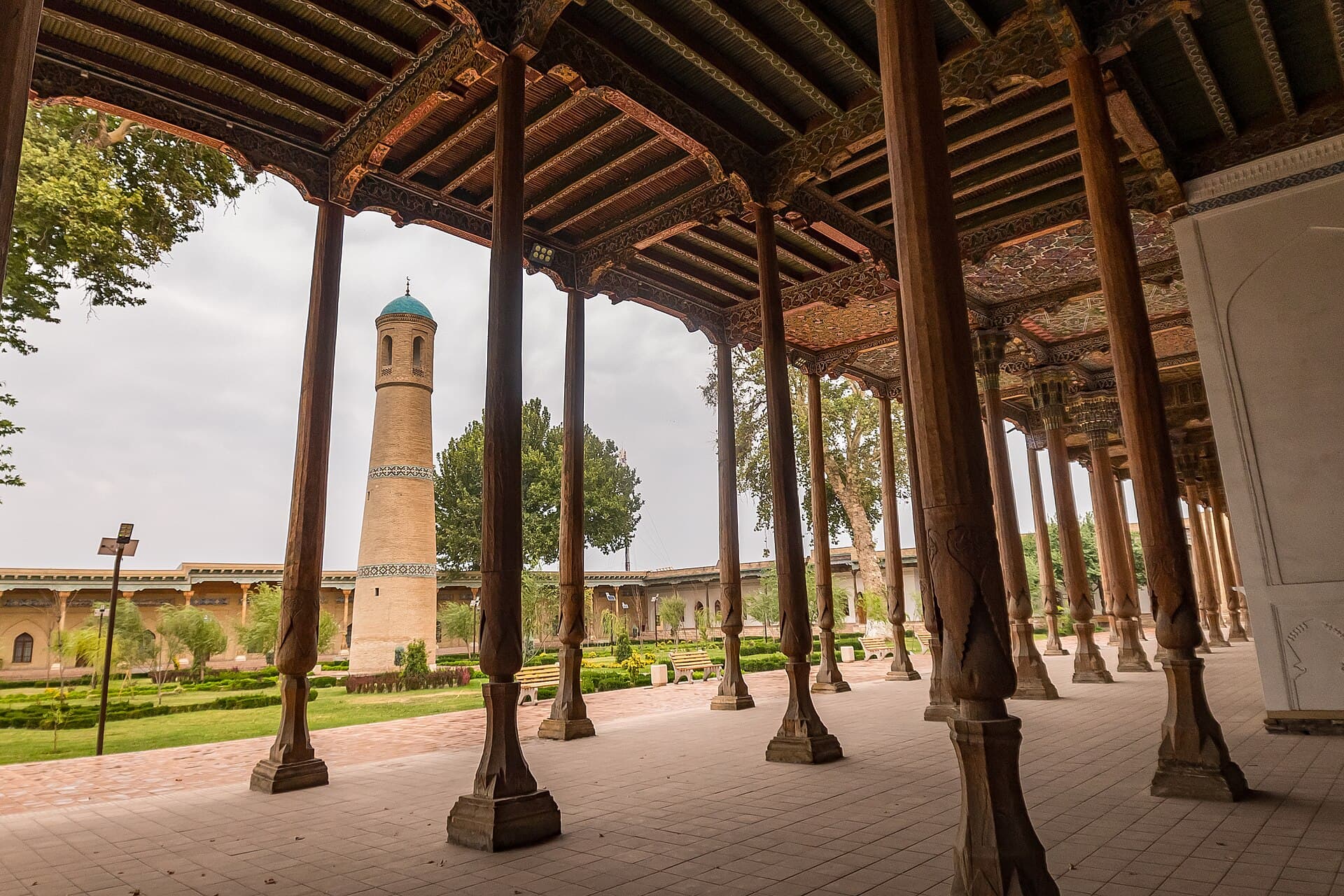 Jami Mosque, KokandKokand's Friday mosque on Chorsu Square, built by order of the khan Umar Khan be15 minutes walk4.6
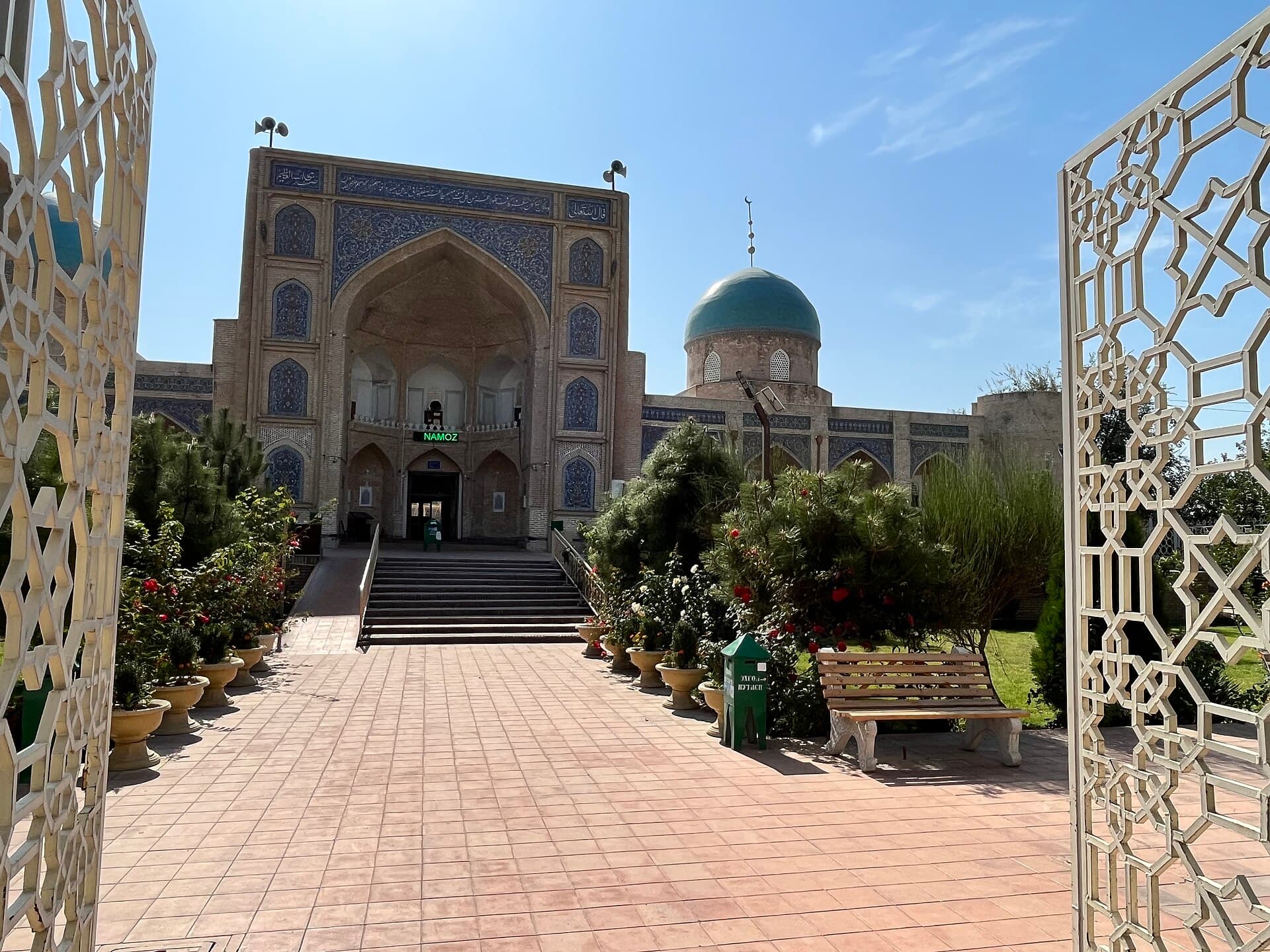 Norbutabey MadrasaKokand's oldest surviving building and the largest of its remaining madrasas, bu15 minutes walk4.4
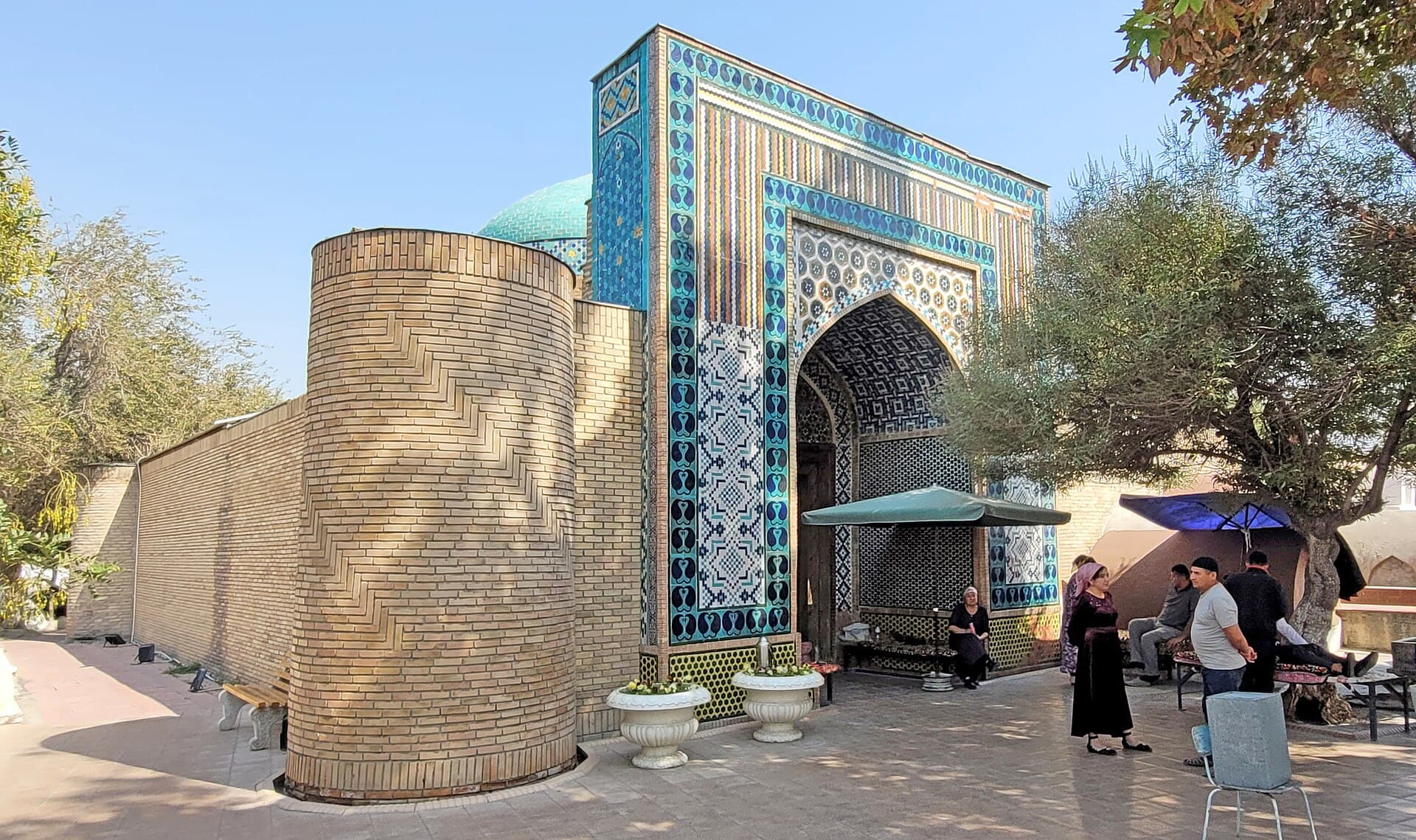 Dakhma-i-Shakhon, KokandThe necropolis of the Kokand khans, whose name means «tomb of the kings», built 18 minutes walk4.5
Five courtyards and 19 of about 114 rooms, after the Bolsheviks demolished most of it in 1918; it is now a local history museum.