
The carved gates
Geometric and floral.
Dmitriy Tashkent — CC BY-SA 4.0 · Dmitriy Tashkent — CC BY-SA 4.0 · Adam Jones from Kelowna, BC, Canada — CC BY-SA 2.0 · Екатерина Борисова — CC BY-SA 4.0 · Екатерина Борисова — CC BY-SA 4.0 · Adam Jones from Kelowna, BC, Canada — CC BY-SA 2.0
Kokand's oldest surviving building and the largest of its remaining madrasas, built at the end of the 18th century by order and at the expense of the ruler Narbuta Bey (1763-1798). Its plan measures 52 by 72 m around a square courtyard 38 m a side. The main portal faces north, leading to a vestibule flanked by a domed mosque, whose drum is pierced by twelve windows, and a domed lecture hall, with student cells around the courtyard. Its carved wooden gates are famous: geometric girih patterns outside, flowing plant motifs inside. Closed in Soviet times, it was restored after independence, its façade dressed in glazed tiles, and it now serves as a mosque. Visitor guides note that the inner courtyard is reserved for Muslim men. Visitors report a ticket of about 20,000 som covering the madrasa, the Modari Khan mausoleum and the nearby khans' necropolis, per visitor guides. Modest dress is expected.
Geometric and floral.
38 m a side.
Restored.
By the khans' necropolis, Kokand
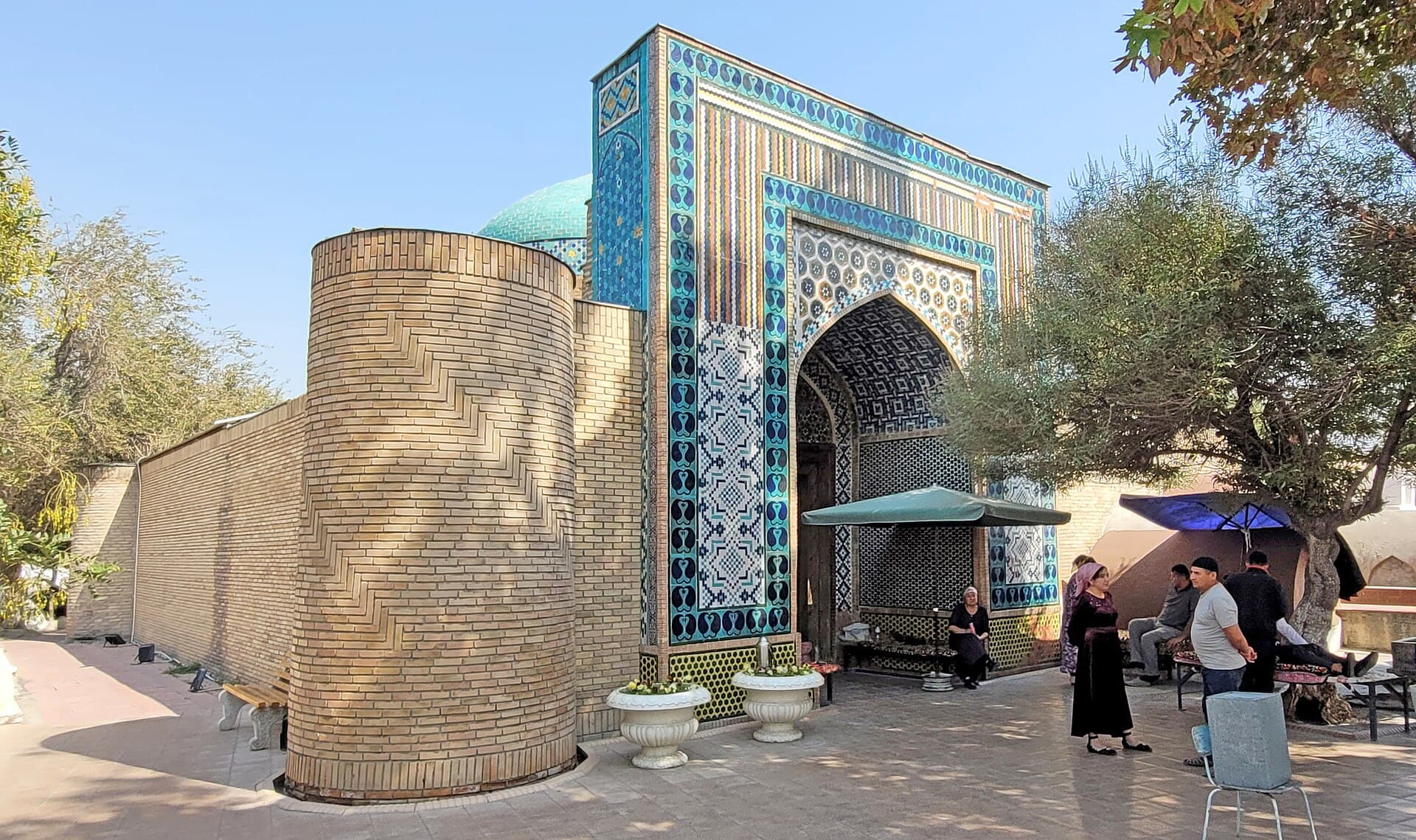 Dakhma-i-Shakhon, KokandThe necropolis of the Kokand khans, whose name means «tomb of the kings», built 3 minutes walk4.5
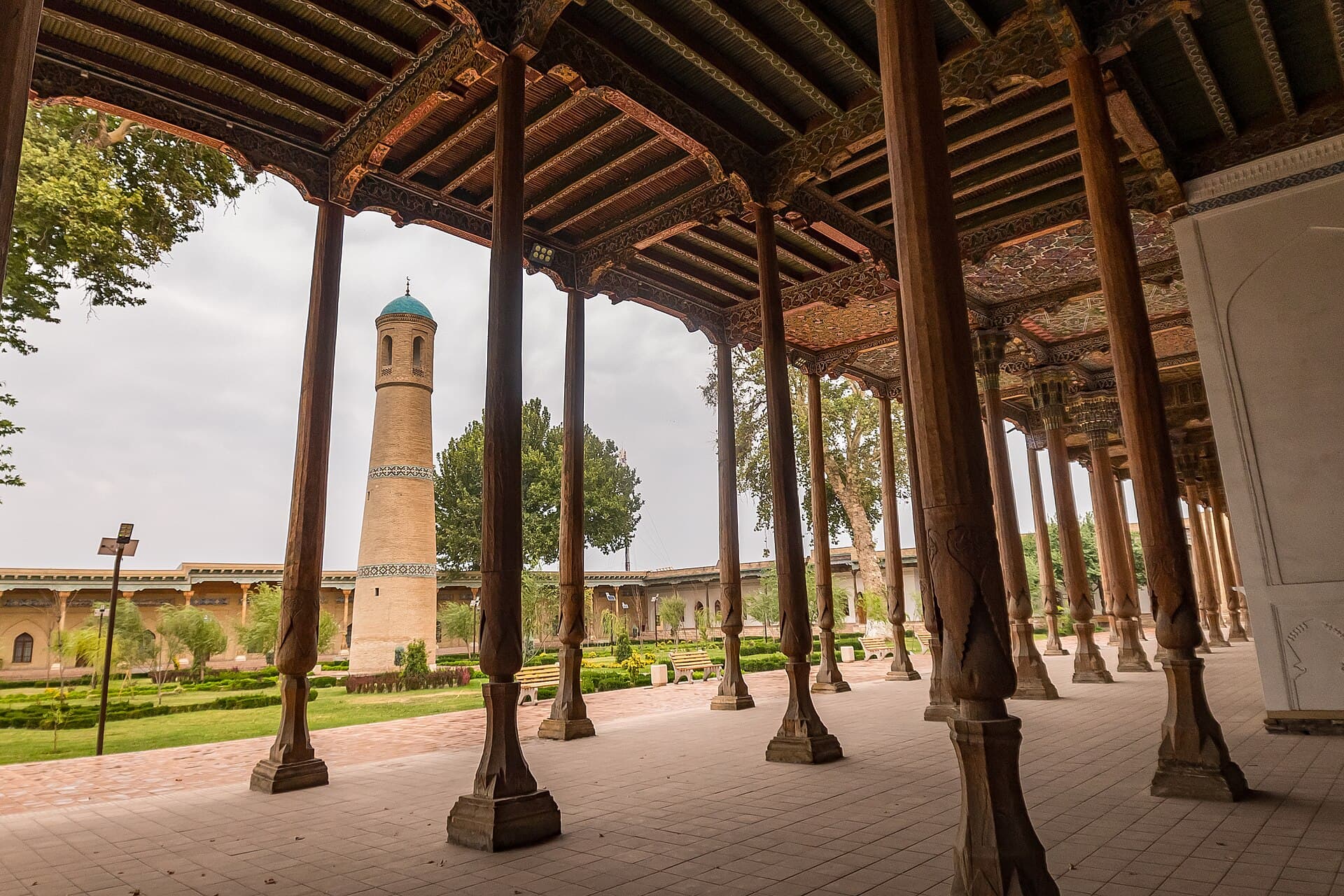 Jami Mosque, KokandKokand's Friday mosque on Chorsu Square, built by order of the khan Umar Khan be9 minutes walk4.6
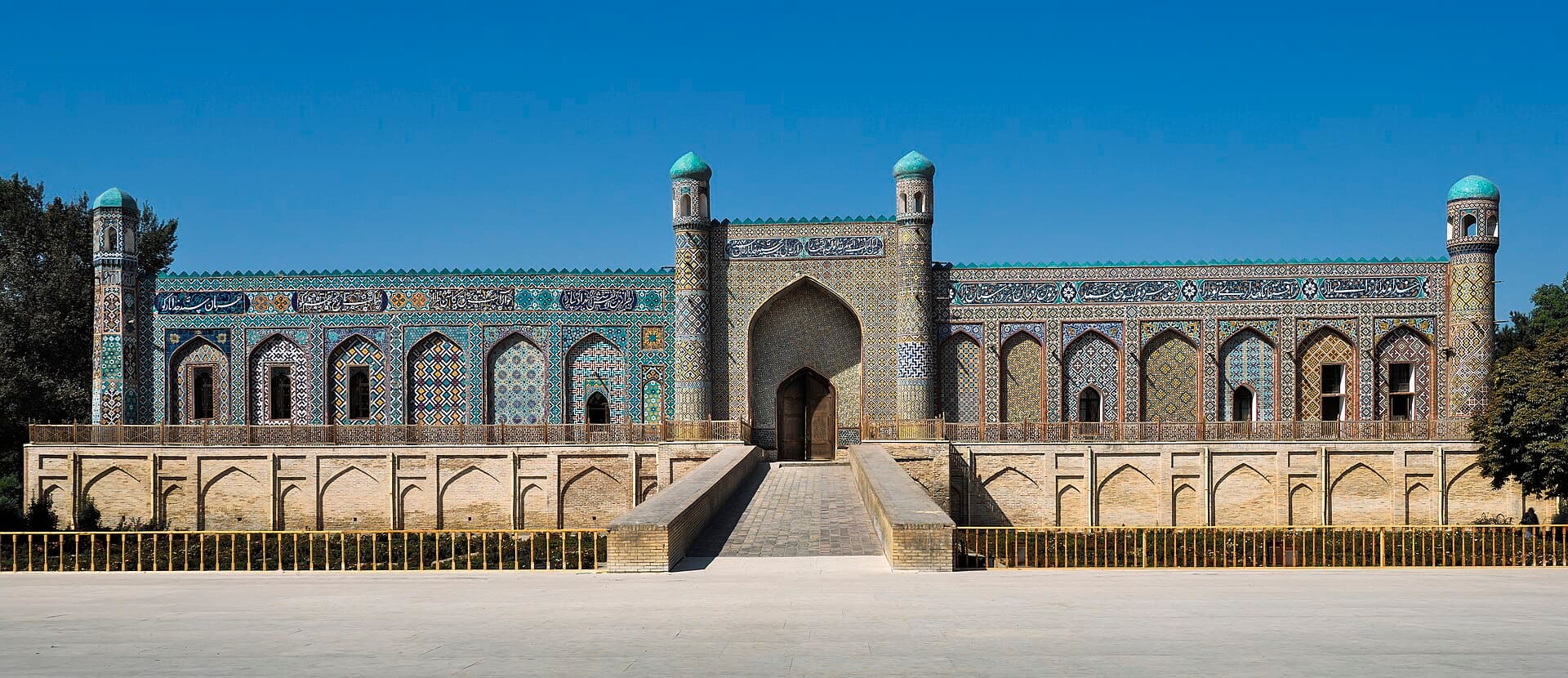 Khudayar Khan PalaceThe palace of Khudayar Khan, last ruler of the Kokand Khanate, nicknamed the Pea15 minutes walk4.8
You can see the portal and façade; guides note the inner courtyard is reserved for Muslim men, as it now serves as a mosque.