
The great iwan
98 columns.
Arina Pan — CC BY-SA 4.0 · Adam Jones from Kelowna, BC, Canada — CC BY-SA 2.0 · Arina Pan — CC BY-SA 4.0 · Arina Pan — CC BY-SA 4.0 · Arina Pan — CC BY-SA 4.0 · Nikolai Bulykin — CC BY-SA 4.0 · Adam Jones from Kelowna, BC, Canada — CC BY-SA 2.0 · Kraftabbas — CC BY-SA 4.0
Kokand's Friday mosque on Chorsu Square, built by order of the khan Umar Khan between 1819 and 1822, with a celebrated architect from Ura-Tyube leading 200 builders. The complex groups a mosque, a madrasa, a khanqah and a minaret around a broad courtyard. Its showpiece is the huge iwan on the west side, 97.5 m long and 25.5 m deep, its roof carried by 98 carved wooden columns, with columns and ceiling decorated in colour and gold. In the middle of the courtyard rises a brick minaret 22.5 m tall, climbed by a spiral stair. The walls keep carved ganch plasterwork typical of the Fergana Valley. The madrasa ran until 1918 and the mosque until 1930; today it is a working mosque again, with a small museum of applied arts, per visitor guides. Tickets are about 35,000 som, per visitor guides, and modest dress is expected. The Norbutabey Madrasa and the khans' necropolis are less than a kilometre away.
98 columns.
22.5 m tall.
Colour and gold.
Chorsu Square, Kokand
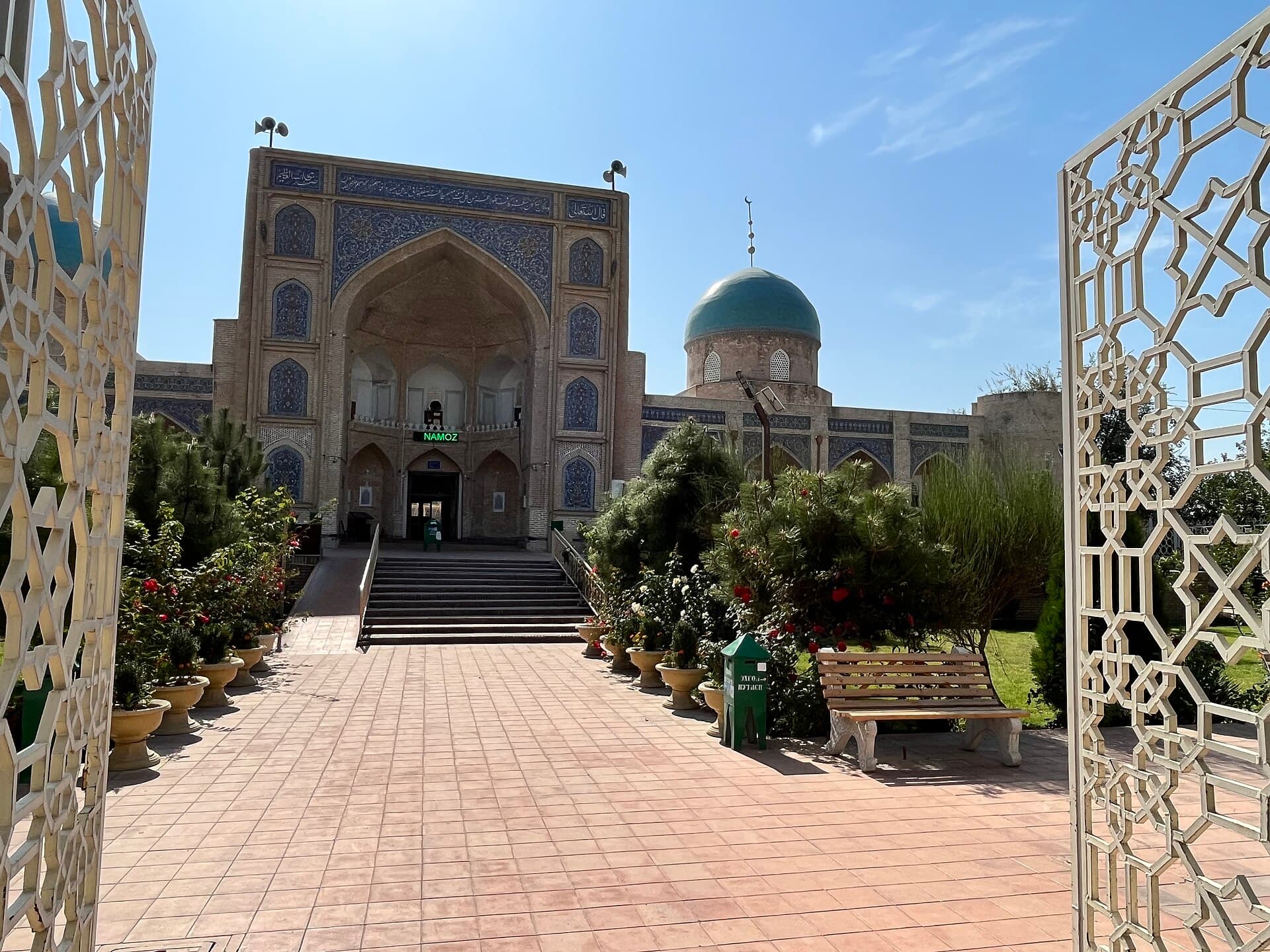 Norbutabey MadrasaKokand's oldest surviving building and the largest of its remaining madrasas, bu9 minutes walk4.4
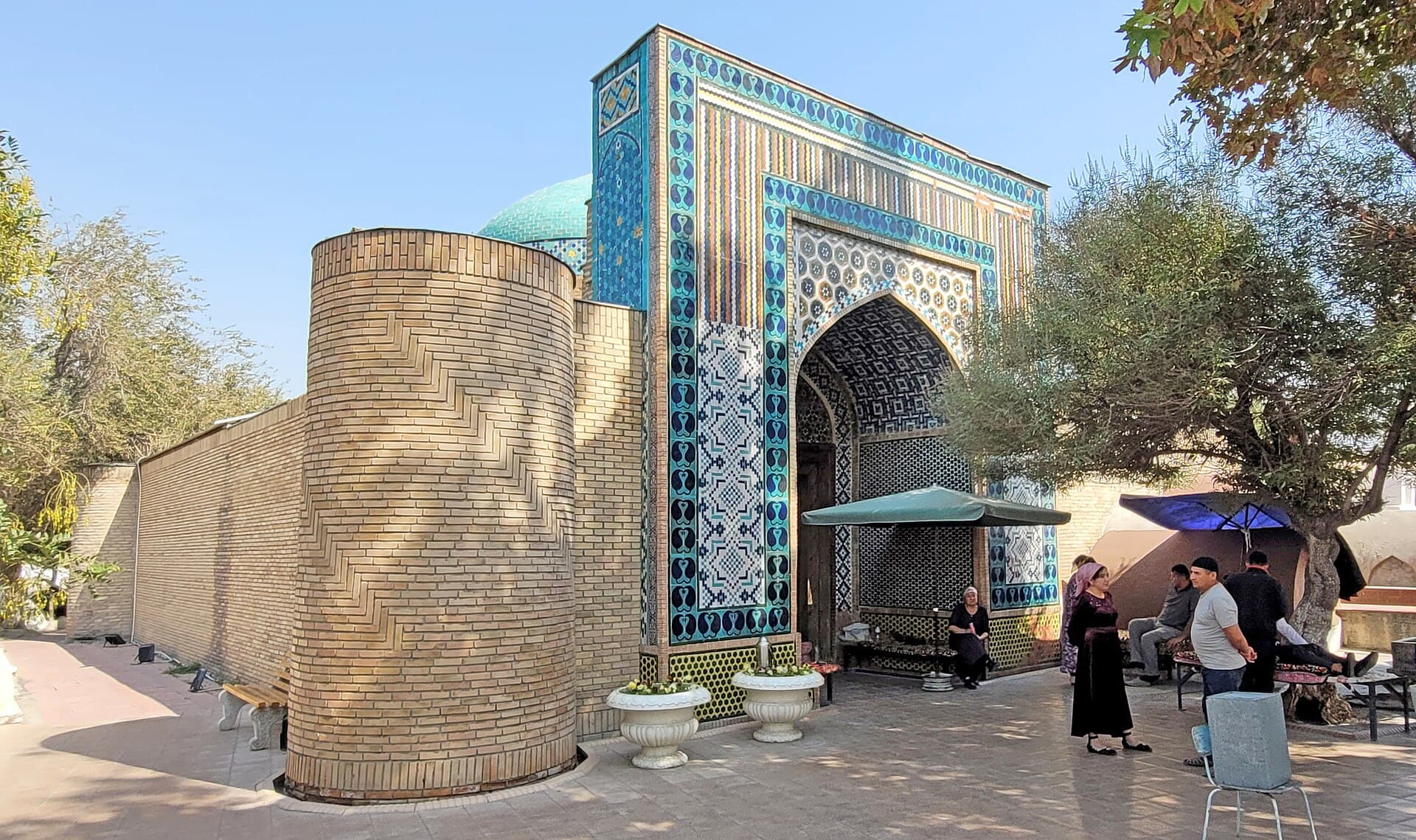 Dakhma-i-Shakhon, KokandThe necropolis of the Kokand khans, whose name means «tomb of the kings», built 10 minutes walk4.5
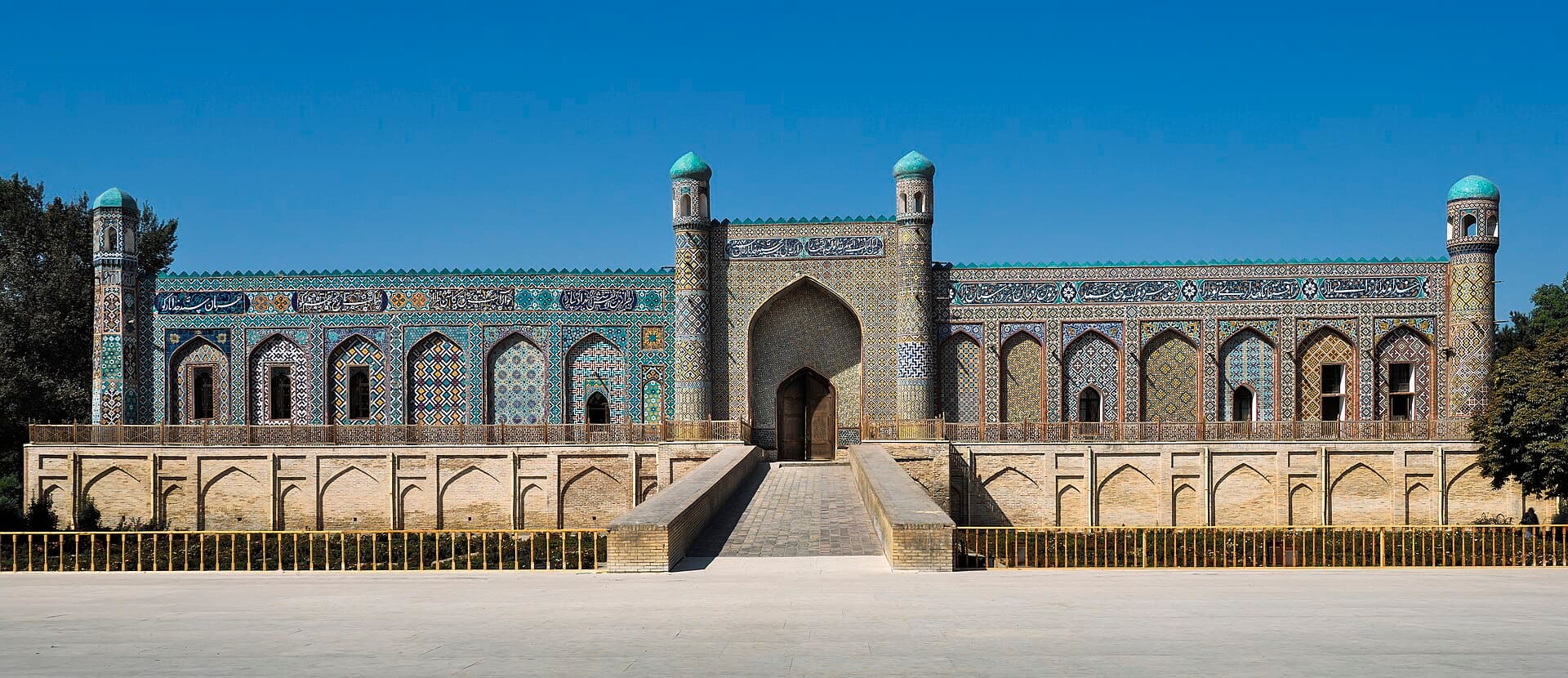 Khudayar Khan PalaceThe palace of Khudayar Khan, last ruler of the Kokand Khanate, nicknamed the Pea15 minutes walk4.8
98 carved wooden columns hold up its 97.5 m west iwan; tickets are about 35,000 som, per visitor guides.